

Solutions
Water rarely comes through a wall, floor, or structure evenly, it finds the specific crack, joint, manhole, or pipe penetration where the seal has failed, and follows that path in. This category covers five distinct ways water shows up: a general below-grade intrusion, a leaking joint, a tunnel leak, manhole infiltration, and a leak specifically at a pipe penetration. Each has its own repair approach, since sealing the wrong spot doesn't stop water that's using a different path entirely.
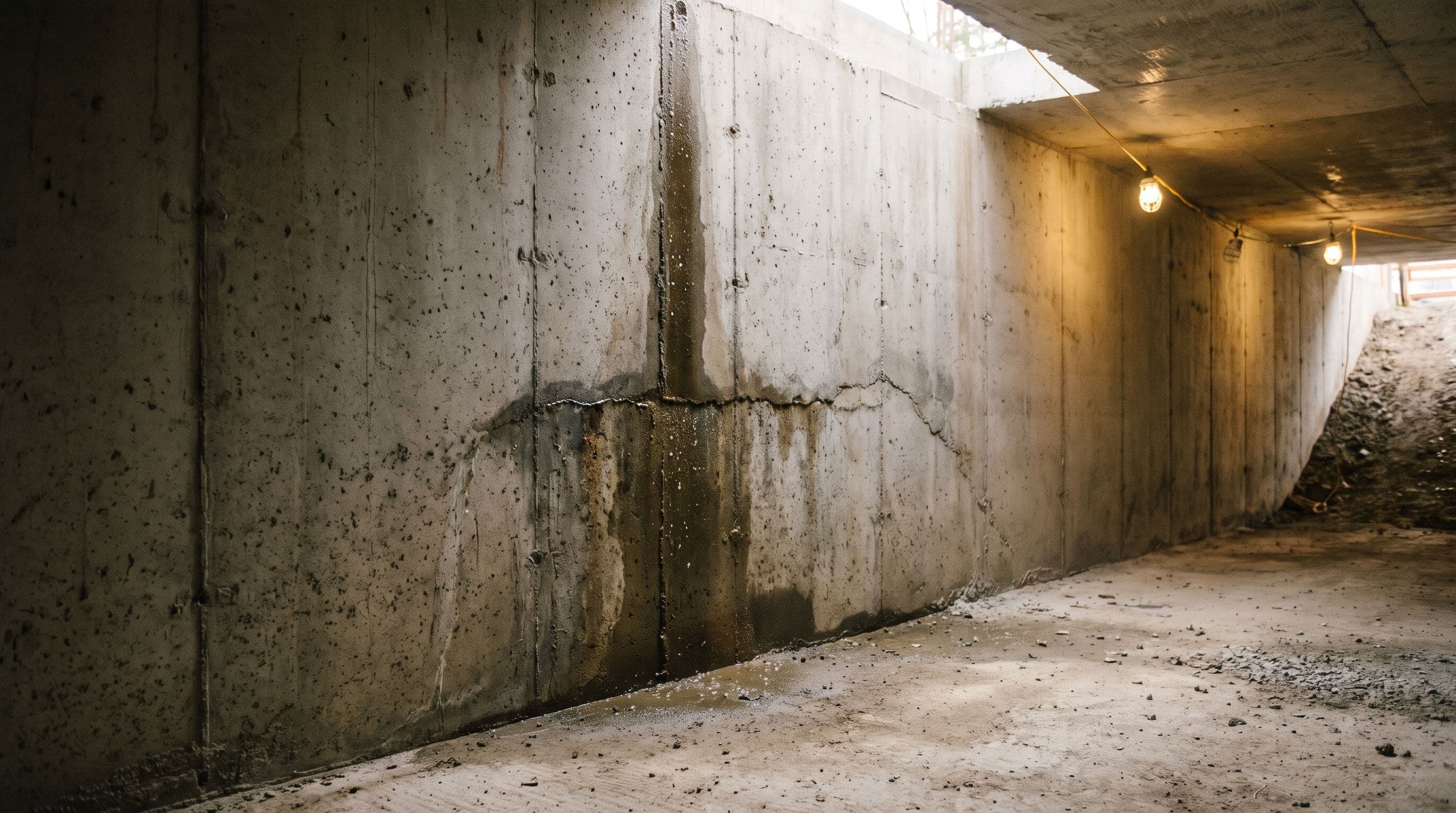
Active Water Intrusion
Stopping water at the point it's actually getting into a below-grade structure, without excavating from the outside.

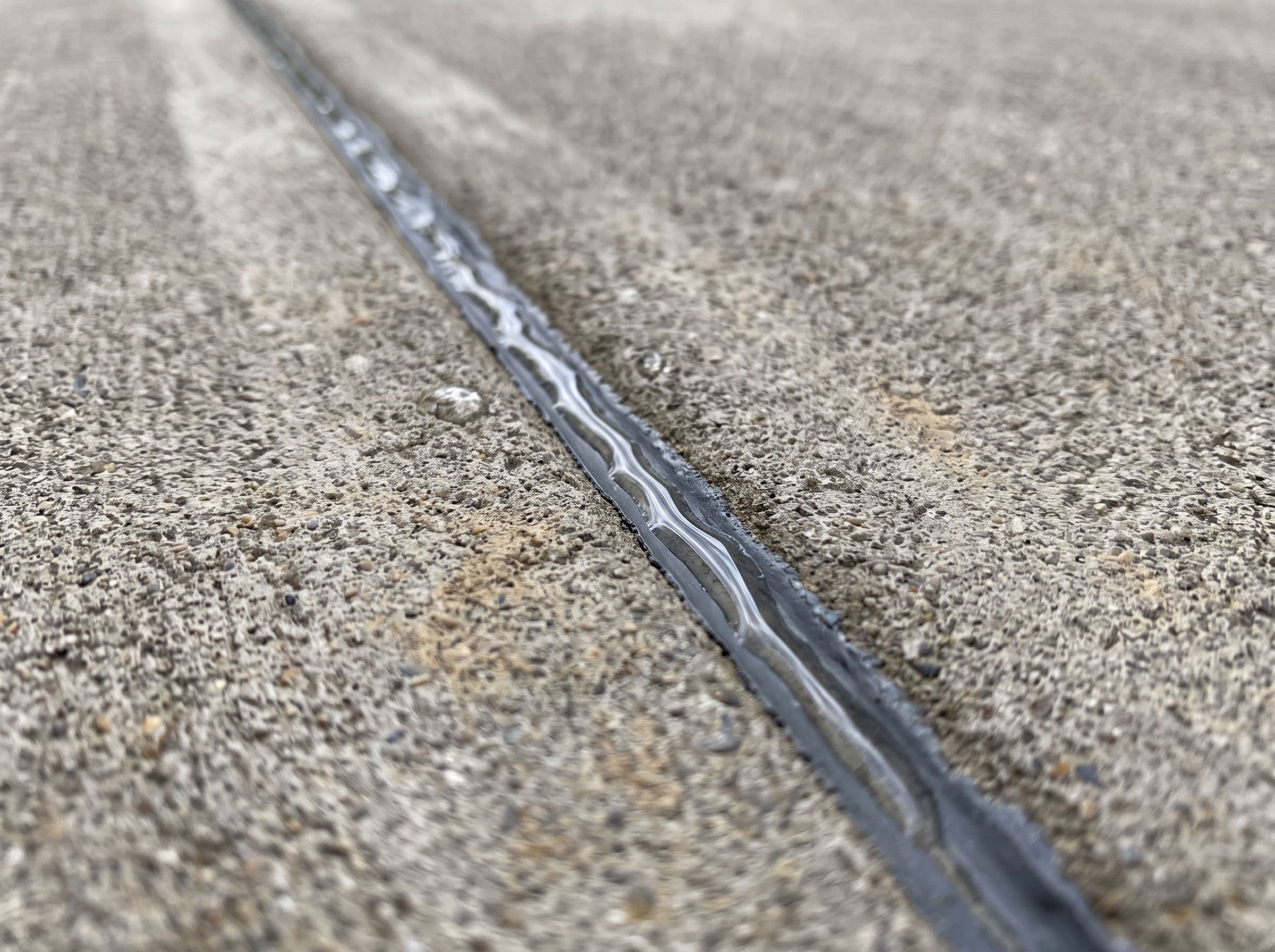
Joint Leaks
Sealing a leaking expansion, construction, or masonry joint directly from the accessible side, without replacing it.
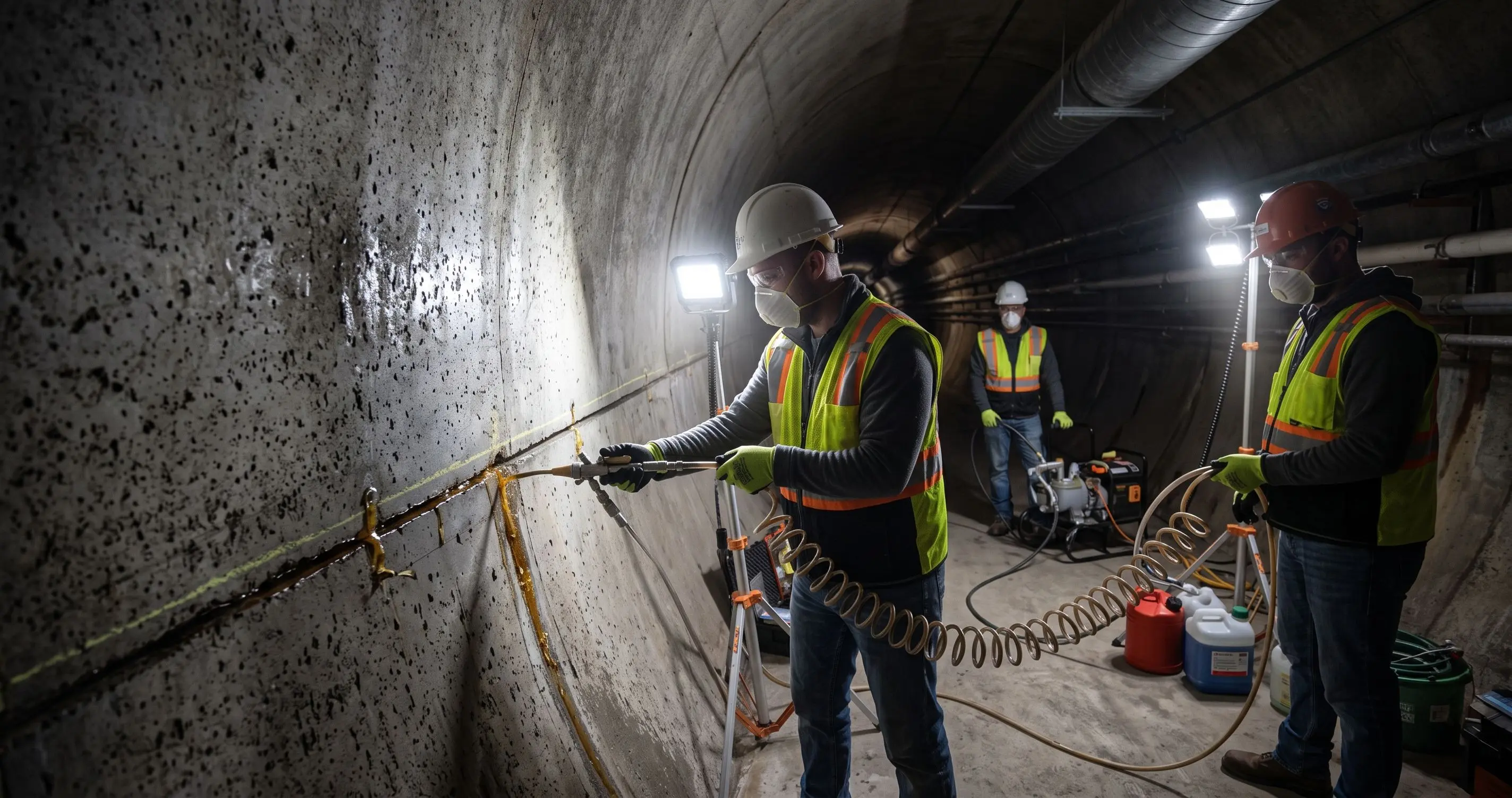
Tunnel Leaks
Sealing active water ingress in a tunnel from the interior, during a scheduled closure window.
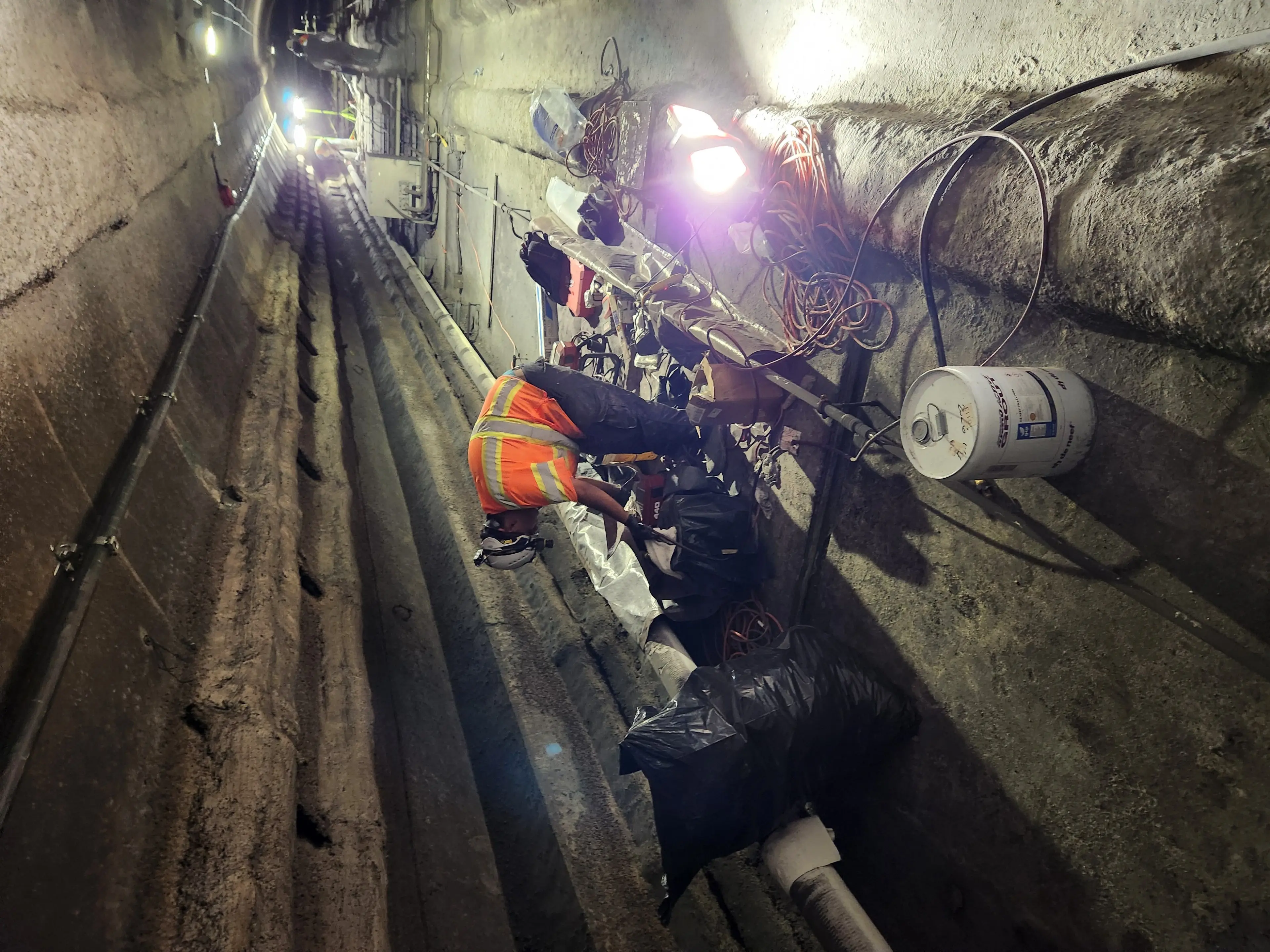
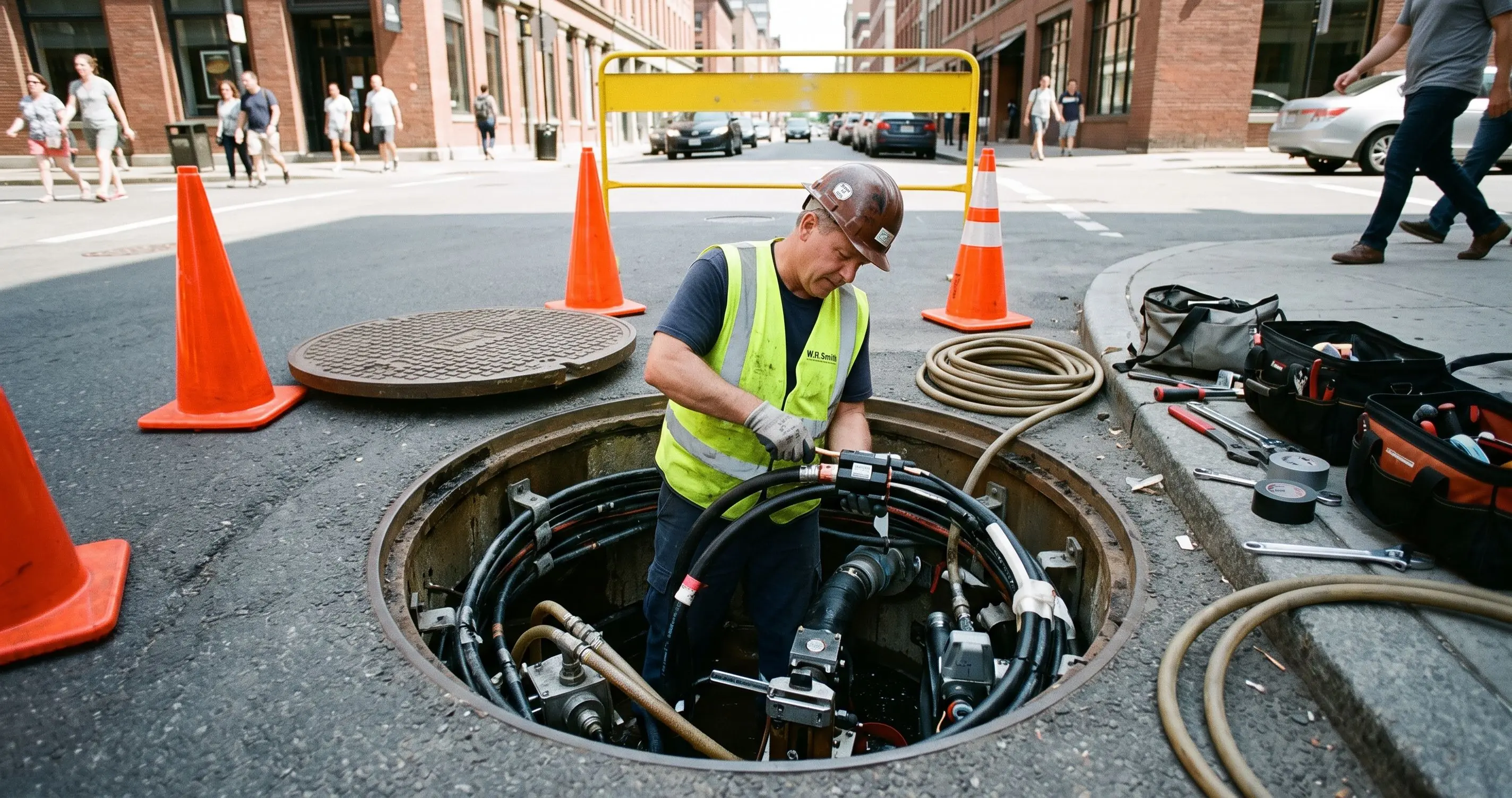
Manhole Infiltration
Sealing infiltration points in sanitary sewer and stormwater manholes from the inside, without excavation.
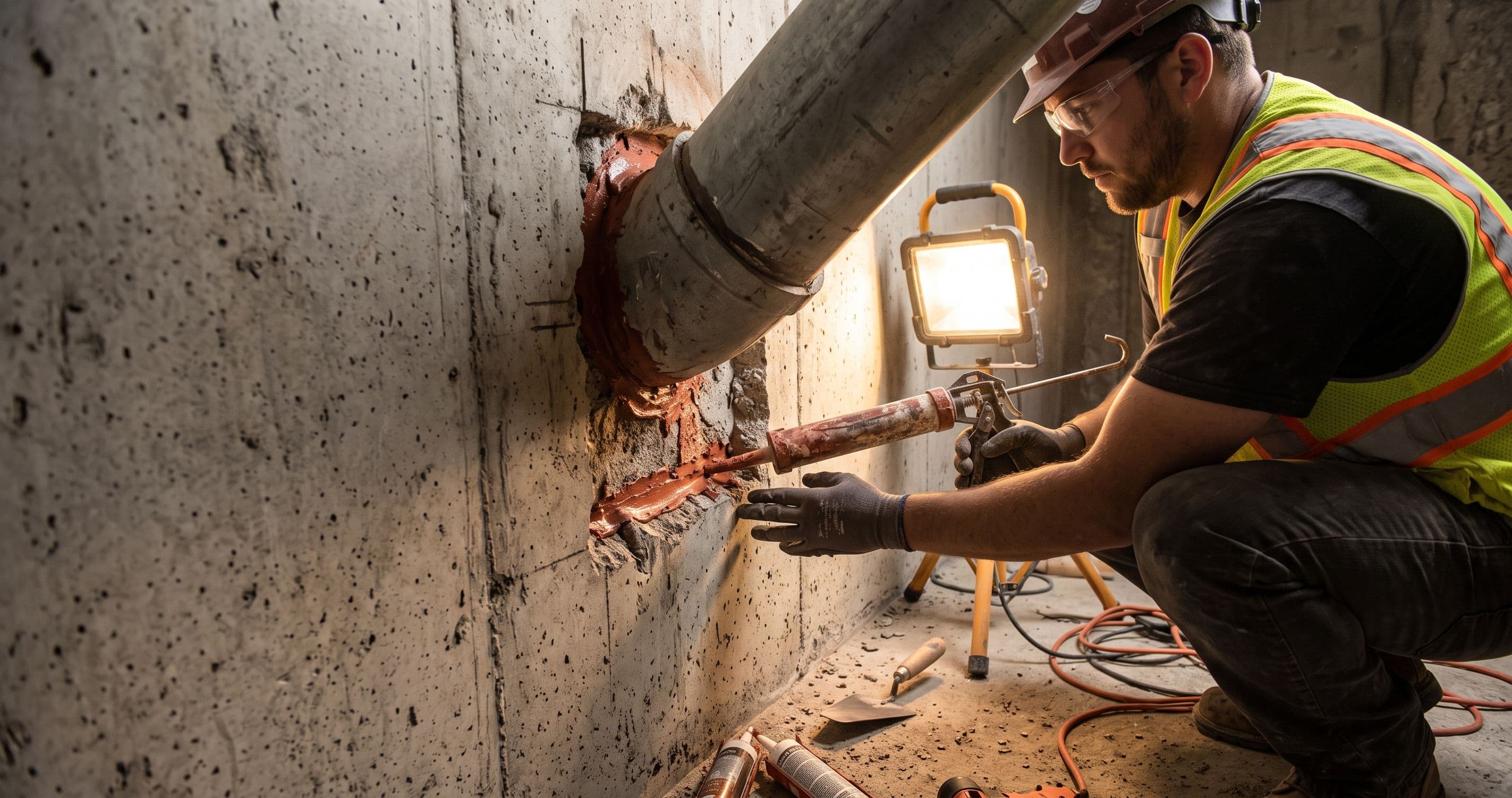
Pipe Penetration Leaks
Sealing the annular space where a pipe passes through a wall, floor, or slab, without disturbing the pipe itself.
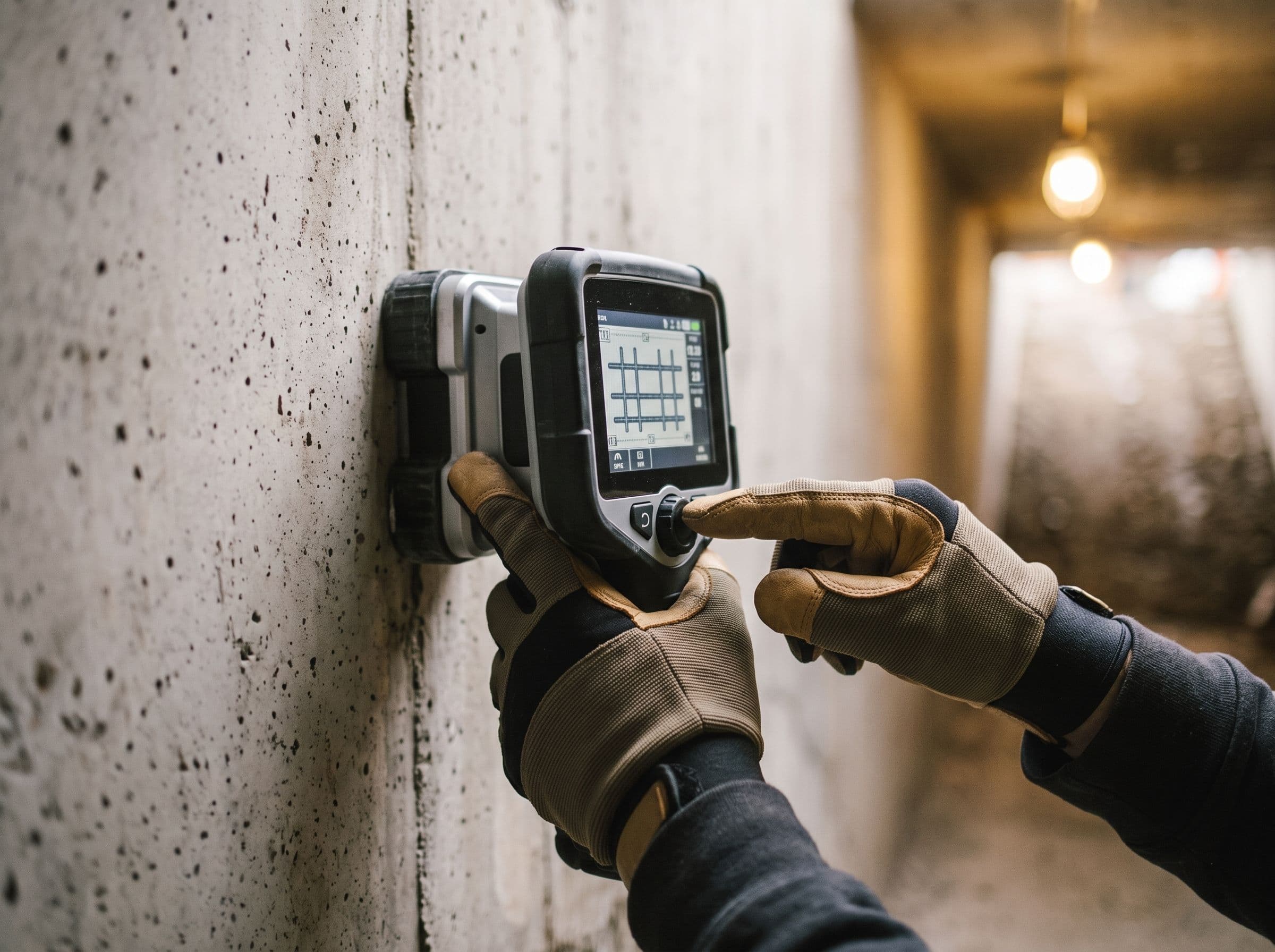
Every repair starts with tracing the actual water path, not guessing at the source.

Investigation: The actual water path is traced first, through inspection, testing, or dive survey where needed, confirming exactly where and how water is getting in before any repair plan is designed.
Planning: The sealing material and injection pattern are matched to the specific setting, a joint, a tunnel, a manhole wall, or a pipe penetration, since each moves, floods, or is accessed differently.
Access: Work is performed from the accessible side wherever possible, through small access points rather than full excavation, keeping the structure or facility in use during the repair.
Start with where the water is tracking. A general wall or floor area with no clear pattern points to Active Water Intrusion. Water following a straight joint line points to Joint Leaks. A leak inside an underground tunnel or vehicular passage points to Tunnel Leaks. Water entering through a manhole structure points to Manhole Infiltration. Water tracking specifically around a pipe passing through a wall points to Pipe Penetration Leaks. Each detail page also includes an "Is This Your Problem?" section to help confirm the right fit.
Not usually. In most cases, it's a seal, whether at a joint, a penetration, or a wall crack, that has aged or failed, not the surrounding concrete or masonry itself. Identifying which one has actually failed is the first step before deciding on a repair.
In most cases, yes. URETEK's injection process is applied from the accessible side, whether that's the interior of a structure, a tunnel, or a manhole, rather than requiring excavation from outside to reach the source.
The choice depends on the setting, the water pressure involved, and how the leak is accessed. A hydrophobic polymer, an acrylate gel, or a chemical grout curtain may each be the right call depending on those specific conditions, not a single default material used everywhere.
Water follows pressure. As the surrounding groundwater level rises, it pushes harder against whatever crack, joint, or gap it's already found, which is why a minor leak often becomes noticeably worse during or after a heavy rain event.
Tell us what you're seeing, and we'll help you find the right fix.
Request an Assessment
URETEK
Ground improvement solutions engineered for performance.
Contact Us
Find Local Experts


13900 Humble Road, Tomball, TX 77375
Services
Solutions

 800-240-7868

