

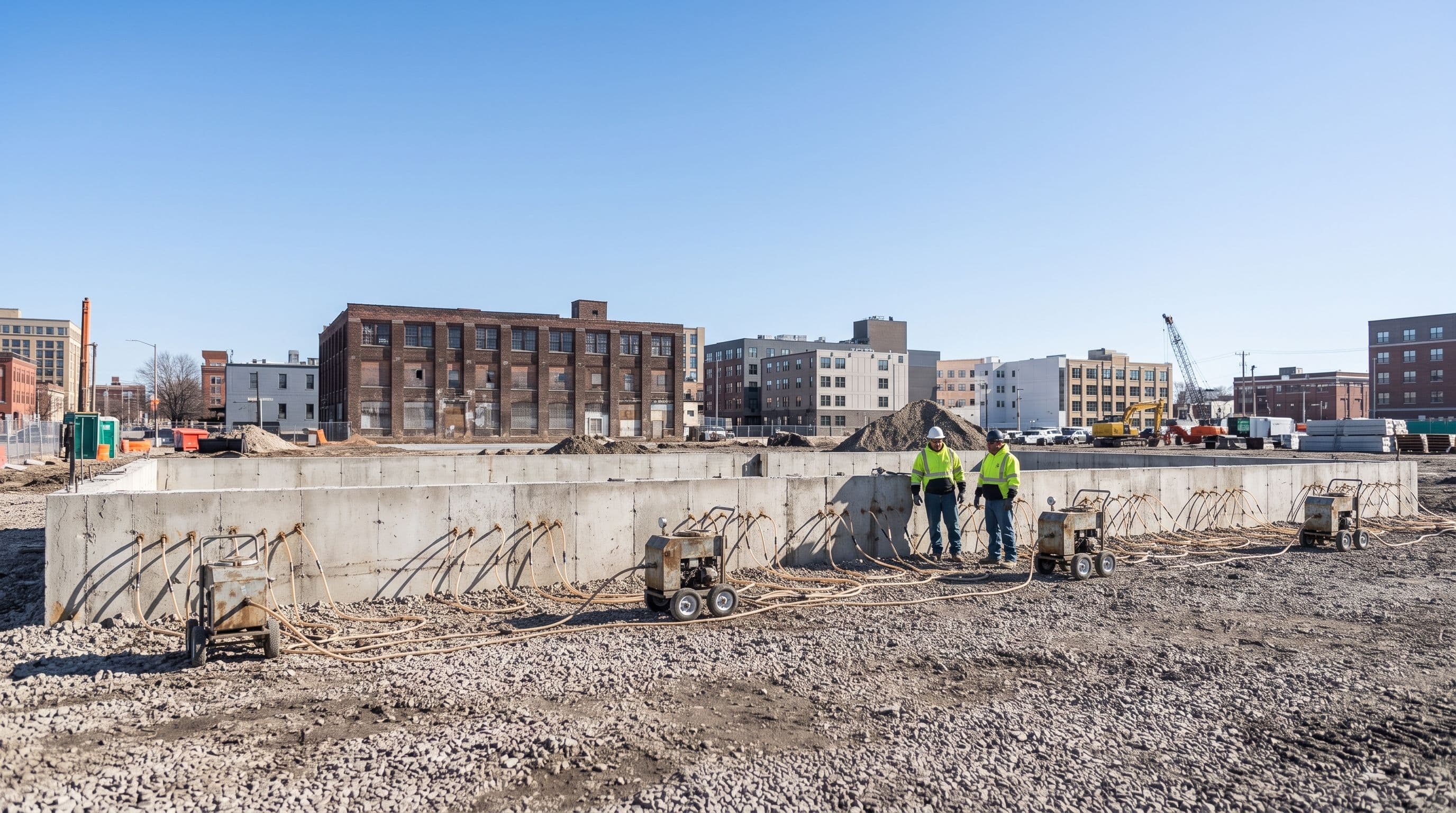
A foundation that has started to settle doesn't stop on its own, and needs support restored at depth, not patched at the surface.
Solutions for this Service
Foundation Stabilization

Settlement Remediation
Infrastructure Settlement Control
Related Industries
Commercial and Institutional
Industrial Facilities
Need a Site Assessment?

800-240-7868

A foundation that has started to settle doesn't stop on its own. The soil beneath it has lost the strength it once had, and the structure above needs that strength restored at depth, not patched at the surface. Structural Underpinning reinforces and densifies weak soil beneath an existing foundation through polymer injection, transferring the load to stronger soil below. Engineers, facility owners, and public agencies use it when a foundation is settling and needs support restored without taking the structure offline.
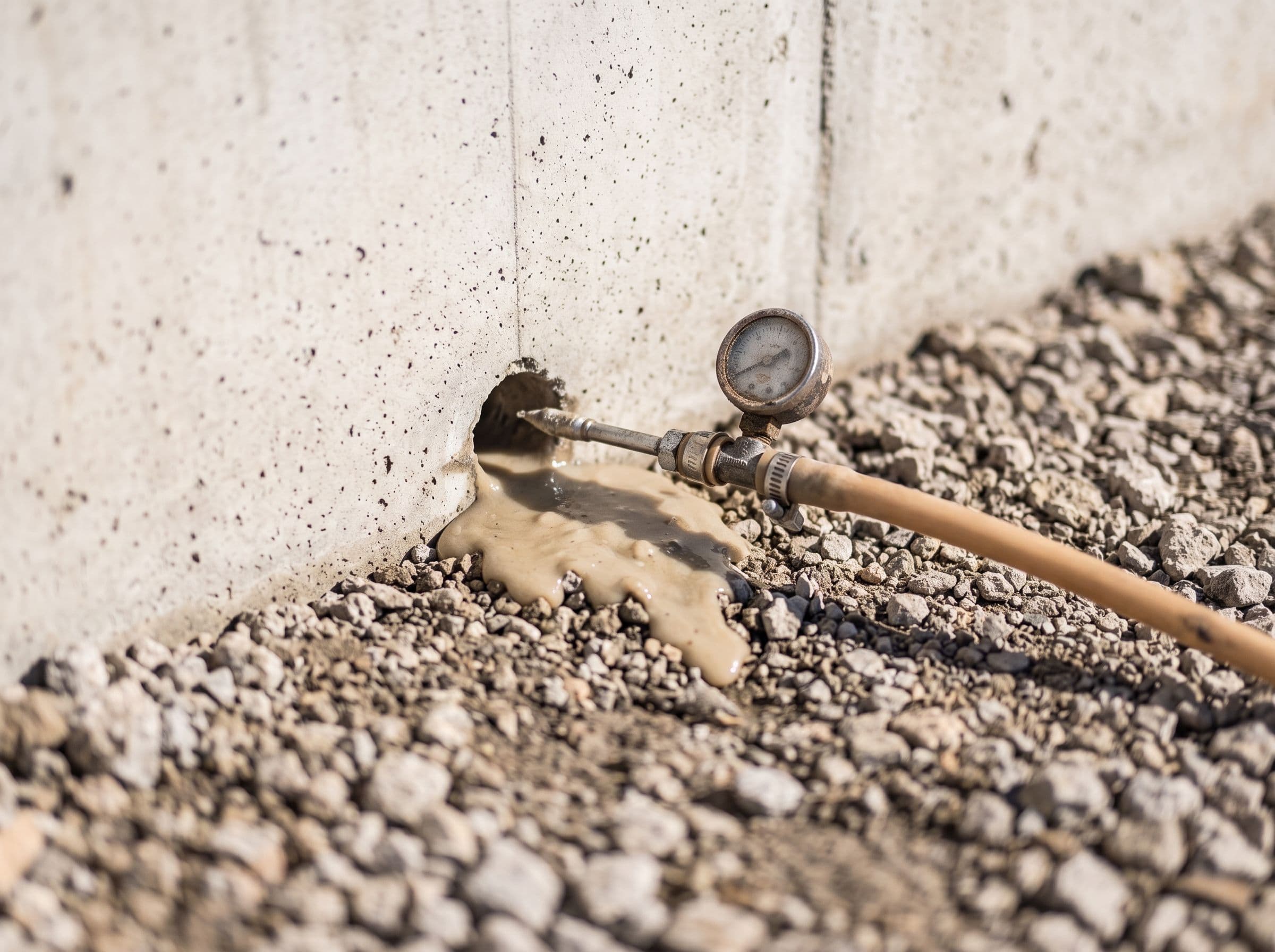
A foundation that's losing bearing capacity won't recover on its own. Here's what that looks like before it becomes a structural failure.

Foundations settling unevenly under heavy or constant loads, such as production floors, tank pads, or storage structures
Existing foundations losing bearing capacity as the soil beneath them weakens, erodes, or shifts over time
Structures next to new excavation, where nearby digging risks disturbing an existing foundation's support
Older or historic foundations that were never built for today's loads, but can't be taken offline for a full rebuild
A foundation losing support usually shows warning signs above ground long before it becomes an emergency.
Stair-step cracks appearing in a foundation wall, especially in block or brick construction
Doors and windows that stick or no longer close square
A visible tilt, dip, or uneven line along a slab, footing, or foundation wall
New construction or excavation planned or underway next to an existing structure
Heavy equipment, tanks, or production floors showing signs of uneven support
A foundation that has been repaired before and has started settling again
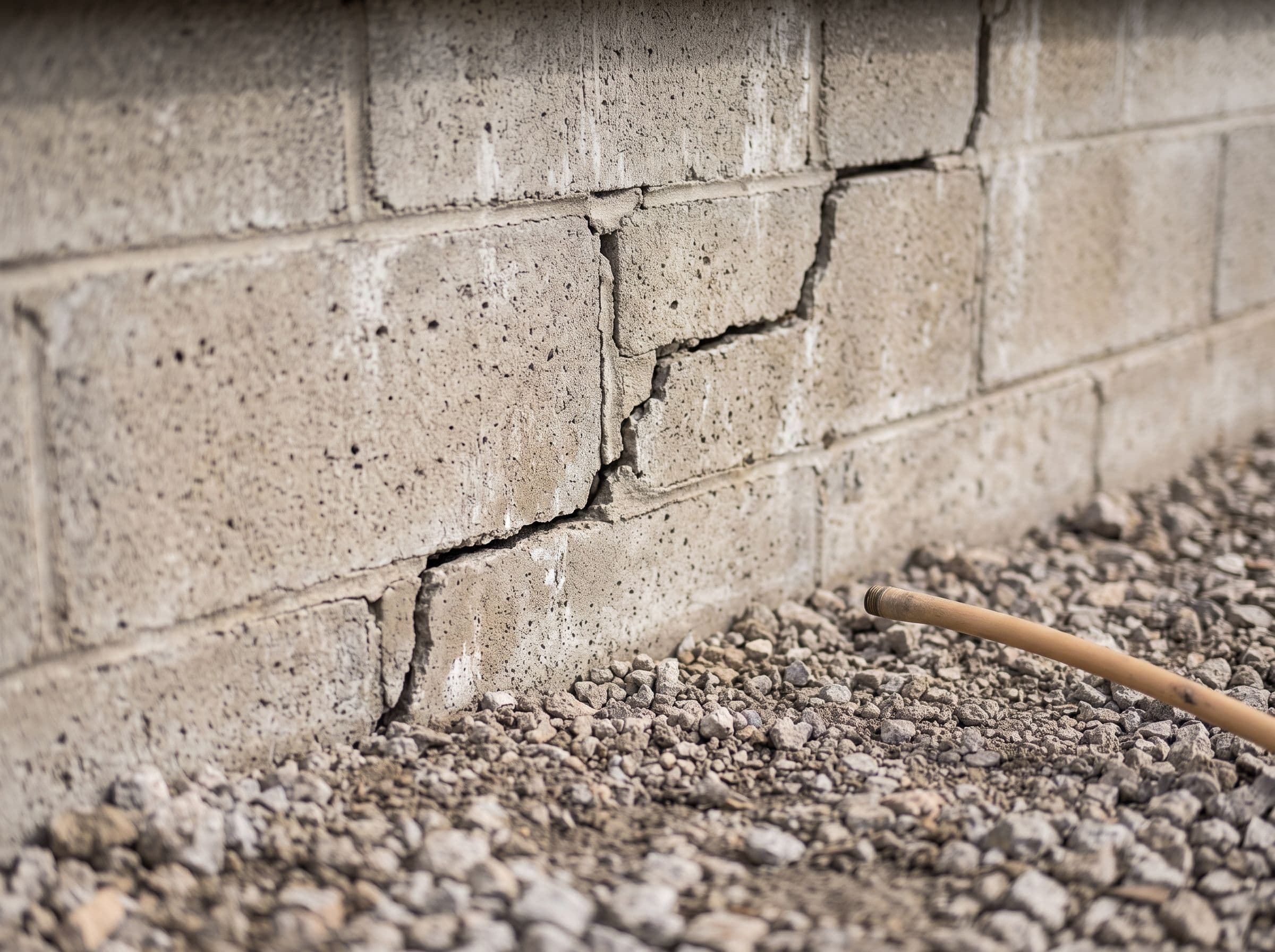
Why engineers and facility owners choose Structural Underpinning to restore bearing capacity without taking a structure offline.
Restores bearing capacity at the source, not just at the surface. URETEK 486 Star polymer is injected beneath the footing to reinforce and densify the weak soil directly, transferring the structure's load down to stronger, more competent soil below.
Reduces the safety risk of open excavation. Because the work is trenchless, crews aren't working inside an open pit next to a loaded structure, which is the main safety hazard in traditional dig-and-underpin repair.
The structure and site stay in use during the work. No excavation and no heavy equipment mean production floors, tank pads, and occupied buildings don't need to shut down for underpinning to happen.
Crews mobilize on the site's schedule, and the polymer cures in minutes, not days. URETEK can deploy nights, weekends, or holidays in a self-contained unit, and 486 Star cures to 99% of its final strength within minutes of injection.
Injection pressure and movement are tracked in real time. As the polymer expands, up to 20 times its original volume, its position and effect are monitored during the work itself, so the fix is confirmed as it happens, not assumed afterward.
Structural Underpinning is the right call when an existing foundation has lost bearing capacity because the soil beneath it has weakened, and the goal is to reinforce that soil at depth without excavating or taking the structure offline. It fits settling foundations under heavy or constant loads, older structures that can't come out of service for a rebuild, and sites where new excavation nearby threatens an existing structure's support.
It isn't the right tool when the actual problem is an open, empty void rather than weak-but-present soil; Void Filling solves that directly. It also isn't the fix for a structure that's already settled unevenly and needs to be brought back level, which is a job for Structural Re-leveling, since underpinning restores support but doesn't by itself correct an existing tilt or dip.
Structural Underpinning is frequently paired with Curtain Grouting on the same project when groundwater is also part of the problem, since sealing the water path and reinforcing the soil address both causes of settlement at once, rather than fixing one and leaving the other to cause the same failure again.
1
Evaluate
A URETEK project manager reviews the foundation's condition and the soil beneath it before proposing a plan, not a salesperson.
2
Deploy
Crews mobilize on the schedule the site needs, including nights, weekends, or holidays, in a self-contained unit.
3
Drill
Small holes are drilled in a pattern designed around the footing and the depth of weak soil beneath it.
4
Inject
URETEK 486 Star polymer is injected beneath the footing, expanding to densify the soil and transfer load to stronger soil below.
5
Monitor
Injection pressure and movement are tracked in real time, so the effect stays controlled and located exactly where the foundation needs it.
6
Validate
A post-treatment inspection confirms restored bearing capacity before the crew leaves the site.
URETEK has reinforced foundations at deep urban excavations, active treatment plants, and industrial sites nationwide, backed by decades of engineering and execution experience.




URETEK 486 Star cures to 99% of its final strength within minutes of injection, so it isn't a slow-setting fix that shifts as it cures. Every job starts with a project manager evaluating the actual soil and foundation conditions, not a standard package sold regardless of what's underground, and Public Works and Federal projects carry a two-year warranty.
URETEK 486 Star expands up to 20 times its original volume once injected, pushing into the weak soil beneath the footing and densifying it into a stiffer zone. That stiffer zone spreads and carries the structure's load down to more competent soil below, rather than leaving it resting on soil that's already lost strength. Pressure and movement are tracked in real time during injection to keep that effect controlled and located exactly where it's needed.
In most cases, yes, mainly because there's no excavation to dig, shore, and backfill, and no heavy equipment mobilization. On a solar field project, URETEK's injectable pile anchor process brought 8 failing pile foundations back into full compliance in weeks rather than the months of downtime a full foundation rebuild would have cost.
Yes. At an active wastewater treatment plant expansion, URETEK's underpinning and grout curtain work held settlement at the adjacent aeration tanks to zero while the plant stayed in operation and the project stayed on schedule.
Yes, and it often is. On several deep excavation projects, including a wastewater plant near Lake Erie, URETEK paired Curtain Grouting with underpinning in the same job, cutting groundwater infiltration by 95% while holding structural settlement to zero at the same time.
Get a foundation evaluated before settlement becomes structural damage. URETEK crews respond fast, including emergencies.
Request a Foundation Assessment
URETEK
Ground improvement solutions engineered for performance.
Contact Us
Find Local Experts


13900 Humble Road, Tomball, TX 77375
Services
Solutions

 800-240-7868


