

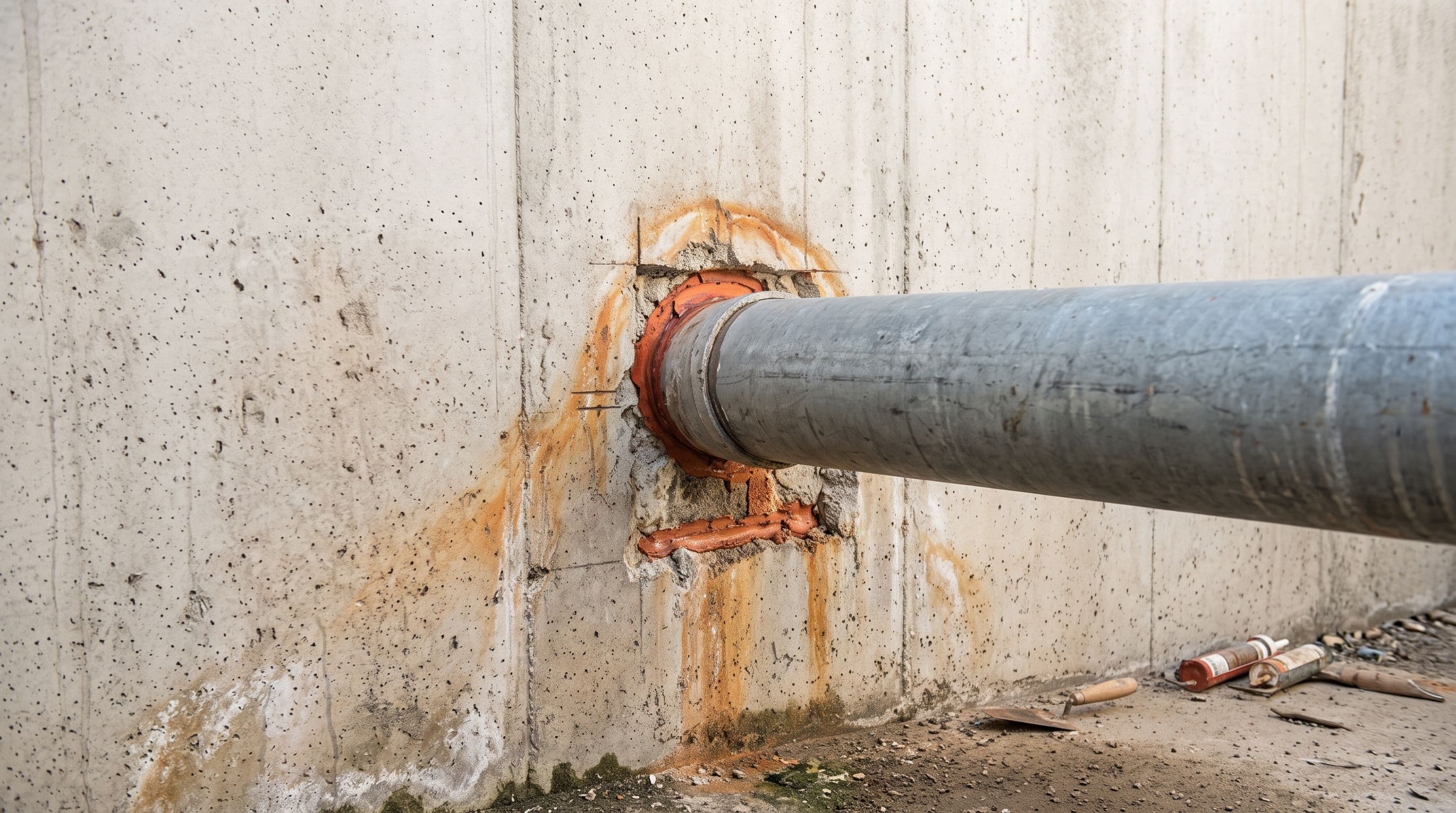
Wherever a pipe passes through a wall, floor, or slab, there's a seal doing the work of keeping water out, and that seal is often the first thing to fail.
Applied in these Services
Structural Leak Sealing

Related Industries
Water and Wastewater
Municipal Infrastructure
Need a Site Assessment?

800-240-7868

Wherever a pipe passes through a wall, floor, or slab, there's a seal doing the work of keeping water out, and that seal is often the first thing to fail. Water tracking specifically around a pipe, not the surrounding wall, usually means the annular space around it has opened up. Pipe Penetration Leaks closes that gap directly, without disturbing the pipe itself. Facility managers, utilities, and public agencies turn to it when a leak is clearly tied to where a pipe passes through a structure.
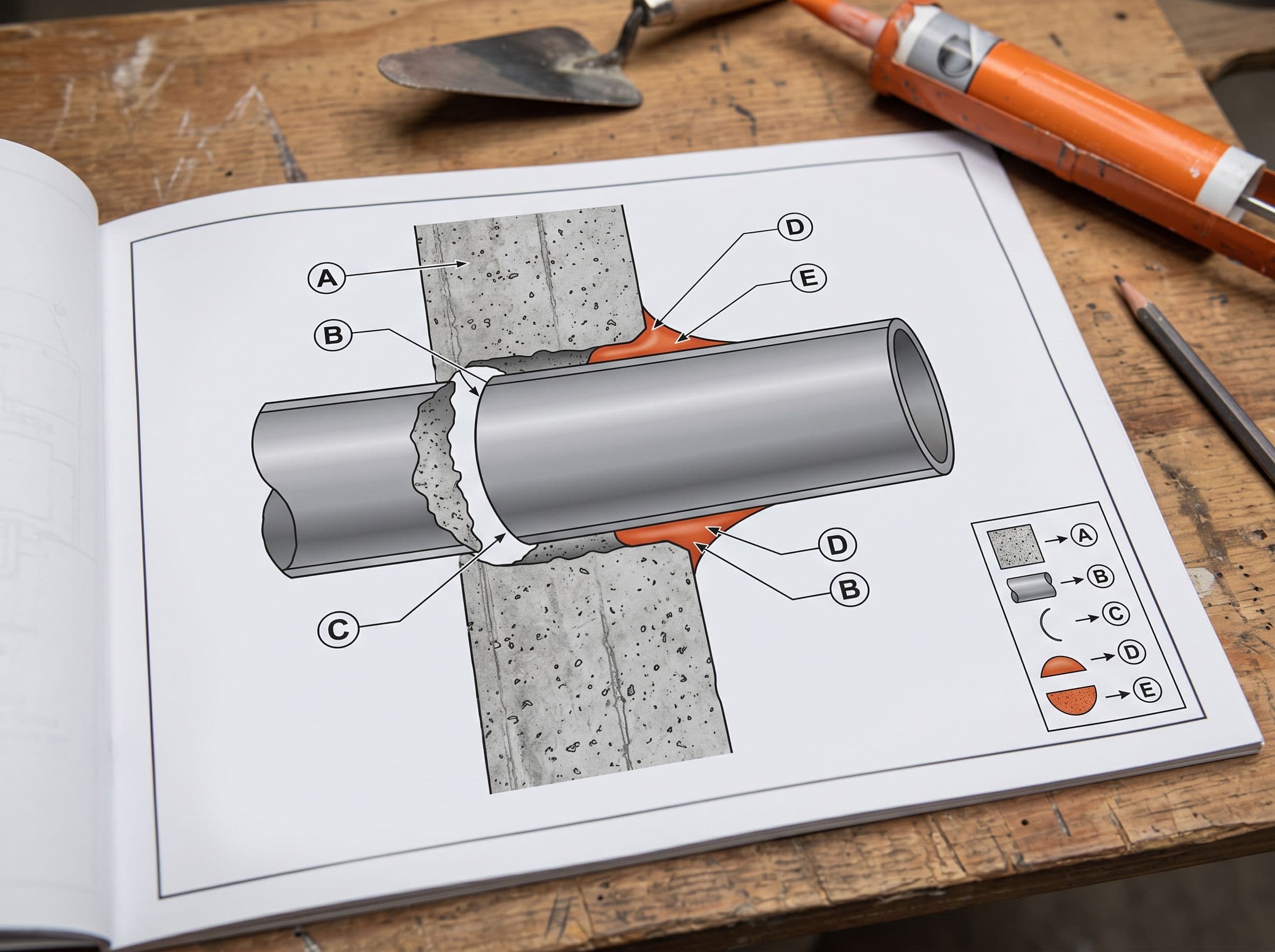
A pipe penetration leak usually traces back to the seal around the pipe, not the pipe itself. Here's what URETEK finds most often.

The seal or sleeve originally installed around the pipe has aged, shrunk, or failed over time
A pipe was replaced or retrofitted without properly resealing the opening it passes through
Ground movement or settlement has shifted the pipe relative to the wall, opening a gap around the penetration
The penetration was never sealed to a watertight standard during original construction
A pipe penetration leak is usually easy to locate once you know to look at the pipe itself. Watch for these.
Water tracking specifically around a pipe where it enters or exits a wall or slab, not the surrounding surface
Staining or mineral deposits forming in a ring pattern around the pipe penetration
A visible gap or annular space around the pipe that was never sealed, or where the seal has clearly failed
Water appearing at a penetration only after a nearby pipe was repaired, replaced, or retrofitted
A previous seal or sealant around the penetration that has cracked, shrunk, or come loose
Water increasing at a specific penetration point after heavy rain or a rise in the surrounding water table
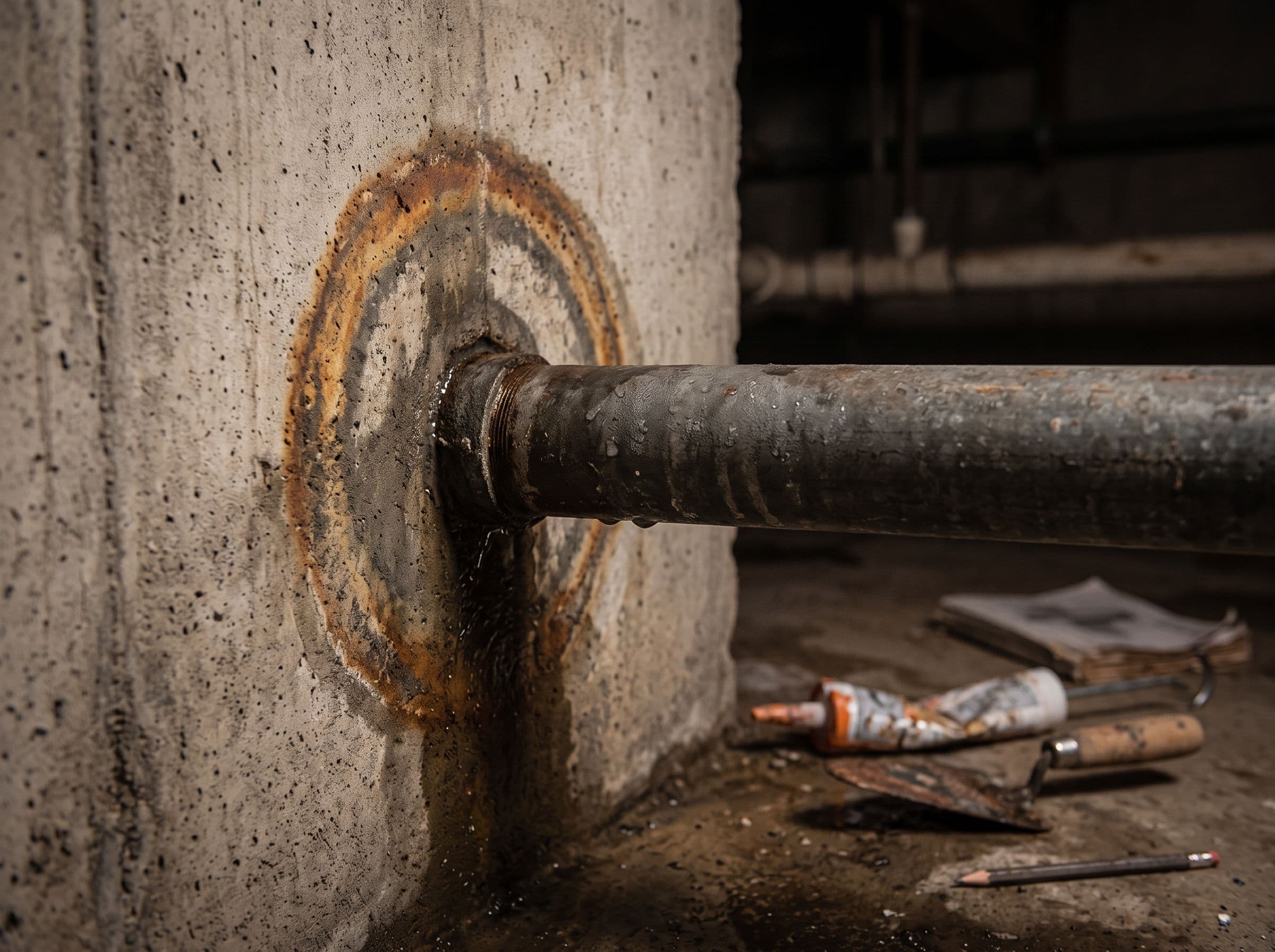
This is the right page when water is tracking specifically around the point where a pipe passes through a wall, floor, or slab.
It's not the best fit in every case. Check these first:
 The water is at a structural joint, not a pipe? See Joint Leaks.The leak is inside a tunnel or underground passage? See Tunnel Leaks.The water is coming in through a manhole? See Manhole Infiltration.The problem is a general wall or floor area, not tied to a specific pipe? See Active Water Intrusion.
A pipe penetration leak sometimes appears alongside broader water intrusion nearby. If more than one entry point is suspected, Active Water Intrusion is worth reviewing too.
What sealing a pipe penetration at its actual source, instead of caulking the visible gap, actually gets you.
Seals the specific annular space around the pipe, closing the exact path water is using instead of a broad-area treatment
Reduces the risk of the leak eroding soil around the pipe, which can eventually undermine the pipe's support or the surrounding structure
Avoids excavation. A sewer line project in Grosse Pointe Farms, Michigan, was sealed from the accessible side without digging up the pipe from outside
Measured in hours, not days. The Grosse Pointe Farms project was completed in six hours from start to finish
Sealing material is injected directly into the annular space around the pipe from the accessible side, closing the gap without disturbing the pipe itself
Structural Leak Sealing, the Service, performs this fix directly, applied specifically to the gap around a pipe penetration
URETEK's general approach drills small access holes near the pipe penetration, not through the pipe itself, and injects sealing material directly into the gap around it. This closes the path water is actually using without removing, replacing, or disturbing the pipe.
This is exactly what the Structural Leak Sealing service does, applied specifically to a pipe penetration. It's different from Joint Leaks' focus on a structural joint, and different from Manhole Infiltration's focus on the manhole structure as a whole.
URETEK has sealed pipe penetration leaks for sewer, water main, and utility systems nationwide, without disturbing the pipe itself.





On a sewer line project in Grosse Pointe Farms, Michigan, technicians drilled small, 5/8-inch, holes through the concrete wall to seal the actual infiltration path, not just caulk over the visible gap. The site is evaluated first to confirm exactly where and why the seal failed.
Access holes are drilled near the penetration, not through the pipe, and sealing material is injected into the annular space around the pipe from the accessible side. The pipe itself isn't disturbed or drilled into.
In most cases, yes. The Grosse Pointe Farms sewer line project was completed in just six hours, sealing the infiltration path without excavating around the pipe from outside.
In most cases, yes. When a burst water pipe caused soil settlement under a departure slab at DFW International Airport, URETEK's overnight repair made the area safe for traffic by 7:00 a.m., avoiding an extended closure.
No. Often it's the seal around the pipe that has failed, not the pipe itself. The annular space is inspected first to confirm whether the seal or the pipe is actually the source before deciding on a repair.
Get the penetration sealed at the source, without disturbing the pipe itself.
Request a Pipe Penetration Assessment
URETEK
Ground improvement solutions engineered for performance.
Contact Us
Find Local Experts


13900 Humble Road, Tomball, TX 77375
Services
Solutions

 800-240-7868


