

Solutions
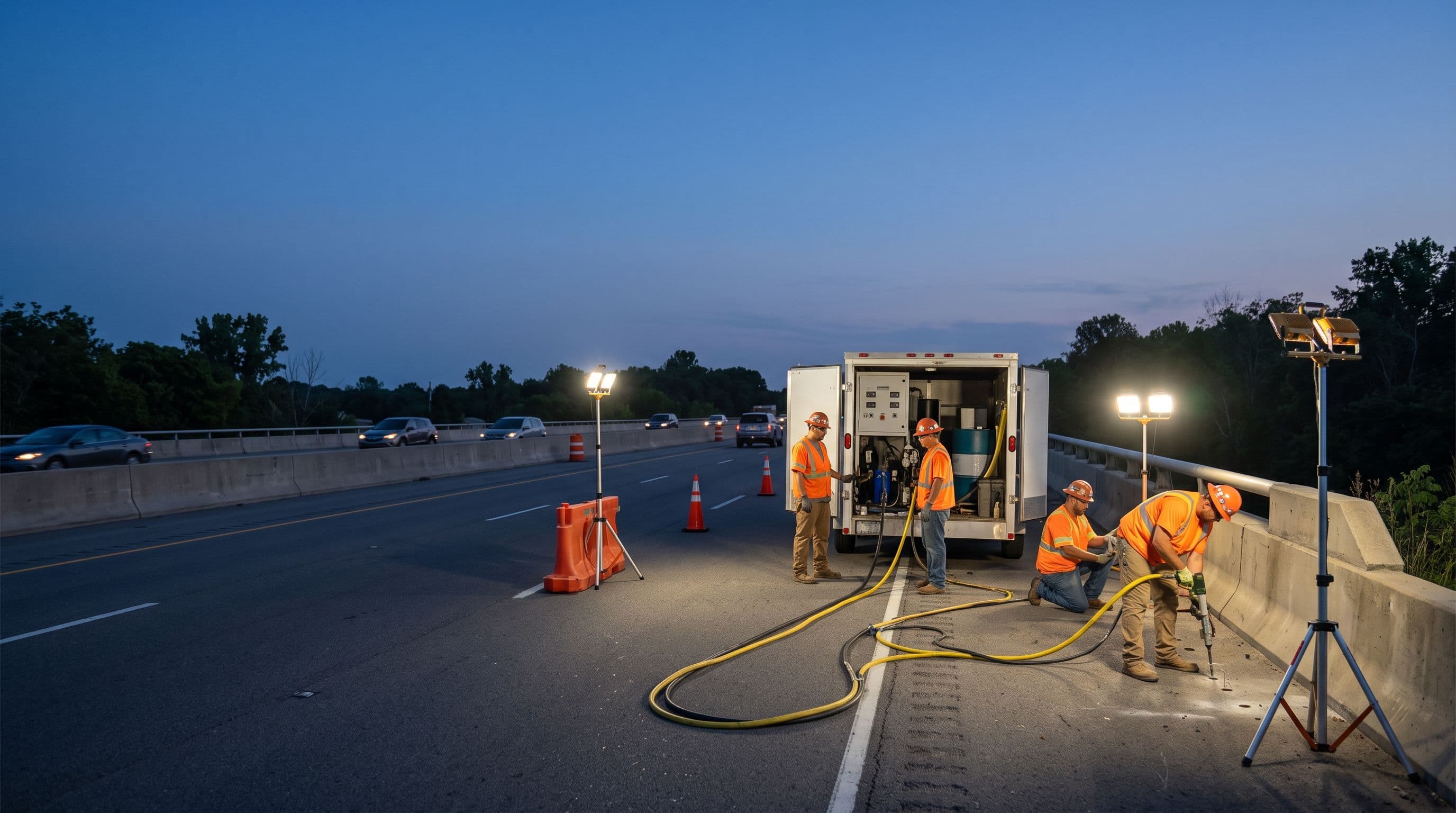
Roads, bridges, rail lines, and marine structures all settle for familiar reasons, weak soil, water erosion, decades of heavy load, but the fix has to work around traffic, schedules, and public safety in a way a private repair doesn't. This category covers four specific settings, a bridge transition, a rail line, an open roadway, and a marine structure, each engineered around the access constraints and traffic demands that come with public infrastructure.
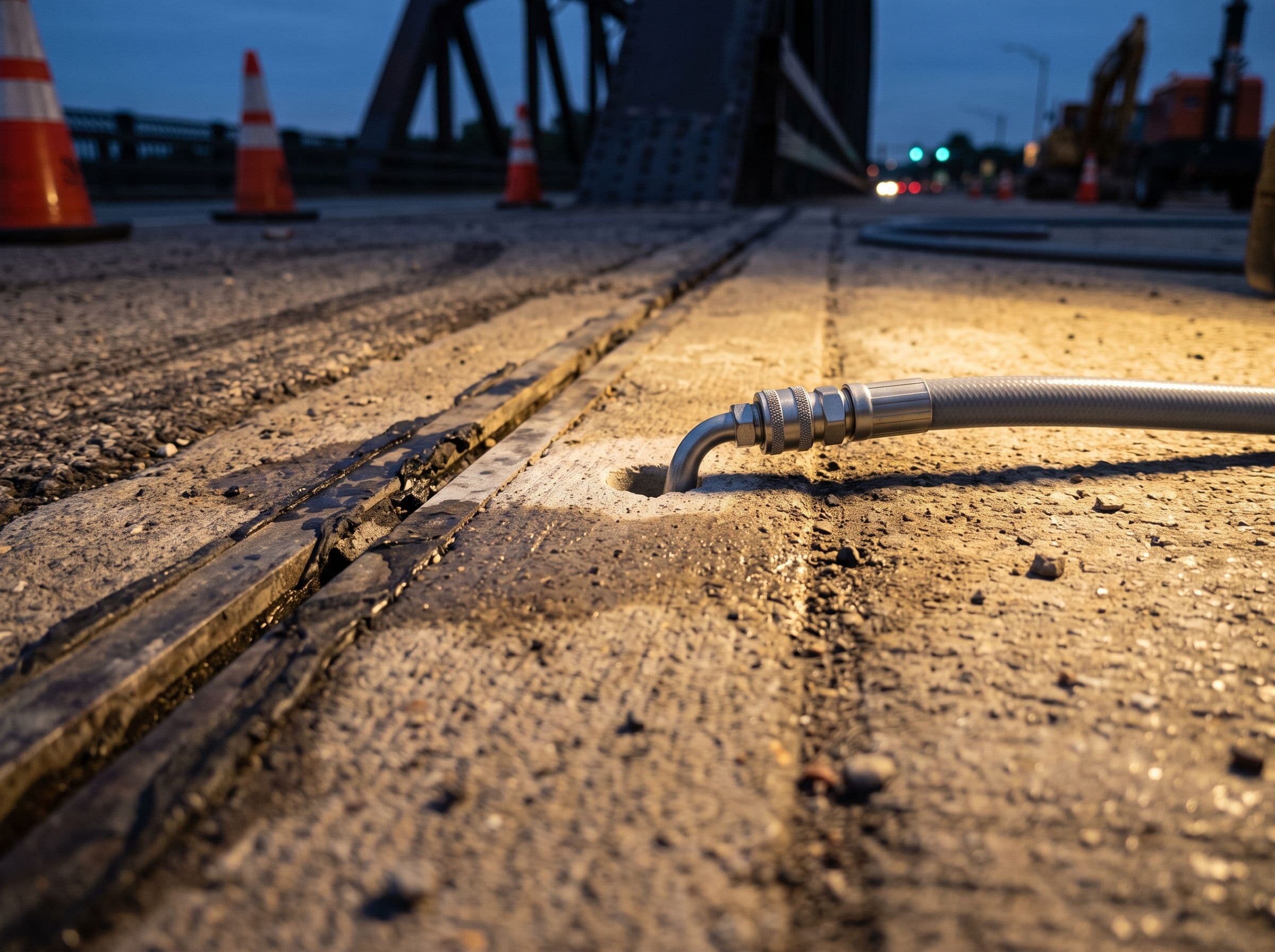
Bridge Approach Settlement
Lifting a settled bridge approach slab back to grade and stabilizing the soil beneath it, closing the gap between the roadway and the bridge structure.
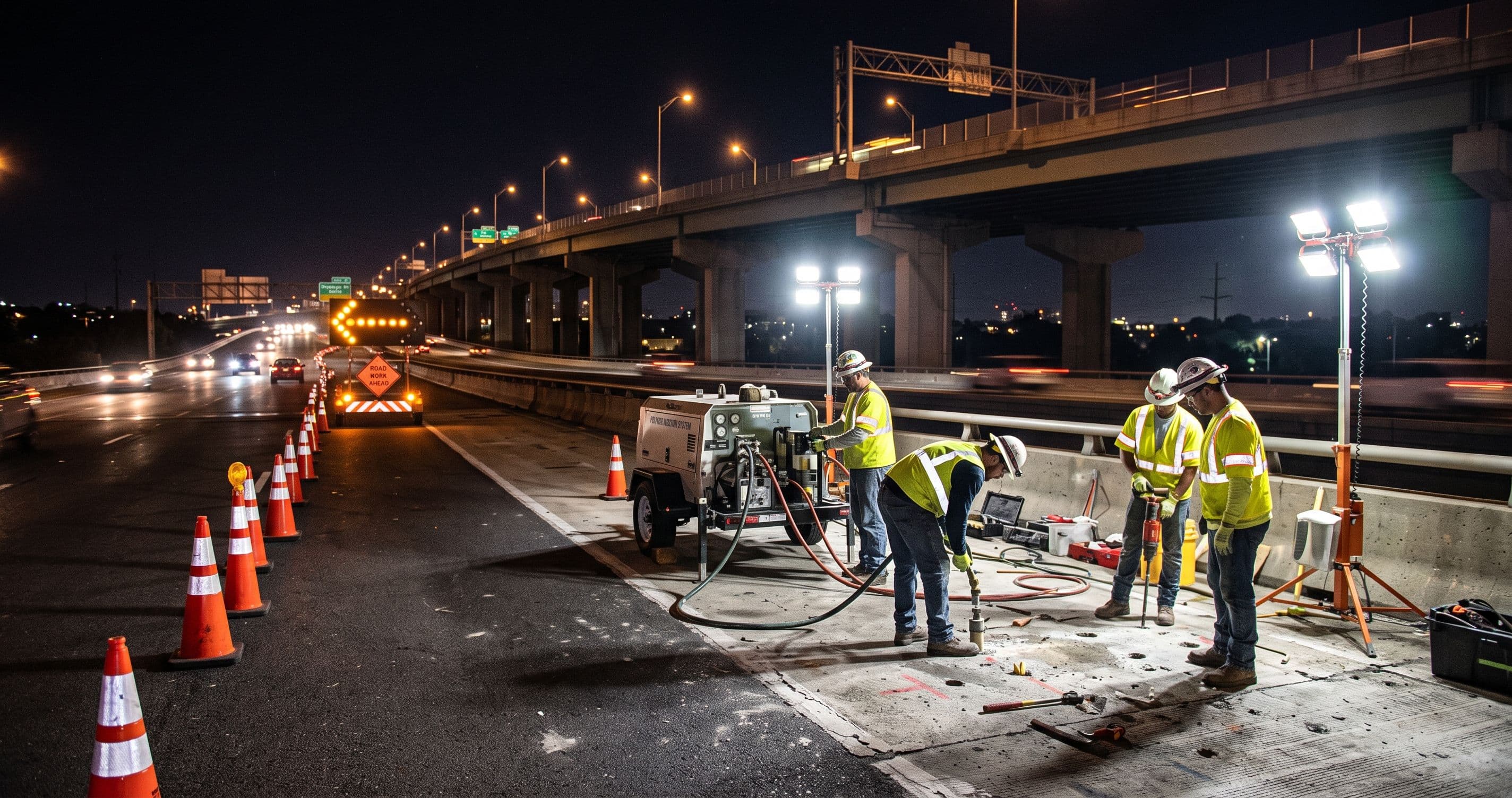
Pavement Settlement
Lifting settled roadway pavement back to grade and stabilizing the subgrade soil beneath it, without full excavation or reconstruction.

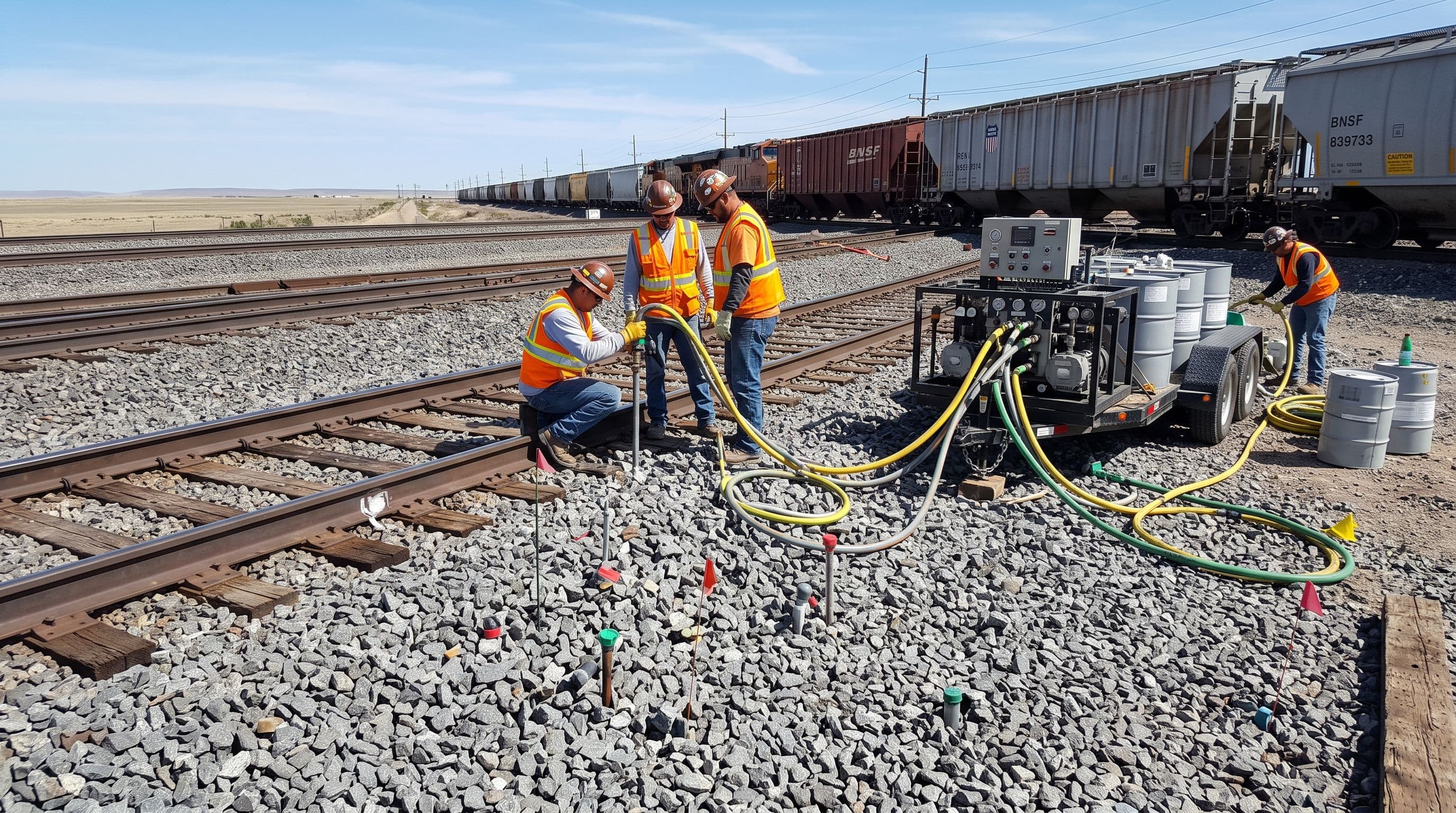
Rail Subgrade Stabilization
Increasing the density and stiffness of subgrade soil beneath an active rail line, without removing the track structure.
Every plan is engineered around public infrastructure's own constraints, not a standard approach applied regardless of setting.

Investigation: Pavement, subgrade, and structural conditions are evaluated through inspection and testing specific to the setting, a bridge transition, a rail line, an open roadway, or a marine structure, before any repair plan is designed.
Planning: Injection design and sequencing are engineered around public infrastructure's specific constraints, traffic volume, scheduled closure windows, tidal conditions, or a facility's operating hours.
Access: Small-diameter injection points are installed with minimal disruption to traffic or operations, often completed during overnight shifts or scheduled closures rather than requiring an extended shutdown.
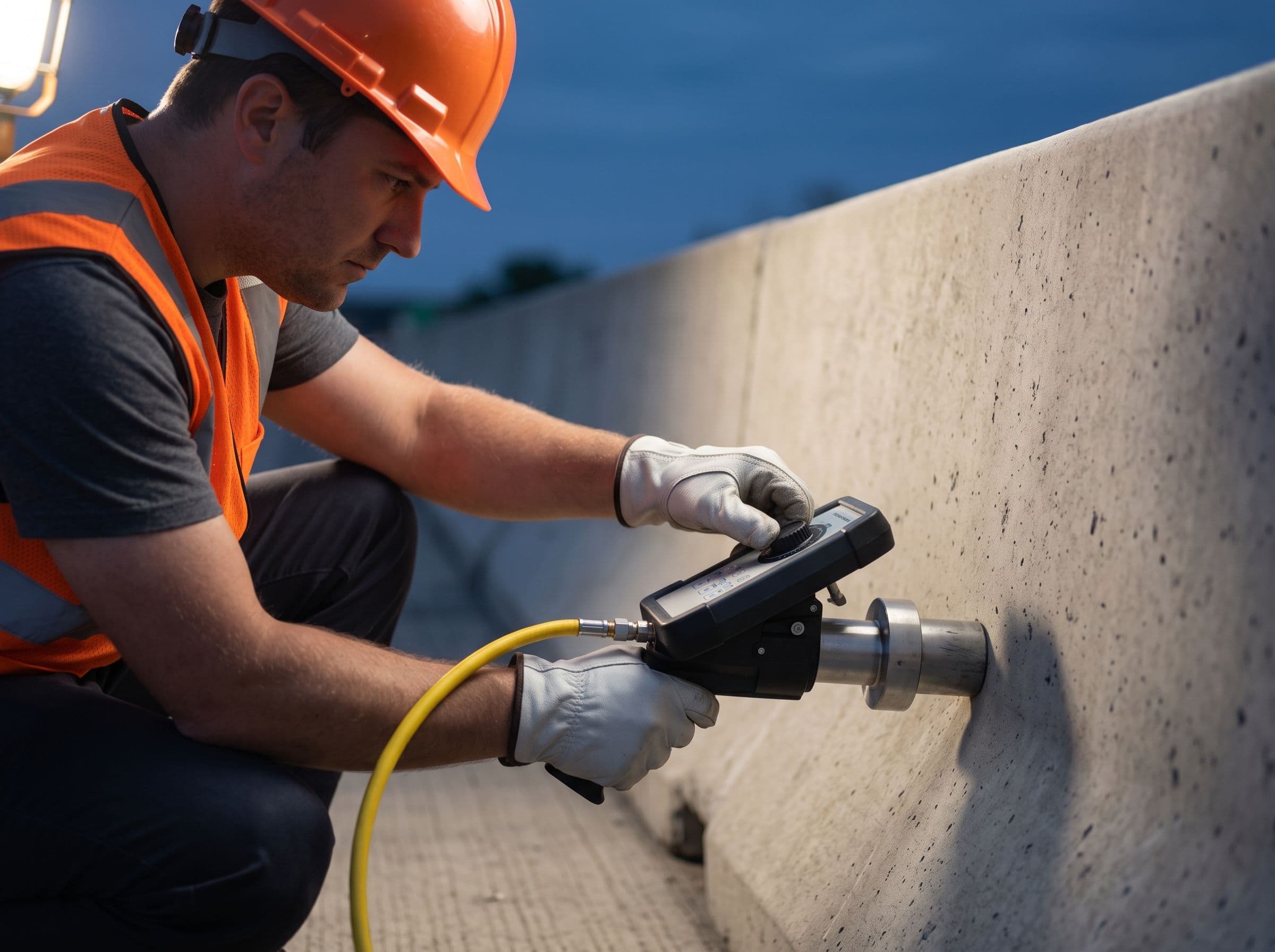
It comes down to where the infrastructure issue is. Settlement specifically at the transition where a road meets a bridge points to Bridge Approach Settlement. Settlement beneath an active rail line points to Rail Subgrade Stabilization. Settlement on an open stretch of roadway points to Pavement Settlement. An issue with a seawall, bulkhead, or other marine structure points to Marine Structure Stabilization. Each detail page also includes an "Is This Your Problem?" section to help confirm the right fit.
In most cases, yes. Several projects in this category, including a bridge approach repair completed in seven overnight shifts and a pavement fatigue repair finished in under six hours, were specifically scheduled to minimize impact on traffic or public operations.
The Highway US-50 project in Nevada was completed over three days in 15°F temperatures and high winds, and multiple projects in this category have been completed in remote or difficult-access locations. The process is engineered around site conditions rather than requiring ideal weather.
Most projects in this category are contracted directly with departments of transportation, port authorities, or municipal agencies, since the infrastructure involved, roads, bridges, rail lines, and marine structures, is usually publicly owned.
The underlying mechanism, expanding polymer injection to strengthen soil and lift settled pavement or structures, is consistent, but the specific injection pattern, depth, and scheduling are engineered around each setting's own constraints, a bridge transition behaves differently than a rail line or a seawall exposed to tidal action.
Tell us what you're seeing, and we'll help you find the right fix.
Request an Assessment
URETEK
Ground improvement solutions engineered for performance.
Contact Us
Find Local Experts


13900 Humble Road, Tomball, TX 77375
Services
Solutions

 800-240-7868

