

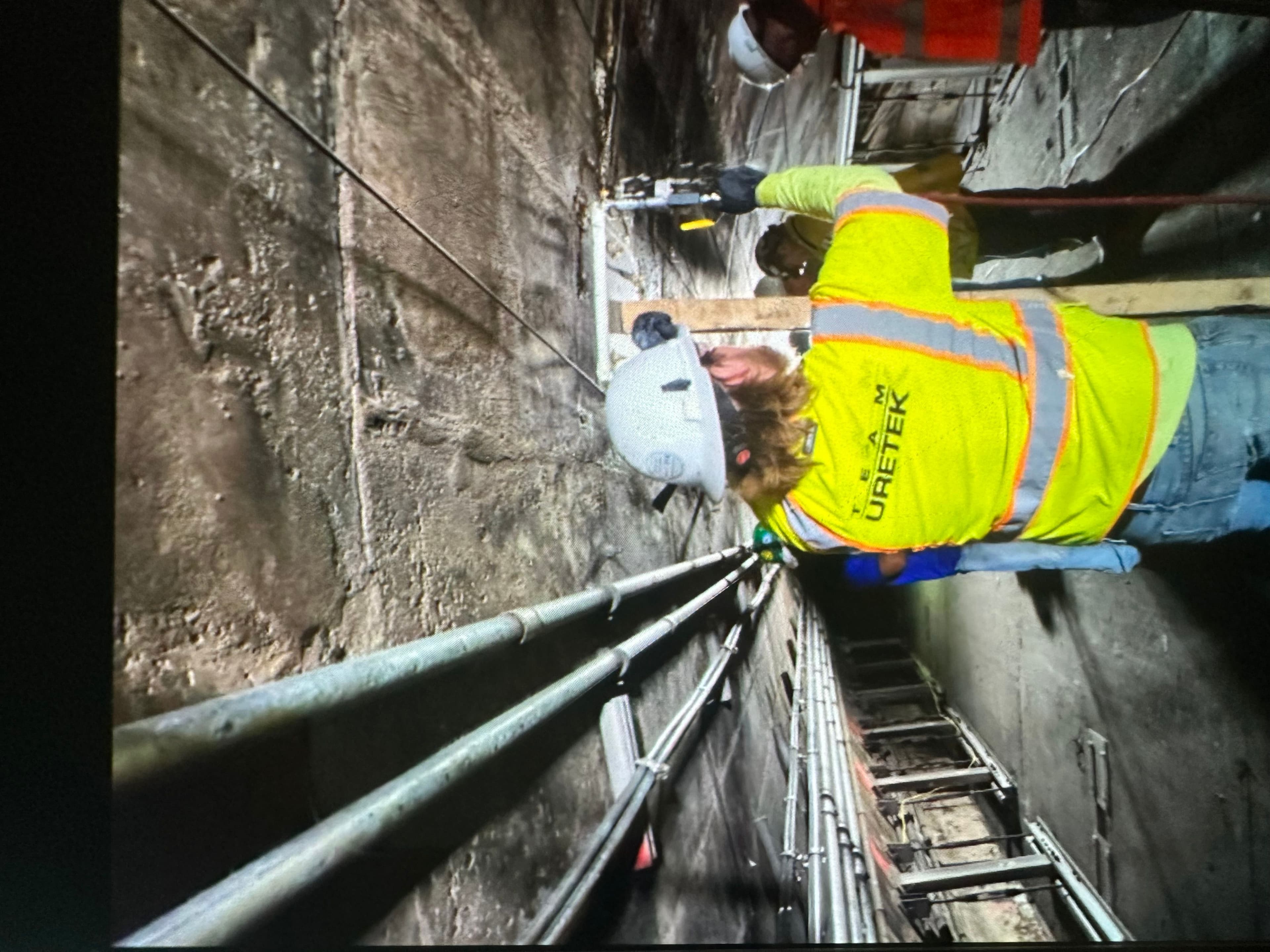
A tunnel only has one side you can reach, the inside, which makes a leak there a different kind of problem than one in a building or a culvert.
Applied in these Services
Joint Sealing

Chemical Curtain Grouting
Related Industries
Transportation
Municipal Infrastructure
Need a Site Assessment?

800-240-7868

A tunnel only has one side you can reach, the inside, which makes a leak there a different kind of problem than one in a building or a culvert. Water finding its way through a liner, joint, or crack usually means groundwater or a nearby waterway is pushing against the structure from outside, with nowhere else to go but in. Tunnel Leaks seals that path from the interior, during a scheduled closure window. Transportation departments, airport authorities, and tunnel operators turn to it when a leak needs to be stopped without an extended shutdown.
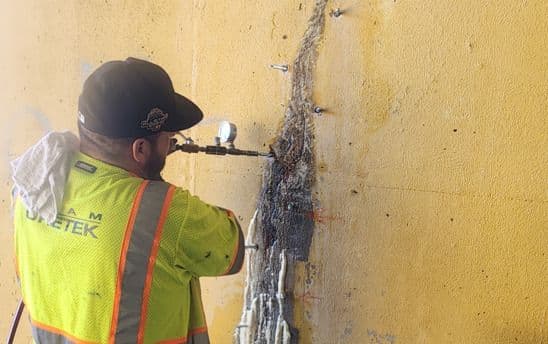
A tunnel sits below the water table or beside a waterway by design, which is exactly why it's exposed to constant outside pressure. Here's what typically lets water in.

The tunnel liner's original waterproofing membrane or joint seal has aged or failed after years of constant exposure
Legacy expansion joints in an older tunnel were never built to modern water-cutoff standards
Hydrostatic pressure from surrounding groundwater or an adjacent waterway pushing water through any available crack or joint in the liner
Nearby drilling, excavation, or construction work accidentally breaching the tunnel lining or disturbing the soil around it
Tunnel leaks are usually easy to spot, but confirming the pattern helps before scheduling a closure. Watch for these.
Water actively dripping or seeping from the tunnel ceiling, walls, or a specific joint
Staining or mineral deposits tracking along a joint or crack in the liner
Water appearing worse during high tide, after rain, or when a nearby waterway rises
Icing or standing water forming inside the tunnel during colder months
A previous joint or liner repair that has started leaking again
Maintenance crews or inspectors reporting the same wet section during routine tunnel inspection
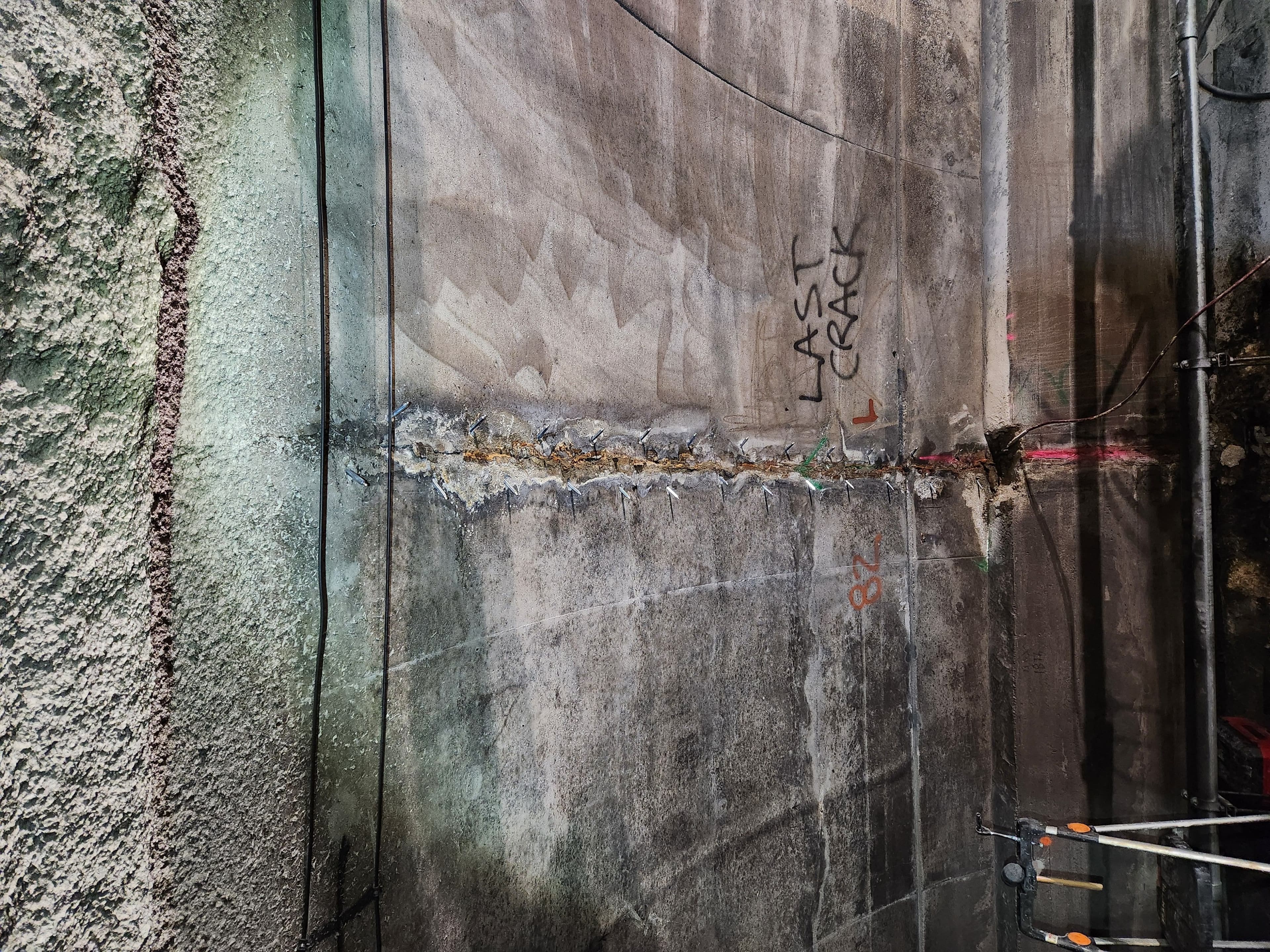
This is the right page when water is actively getting into an underground tunnel or vehicular passage, whether from the liner, a joint, or general hydrostatic pressure.
It's not the best fit in every case. Check these first:
 The leaking joint isn't in a tunnel setting, more of a bridge, culvert, or building? See Joint Leaks.The water is coming in through a manhole or maintenance structure? See Manhole Infiltration.The problem is a general below-grade wall or floor, not a tunnel? See Active Water Intrusion.The entry point is specifically where a pipe passes through a wall? See Pipe Penetration Leaks.
If the tunnel leak is narrowly confined to a single expansion joint, Joint Leaks is worth checking too, since the fix can overlap.
What sealing a tunnel leak from the inside, on a real closure schedule, actually gets you.
Addresses the full wet section of the tunnel, not just the first visible drip, so the fix doesn't need to be revisited a section at a time
Reduces the safety risk of water undermining the tunnel structure or freezing on the roadway or track surface inside
Fits within a scheduled closure window. On a major urban vehicular tunnel project, the tunnel returned to full service on schedule both mornings
Measured in shifts, not days. The same project arrested active leaks at every treated location within a two-shift closure window
Positive-side hydrophobic polymer or acrylate gel is injected directly at the crack or joint from inside the tunnel, sealing the water path without accessing the tunnel from the surface above
Joint Sealing and Chemical Curtain Grouting, the Services, perform this fix directly, chosen based on whether the leak is confined to one joint or spread across more of the liner
URETEK's general approach works entirely from inside the tunnel, during a scheduled overnight or off-hours closure window. Crews inject hydrophobic polymer or acrylate gel directly at the leaking joint or crack, arresting the leak without accessing the tunnel from the surface above.
This is exactly what Joint Sealing and Chemical Curtain Grouting do inside a tunnel setting. Joint Sealing targets one specific leaking joint, while Chemical Curtain Grouting is used when a broader barrier is needed across more of the liner.
URETEK has sealed active water ingress in vehicular and airfield tunnels nationwide, working entirely within scheduled closure windows.




On a major urban vehicular tunnel project, active leaks were arrested at every treated location within a two-shift closure window, with full QA/QC documentation delivered. The injection material is matched to the specific water pressure and crack condition, not applied as a generic patch.
Each treated location is verified individually before the closure window ends. On the same vehicular tunnel project, leaks were confirmed arrested at all treated locations, with the tunnel returned to full service on schedule both mornings.
In most cases, yes, since there's no surface excavation, no disruption to whatever is above the tunnel, and no restoration work once the seal is complete. The fix is applied entirely from the tunnel's interior.
Yes. On a major urban vehicular tunnel project, the work was completed within a two-shift closure window, and the tunnel returned to full service on schedule both mornings.
The same interior injection approach applies regardless of cause. When third-party drilling accidentally breached a tunnel lining and created active water inflow, URETEK's emergency response eliminated the inflow within a two-shift access window with zero safety incidents.
Get the leak sealed from inside, on a schedule that keeps the tunnel open.
Request a Tunnel Leak Assessment
URETEK
Ground improvement solutions engineered for performance.
Contact Us
Find Local Experts


13900 Humble Road, Tomball, TX 77375
Services
Solutions

 800-240-7868


