

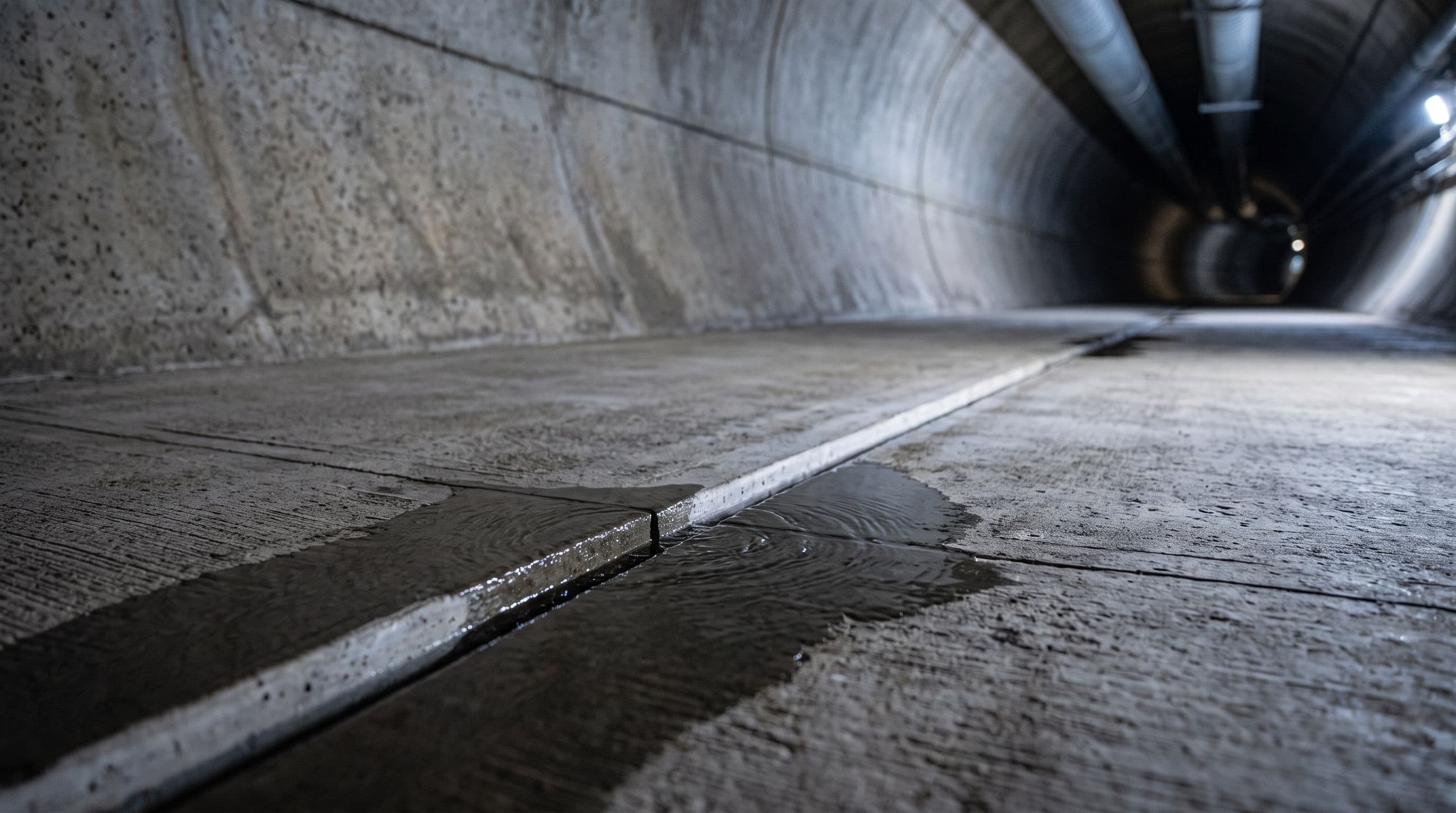
An expansion joint or a seam where two sections of concrete meet is only as watertight as the seal inside it, and once that seal fails, water follows the joint itself.
Applied in these Services
Joint Sealing

Related Industries
Transportation
Municipal Infrastructure
Need a Site Assessment?

800-240-7868

An expansion joint, a construction joint, a seam where two sections of concrete meet, these are built to allow movement, and that means they're only as watertight as the seal inside them. Once that seal fails, water follows the joint itself rather than the surrounding concrete. Joint Leaks seals the joint directly from the accessible side, without replacing it. Engineers, facility managers, and public agencies turn to it when a specific joint, not the surrounding structure, is where water is getting in.
Joints are designed to move, which is exactly why they're vulnerable. Here's what typically causes a joint to start leaking.

The original sealant or gasket material inside the joint has aged, shrunk, or degraded over time
Repeated expansion and contraction, from temperature changes or structural movement, has widened or damaged the joint over years of use
The joint was never sealed correctly during original construction, leaving a gap that water eventually finds
Nearby settlement or structural movement has shifted the joint out of its original alignment, opening a new path for water
A joint leak is usually easy to locate once you know where to look. Watch for these.
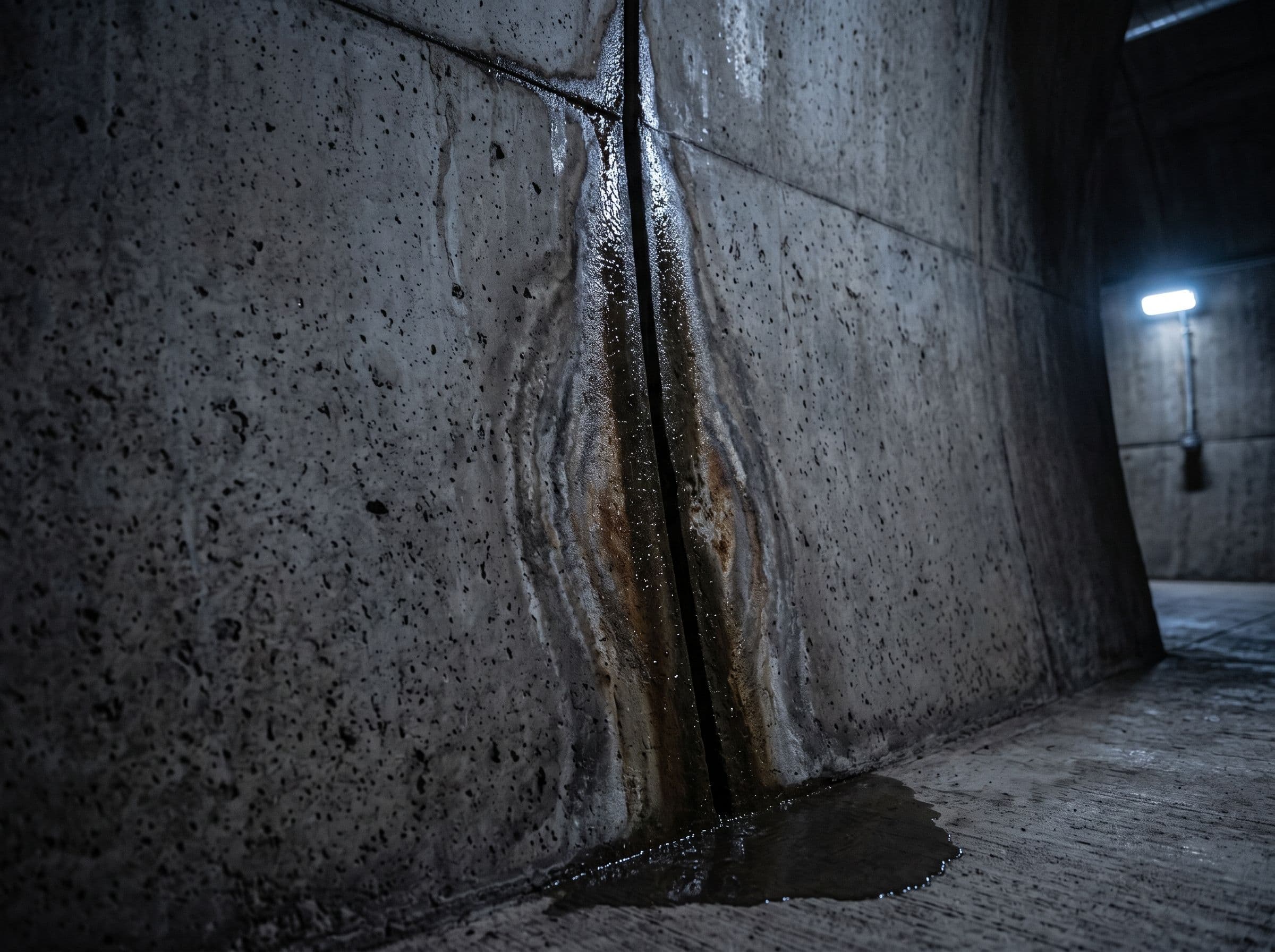
Water tracking specifically along a straight joint line, rather than appearing across a broad area
Staining or mineral deposits following the joint's exact path
A joint that visibly appears open, cracked, or missing its original sealant
Water appearing worse after rain or when a nearby water table rises
A joint that has been patched before and has started leaking again in the same spot
Water appearing at a joint specifically where two different pours, sections, or materials meet
This is the right page when the water is tracking specifically along a joint, expansion, construction, or masonry, rather than through a general wall or floor area.
It's not the best fit in every case. Check these first:
 The water isn't following a specific joint line, more of a general wall or floor area? See Active Water Intrusion.The leak is inside a tunnel or underground passage specifically? See Tunnel Leaks.The water is coming in through a manhole or maintenance structure? See Manhole Infiltration.The entry point is specifically where a pipe passes through a wall? See Pipe Penetration Leaks.
A leaking joint sometimes points to a forming void behind it, where water has already begun washing soil away. Worth checking Void Formation and Soil Loss too.
What sealing a joint the right way, instead of patching around it, actually gets you.
Seals the joint's actual movement path, instead of applying a surface patch that cracks again the next time the joint moves
Reduces the safety and structural risk of water tracking along a joint and eroding the soil or concrete behind it over time
Keeps the structure in service. A canal box culvert joint was sealed using interior access only, meeting the project schedule without taking the culvert out of service
Verified against a defined standard, not just visually inspected. The CVG Airfield tunnel expansion joint project sealed 60 linear feet against a pass/fail acceptance criteria, achieving zero seepage
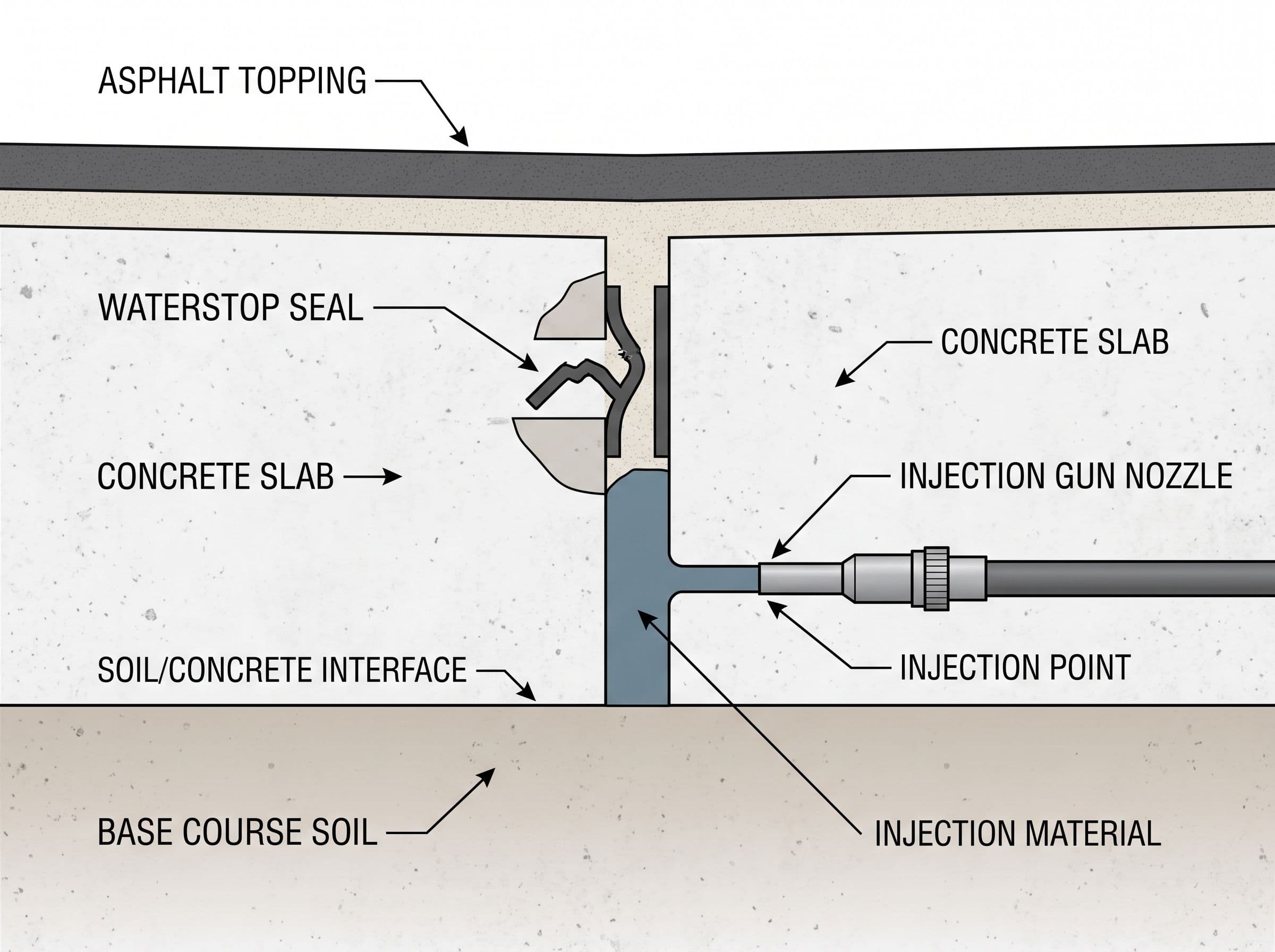
Flexible or hydrophobic material is injected directly into the joint, matching the joint's own movement instead of a rigid patch that fails the next time the joint expands or contracts
Joint Sealing, the Service, performs this fix directly, choosing the sealing material based on the joint's movement, water pressure, and access
URETEK's general approach seals the joint from the accessible side using a flexible or hydrophobic material matched to the joint's movement and water pressure. Because joints are built to move, a rigid patch fails again the next time the joint expands or contracts, so the material has to move with it.
This is exactly what the Joint Sealing service does. It's different from Active Water Intrusion's broader wall-or-floor focus, and different from Tunnel Leaks or Manhole Infiltration's specific structure types.
URETEK has sealed joints for airports, canals, and public infrastructure nationwide, verified against defined acceptance criteria.





On the CVG Airfield tunnel expansion joint project, 60 linear feet of joint were sealed against a defined pass/fail acceptance criteria, achieving zero seepage. The material is chosen for the specific joint and water condition involved, not applied as a one-size-fits-all fix.
The choice depends on the joint's movement, water pressure, and access. On the CVG Airfield project, an acrylate gel was used specifically for the tunnel expansion joint's water cutoff requirements, confirmed against linear footage and pass/fail testing criteria.
In most cases, yes, and it avoids the cost and disruption of a full joint replacement. On a canal box culvert project, trenchless joint sealing using hydrophobic polymer injection was completed with interior access only, meeting the project schedule without exterior excavation.
In most cases, yes. The canal box culvert joint sealing project was completed using interior access only, meeting the project schedule without requiring the culvert to be taken fully out of service.
Joints are built to allow movement, expansion, contraction, or settlement, which means the seal inside them is the only thing keeping water out. That seal degrades over time even when the concrete around it hasn't, which is why a joint often leaks well before the surrounding structure shows any other sign of a problem.
Get the joint sealed from the inside before water finds a wider path.
Request a Joint Assessment
URETEK
Ground improvement solutions engineered for performance.
Contact Us
Find Local Experts


13900 Humble Road, Tomball, TX 77375
Services
Solutions

 800-240-7868


