

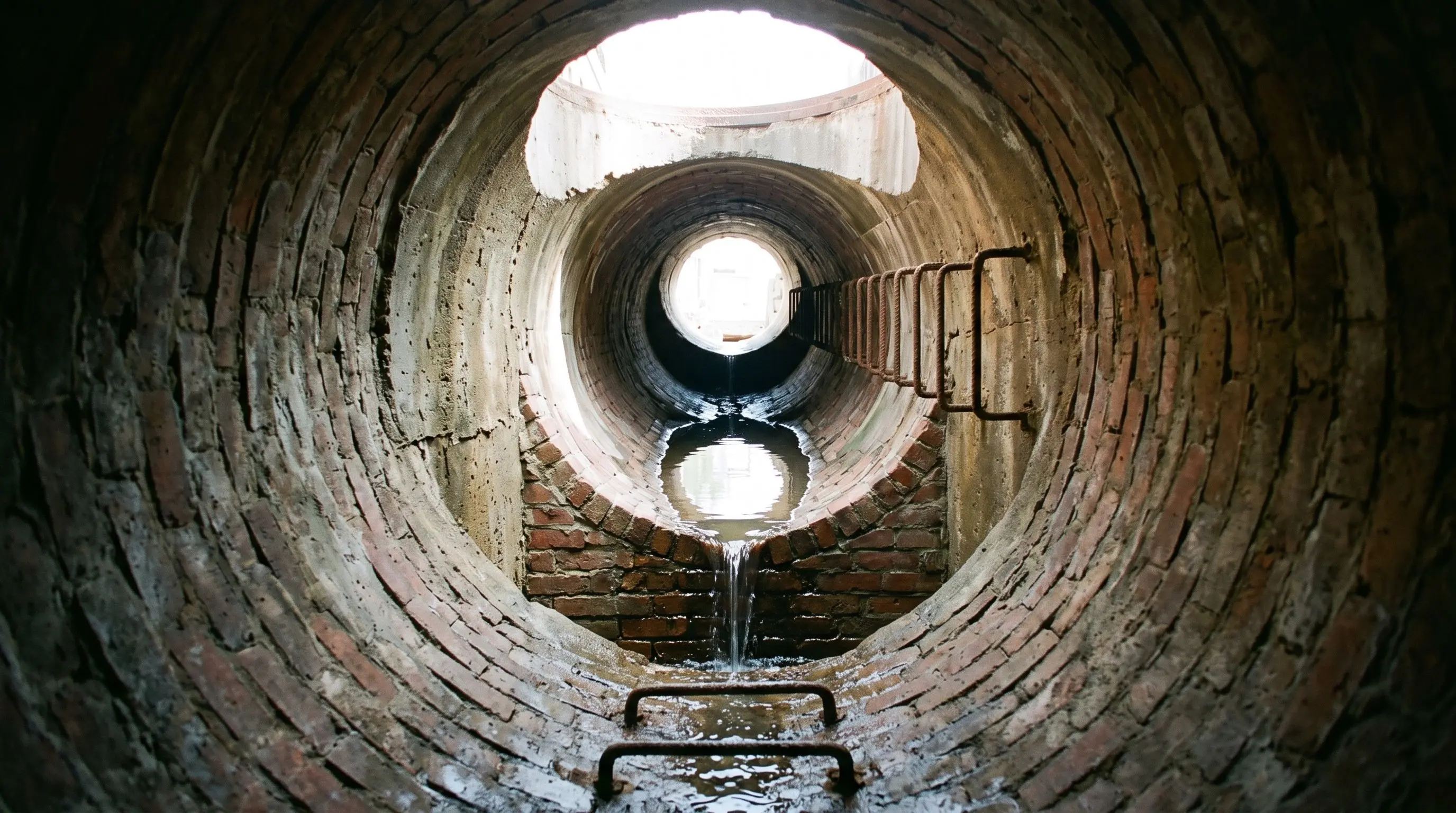
A manhole doesn't need a visible flood to be a problem, groundwater seeping in through a cracked wall or failed joint adds up fast, and every gallon still has to be pumped and treated.
Applied in these Services
Structural Leak Sealing

Related Industries
Water and Wastewater
Municipal Infrastructure
Need a Site Assessment?

800-240-7868

A manhole doesn't need a visible flood to be a problem. Groundwater seeping in through a cracked wall, a failed joint, or a poorly sealed pipe connection adds up fast, and every gallon of it still has to be pumped and treated downstream. Manhole Infiltration seals those entry points from the inside, without digging up the structure. Municipal engineers and wastewater utilities turn to it whenever a manhole is letting in more than it should.
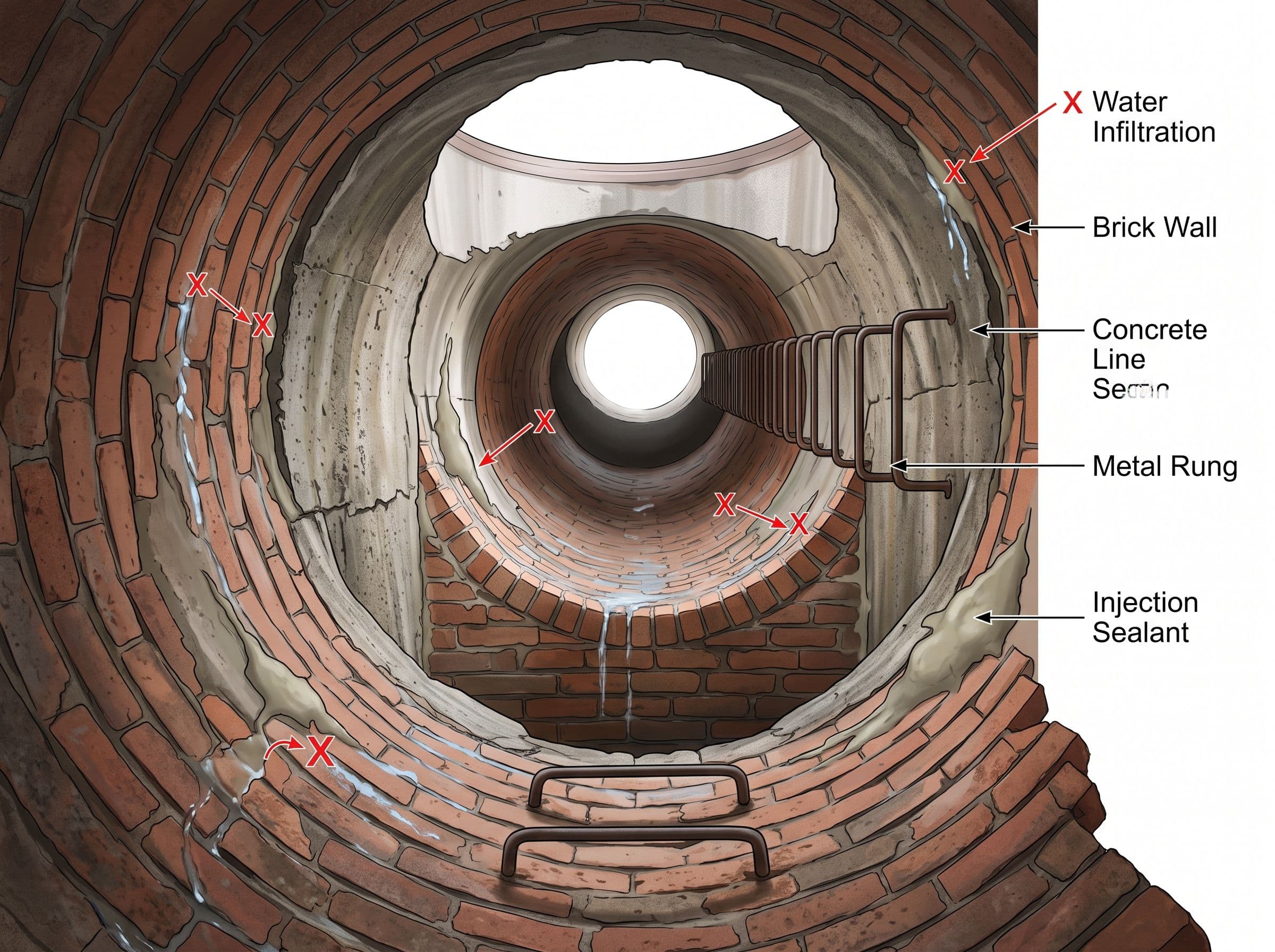
Manhole infiltration usually traces back to one of a few common failure points. Here's what URETEK finds most often.

Deteriorated mortar joints or cracks in the manhole wall where precast sections meet, especially in older concrete or brick manholes
A poorly sealed connection where a pipe enters or exits the manhole structure
Rising groundwater or a high water table pushing water through any gap in the manhole wall or base
Previous rehabilitation work that wasn't fully sealed, leaving a partial path for water to keep getting in
Manhole infiltration is often caught downstream before it's traced back to the source. Watch for these.
Water visibly entering through cracks, joints, or pipe connections inside the manhole
Unusually high flow readings at a pump station or treatment plant that trace back to a specific manhole or collection area
Sewer flow that increases noticeably during or after rain, a sign known as inflow and infiltration, or I&I
Staining, efflorescence, or active dripping on the manhole's interior walls
Ground around the manhole cover staying wet or muddy longer than the surrounding area after rain
A wastewater treatment plant reporting unexplained volume increases traceable to a specific area of the collection system
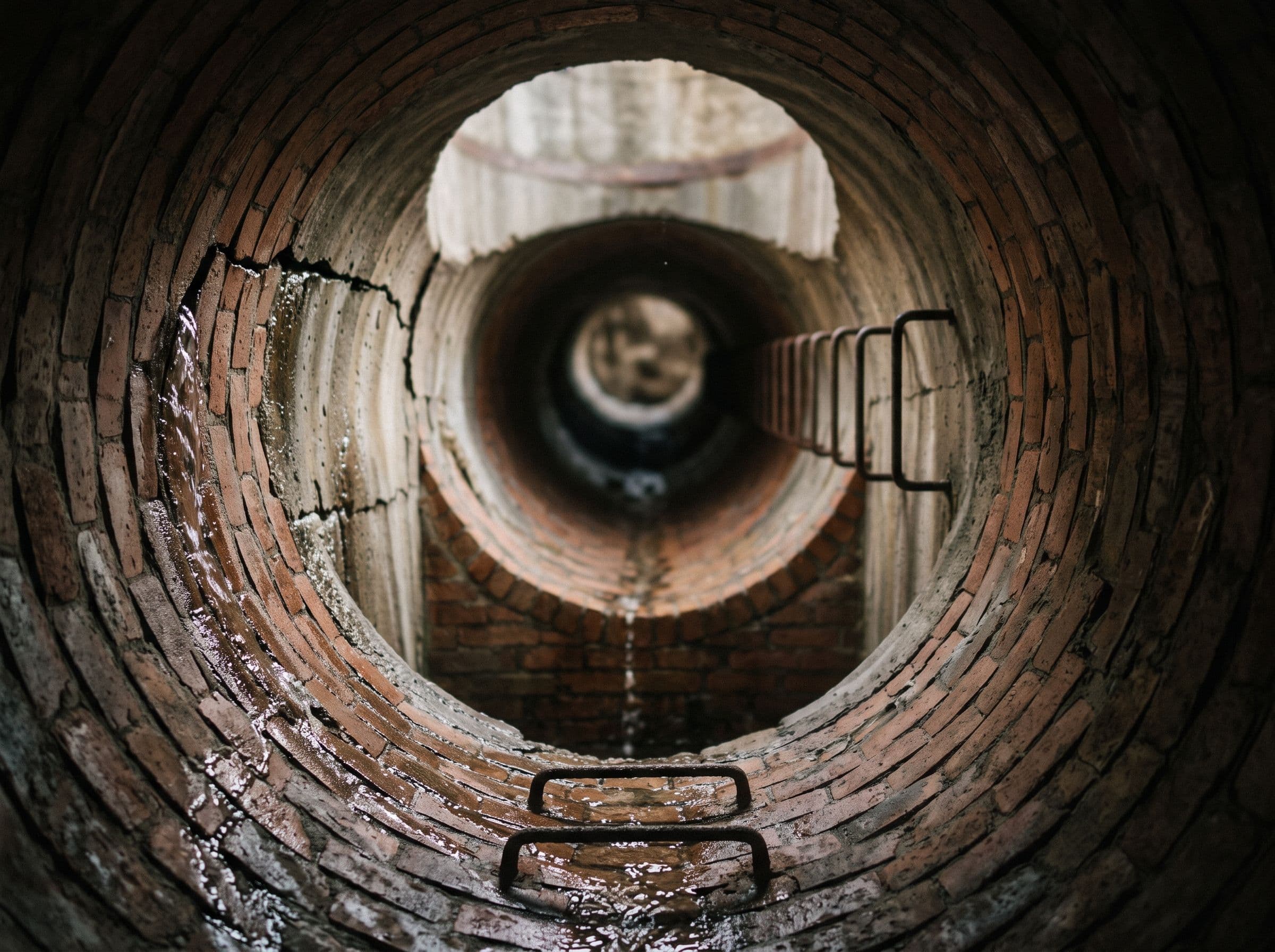
This is the right page when water is entering specifically through a manhole structure, at the walls, joints, or pipe connections.
It's not the best fit in every case. Check these first:
 The leaking joint isn't part of a manhole, more of an expansion or construction joint elsewhere? See Joint Leaks.The leak is inside a tunnel or underground passage? See Tunnel Leaks.The problem is a general below-grade wall or floor, not a manhole? See Active Water Intrusion.The entry point is specifically where a pipe passes through a wall outside a manhole? See Pipe Penetration Leaks.
A citywide inflow and infiltration problem often involves more than one manhole at once. If several manholes in the same area are affected, it's worth reviewing them as a group rather than one at a time.
What sealing manhole infiltration the right way, instead of letting it add up downstream, actually gets you.
Reduces the volume of clean groundwater reaching the wastewater treatment plant, cutting unnecessary treatment costs caused by inflow and infiltration
Reduces the risk of infiltration washing soil out around the manhole structure, which can eventually undermine the surrounding pavement or ground
Keeps the surrounding area undisturbed. In Nederland, Texas, a manhole was sealed in under 4 hours, saving more than 75 percent compared to the alternative approach
Avoids excavation entirely. In Knoxville, Tennessee, sealing a manhole from the inside saved the cost of a 25-foot excavation that would otherwise have been required
Sealing material is injected directly through the manhole wall in an engineered pattern, targeting the actual infiltration points rather than coating the structure generally
Structural Leak Sealing, the Service, performs this fix directly, applied specifically to a manhole's walls, joints, and pipe connections
URETEK's general approach works from inside the manhole. Crews identify the specific infiltration points, at wall cracks, joints, or pipe connections, and inject sealing material directly through the wall in a pattern matched to the manhole's construction and the water pressure involved.
This is exactly what the Structural Leak Sealing service does, applied specifically to a manhole structure. It's different from Joint Leaks' focus on a single expansion or construction joint elsewhere, and different from Tunnel Leaks' enclosed passage setting.
URETEK has sealed manhole infiltration for cities and utilities nationwide, reducing unnecessary flow to the treatment plant.





In Nederland, Texas, a manhole was sealed in under 4 hours, saving more than 75 percent compared to the alternative approach. The specific infiltration points are identified before sealing begins, rather than applying a generic coating over the whole structure.
In Beaumont, Texas, the city identified a number of sanitary sewer manholes suffering from inflow and infiltration, and crews drilled through the manhole wall according to an engineered pattern, rather than sealing only the most visible crack.
In most cases, yes. In Knoxville, Tennessee, sealing a manhole from the inside saved the cost of a 25-foot excavation that would otherwise have been required.
Yes. In Knoxville, Tennessee, and in a residential manhole project in California, the fix was completed from inside the manhole, without excavating the surrounding street or ground.
Clean groundwater entering through manhole infiltration still has to be pumped and treated at the wastewater plant, adding unnecessary volume and cost. In Beaumont, Texas, the city identified a number of sanitary sewer manholes suffering from inflow and infiltration and had them sealed directly to reduce that added load.
Get the entry points sealed before it strains flow capacity downstream.
Request a Manhole Infiltration Assessment
URETEK
Ground improvement solutions engineered for performance.
Contact Us
Find Local Experts


13900 Humble Road, Tomball, TX 77375
Services
Solutions

 800-240-7868


