

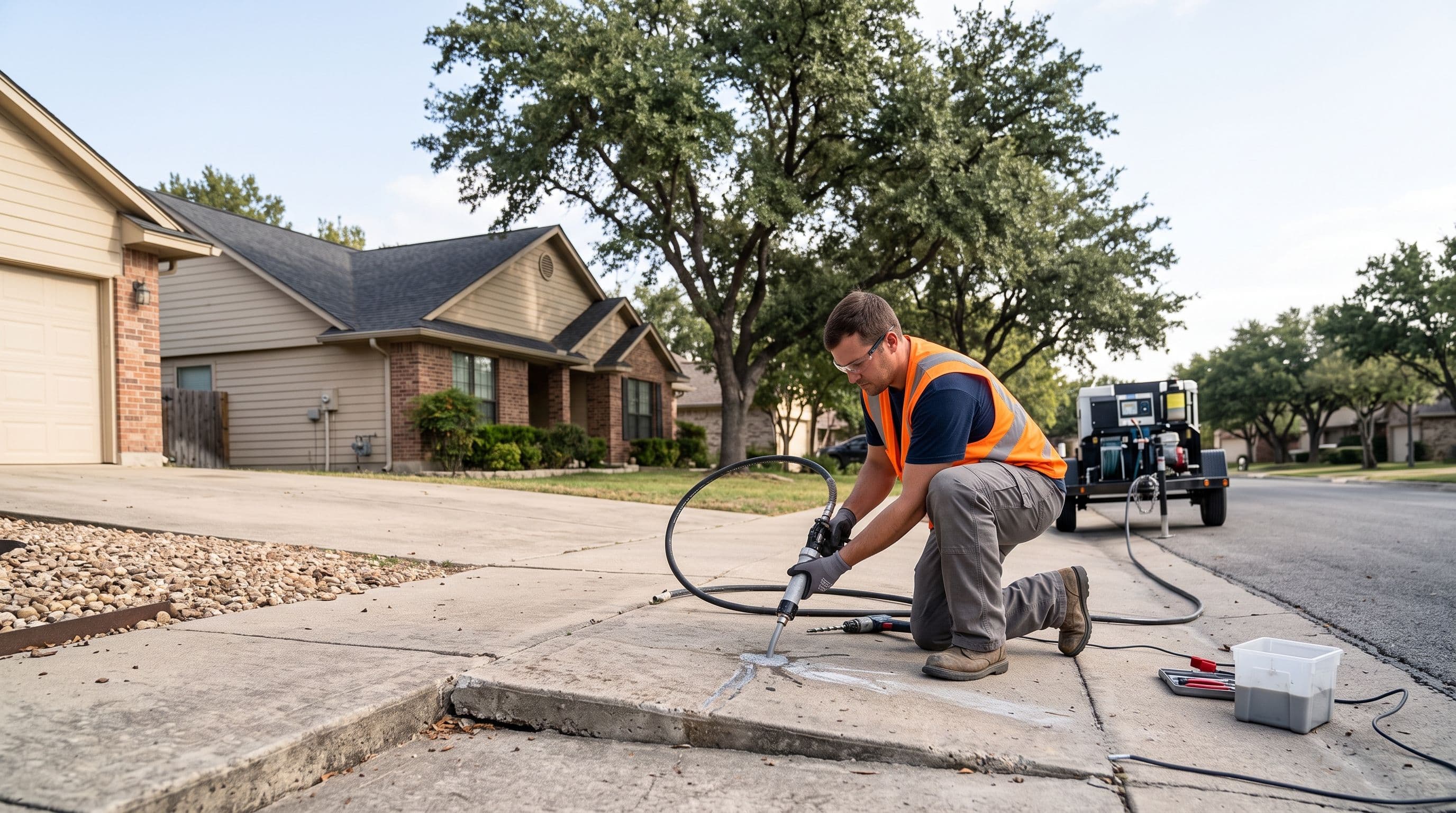
A sunken slab doesn't stay a small problem. It becomes a trip hazard, a drainage issue, and eventually a liability.
Solutions for this Service
Settlement Remediation

Structural Re-Leveling
Foundation Stabilization
Related Industries
Commercial and Institutional
Municipal Infrastructure
Need a Site Assessment?

800-240-7868

A sunken slab doesn't stay a small problem. It becomes a trip hazard, a drainage issue, and eventually a liability. Concrete Leveling raises settled concrete, slabs, walkways, and pavement, back to its original grade by injecting expanding polymer beneath it, stabilizing the soil at the same time it lifts the surface. Facility owners, engineers, and public agencies use it when a slab has settled and needs to be restored to grade without tearing it out and pouring new concrete.
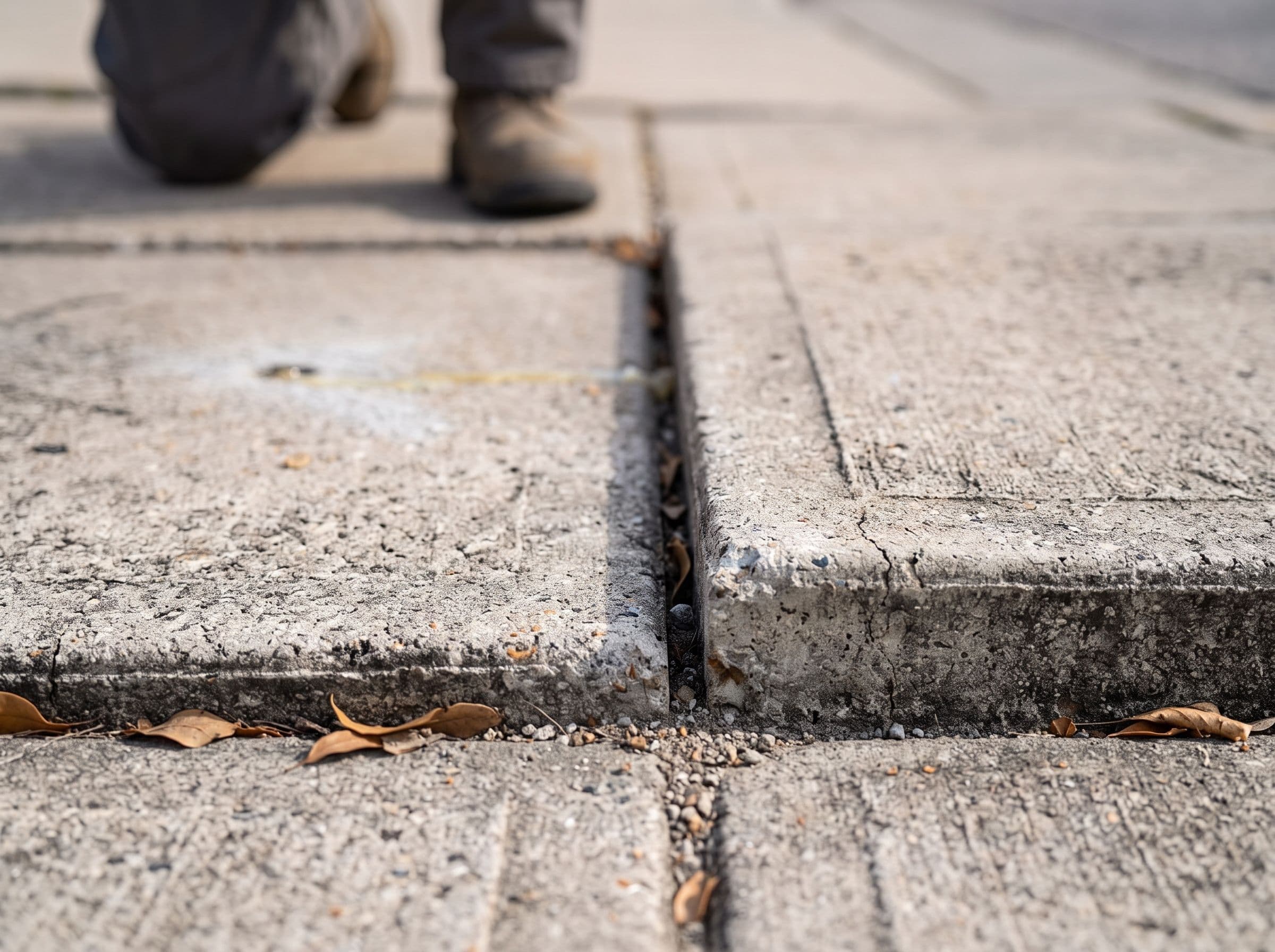
A sunken slab is a hazard and a liability sitting in plain sight. Here's what it turns into when it's left alone.

Trip hazards where a slab, sidewalk, or walkway has settled unevenly against an adjacent surface
Facility floors settling under constant forklift, equipment, or foot traffic, creating uneven working conditions
Airport aprons, taxiways, and hangar floors developing faulted or misaligned panels that affect load transfer
Pool decks and pool shells settling out of level, risking cracking and water loss if left uncorrected
Settled concrete usually shows itself in small ways above ground before it becomes a safety or compliance issue.
A visible lip or step where one slab section sits lower than the one next to it
Cracks radiating from one corner or edge of a slab
Water pooling on a slab or pavement surface after rain, instead of draining away
Doors, dock levelers, or equipment that no longer sit flush against a settled floor
A pool with water sitting unevenly across its surface
Faulted or misaligned joints on a driveway, parking lot, or airport pavement
Why facility owners, agencies, and engineers choose Concrete Leveling over full slab replacement.
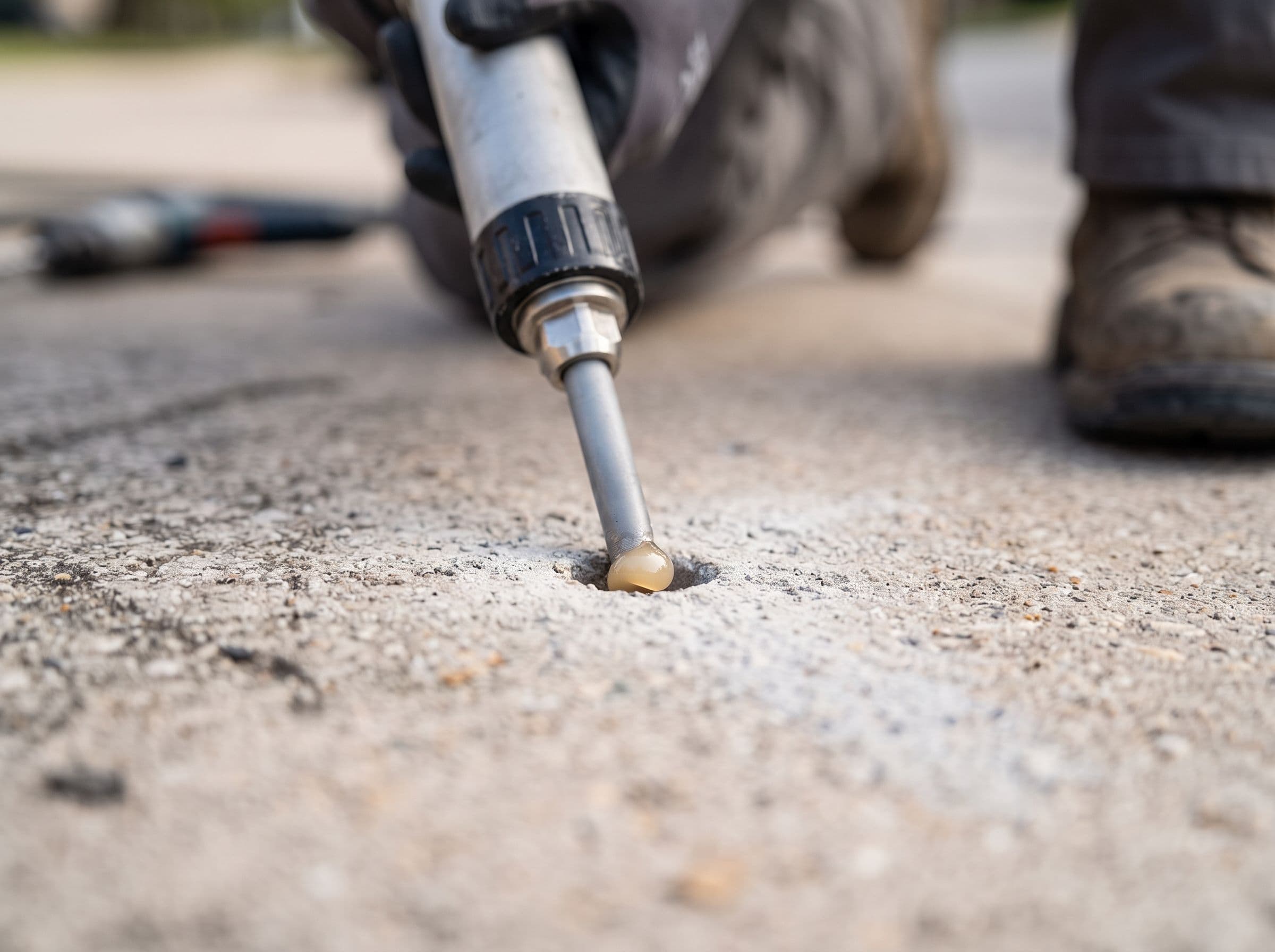
Restores the slab to grade and stabilizes what's holding it up. URETEK 486 Star polymer is injected beneath the settled area, densifying the soil while lifting the slab, so the fix addresses both the surface and the cause underneath it.
Removes trip hazards and restores compliance without an open excavation. Because the work is trenchless, there's no exposed pit or trench for pedestrians, forklifts, or vehicles to navigate around during the repair.
The slab stays in place, so the surface stays usable during and after the work. No demolition and no new pour mean sidewalks, floors, and pavement don't need to be closed off and replaced, they're lifted where they already sit.
Most jobs finish in days, not the weeks a full replacement takes. On a Wyoming warehouse project, URETEK stabilized and leveled a 12,000-square-foot floor in three and a half days, and airport and municipal jobs in the case study library routinely close out in one to three days.
The polymer expands gradually to lift evenly, not with one sudden push. URETEK 486 Star expands up to 20 times its original volume once injected, applying controlled, even lifting pressure across the injection pattern rather than one abrupt jolt that could crack the slab further.
Concrete Leveling is the right call when a slab, walkway, floor, or pavement surface has settled or become misaligned, and the concrete itself is still structurally sound enough to lift and reuse. It fits trip hazards, uneven facility floors, faulted airport panels, and pool decks that have gone out of level.
It isn't the right tool when the slab itself is badly cracked or broken beyond what lifting can fix, since no amount of soil stabilization repairs concrete that's already failed structurally, that calls for Structural Reinforcement or replacement instead. It also isn't the starting point when there's no slab yet, new construction planned on weak soil needs Soil Stabilization or Ground Densification before a slab is ever poured, not a leveling fix after the fact.
Concrete Leveling is frequently the second half of a two-part project alongside Void Filling, when an underground void caused the slab to sink in the first place, filling the void and leveling the slab in the same mobilization avoids a second trip back to the site.
1
Evaluate
A URETEK project manager reviews the settled area and the soil beneath it before proposing a plan, not a salesperson.
2
Deploy
Crews mobilize on the schedule the site needs, including nights, weekends, or holidays, in a self-contained unit.
3
Drill
Small holes, as narrow as 5/8 inch, are drilled in a pattern designed around the slab's settlement.
4
Inject
URETEK 486 Star polymer is injected beneath the slab, densifying the soil as it expands and gradually raises the surface back to grade.
5
Monitor
Elevation is checked throughout the lift, so the slab comes back to grade evenly rather than overcorrecting in one spot.
6
Validate
The client confirms the slab is level and stable before the crew leaves the site.
URETEK has leveled warehouse floors, airport pavement, pool shells, and university facilities nationwide, backed by decades of engineering and execution experience.




Not if the reason it sank the first time gets fixed along with the slab. URETEK 486 Star polymer densifies the soil beneath the slab as it lifts it, so the slab is resting on stronger soil afterward, not the same weak soil that caused the problem. Public Works and Federal projects carry a two-year warranty, and a project manager evaluates the actual cause of settlement before proposing a plan.
Small holes, as narrow as 5/8 inch, are drilled in a pattern designed around the slab's settlement. URETEK 486 Star polymer is injected beneath it and expands gradually, up to 20 times its original volume, applying gentle, even lifting pressure across the injection pattern rather than one sudden push in a single spot.
In most cases, yes, and often by a wide margin. On a faulted taxiway joint repair in Louisiana, URETEK's process saved the airport more than half the cost of replacing the pavement, while also backing the work with a two-year unconditional settlement warranty.
Yes. On a Wyoming state warehouse project, URETEK stabilized and leveled a 12,000-square-foot floor in just three and a half days using the UDI process, without the extended shutdown a full floor replacement would have required.
Yes. At a YMCA facility in Bellevue, Washington, URETEK used a grid injection pattern to fill voids beneath the pool shell, level the structure, and stabilize it in one day, allowing the pool to reopen to the public shortly after.
Get a settled slab leveled before it becomes a safety or compliance issue. URETEK crews respond fast, including emergencies.
Request a Slab Assessment
URETEK
Ground improvement solutions engineered for performance.
Contact Us
Find Local Experts


13900 Humble Road, Tomball, TX 77375
Services
Solutions

 800-240-7868


