

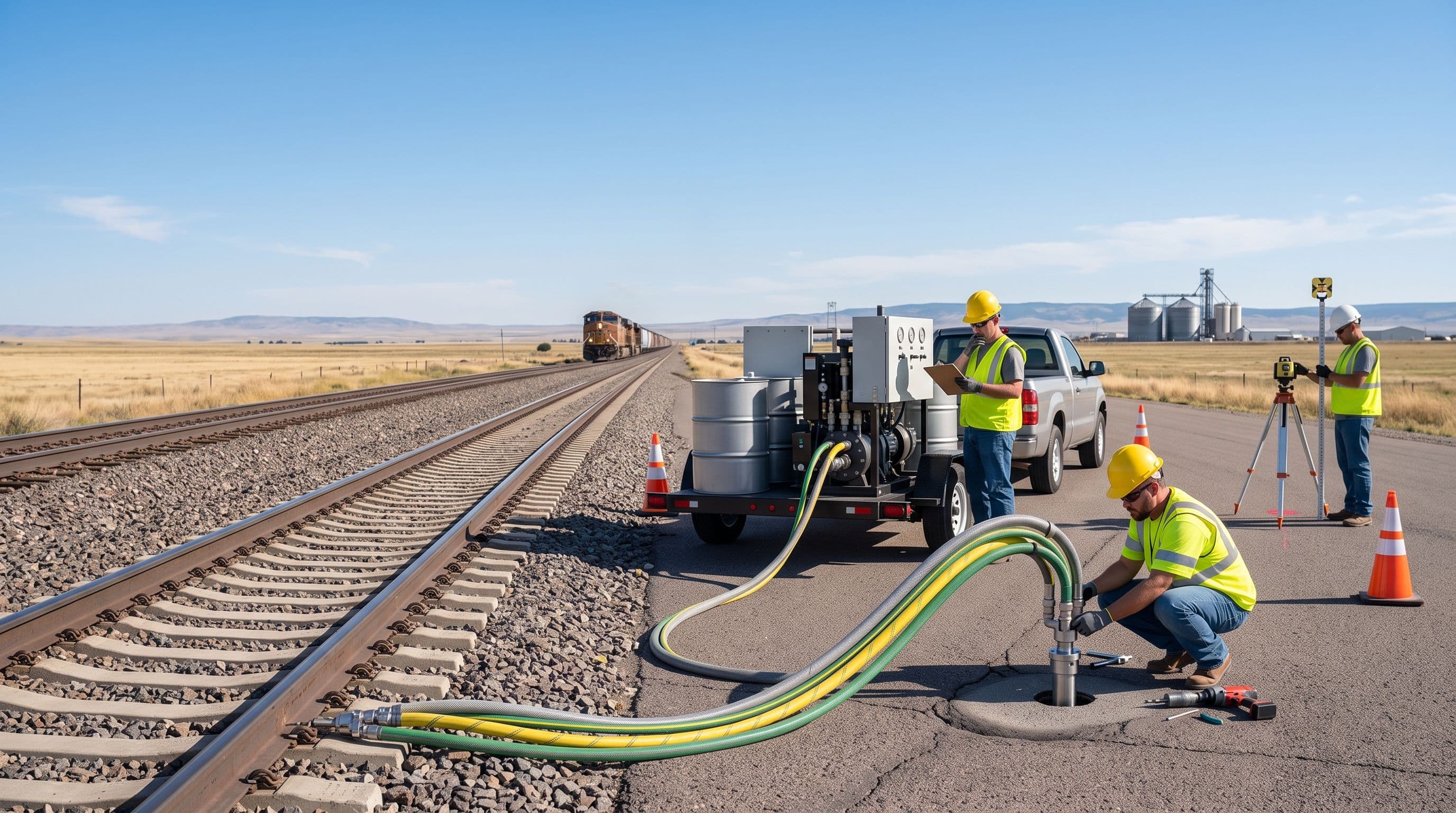
A rail line only performs as well as the ground beneath it. Ballast and subgrade that have lost density under repeated train loads show up first as a rougher ride, then as a maintenance problem that keeps coming back.
Applied in these Services
Settlement Control

Related Industries
Transportation
Industrial Facilities
Need a Site Assessment?

800-240-7868

A rail line only performs as well as the ground beneath it. Ballast and subgrade that have lost density under repeated train loads, or eroded from a failing culvert nearby, show up first as a rougher ride, then as a maintenance problem that keeps coming back. Rail Subgrade Stabilization increases the density and stiffness of that subgrade directly, without removing the track. Rail operators and infrastructure agencies turn to it whenever a section of track needs its substructure restored rather than just its surface.
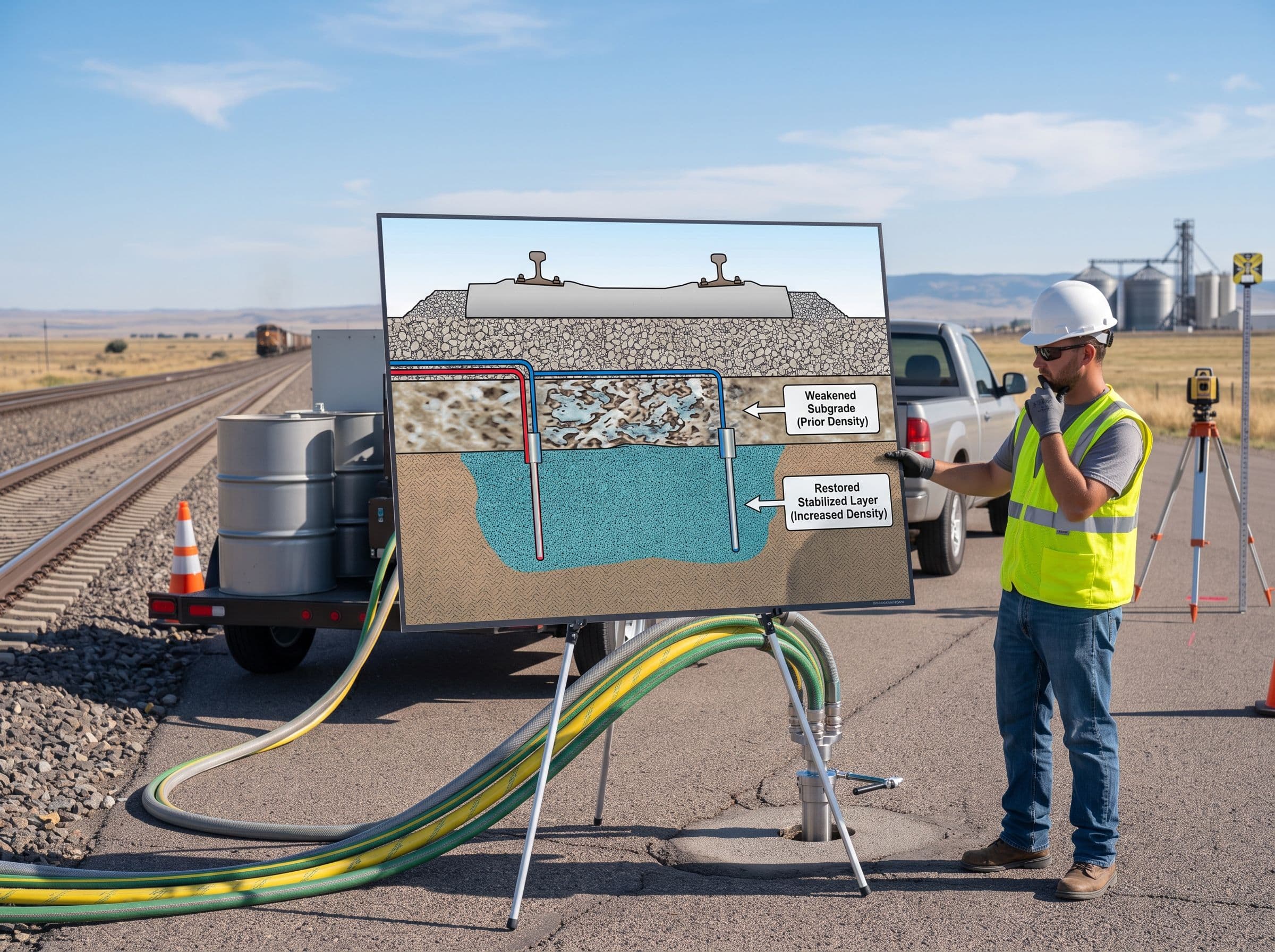
Rail subgrade settlement usually comes down to what's happening below the ballast, not the rails themselves. Here's what URETEK sees most often.

Ballast and subgrade beneath the rails gradually lose density under the repeated, concentrated load of passing trains
Water erosion or a failing culvert beneath the track washes out the subgrade soil supporting the rail structure
Original subgrade material was never dense enough to reliably support rail traffic loads over the long term
Nearby construction, utility work, or drainage changes disturb the soil supporting an existing rail line
Rail subgrade issues often show up as ride quality before they show up as a measurable number. Watch for these.
Track that feels rougher or less stable at a specific section during a routine inspection or ride
A measurable drop in track modulus or stiffness at a particular location along the line
Visible depression or unevenness in the ballast or rail bed at one section of track
Voids detected beneath the rail bed during geotechnical or track inspection
Recurring maintenance needs at the same section of track despite previous repairs
A nearby culvert, drainage structure, or utility crossing known to be in poor condition
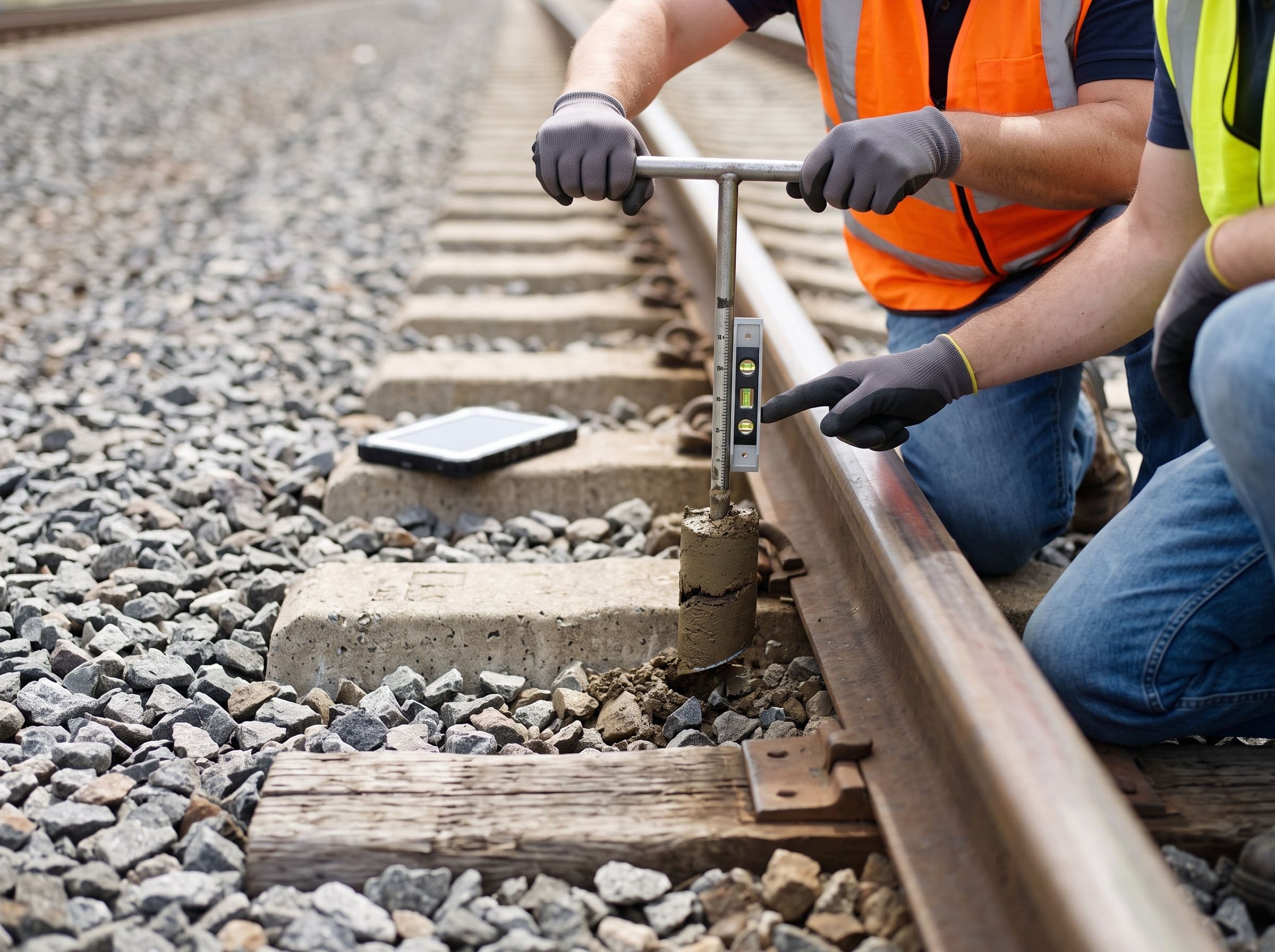
This is the right page when settlement or void formation is affecting the subgrade beneath an active rail line.
It's not the best fit in every case. Check these first:
 The settlement is at a bridge transition rather than open track? See Bridge Approach Settlement.The settlement is on a roadway, not a rail line? See Pavement Settlement.The problem is on or near a marine structure? See Marine Structure Stabilization.
Rail subgrade settlement is often tied to a failing culvert or drainage structure beneath the track. Soil Loss is worth checking too if erosion is the underlying driver.
What restoring subgrade stiffness directly, instead of only realigning the rails on top of it, actually gets you.
Increases track stiffness and subgrade density directly beneath the rail, addressing the structural cause rather than just the surface symptom
Reduces the risk of a track section becoming unsafe for normal operating speeds due to ongoing subgrade movement
Doesn't require removing the track structure itself, work is injected from access points along the rail bed
Measured in hours, not days. A rail subgrade stabilization project in Baltimore was completed in under 20 hours total, including setup, breakdown, cleanup, and inspection
Expanding polymer is injected beneath the rail bed to fill voids and increase subgrade density. On one railway project, this raised track stiffness by 90 percent, with track modulus increasing from 8 MPa to 15 MPa
Settlement Control, the Service, performs this fix directly, targeting the specific subgrade weakness identified beneath the track
URETEK's general approach injects expanding polymer beneath the rail bed to fill voids and increase the density of the subgrade soil, restoring the stiffness and support the track structure depends on, without removing the rails or ties.
This is exactly what the Settlement Control service does, applied here to a rail line's subgrade specifically. It's different from Bridge Approach Settlement's focus on the road-to-bridge transition, and different from Pavement Settlement's open-roadway setting.
URETEK has stabilized rail subgrade for freight and passenger rail lines nationwide, without removing the track structure.

On a railway subgrade project, UDI treatment increased track stiffness by 90 percent, with track modulus measured both before and after treatment to confirm the actual improvement rather than assuming it worked.
Track modulus is measured directly. On one project, it increased from 8 MPa to 15 MPa across a treated 50-foot section, giving a concrete, verified improvement figure rather than a general claim.
In most cases, yes. A railroad subgrade stabilization project in Baltimore, including setup, breakdown, cleanup, and final inspection, was completed in under 20 hours, a fraction of what removing and rebuilding a section of track would require.
Yes. The Baltimore project was completed in under 20 hours total, with work performed from access points along the rail bed without removing the track structure itself.
Rail lines carry concentrated, repeated loads along a fixed, narrow path, so subgrade weakness affects ride quality and safety more directly than it would on a road with load spread across a wider surface. With roughly 40 percent of the world's freight cargo moving by rail, the structural integrity of that substructure carries real weight.
Get the track's subgrade stabilized before it becomes a bigger maintenance problem.
Request a Rail Subgrade Assessment
URETEK
Ground improvement solutions engineered for performance.
Contact Us
Find Local Experts


13900 Humble Road, Tomball, TX 77375
Services
Solutions

 800-240-7868


