

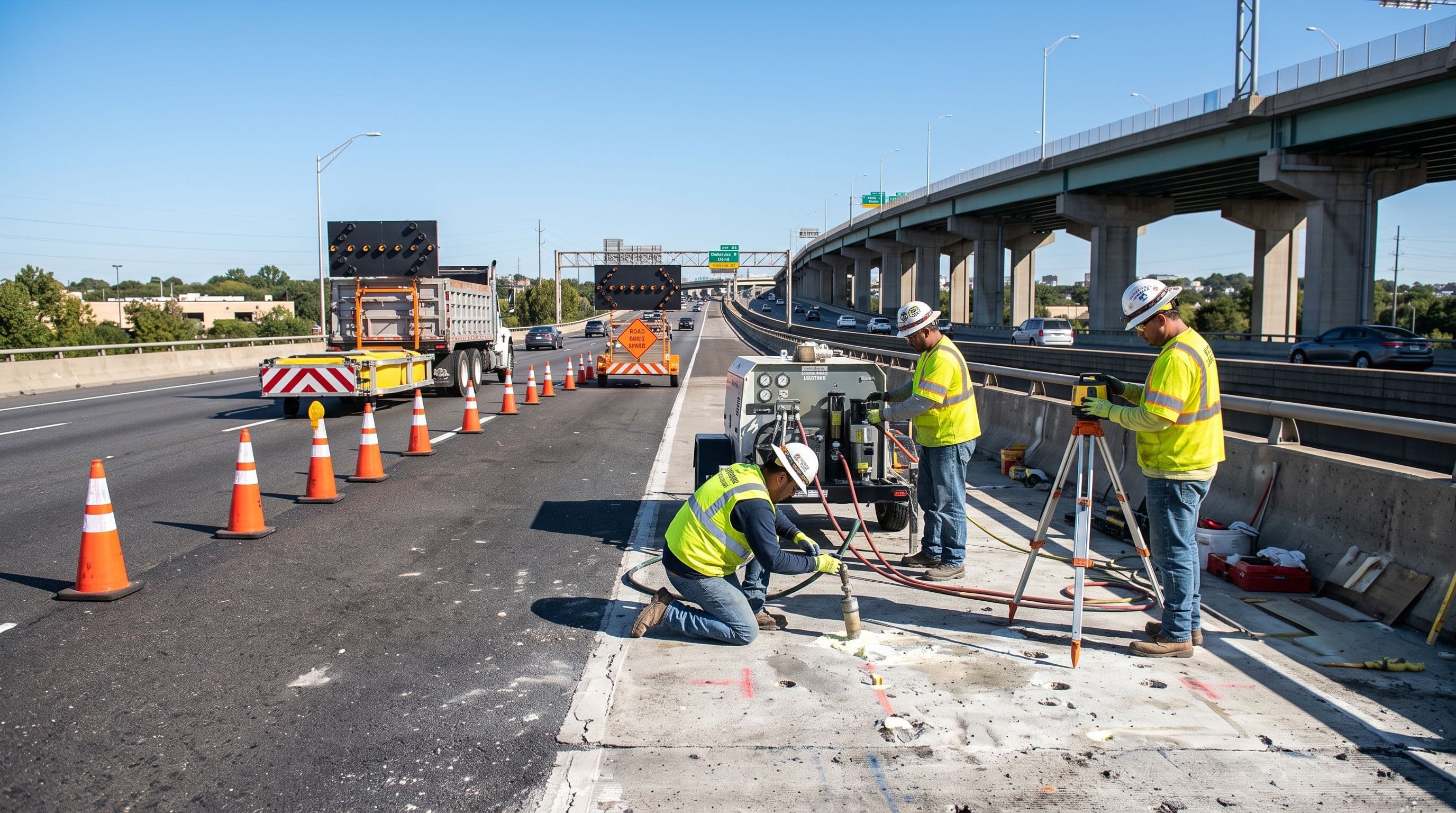
Drivers call it the bump at the bridge. A bridge structure sits on deep foundations that don't settle, while the roadway leading onto it sits on ordinary fill that does, and over time a gap opens between the two.
Applied in these Services
Settlement Control

Related Industries
Transportation
Municipal Infrastructure
Need a Site Assessment?

800-240-7868

Drivers call it the bump at the bridge. A bridge structure sits on deep foundations that don't settle, while the roadway leading onto it sits on ordinary fill that does, and over time a gap opens between the two. Bridge Approach Settlement lifts that approach slab back to grade and stabilizes the soil beneath it, closing the gap directly. Transportation departments and public agencies turn to it whenever the transition onto or off a bridge has become a rough ride, or a genuine safety concern.
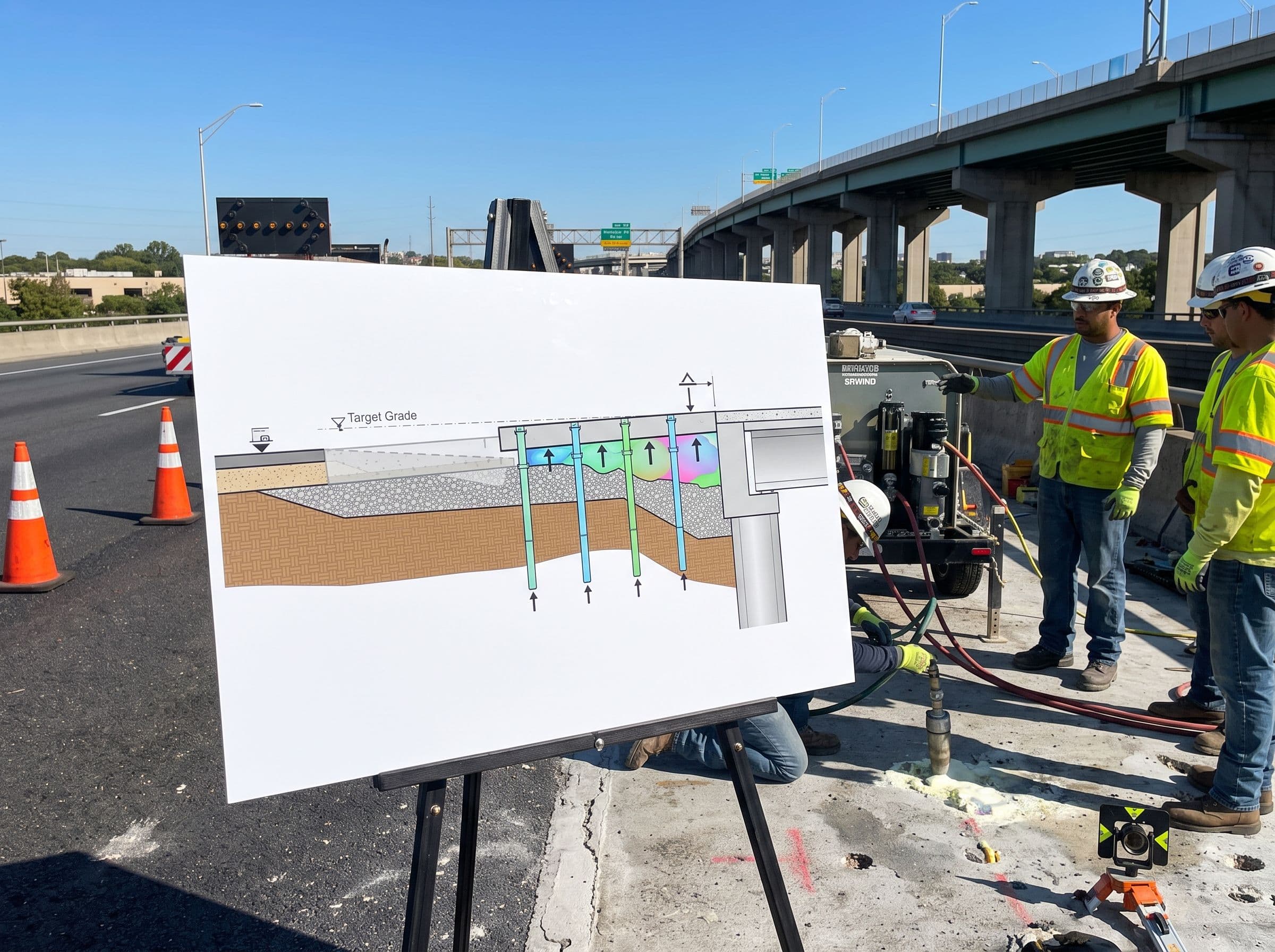
Bridge approach settlement almost always comes down to the same structural mismatch. Here's what URETEK sees most often.

The bridge structure itself sits on deep foundations that don't settle, while the approach roadway sits on ordinary fill that does, creating a gap between the two that grows over time
Backfill placed behind the bridge abutment during construction was never compacted to match the density of undisturbed soil nearby
Water draining off the bridge deck concentrates at the approach slab, gradually eroding the soil beneath it
Repeated heavy traffic loading compacts and displaces the approach slab's foundation soil faster than the bridge structure itself
The bump at the bridge is usually obvious to drivers long before it shows up on a maintenance schedule. Watch for these.
A noticeable bump or dip right where the roadway meets the bridge, often described as the bump at the bridge
A gap or step visible between the approach slab and the bridge deck itself
Drivers slowing down or swerving specifically at the bridge approach, a sign the transition has become a safety concern
Settlement that keeps returning to the same approach slab despite previous patch repairs
Cracking or faulting in the pavement joint where the approach slab meets the bridge structure
A maintenance log showing repeat complaints or repairs at the same bridge approach location
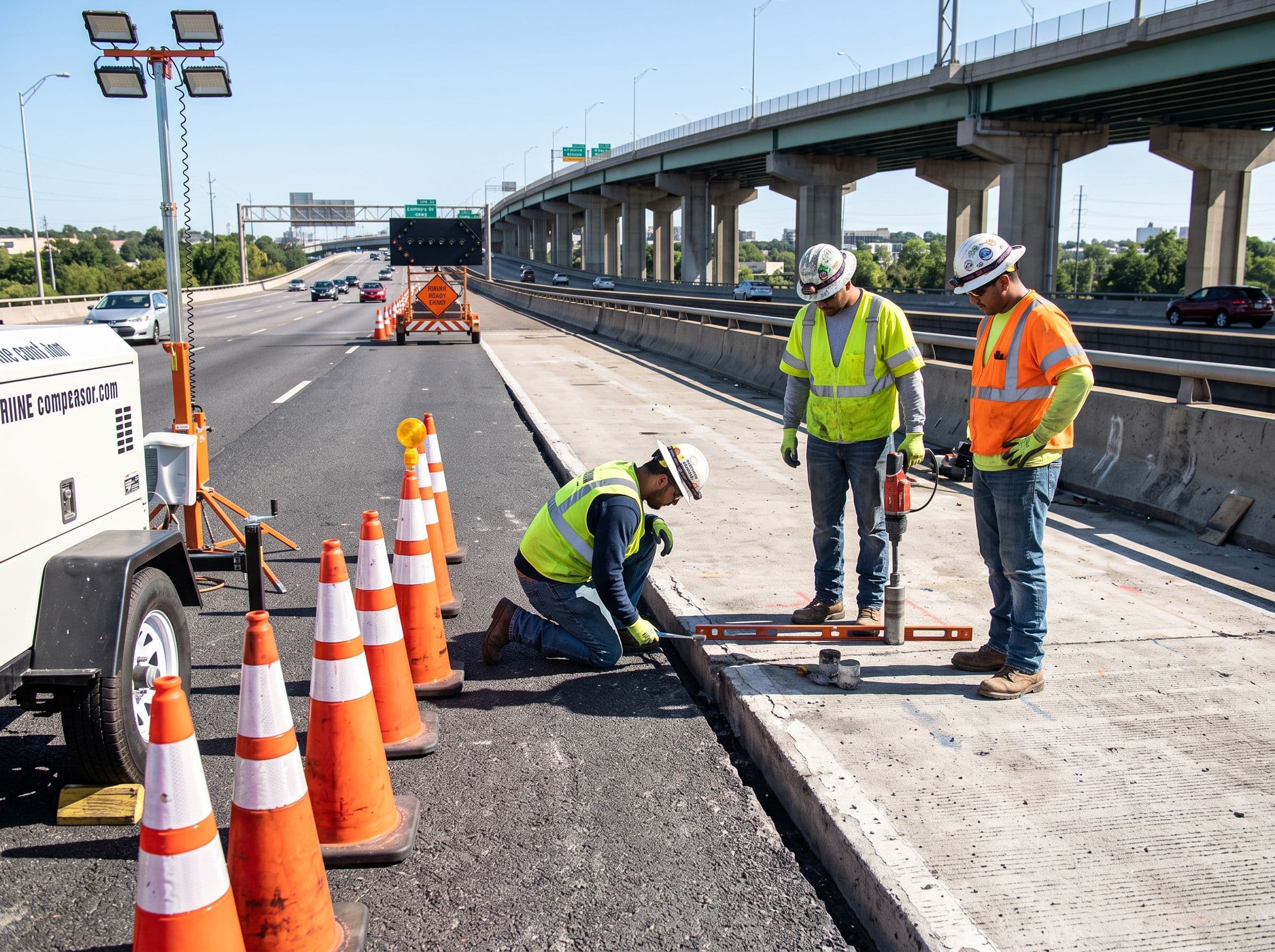
This is the right page when settlement is happening specifically where a roadway transitions onto or off of a bridge structure.
It's not the best fit in every case. Check these first:
 The settlement is on the open roadway itself, not specifically at a bridge transition? See Pavement Settlement.The settlement is beneath a railway rather than a road? See Rail Subgrade Stabilization.The problem is on or near a marine structure like a seawall or bulkhead? See Marine Structure Stabilization.
Bridge approach settlement is a specific case of broader infrastructure settlement. If the same site involves settlement beyond just the bridge transition, Infrastructure Settlement Control is worth reviewing too.
What lifting the approach slab and stabilizing the soil beneath it, instead of resurfacing over the problem, actually gets you.
Lifts the approach slab back to grade and stabilizes the soil beneath it, closing the gap between the roadway and the bridge structure directly
Reduces the risk of the bump at the bridge becoming a hazard for drivers, especially at highway speeds
Keeps traffic moving during the day. A bridge approach and departure ramp repair in Pigeon Forge, Tennessee was scheduled entirely on overnight shifts to minimize impact on daytime traffic
Measured in shifts, not weeks. That same Pigeon Forge project was completed in a total of seven overnight work shifts
Expanding polymer is injected to fill subsurface voids and lift the settled pavement back to grade. On a Binghamton, New York project, this approach came in 60 percent under budget compared to the original estimate
Settlement Control, the Service, performs this fix directly, targeting the specific gap that's formed between the roadway and the bridge structure
URETEK's general approach injects expanding polymer beneath the approach slab to fill voids, strengthen the backfill soil, and lift the settled pavement back to grade, closing the gap between the roadway and the bridge structure. Work is often scheduled during overnight shifts to minimize impact on traffic.
This is exactly what the Settlement Control service does, applied here specifically to the transition where a road meets a bridge. It's different from Pavement Settlement's broader roadway focus, and different from Rail Subgrade Stabilization's rail-specific setting.
URETEK has lifted and stabilized bridge approach and departure slabs for transportation departments and public agencies nationwide.



On a bridge settlement project in Binghamton, New York, the repair was completed 60 percent under budget by filling the actual subsurface voids rather than just resurfacing the road, addressing the cause of the settlement rather than only its symptom.
A bridge structure typically sits on deep pile foundations that don't settle, while the approach roadway sits on ordinary fill that does. That difference is exactly what creates the gap between the two over time, and why the approach slab needs its own fix rather than assuming the bridge and the road behave the same way.
Often significantly so. A bridge settlement project in Binghamton, New York was completed 60 percent under budget compared to the original estimate.
Yes. A bridge approach and departure ramp repair in Pigeon Forge, Tennessee was completed in a total of seven overnight work shifts, scheduled specifically to minimize impact on daytime traffic.
Not every bridge, but any approach built on ordinary fill rather than deep foundations is at risk over time. In Alamogordo, New Mexico, a series of bridges connecting to Holloman Air Force Base needed stabilization due to gypsum soil conditions specific to that site.
Get the approach slab lifted and the soil beneath it stabilized.
Request a Bridge Approach Assessment
URETEK
Ground improvement solutions engineered for performance.
Contact Us
Find Local Experts


13900 Humble Road, Tomball, TX 77375
Services
Solutions

 800-240-7868


