

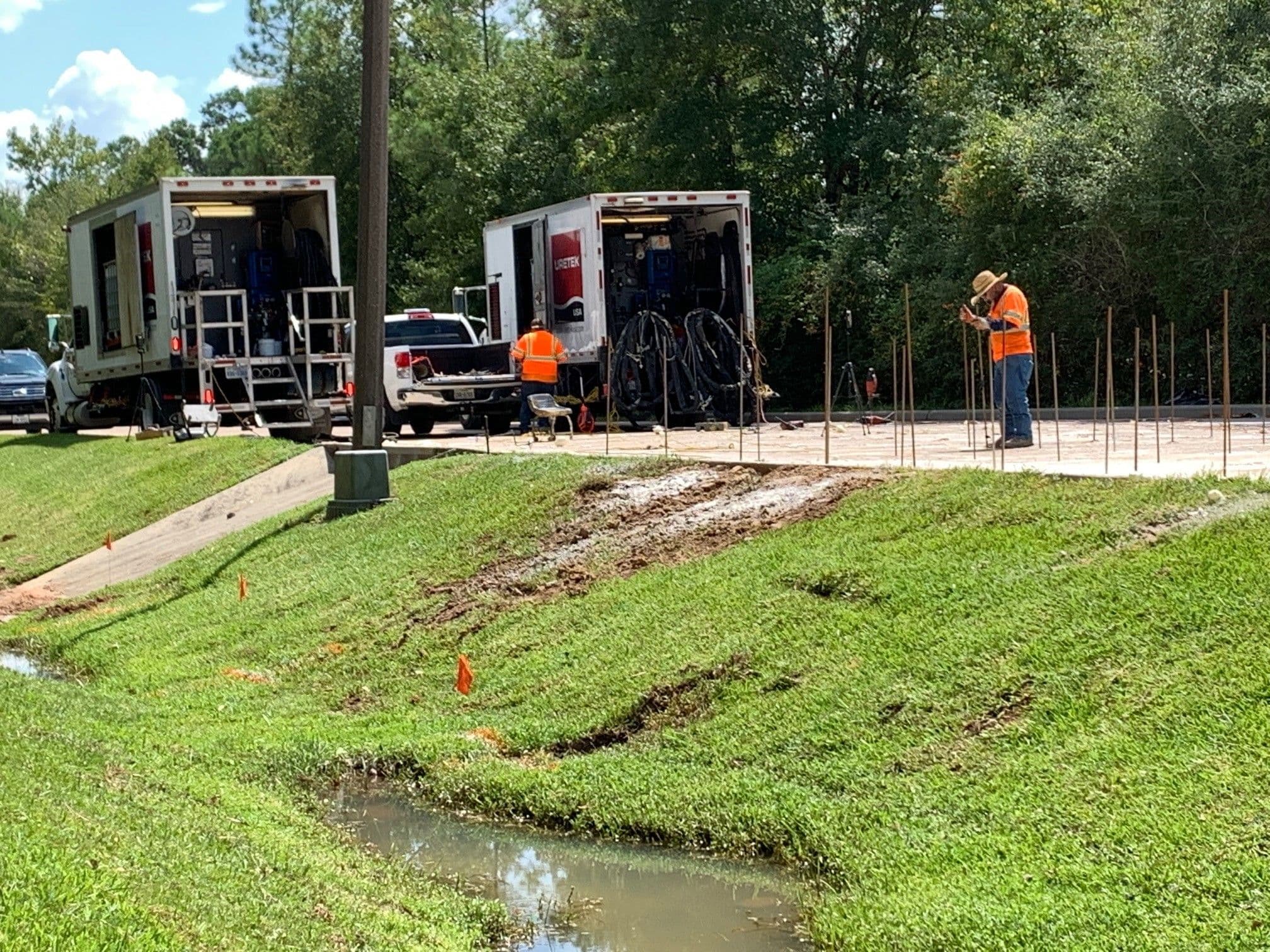
Industries
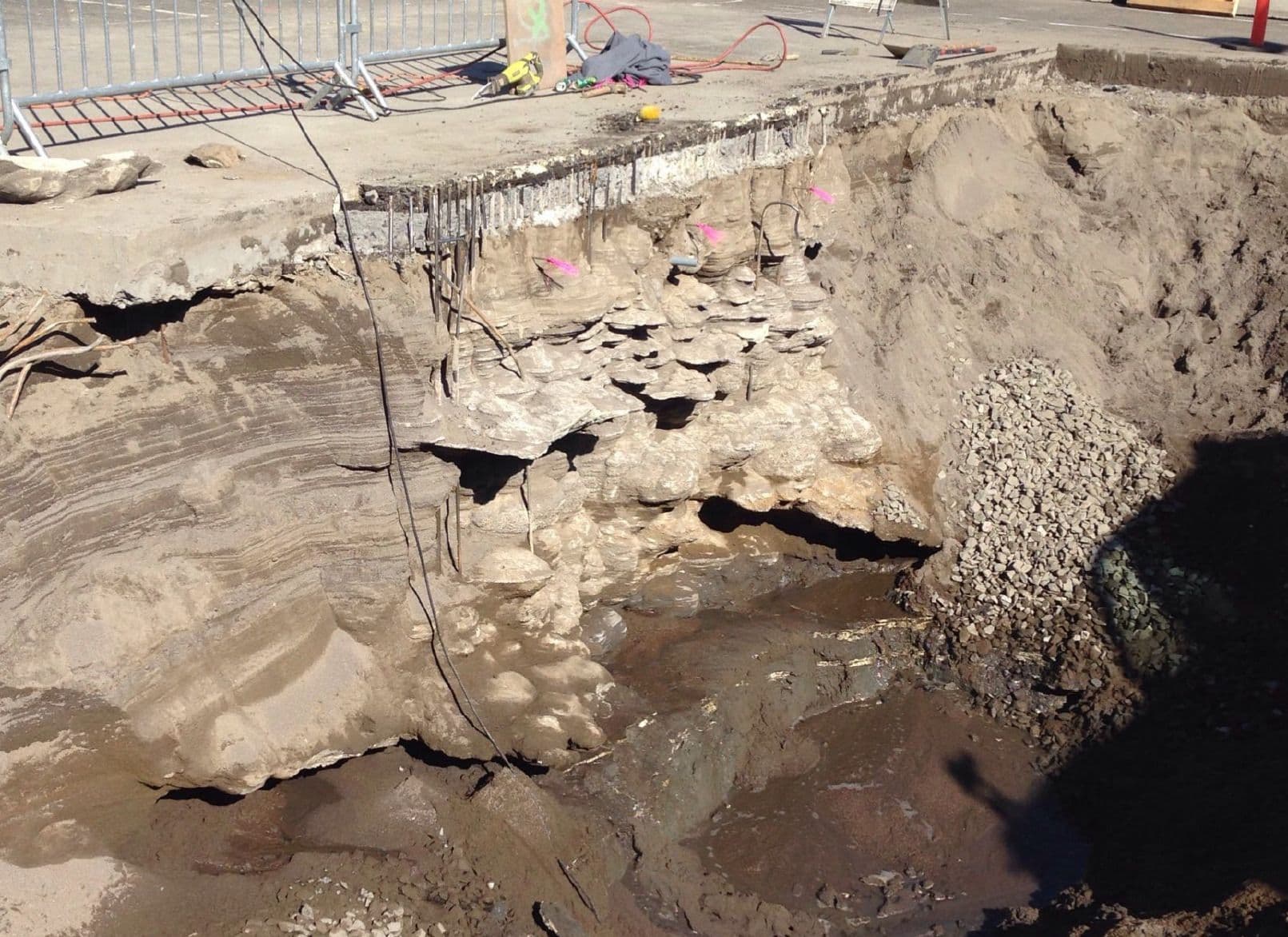
Treatment plants, sewer lines, and pump stations all depend on soil and structures staying exactly where they were built, and on groundwater staying out where it isn't wanted. When soil settles or a joint opens, the result is either a structural problem next to a plant that can't be shut down, or inflow and infiltration that strains a system already running at capacity. URETEK stabilizes the ground and seals the openings that cause both, without excavation and without taking the system offline.
Treatment plants, sewer systems, and pump stations share three pressures, even though the fix looks different for each.

Groundwater and stormwater finding their way into sanitary systems through failed joints, cracked pipe, or aging manhole seals, straining treatment capacity
Settlement next to structures that cannot be taken offline for repair, like active aeration tanks, wet wells, or a plant mid-expansion
Repairs that have to happen without shutting down service to the community that depends on the system
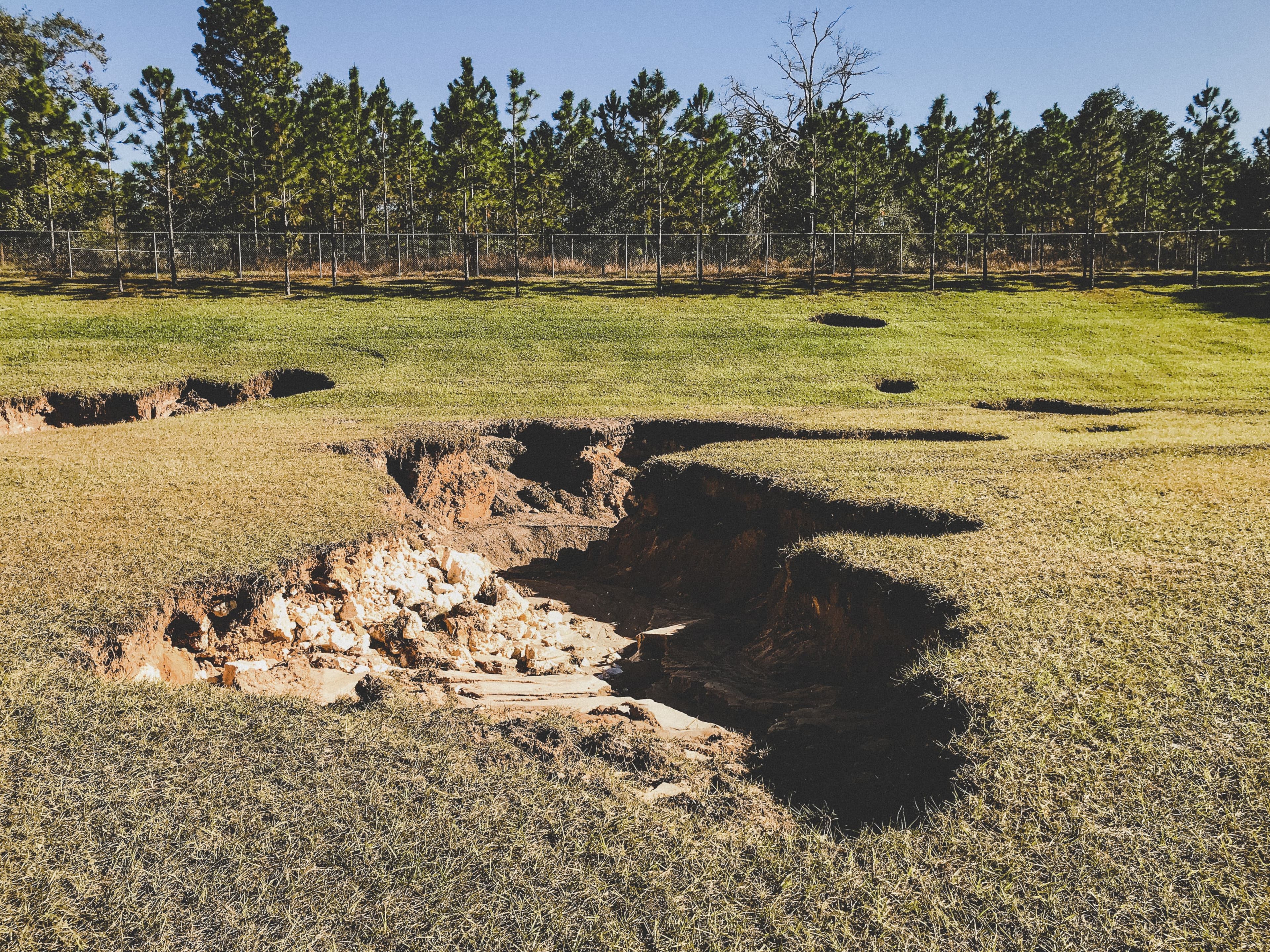
Pump Stations
URETEK stabilizes soil beneath pump station wet wells, valve pits, and transformer pads using polymer injection, without excavation or extended downtime.
Read More about Pump Stations


Sewer Systems
URETEK seals infiltration points in manholes and sewer pipe joints across a collection network using interior injection, reducing inflow and infiltration without excavation.
Read More about Sewer Systems
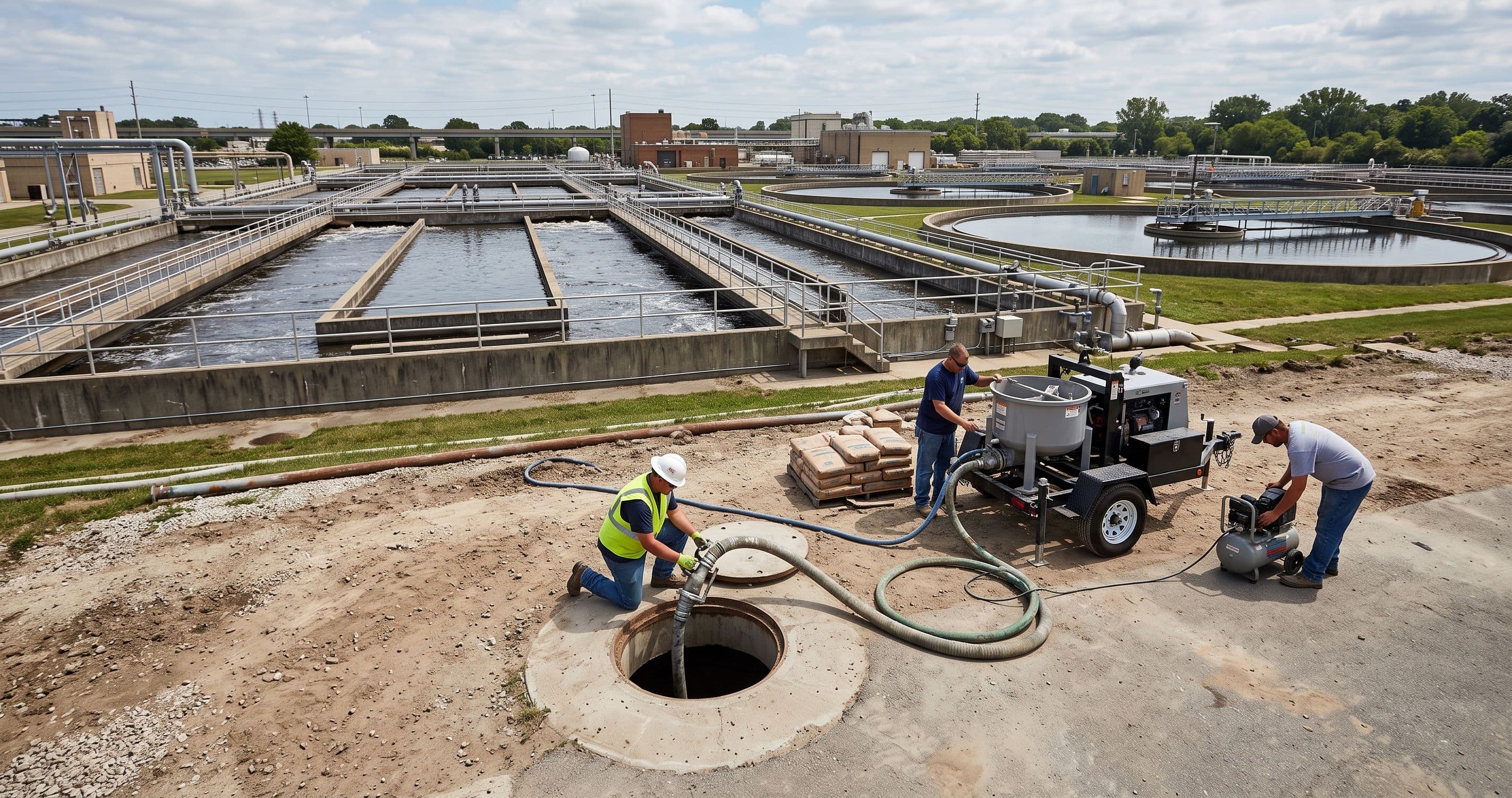
Treatment Plants
URETEK controls groundwater and protects adjacent structures during excavation at active wastewater treatment facilities using chemical grout curtains and structural underpinning, without interrupting plant operations.
Read More about Treatment Plants
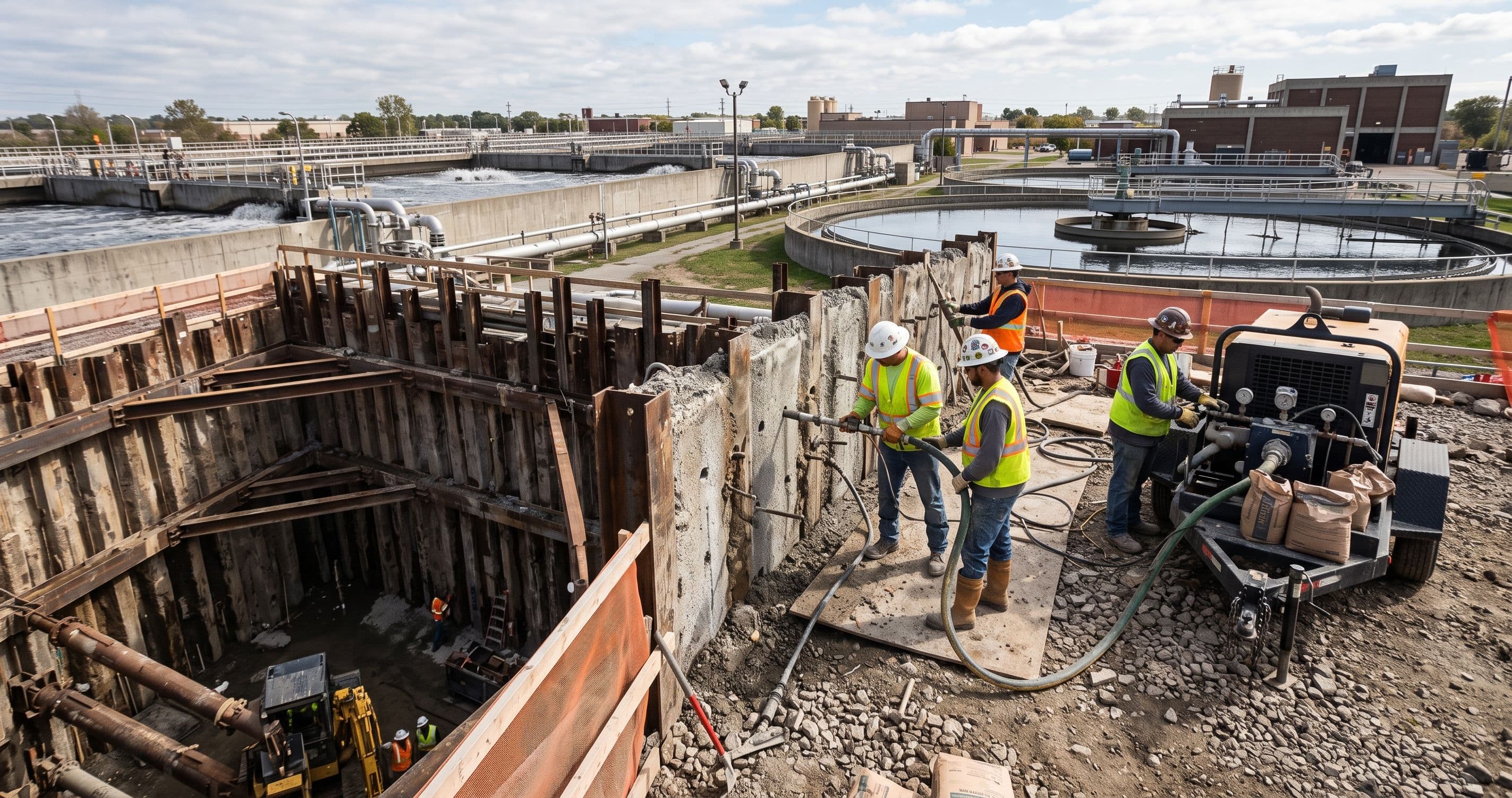
Manholes, pipes, plant structures, and the soil around them are evaluated on site before any repair plan is proposed.
Injection or sealing design is built around the specific site, whether that means a manhole under a live traffic lane or an excavation next to an active treatment tank, and coordinated with the utility's own engineers.
Work is scheduled to keep the plant, pump station, or sewer line running, with most manhole and pipe work completed through small access points rather than open excavation.
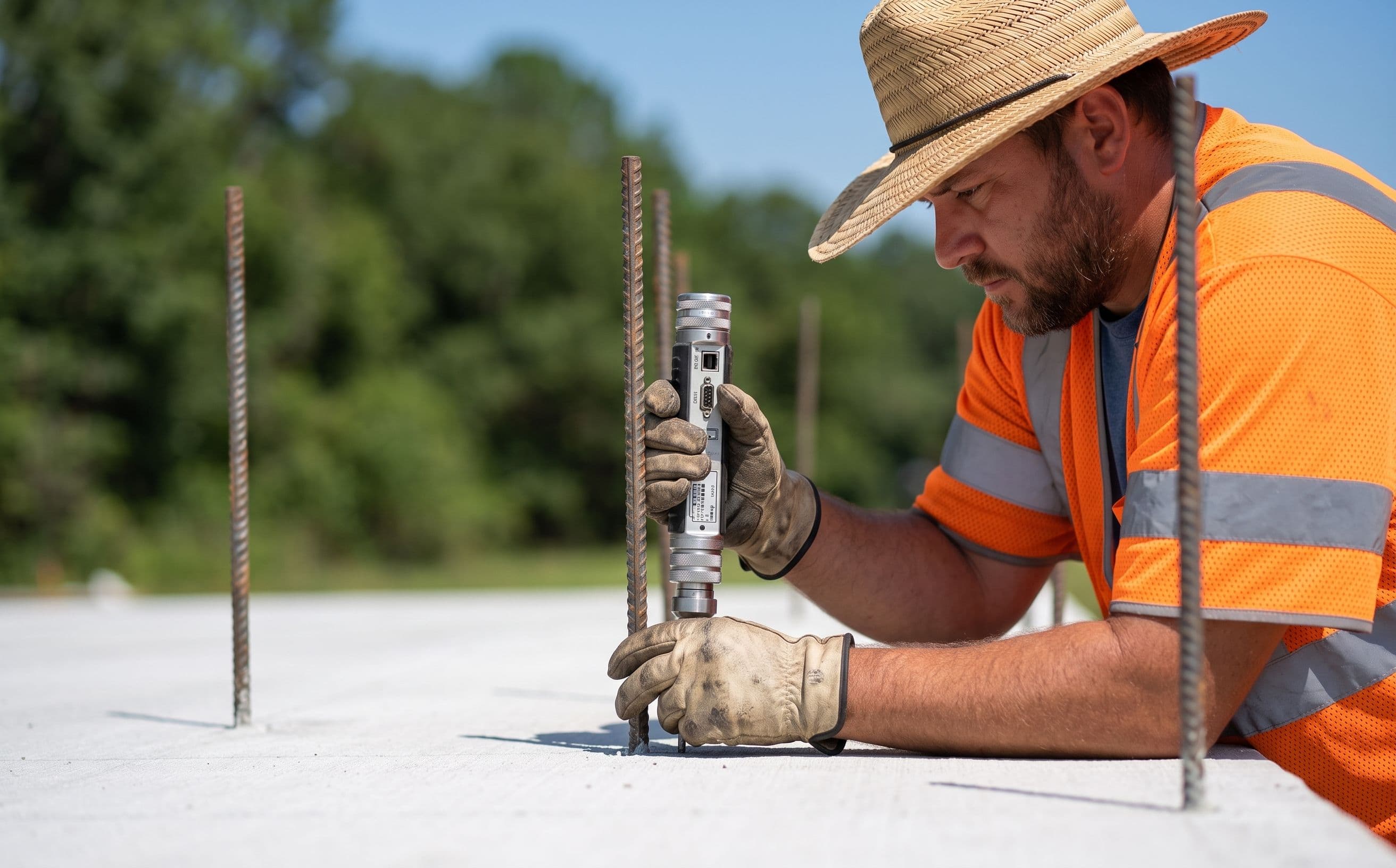
URETEK evaluates the actual condition of the manhole, pipe, or structure on site first, not a generic sealing package. In Nederland, Texas, URETEK sealed the inlets and outlets of two manholes and eliminated future I&I risk from storm water, verified during the next rainy period rather than assumed at the end of the job.
Yes. A treatment plant expansion next to active aeration tanks calls for groundwater control and underpinning, which is how URETEK achieved zero observed settlement at the adjacent tanks on one recent plant expansion. A sewer line or manhole calls for sealing the specific point of inflow and infiltration, which is a different injection pattern entirely.
Often, yes. In Nederland, Texas, the city saved more than 75 percent of the cost of the cured-in-place liner alternative by sealing its manholes with URETEK Deep Injection instead. In Knoxville, Tennessee, the same approach avoided a 25-foot excavation entirely.
Usually, yes. In Grosse Pointe Farms, Michigan, a leaking sewer drainage line was repaired in six hours. In Knoxville, Tennessee, manhole work was scheduled at night specifically to keep traffic uninterrupted during the day. Most repairs are designed around keeping the system operating.
Crews can mobilize on short notice. In Clarksville, Indiana, rising water levels at a pump station were straining the wastewater treatment plant it fed, and URETEK rehabilitated all seven affected manholes in just 1.5 days, restoring the area to full operation.
Get your treatment plant, sewer system, or pump station assessed by a team that has worked on all three.
Request Proposal
URETEK
Ground improvement solutions engineered for performance.
Contact Us
Find Local Experts


13900 Humble Road, Tomball, TX 77375
Services
Solutions

 800-240-7868

