

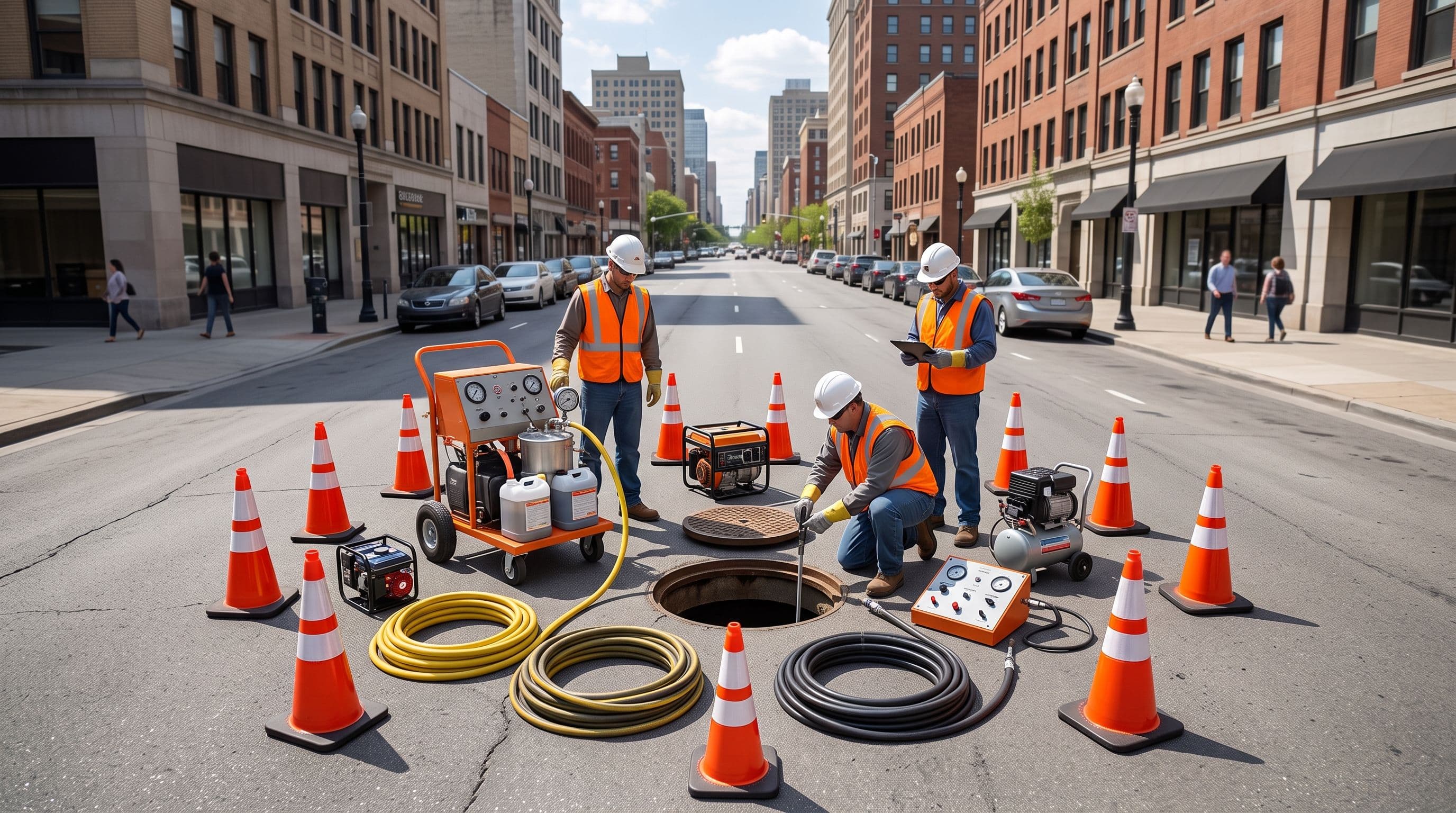
A sewer collection network is only as tight as its weakest joint.
Solutions for this Industry
Manhole Infiltration

Joint Leaks
Pipe Penetration Leaks
Sibling Industries
Treatment Plants
Pump Stations
Need a Site Assessment?

800-240-7868

A sewer collection network is only as tight as its weakest joint. Water entering through a cracked manhole wall, a failed pipe connection, or an aging joint adds up fast across a network, and every gallon of it still has to be pumped and treated downstream. Utilities and public works departments turn to targeted sealing when inflow and infiltration across their collection system is adding unnecessary volume and cost.
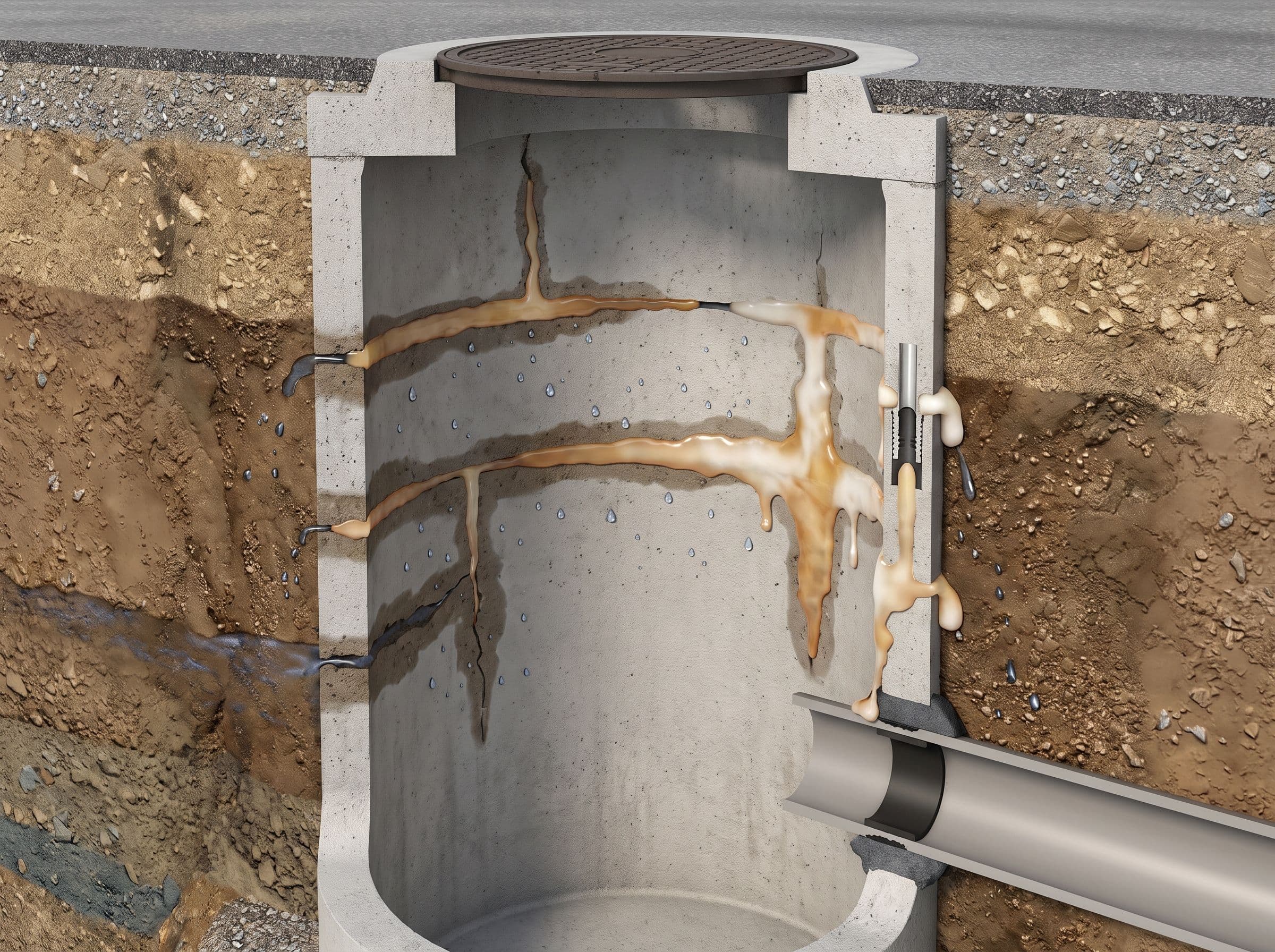
Sewer collection networks carry a specific set of pressures tied to their sheer scale and age.

Inflow and infiltration adding clean groundwater to the sewer system, straining treatment plant capacity downstream
Deteriorated manhole walls, joints, and pipe connections allowing water to enter the collection system at multiple points across a network
Aging sewer infrastructure, much of it installed decades ago, reaching the end of its expected service life across large service areas
Repeated repairs at the same manholes or pipe sections without the underlying infiltration path ever being addressed
Meeting EPA and state environmental agency inflow-and-infiltration reduction requirements
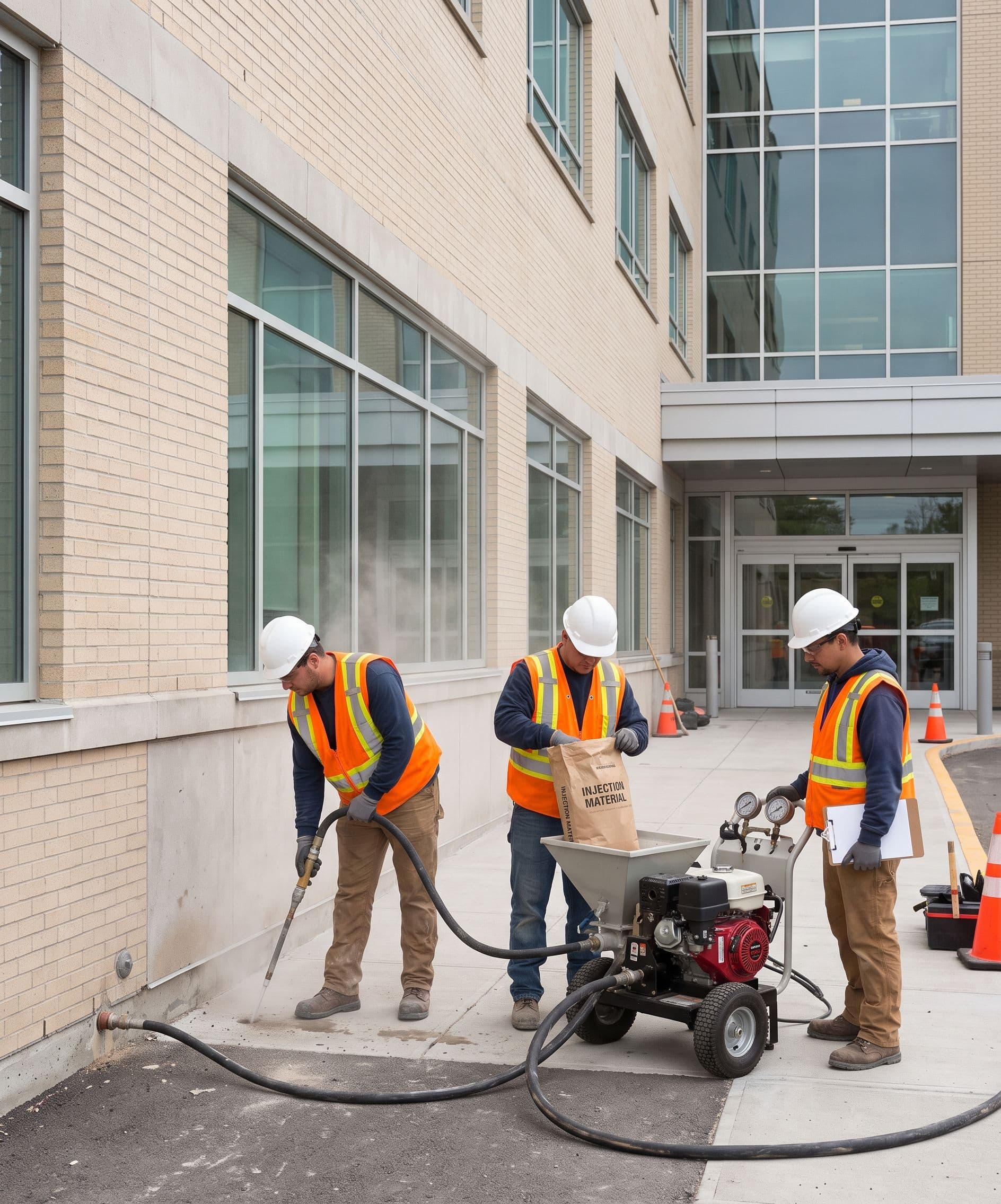
Sewer network repairs demand a fix that targets the actual infiltration path, not just the manhole where it happened to be noticed.
Minimal disruption. In Nederland, Texas, a manhole was sealed in under 4 hours with no major excavation, leaving the surrounding area undisturbed
Reduces the volume of clean groundwater reaching the treatment plant, supporting EPA and state I&I compliance targets
Targets confirmed infiltration points, not just the visible crack. In Beaumont, Texas, crews drilled through the manhole walls according to an engineered pattern
Scales across multiple locations efficiently. In Clarksville, Indiana, all seven manholes were repaired in just 1.5 days, and the area was restored to full operation
1
Investigation
Manhole and pipe joint conditions are evaluated through inspection to identify the actual infiltration points.
2
Planning
Injection design is developed around the specific manhole or pipe connection issues found across the network.
3
Access
Small-diameter access points are installed from inside the manhole or pipe, no open excavation.
4
Injection
Sealing material is placed to close the infiltration path at each confirmed location.
5
Monitoring
Real-time verification confirms each treated location before the crew leaves.
6
Validation
Final inspection confirms infiltration reduction and compliance with the utility's I&I standards.
In Beaumont, Texas, crews drilled through the manhole walls according to an engineered pattern targeting confirmed infiltration points, rather than sealing only the most visible crack.
In Clarksville, Indiana, seven manholes needed rehabilitation, but only four required complete encapsulation. Each manhole's actual condition was assessed individually rather than assuming every location needed the same treatment.
In most cases, yes. In Nederland, Texas, a manhole was sealed in under 4 hours, saving more than 75 percent compared to the alternative approach.
Yes, in most cases. In St. Louis, Missouri, URETEK sealed a manhole and its sewer line joints, stabilizing the surrounding soil, in just one day of work.
Clean groundwater entering through inflow and infiltration still has to be pumped and treated downstream, adding unnecessary volume and cost to the treatment plant that serves the whole network, not just the one manhole where it got in.
Get an expert site assessment and a tailored stabilization solution.
Request a Site Assessment
URETEK
Ground improvement solutions engineered for performance.
Contact Us
Find Local Experts


13900 Humble Road, Tomball, TX 77375
Services
Solutions

 800-240-7868


