

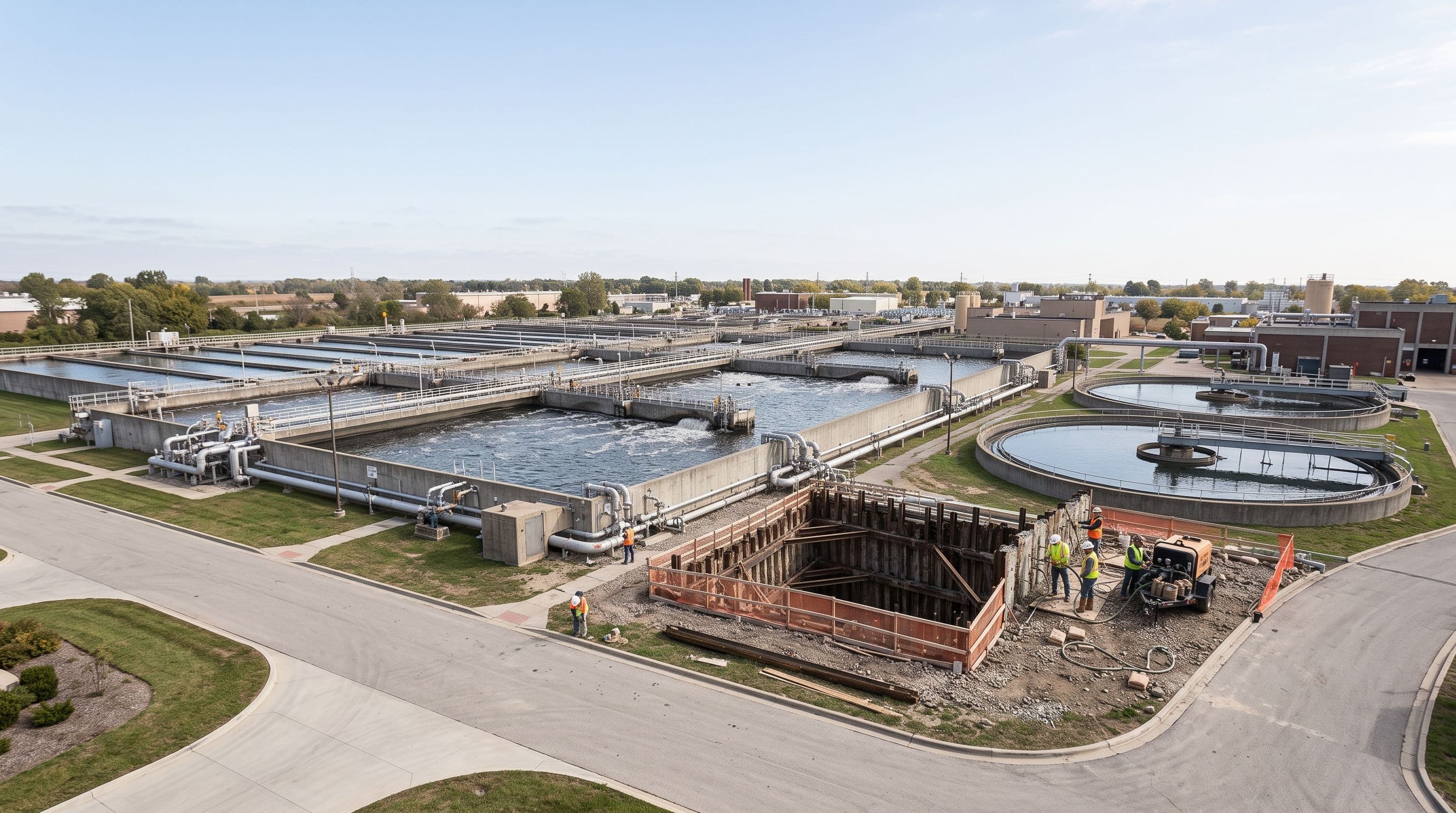
A wastewater treatment plant can't simply shut down while construction happens around it.
Solutions for this Industry
Active Water Intrusion

Weak Soils
Erosion Voids
Sibling Industries
Sewer Systems
Pump Stations
Need a Site Assessment?

800-240-7868

A wastewater treatment plant can't simply shut down while construction happens around it. Aeration tanks, clarifiers, and treatment basins have to keep running, which means any excavation, expansion, or repair nearby has to control groundwater and protect those structures without interrupting the treatment process itself. Utilities and engineering firms turn to targeted groundwater control when a treatment facility's own construction work threatens the structures it depends on.
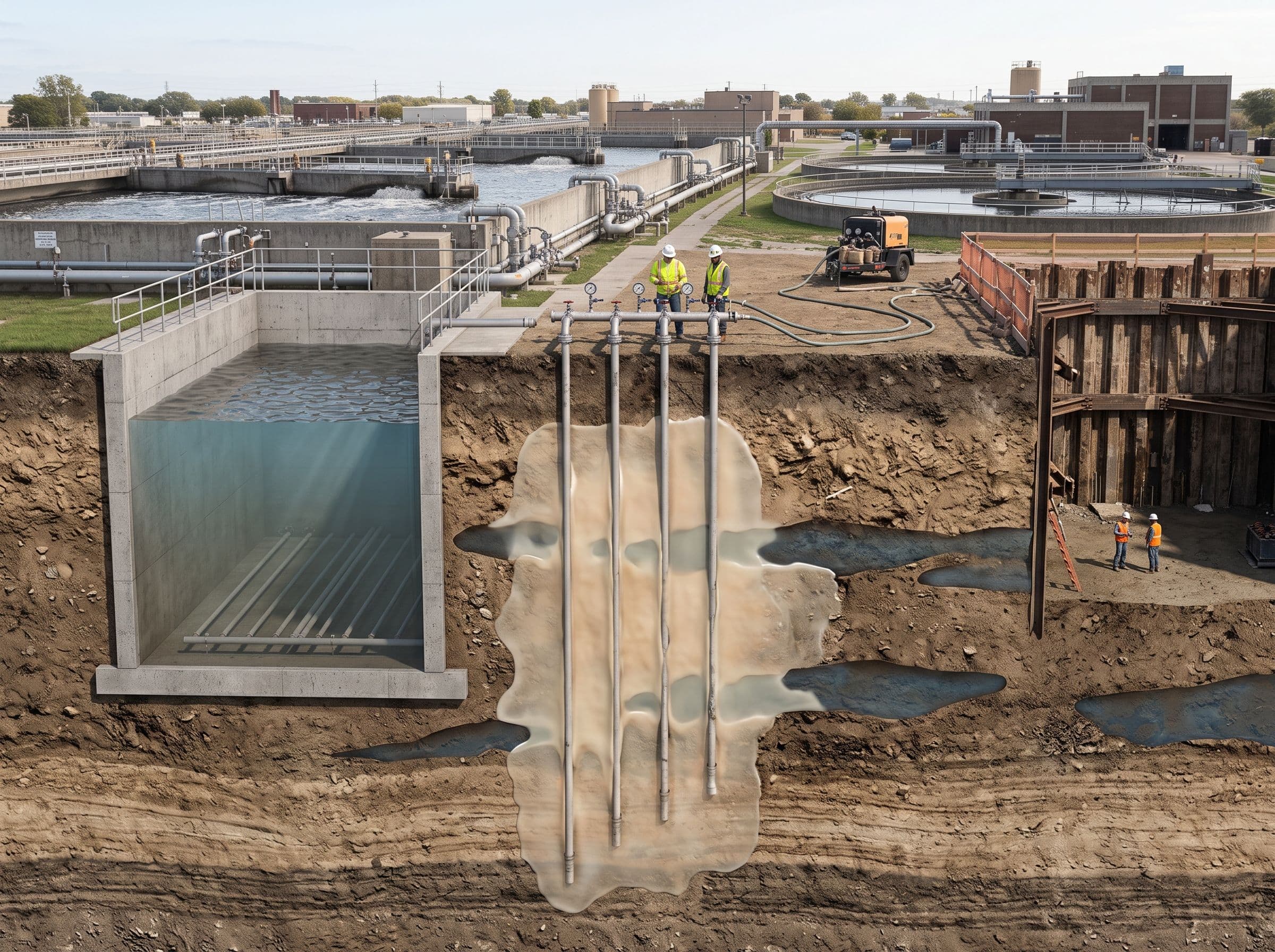
Treatment facilities carry a specific operating pressure that sets them apart from the collection and pumping infrastructure around them.

Settlement or void formation near active treatment structures, aeration tanks, clarifiers, and basins, risking damage to equipment that can't be taken offline
Deep excavation for plant expansion or upgrades risking groundwater drawdown and settlement of adjacent structures
Groundwater infiltration into excavation areas complicating construction near continuously operating tanks
Continuous operation requirements, since a treatment plant generally can't be shut down the way a road or bridge can be closed
Meeting EPA and state environmental agency standards throughout any construction or repair work
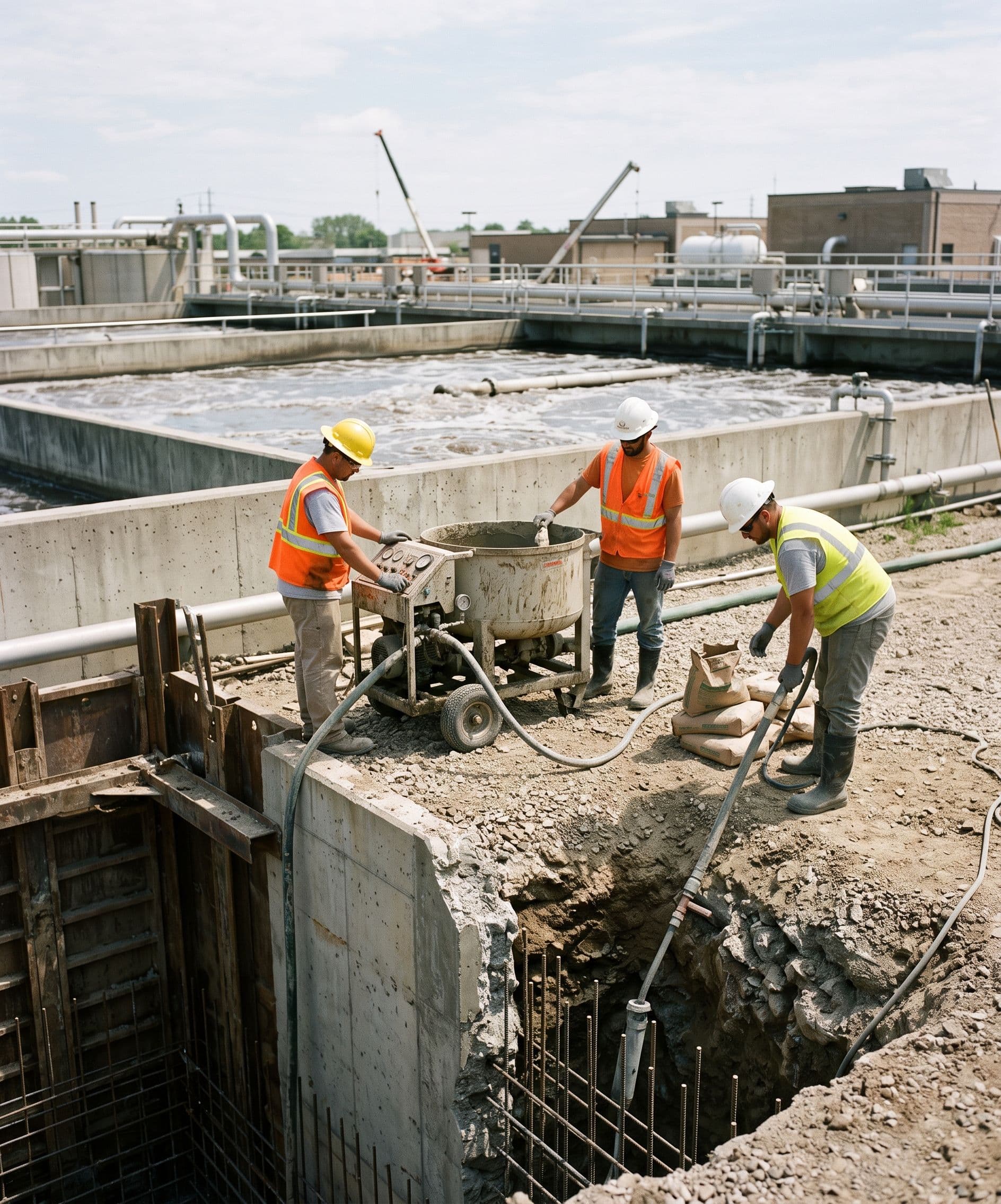
Treatment facility work demands a fix that protects adjacent structures without interrupting the treatment process itself.
Protects structures that can't go offline. On a wastewater treatment plant expansion, URETEK recorded zero observed settlement at adjacent aeration tanks throughout the excavation
Matched to what the specific site actually requires. On the same project, jet grouting was ruled out as impractical, and a chemical grout curtain with targeted underpinning was installed instead
Controls groundwater directly at the source, rather than only reinforcing the structures it threatens
Keeps the project on schedule. Even after the initial method was ruled out, the schedule was maintained through project completion
1
Investigation
The excavation area and adjacent treatment structures are evaluated through testing before any plan is designed.
2
Planning
A grouting or injection method is selected specifically for the facility's continuous-operation and regulatory requirements.
3
Access
Small-diameter injection or grouting points are installed with minimal disruption to active treatment processes.
4
Injection
A chemical grout curtain or structural underpinning is placed to control groundwater and protect adjacent structures.
5
Monitoring
Real-time tracking confirms zero settlement at adjacent structures throughout the work.
6
Validation
Final inspection confirms groundwater control and structural protection met the project's requirements.
On a wastewater treatment plant expansion, URETEK recorded zero observed settlement at adjacent aeration tanks or structures throughout the excavation, confirmed by monitoring rather than assumed after the fact.
On the same treatment plant excavation, jet grouting proved impractical for the site's specific conditions. URETEK installed a chemical grout curtain and targeted underpinning instead, a method matched to what the site actually required rather than a default approach.
Not necessarily. On the treatment plant excavation project, the schedule was maintained through project completion even after the initial method was ruled out and replaced.
Yes, in most cases. The treatment plant excavation project maintained zero settlement at adjacent aeration tanks and kept the schedule on track, with no indication that plant operations needed to be interrupted.
Deep excavation can draw down groundwater in the surrounding area, removing support from soil beneath adjacent structures. Controlling that groundwater directly, as with a chemical grout curtain, is what prevents the settlement risk from reaching nearby tanks or foundations.
Get an expert site assessment and a tailored stabilization solution.
Request a Site Assessment
URETEK
Ground improvement solutions engineered for performance.
Contact Us
Find Local Experts


13900 Humble Road, Tomball, TX 77375
Services
Solutions

 800-240-7868


