

Industries
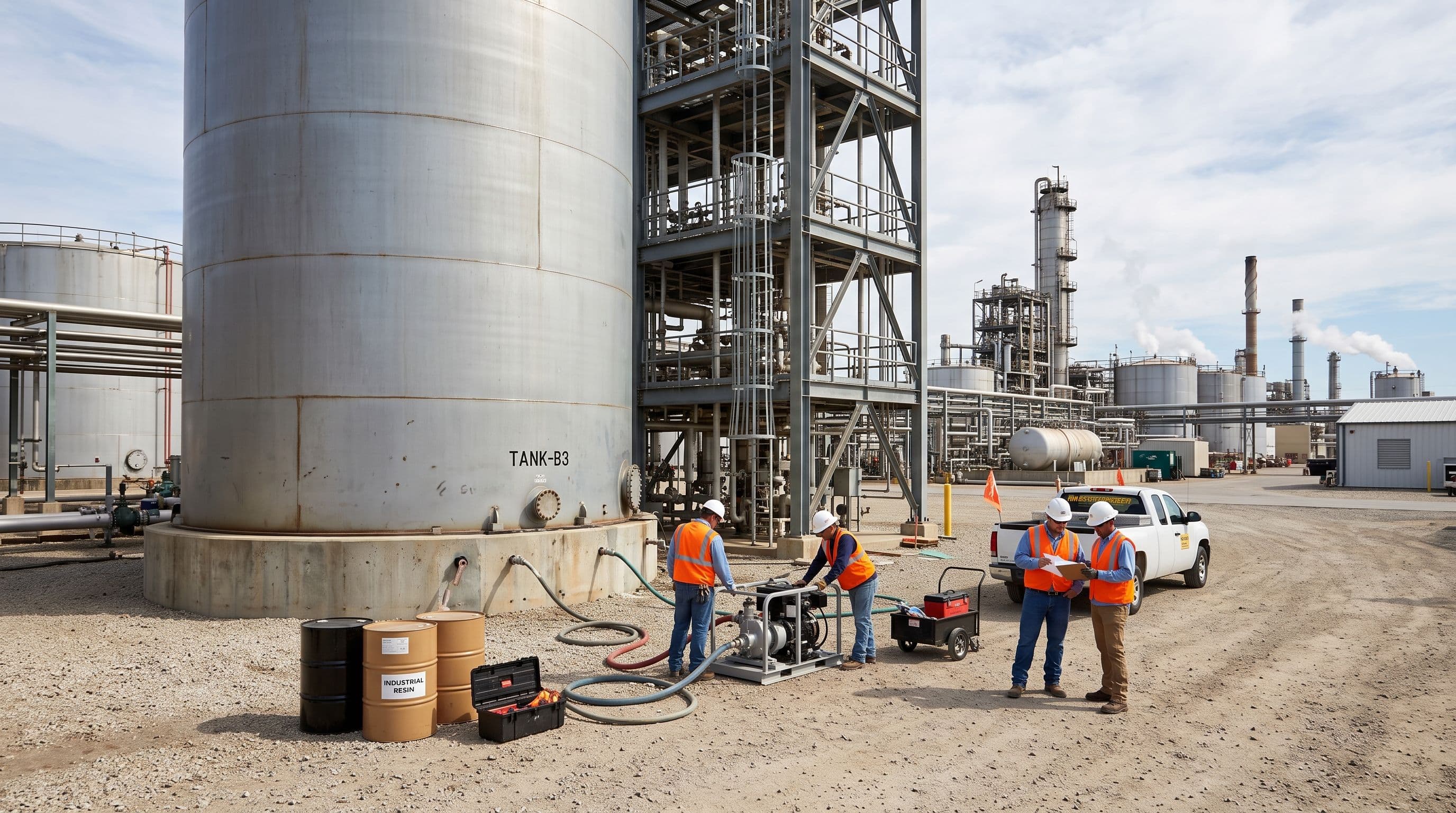
Manufacturing plants, refineries, and processing facilities all carry heavy, concentrated loads, storage tanks, process equipment, structural columns, on soil that has to hold steady around the clock. When that soil weakens, the fix has to happen without shutting down production or taking a tank or process line offline. URETEK stabilizes the ground beneath industrial facilities through small-hole polymer injection, restoring support without the excavation or extended downtime a traditional repair would need.
Industrial sites share three pressures, whether the asset is a manufacturing plant, a refinery, or a processing facility.

Settlement beneath tank pads, process equipment, and structural columns carrying constant, concentrated loads
Repairs that have to happen without stopping production or taking a storage tank, process line, or structure offline
Soil and containment problems, like a deteriorating pond liner or foundation, that get worse the longer they run undetected in an active industrial environment
Manufacturing Plants
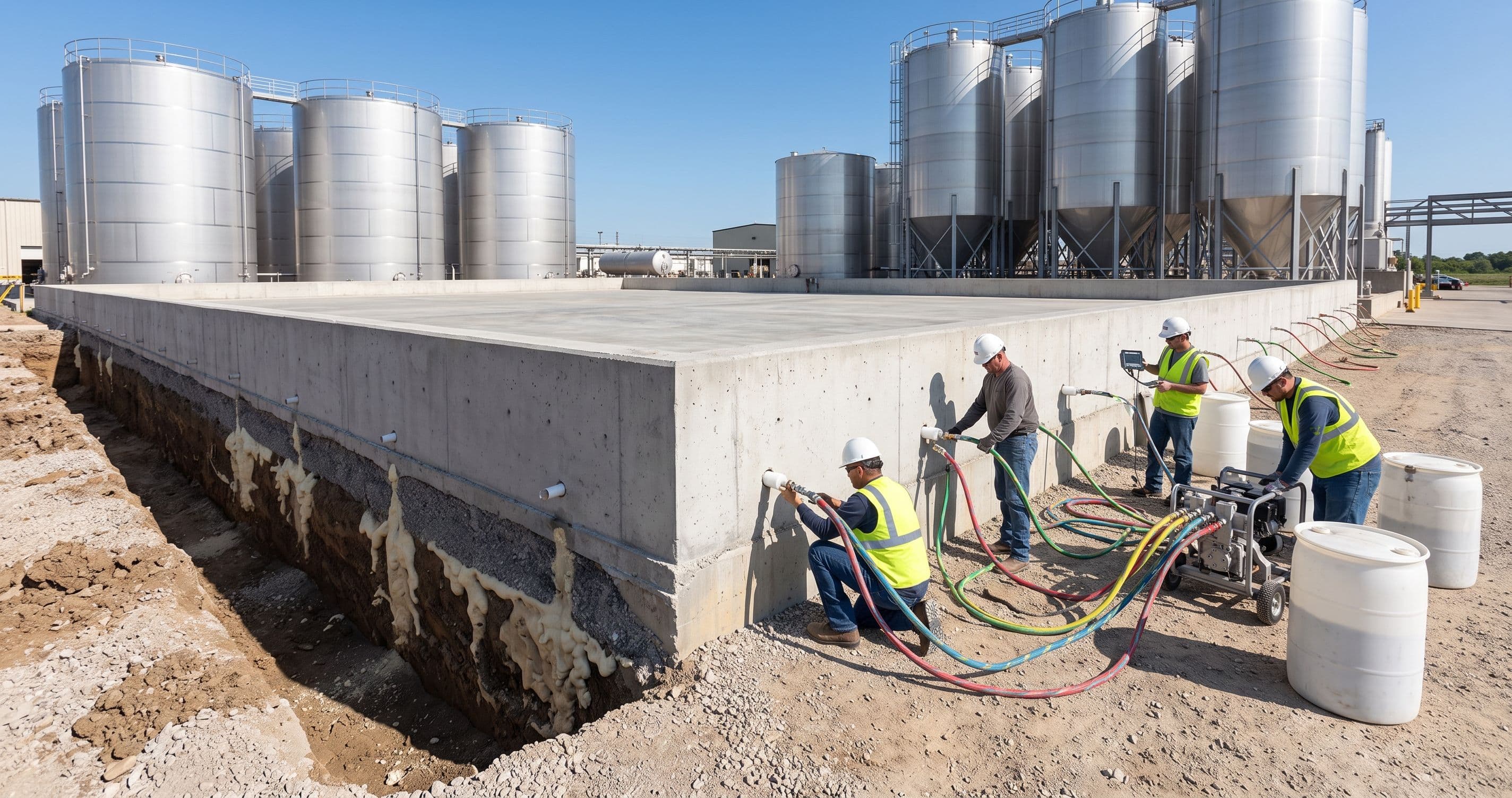
URETEK stabilizes soil beneath production tanks, equipment foundations, and plant infrastructure using expanding polymer injection, without halting production.
Read More about Manufacturing Plants

Mining Infrastructure
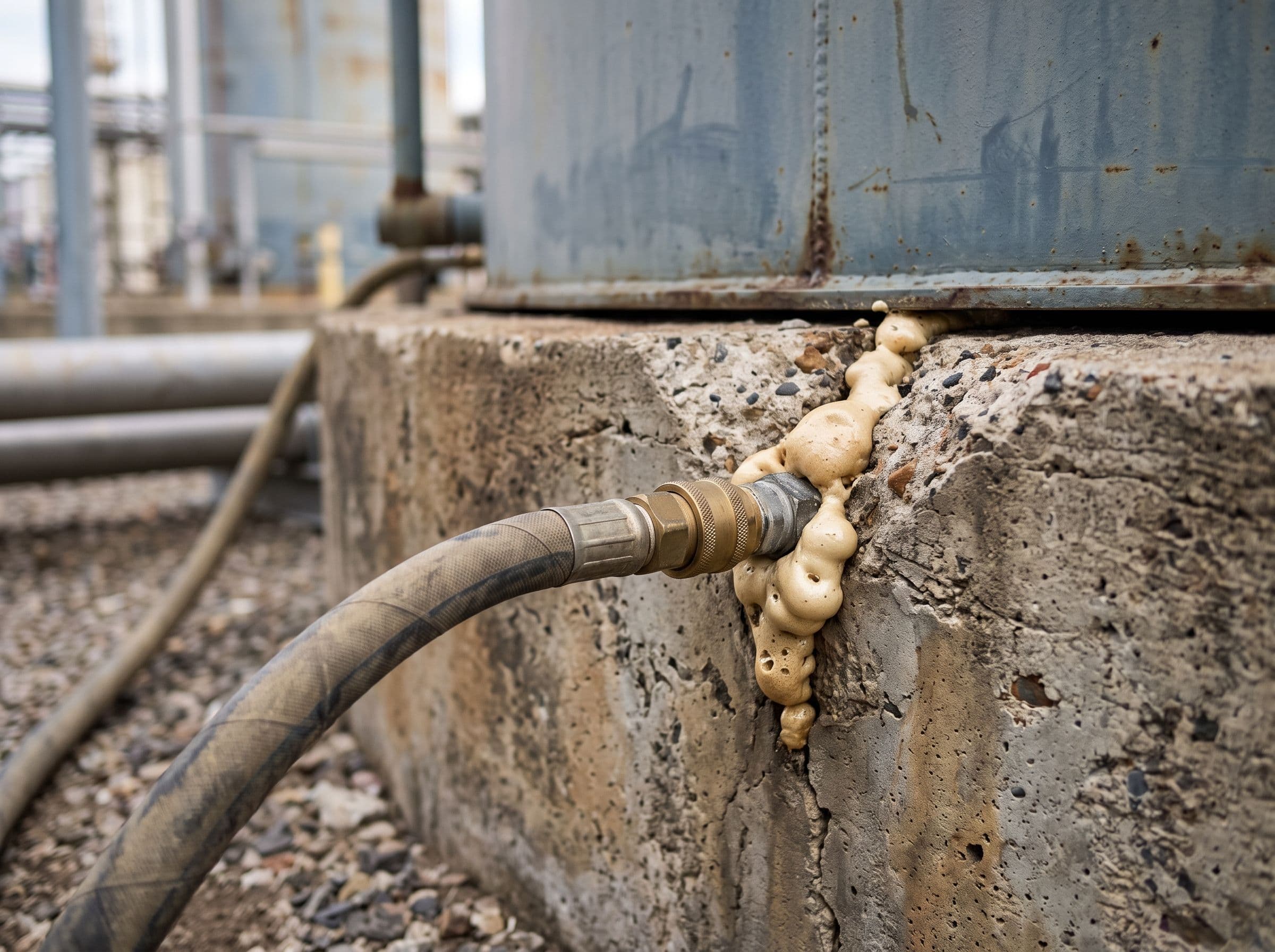
Ground stabilization guidance for mining and extraction facility infrastructure, covering foundation settlement near active mining operations.
Read More about Mining Infrastructure

Processing Facilities
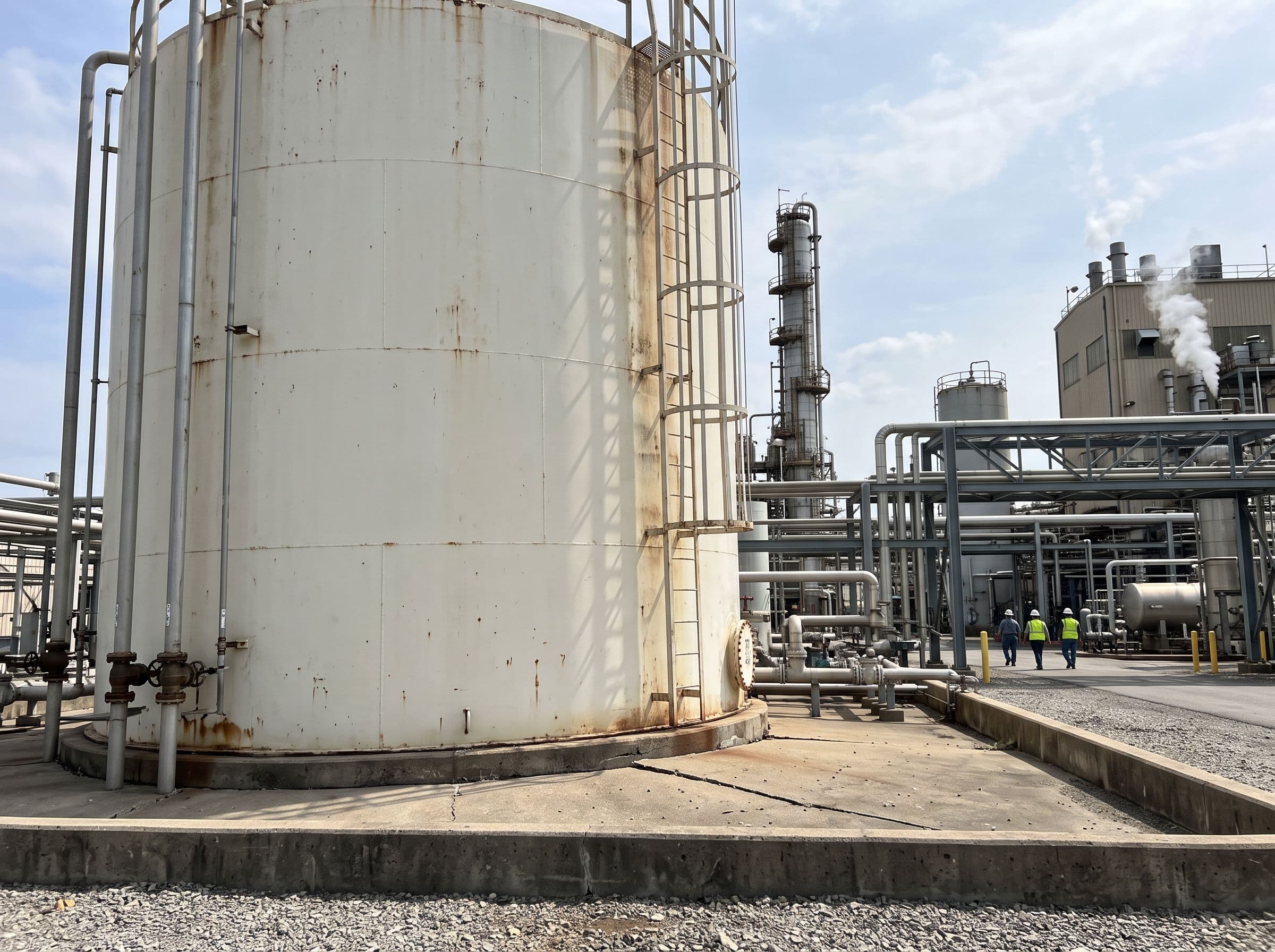
URETEK stabilizes tank pads and storage foundations at food and material processing facilities affected by weak soils and drainage issues, using expanding polymer injection without halting operations.
Read More about Processing Facilities
Refineries
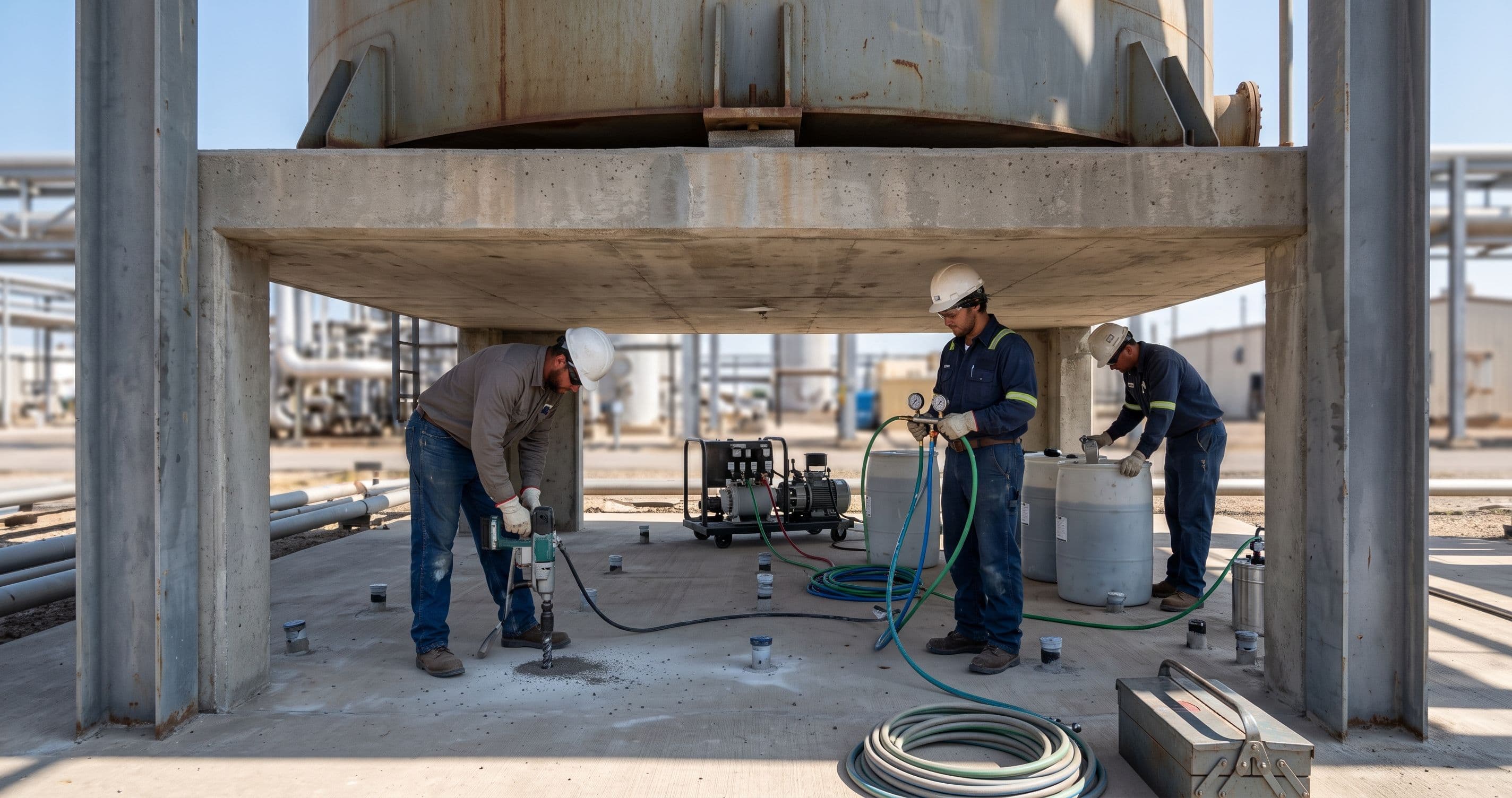
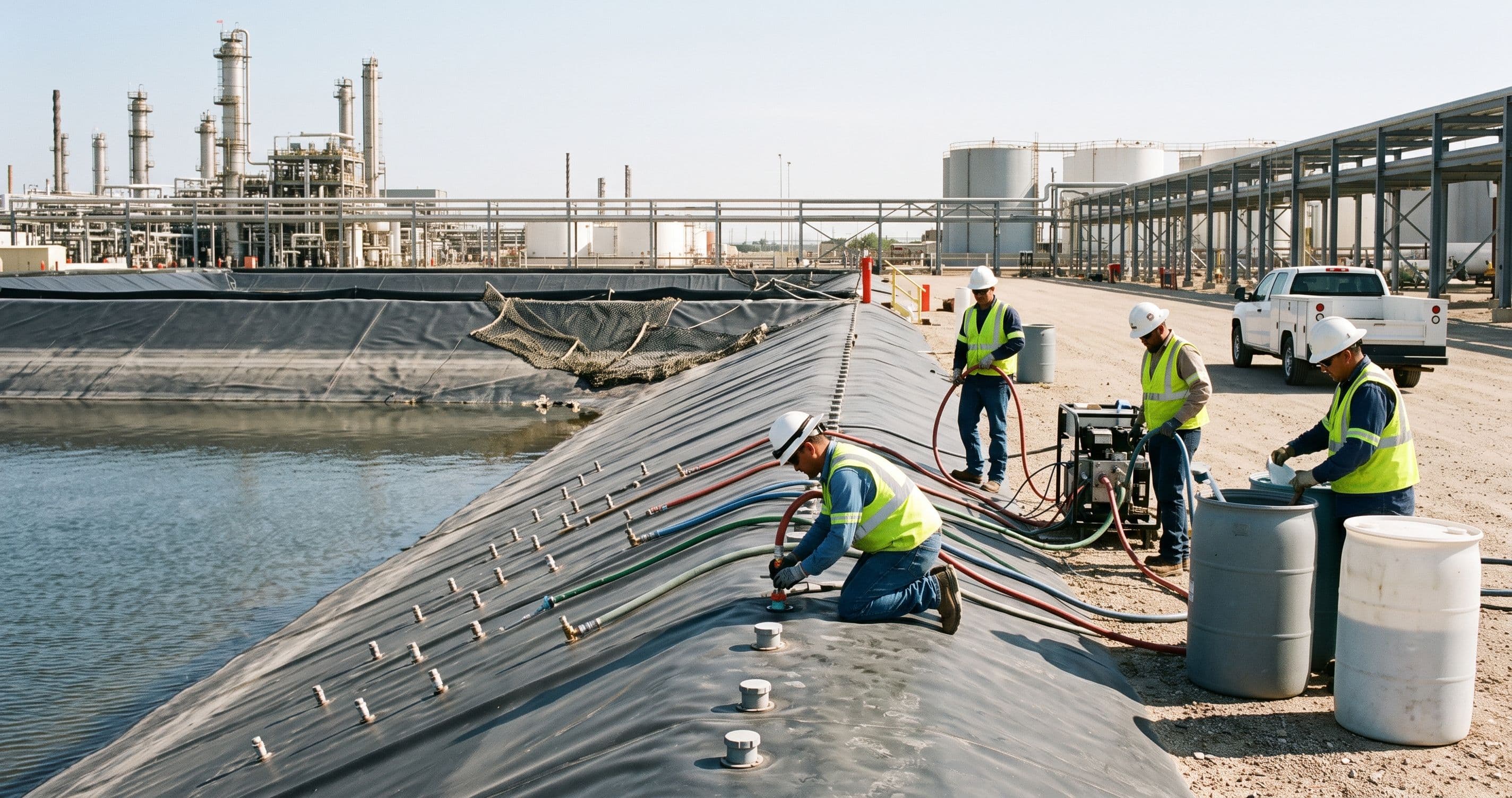
URETEK reconstructs deteriorated containment pond liners and stabilizes foundation soil beneath refinery processing infrastructure using expanding polymer injection, without halting operations.
Read More about Refineries
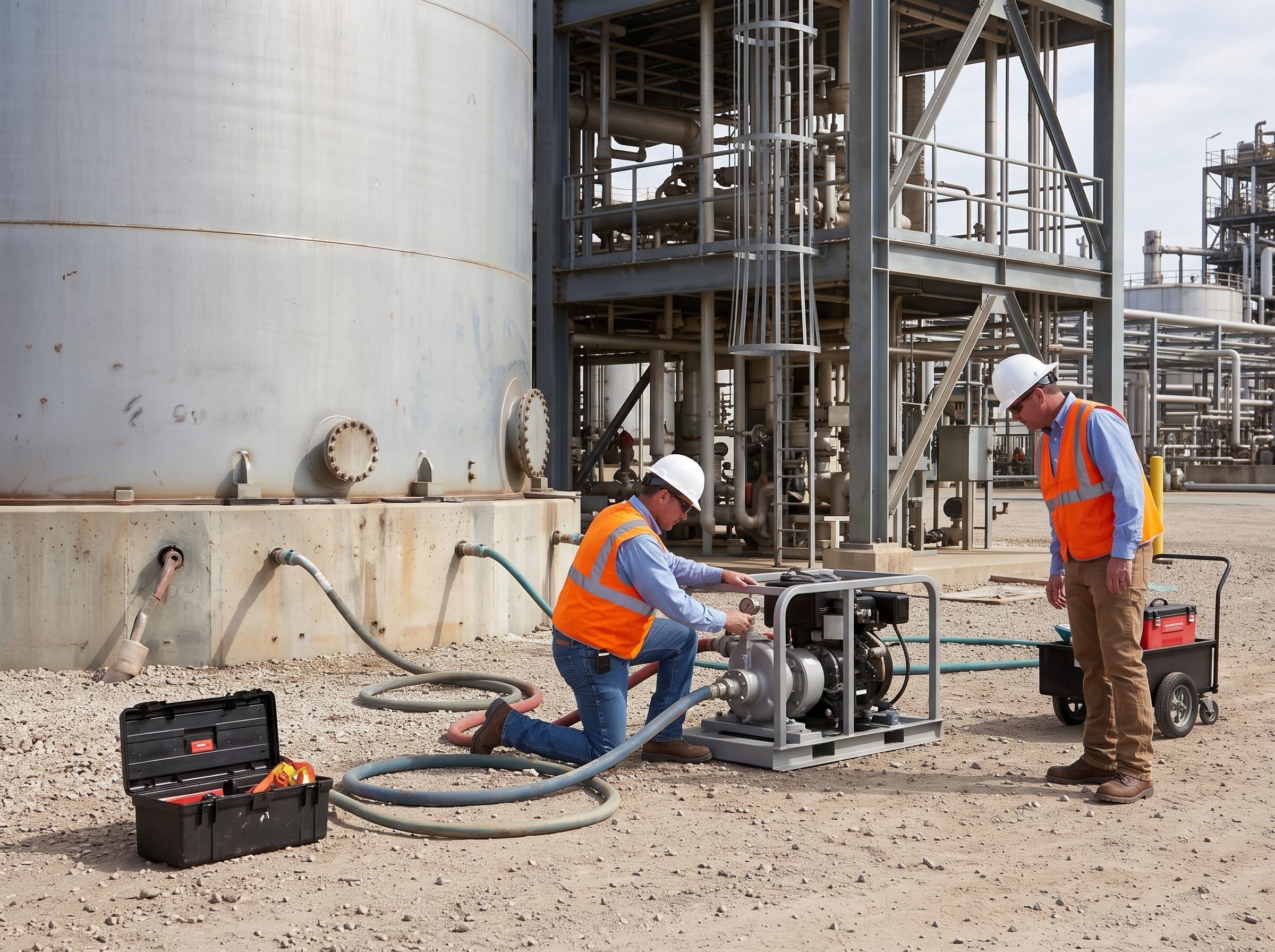
Tank pads, foundations, and the soil beneath them are evaluated on site, often alongside the facility's own engineering team, before any repair plan is proposed.
Injection design is built around the specific structure and its load, whether that is a storage tank pad, a process line foundation, or a containment pond liner.
Work is scheduled and phased to keep the facility operating, with treatment installed through small access points rather than the excavation a full shutdown repair would require.
At the Saputo Dairy Plant in Murray, Kentucky, URETEK designed a plan to stabilize and bridge weak soils at two different depths beneath a 50,000-gallon tank's foundation pad, and the fix has now held for 15 years. At an industrial food processing facility in Kentucky, the tank pad has been monitored for more than two years since the repair with no additional settlement detected.
The injection pattern is designed around the specific structure and its soil conditions. A tank pad under a dairy production tank needs a different depth profile than a firewater pond liner at a petrochemical plant, where URETEK completed 76 injections across two ponds to reconstruct deteriorated side-slopes and floors.
Often, significantly. At the University of Tennessee's facility support building, URETEK's method saved an estimated $380,000 compared to the originally proposed alternative of excavating and installing helical piers at each of 142 column locations.
That is the design goal on every industrial site URETEK works. The University of Tennessee column stabilization was completed in increments over six weeks specifically so the facility could keep operating, rather than requiring a full shutdown.
Reach out directly, particularly for refinery-specific work. Manufacturing plants and processing facilities each have documented, published projects on this site, but refinery-specific case studies are thinner, and we would rather point you to what is genuinely documented than overstate it.
Get your manufacturing plant, refinery, or processing facility assessed by a team that works around active operations.
Request Proposal
URETEK
Ground improvement solutions engineered for performance.
Contact Us
Find Local Experts


13900 Humble Road, Tomball, TX 77375
Services
Solutions

 800-240-7868

