

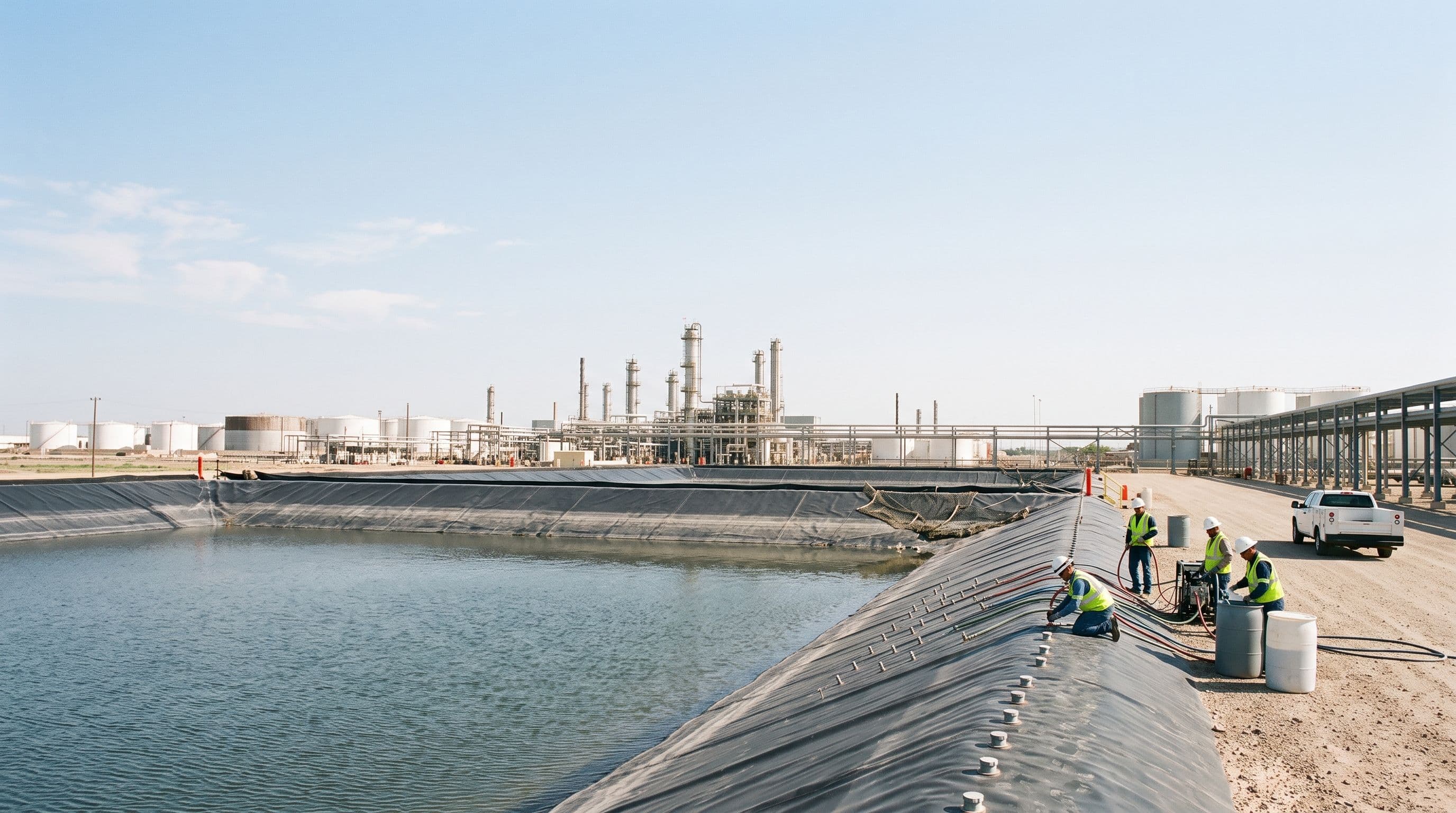
A refinery's containment structures, firewater ponds, retention basins, lined containment areas, serve a safety function, not just an operational one.
Solutions for this Industry
Active Water Intrusion

Erosion Voids
Weak Soils
Sibling Industries
Manufacturing Plants
Processing Facilities
Need a Site Assessment?

800-240-7868

A refinery's containment structures, firewater ponds, retention basins, lined containment areas, serve a safety function, not just an operational one. When a liner deteriorates and seepage begins, it becomes a compliance issue as much as a maintenance one. Refineries and petrochemical facilities turn to targeted ground stabilization when a containment pond or foundation needs to be restored without shutting down active processing operations.
Refinery and petrochemical infrastructure carries safety and compliance pressures most other industrial facilities don't face at the same intensity.

Containment structures like firewater ponds, retention basins, and lined containment areas losing integrity as liners deteriorate over years of chemical exposure
Continuous processing operations, since a refinery generally can't shut down production while a containment or foundation repair is completed
Heavy processing equipment and vessel foundations under continuous vibration and thermal cycling from ongoing operations
Strict safety protocols for any construction work near active processing units, storage tanks, or hazardous materials
Meeting EPA, state environmental agency, and refinery-specific safety standards throughout any repair work
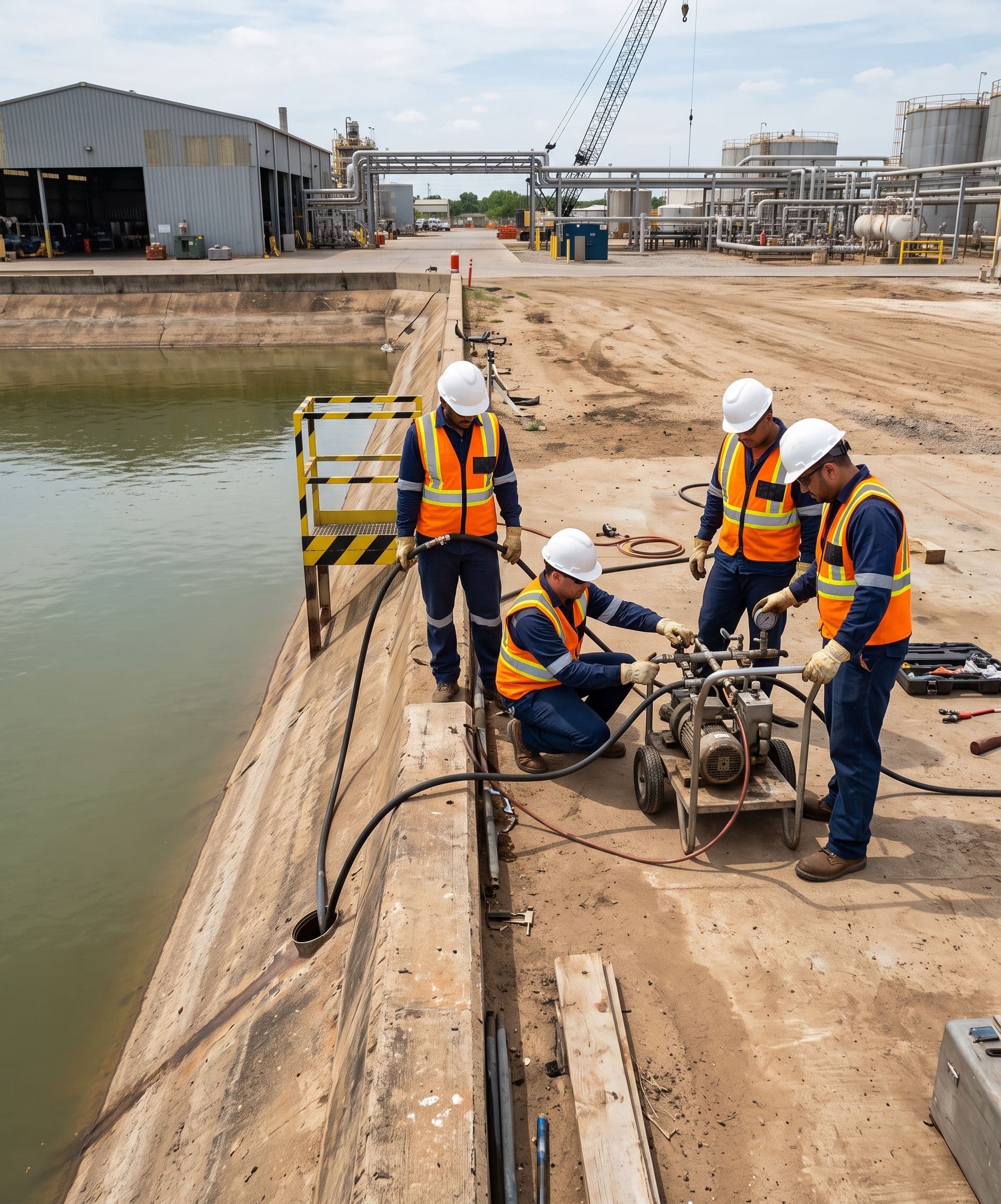
Refinery infrastructure demands a fix that restores containment or foundation integrity without interrupting active processing.
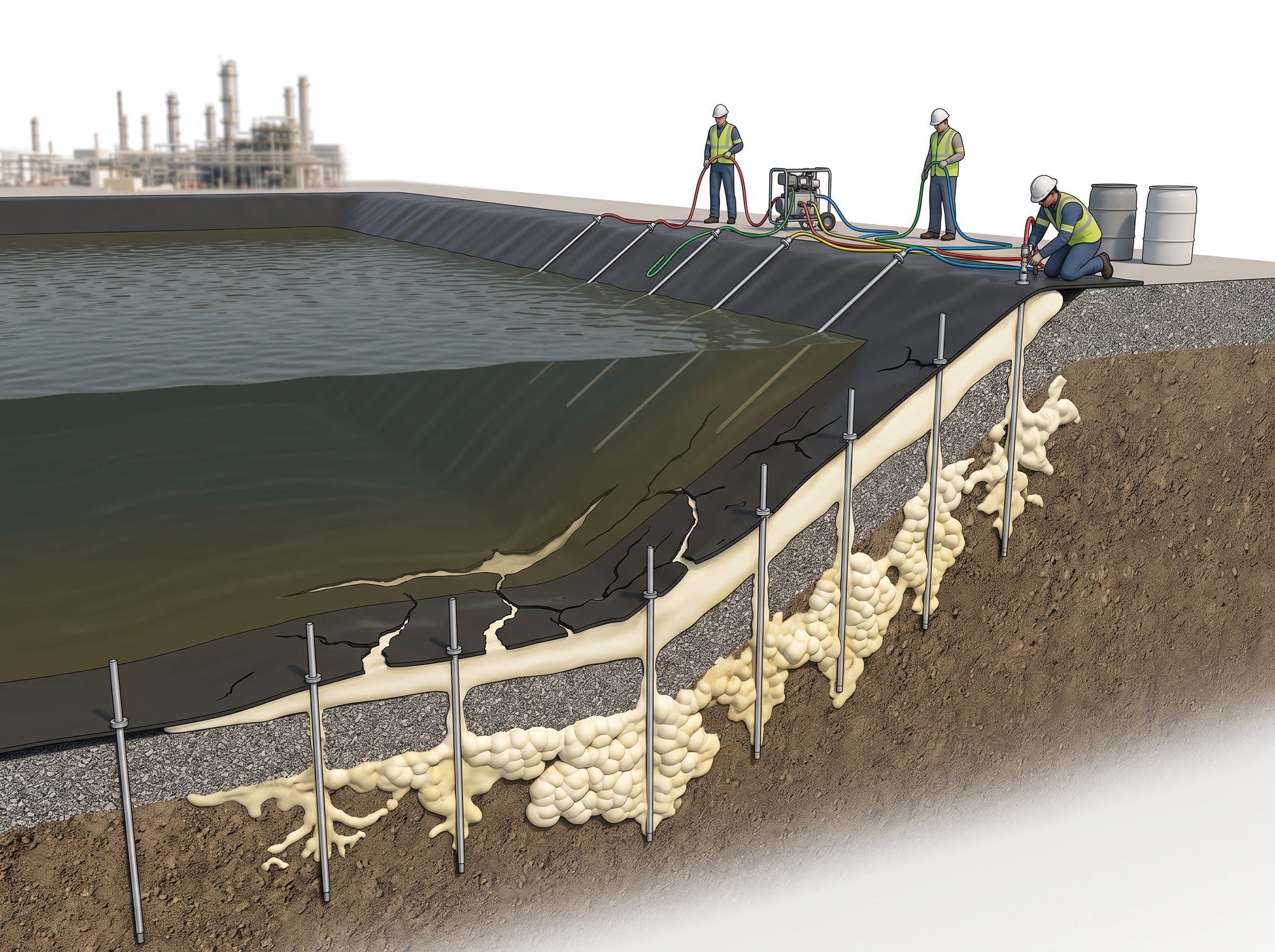
Reconstructs the liner directly, rather than patching over it. At a petrochemical plant in Pasadena, Texas, URETEK reconstructed pond side-slopes and floors through injection rather than draining and rebuilding the liner from scratch
Engineered around the facility's own safety protocols for work near active processing units
Matched to each area's specific condition. The same Pasadena project used 38 injection points for one pond and 19 for the other, rather than a uniform pattern applied to both
Often well under the cost of traditional repair. The Pasadena project was completed at a fraction of the cost conventional methods would have required
1
Investigation
Containment liner, pond, or foundation conditions are evaluated through testing before any plan is designed.
2
Planning
Injection design is engineered around the facility's safety protocols and the specific containment or foundation issue found.
3
Access
Small-diameter injection points are installed with minimal disruption to active processing operations.
4
Injection
Expanding polymer is placed to reconstruct containment side-slopes and floors, or stabilize foundation soil, as needed.
5
Monitoring
Real-time tracking confirms treatment coverage across every injection point.
6
Validation
Final inspection confirms containment integrity or foundation stability and compliance with the facility's standards.
At a petrochemical plant in Pasadena, Texas, URETEK completed 76 total injections across 57 points at 4 and 8-foot depths, engineered to reconstruct the pond's side-slopes and floors directly rather than patching over the deteriorated liner.
The pattern is matched to each pond's specific condition. On the Pasadena, Texas project, 38 injection points addressed the south pond and 19 addressed the north pond, rather than applying a uniform pattern to both.
Often significantly so. The Pasadena, Texas petrochemical plant project was completed at a fraction of the cost traditional repair methods would have required.
In most cases, yes. The work is performed through small-diameter injection points rather than draining and excavating the containment area, minimizing disruption to operations around it.
Firewater ponds and containment structures at a refinery serve a safety function. Seepage through a deteriorated clay liner isn't just a maintenance item, it's a genuine safety and environmental compliance concern that needs to be addressed directly, not patched temporarily.
Get an expert site assessment and a tailored stabilization solution.
Request a Site Assessment
URETEK
Ground improvement solutions engineered for performance.
Contact Us
Find Local Experts


13900 Humble Road, Tomball, TX 77375
Services
Solutions

 800-240-7868


