

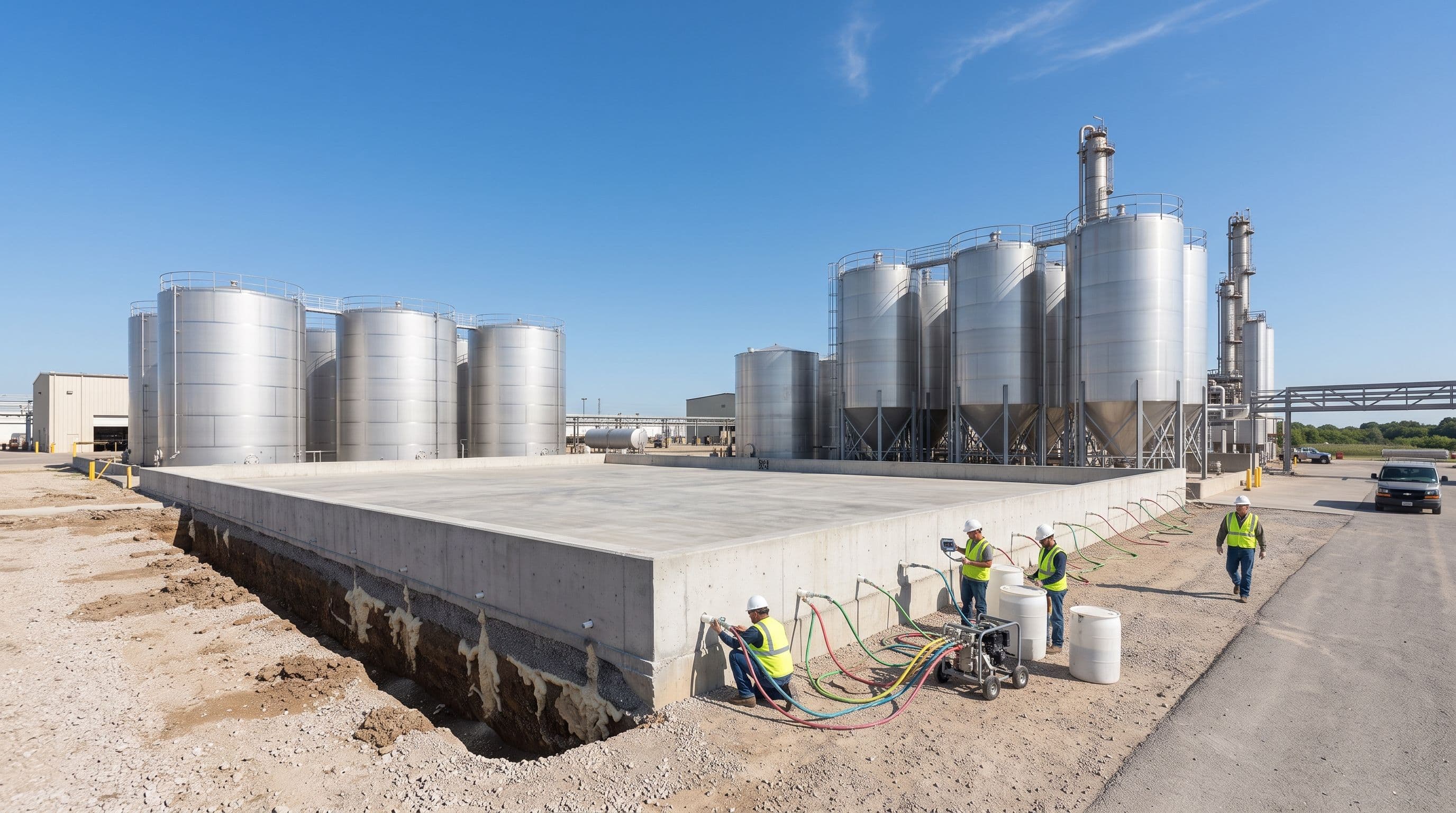
Food and material processing facilities depend on storage tanks, silos, and processing equipment that place concentrated loads on soil often weakened by the same drainage issues that make a site suited to processing in the first place.
Solutions for this Industry
Weak Soils

Erosion Voids
Settlement Remediation
Sibling Industries
Manufacturing Plants
Refineries
Need a Site Assessment?

800-240-7868

Food and material processing facilities depend on storage tanks, silos, and processing equipment that place concentrated loads on soil often weakened by the same drainage issues that make a site suited to processing in the first place. When that soil settles, a facility can't simply pause production while it's addressed. Processing facilities turn to targeted ground stabilization when weak soil and drainage problems threaten a tank pad or storage foundation.
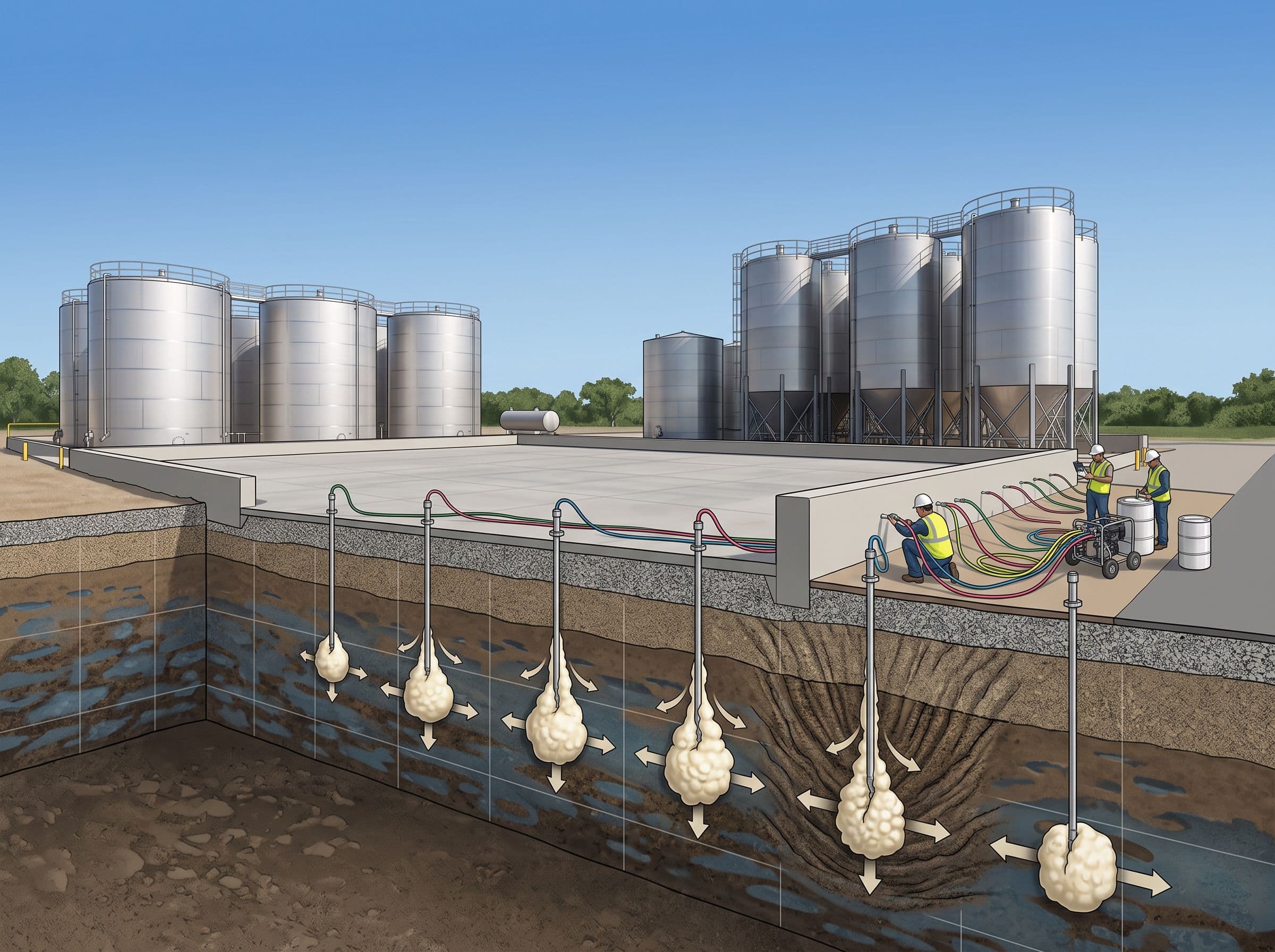
Processing facilities carry a specific combination of pressures tied to storage infrastructure and continuous operation.

Weak soils and water drainage issues affecting tank pads, storage structures, and processing equipment foundations
Continuous processing schedules, since a food or material processing facility often can't pause operations for an extended ground repair
Storage tanks and silos placing concentrated point loads on soil that may not have been engineered for that specific weight
Sanitation and food-safety compliance requirements limiting which repair methods are acceptable near active processing areas
Long-term monitoring expectations, since a processing facility depends on foundation stability holding for years without recurring issues
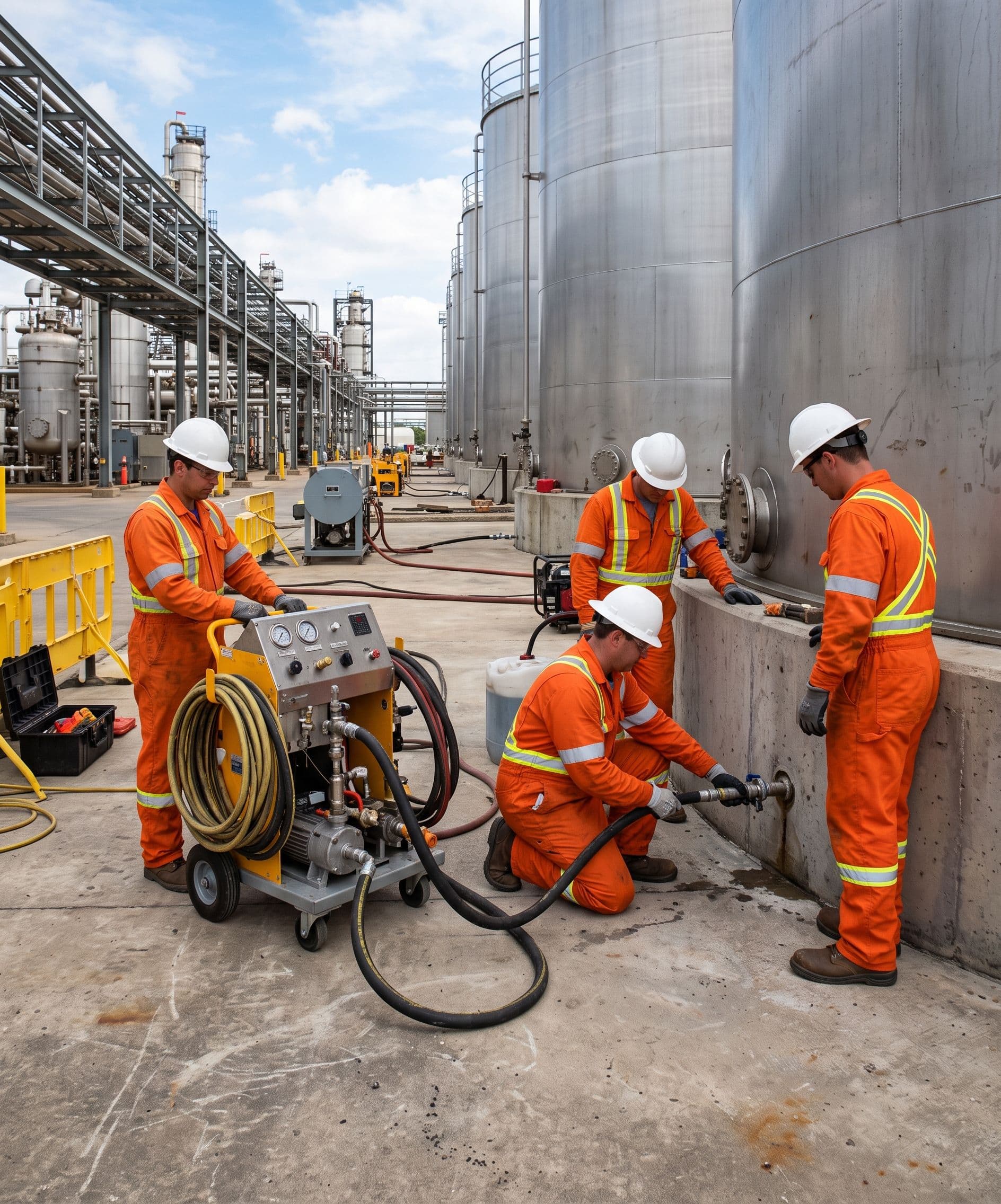
Processing facilities demand a fix that addresses weak soil and drainage together, without stopping operations to do it.
Works through small access points without halting ongoing processing operations
Engineered around each facility's specific weak-soil and drainage conditions, not a one-size-fits-all approach
Holds up over the long term. At an industrial food processing facility in Kentucky, the tank pad has been monitored for more than two years since completion, with no additional settlement detected
Crews can mobilize on short notice, including nights, weekends, or holidays, so stabilization work can be scheduled around processing demands
1
Investigation
Tank pad, storage structure, and surrounding soil and drainage conditions are evaluated through testing before any plan is designed.
2
Planning
Injection design is developed around the specific weak-soil and drainage issues found at the facility.
3
Access
Small-diameter injection points are installed with minimal disruption to active processing operations.
4
Injection
Expanding polymer is placed to stabilize soil beneath the affected tank pad or foundation.
5
Monitoring
Real-time tracking confirms alignment and stabilization throughout treatment.
6
Validation
Final inspection confirms foundation stability, with follow-up monitoring available to confirm long-term performance.
At an industrial food processing facility in Kentucky, the tank pad has been monitored for more than two years since URETEK completed its work, with no additional settlement issues detected.
At two different industrial food storage and processing facilities in Kansas and Kentucky, both facing similar weak soil and drainage challenges, URETEK's Deep Injection process addressed the underlying soil condition directly at both locations.
In most cases, yes, since there is no excavation and no tank relocation required. The fix is applied directly beneath the affected foundation from small access points.
In most cases, yes. The Kansas and Kentucky facilities were addressed through small-access-point injection rather than a method that would have required stopping operations.
Poor drainage contributes directly to weak soil conditions, since water saturating the ground beneath a foundation reduces its bearing capacity. The two problems are often connected, which is why both facilities in the Kansas and Kentucky case needed the same combined approach.
Get an expert site assessment and a tailored stabilization solution.
Request a Site Assessment
URETEK
Ground improvement solutions engineered for performance.
Contact Us
Find Local Experts


13900 Humble Road, Tomball, TX 77375
Services
Solutions

 800-240-7868


