

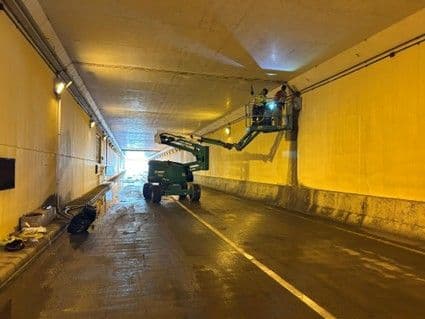
A tunnel only has one side you can reach, the inside, which makes water ingress a different kind of problem than it is anywhere else in transportation infrastructure.
Solutions for this Industry
Tunnel Leaks

Joint Leaks
Active Water Intrusion
Sibling Industries
Highways
Bridges
Rail Systems
Airports
Need a Site Assessment?

800-240-7868

A tunnel only has one side you can reach, the inside, which makes water ingress a different kind of problem than it is anywhere else in transportation infrastructure. Groundwater or a nearby waterway pushes against the structure constantly, and any weakness in the liner, a joint, or a crack becomes the path of least resistance. Transit authorities, transportation departments, and airport operators turn to interior sealing when a tunnel leak needs to be stopped without an extended shutdown.
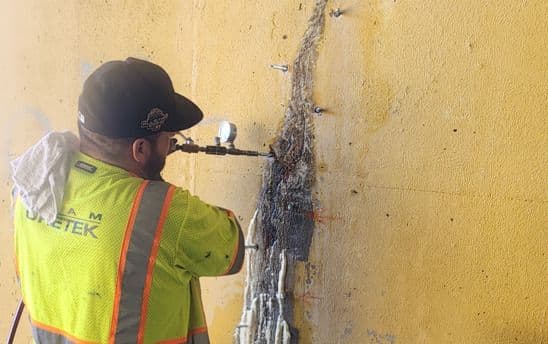
Tunnel infrastructure faces a pressure that road and rail assets built above ground simply don't.

Water ingress through the tunnel liner, joints, or cracks under constant hydrostatic pressure from surrounding groundwater
Legacy tunnels built before modern water-cutoff standards, especially expansion joints not designed for today's sealing requirements
Limited access, since a tunnel only has one side reachable, all work must be performed entirely from the interior
Narrow closure windows, since most tunnel work must be scheduled during off-peak hours or overnight shifts to avoid disrupting traffic
Coordinating repairs with the transit authority, DOT, or airport operator responsible for what the tunnel actually serves
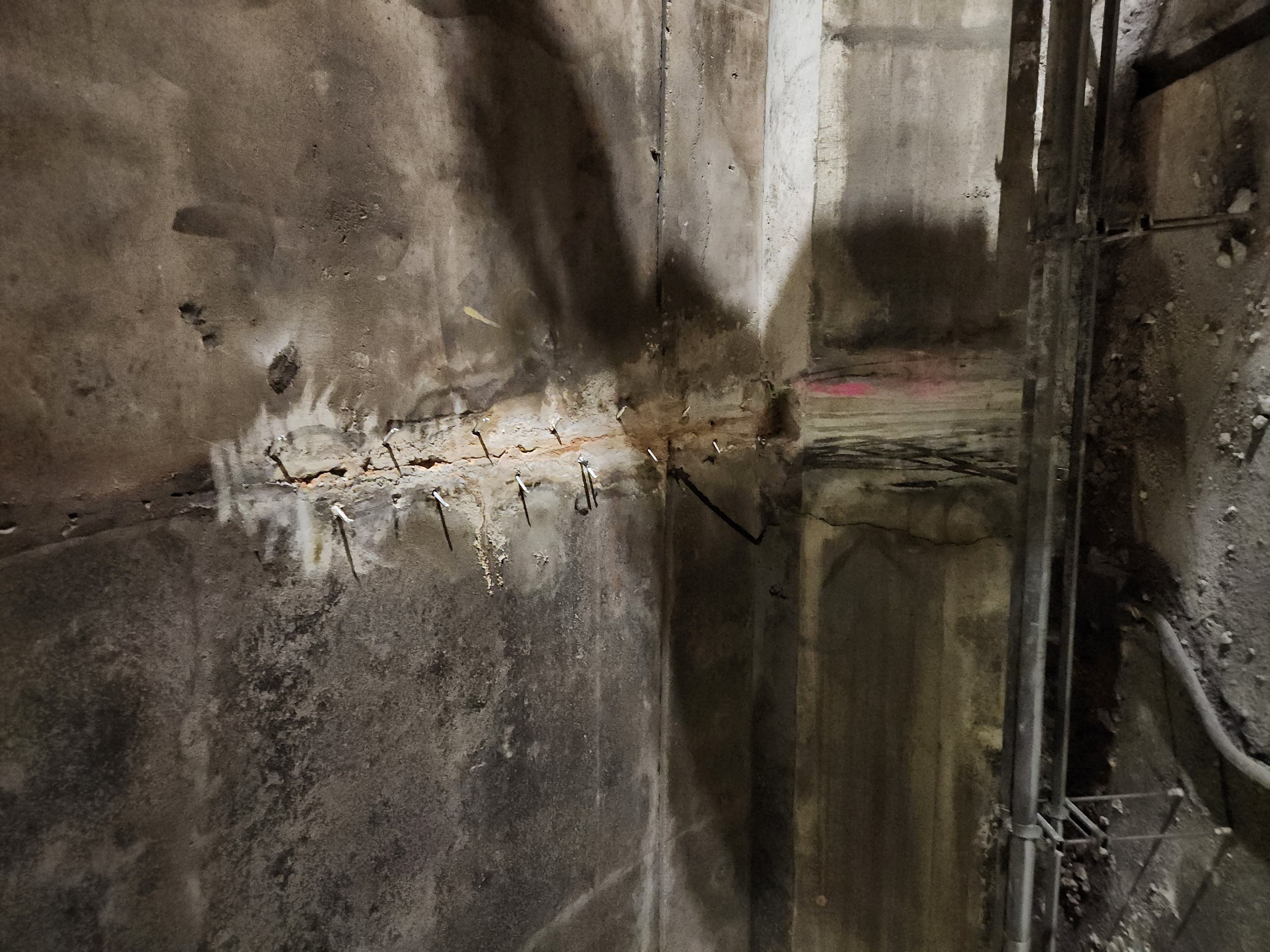
Tunnel infrastructure demands a fix that works entirely from the interior, on a schedule that gets the tunnel back in service fast.
Fits within a scheduled closure window. On a major urban vehicular tunnel project, the tunnel returned to full service on schedule both mornings
Injection plans are verified against a defined pass/fail acceptance criteria before the closure window ends, not just visually inspected
Addresses every treated location, not just the most visible leak. On the same project, active leaks were arrested at every treated location within a two-shift closure window
Work is performed entirely from the tunnel's interior, with no surface excavation or disruption to whatever is above the tunnel
1
Investigation
Tunnel liner, joints, and cracks are evaluated through inspection and testing to locate the actual leak path.
2
Planning
Injection design and sequencing are developed around the tunnel's specific closure window and access constraints.
3
Access
Small-diameter injection points are installed entirely from the tunnel's interior, no surface excavation.
4
Injection
Hydrophobic polymer or acrylate gel is placed to seal the leak path as needed.
5
Monitoring
Real-time tracking confirms each treated location before the closure window ends.
6
Validation
Final inspection confirms leak arrest and the tunnel returns to service on schedule.
On a major urban vehicular tunnel project, active leaks were arrested at every treated location within a two-shift closure window, with full QA/QC documentation delivered. The injection material is matched to the specific water pressure and crack condition, not applied as a generic patch.
Each treated location is verified individually before the closure window ends. On the same vehicular tunnel project, leaks were confirmed arrested at all treated locations, with the tunnel returned to full service on schedule both mornings.
In most cases, yes, since there's no surface excavation, no disruption to whatever is above the tunnel, and no restoration work once the seal is complete. The fix is applied entirely from the tunnel's interior.
Yes. On a major urban vehicular tunnel project, the work was completed within a two-shift closure window, and the tunnel returned to full service on schedule both mornings.
The same interior injection approach applies regardless of cause. When third-party drilling accidentally breached a tunnel lining and created active water inflow, URETEK's emergency response eliminated the inflow within a two-shift access window with zero safety incidents.
Get an expert site assessment and a tailored stabilization solution.
Request a Site Assessment
URETEK
Ground improvement solutions engineered for performance.
Contact Us
Find Local Experts


13900 Humble Road, Tomball, TX 77375
Services
Solutions

 800-240-7868


