

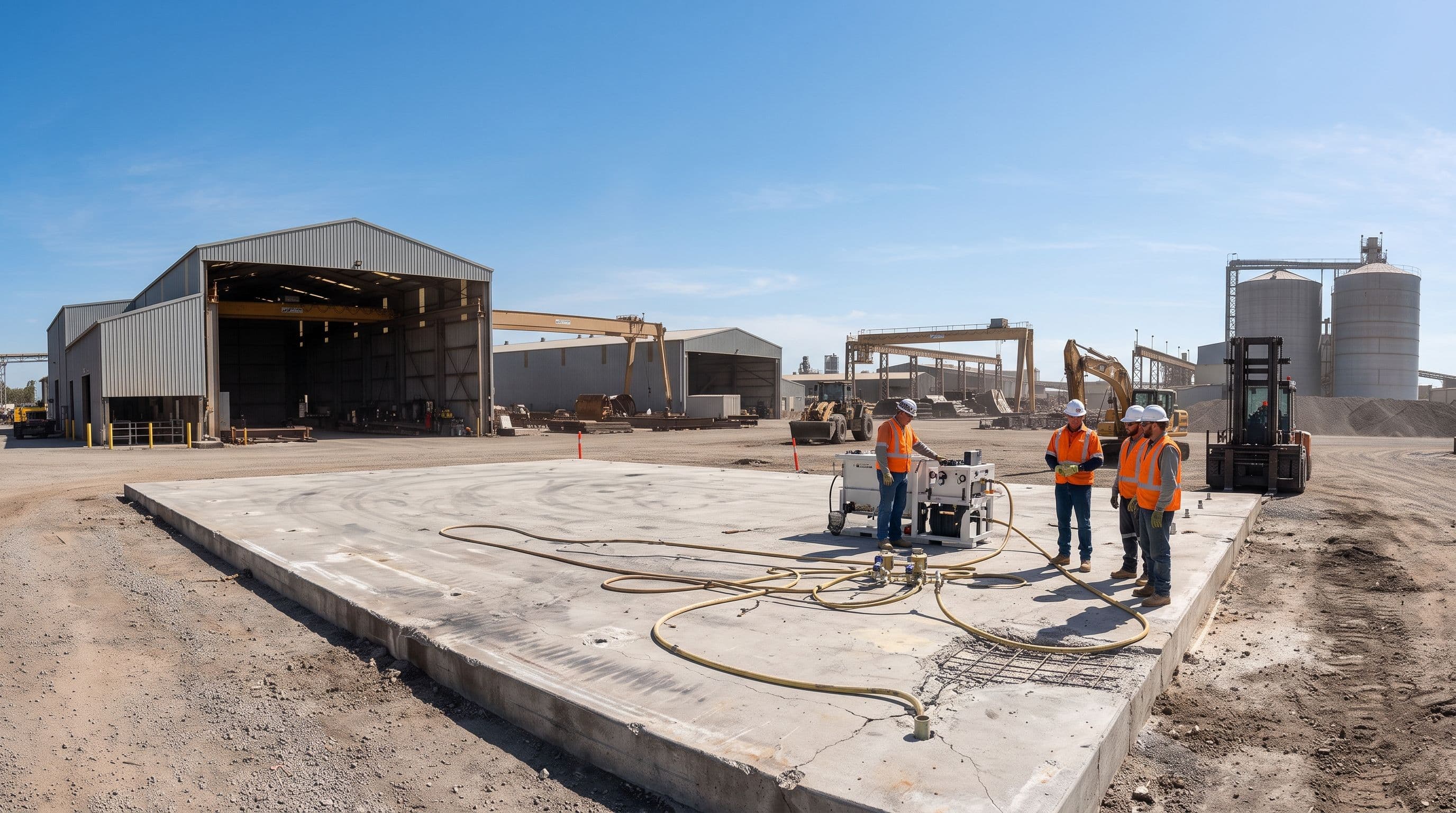
Nuclear facilities are engineered and licensed to tolerances that exceed most other structure types, with foundation performance directly tied to the facility's safety case.
Solutions for this Industry
Weak Soils

Liquefaction Risk
Settlement Remediation
Sibling Industries
Power Plants
Renewable Energy
Need a Site Assessment?

800-240-7868

Nuclear facilities are engineered and licensed to tolerances that exceed most other structure types, with foundation performance directly tied to the facility's safety case. Ground movement that would be a maintenance item elsewhere can carry regulatory significance here. This page describes general ground engineering principles relevant to that class of structure, not a documented URETEK project history in the nuclear sector, see the flag above.

Reinforced foundation systems built to significantly higher load and safety-factor standards than typical industrial construction
Seismic design requirements specific to licensed nuclear facilities, given the consequences of structural movement at this class of asset
Extremely limited tolerance for ground movement near safety-related structures and systems
Regulatory oversight from the Nuclear Regulatory Commission governing any construction or ground-engineering work at a licensed facility
Long facility lifespans, often measured in decades, placing sustained demand on the soil supporting original construction-era foundations
Works through small access points, which matters at a facility where any ground disturbance requires careful evaluation
Any real engagement at a licensed facility would need to be engineered specifically around that facility's own regulatory and licensing requirements, not a standard approach
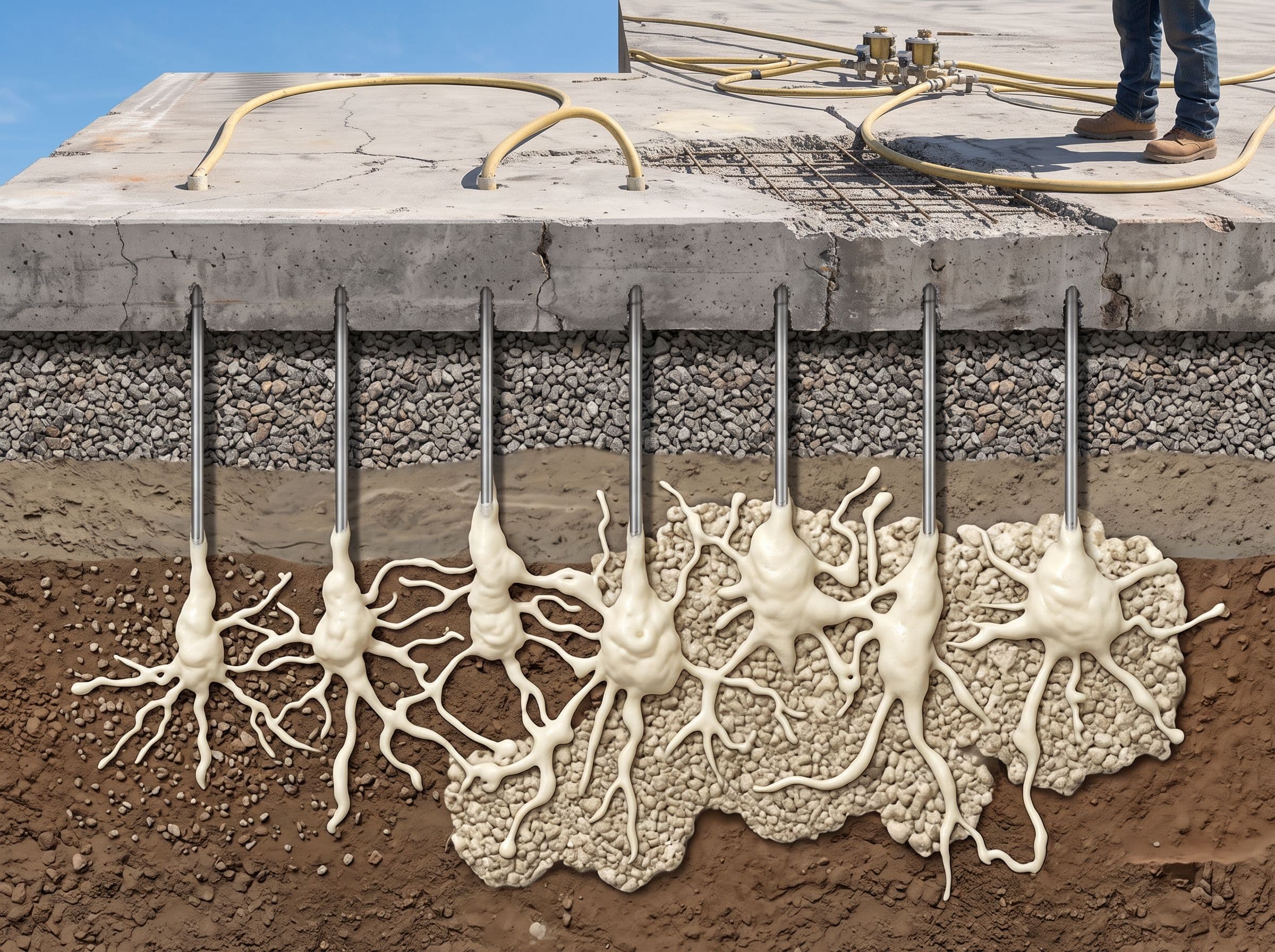
Strengthens soil directly beneath a foundation rather than only reinforcing the structure above it
Crews can generally mobilize on short notice, though scheduling at a licensed facility would follow that facility's own access and security protocols
1
Investigation
Foundation and surrounding soil conditions are evaluated through testing before any plan is designed.
2
Planning
Any injection design would need to be developed around the facility's own licensing basis and safety requirements.
3
Access
Small-diameter injection points, where feasible, minimize disruption relative to conventional excavation.
4
Injection
Expanding polymer is placed to stabilize soil beneath the affected foundation as needed.
5
Monitoring
Real-time tracking confirms alignment and stabilization throughout treatment.
6
Validation
Final inspection would need to confirm compliance with the facility's own regulatory and licensing standards, not a general industry benchmark.
Nuclear facilities are generally designed and licensed with significantly tighter tolerances for structural movement than conventional industrial construction, given the consequences of any deviation at a safety-related structure. Any ground engineering work at such a facility would need to be evaluated against that facility's own licensing basis, not a standard industrial approach.
Nuclear facilities are typically designed to withstand a defined seismic event without loss of safety function, which means the soil beneath safety-related structures is engineered and monitored to a higher standard than most other structure types.
The Nuclear Regulatory Commission oversees licensed nuclear facilities in the United States, and any construction or ground-engineering work would fall under that facility's own regulatory and licensing framework, not a general industry standard.
Facilities built decades ago rely on original construction-era foundations, which may predate current soil engineering standards even where the structure above has been upgraded over time. This is a general consideration for long-lived infrastructure, not a claim about any specific facility's condition.
No project at a licensed nuclear facility is currently documented in URETEK's case study library. This page describes general ground engineering principles relevant to this class of structure, not a specific URETEK project history in the nuclear sector.
Get in touch to discuss your facility's specific ground engineering and regulatory requirements.
Contact Our Team
URETEK
Ground improvement solutions engineered for performance.
Contact Us
Find Local Experts


13900 Humble Road, Tomball, TX 77375
Services
Solutions

 800-240-7868


