

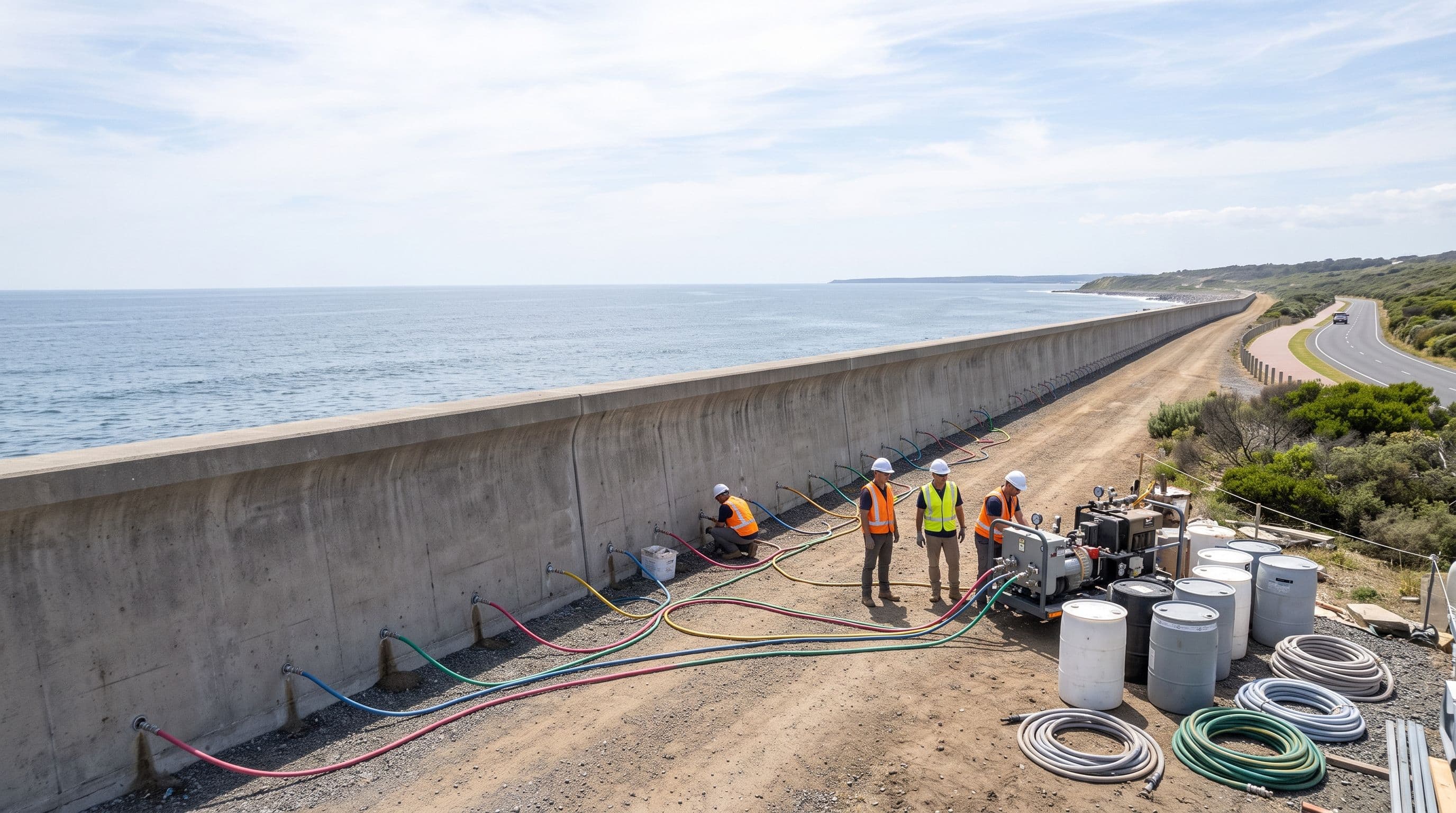
A seawall holds back more than water, it holds back the soil behind it, and tidal action works on that soil every day it's exposed.
Solutions for this Industry
Marine Structure Stabilization

Erosion Voids
Sinkholes
Sibling Industries
Ports
Harbors
Bulkheads
Need a Site Assessment?

800-240-7868

A seawall holds back more than water, it holds back the soil behind it, and tidal action works on that soil every day it's exposed. Barrier island seawalls, coastal roadway protection, and public waterfront walls all face the same underlying pressure: soil eroding out of sight, long before a crack or a sinkhole shows up above. Public agencies and coastal property owners turn to targeted ground stabilization when a seawall's supporting soil needs to be restored without excavating the structure open.
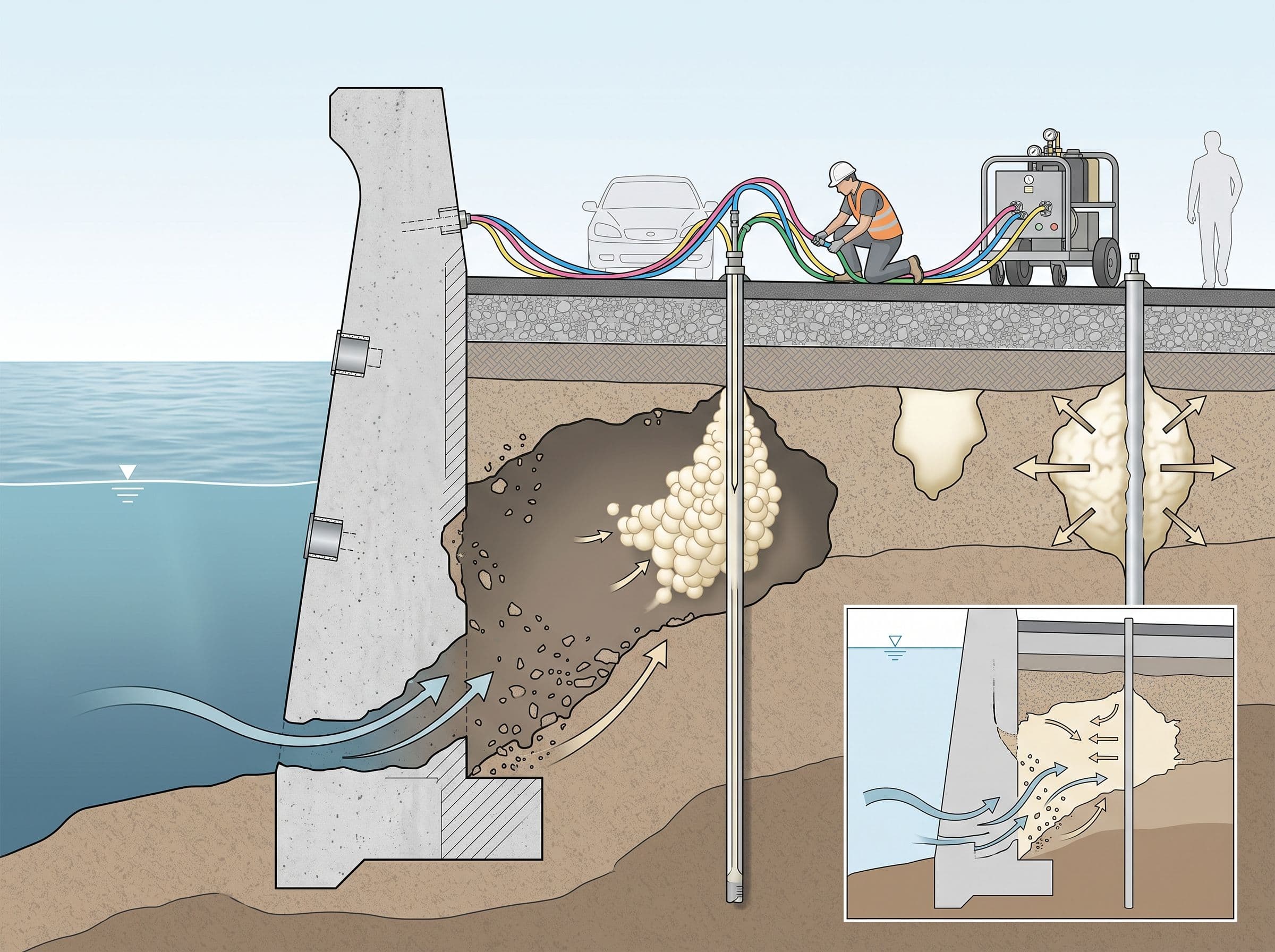
Ocean-facing coastal protection structures face a specific set of pressures tied directly to constant tidal and wave exposure.

Tidal action and wave energy continuously eroding soil from behind or beneath a seawall over years of direct coastal exposure
Storm surge or a major coastal weather event accelerating erosion that would otherwise take decades to develop
Turbidity and environmental monitoring requirements limiting repair methods near sensitive coastal waters
Public roadways, promenades, or structures directly behind a seawall at risk if the wall's supporting soil is compromised
Meeting state coastal protection and environmental agency engineering standards
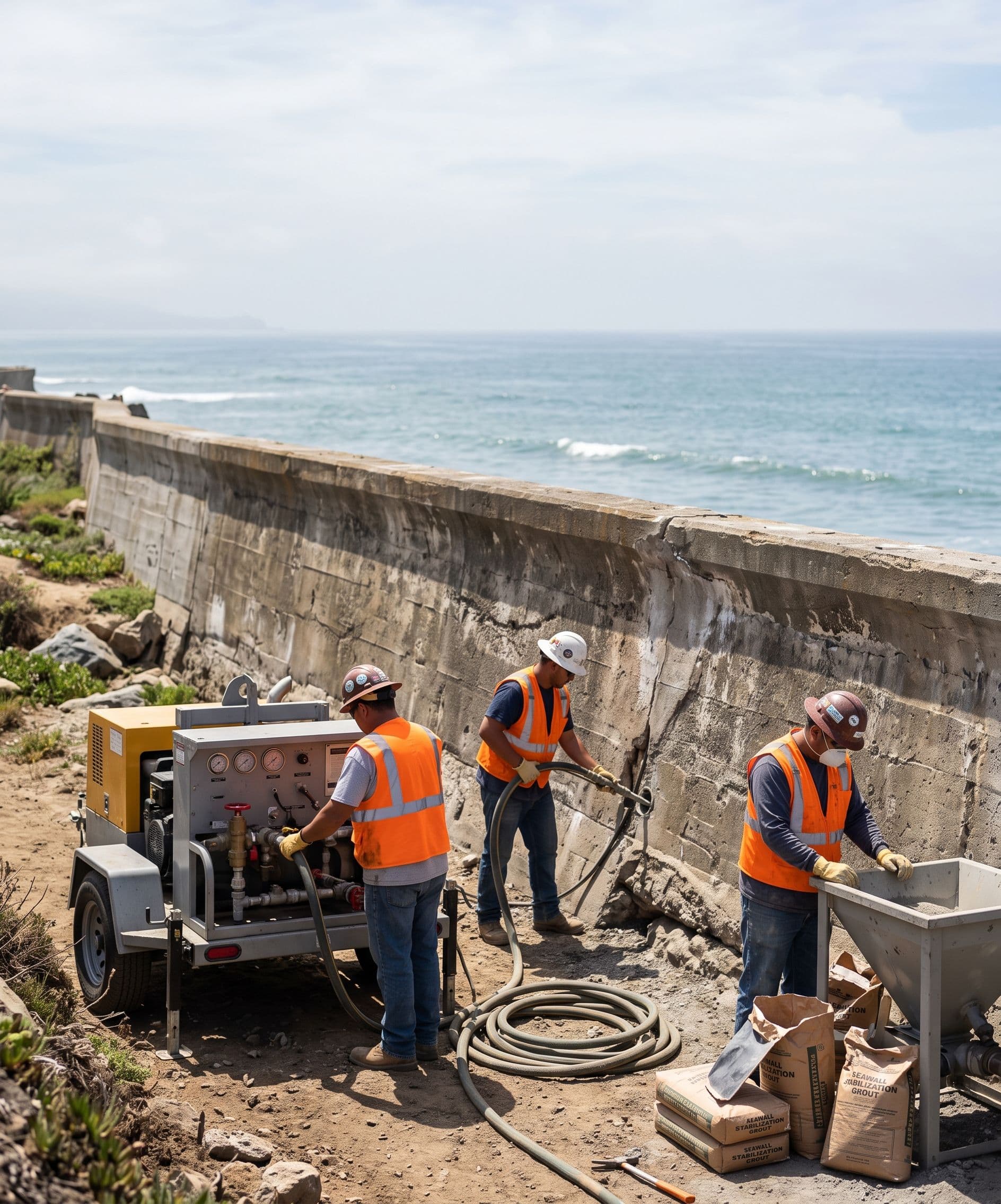
Coastal protection infrastructure demands a fix that restores support without excavating or dewatering the site.
No-dewatering, no-excavation repair. One coastal seawall project returned its corridor to public use approximately 15 minutes after the final injection
Performed under strict environmental monitoring, one project recorded no turbidity events triggered throughout the work
Holds up against sustained tidal exposure. On a Massachusetts coastal roadway seawall, no new sinkholes have formed since treatment, against tidal swings of nearly 12 feet
Measured in about a week, not months. The same Massachusetts project was completed with only lane restrictions
1
Investigation
Seawall and surrounding soil conditions are evaluated through testing, often under environmental and turbidity monitoring requirements.
2
Planning
Injection design is developed to match the specific tidal exposure, depth, and void conditions found.
3
Access
Small-diameter landside injection points are installed without dewatering or excavation.
4
Injection
Structural or hydrophobic polymer is placed to fill voids and seal leaks behind the seawall.
5
Monitoring
Turbidity and treatment completeness are monitored in real time throughout the work.
6
Validation
Final inspection confirms the seawall and surrounding area are stable and public access can resume.
On a Massachusetts coastal roadway seawall, no new sinkholes have formed since treatment, holding against tidal swings of nearly 12 feet.
A landside injection program can be designed to seal leaks and restore backfill support without dewatering or excavation. On one coastal seawall project, this was performed under strict turbidity monitoring with no turbidity events triggered.
Often significantly so. A Massachusetts coastal roadway seawall repair was completed in about one week with only lane restrictions, compared to months for a full rebuild.
In many cases, yes. On one coastal seawall project, the corridor returned to public use approximately 15 minutes after the final injection.
On the St. Pete Pier project in Florida, deeper 12-foot injections were made specifically into the underlying sands beneath the seawall's footing, to permeate the sand and mitigate loss via tidal action, a point of failure that isn't visible from above.
Get an expert site assessment and a tailored stabilization solution.
Request a Site Assessment
URETEK
Ground improvement solutions engineered for performance.
Contact Us
Find Local Experts


13900 Humble Road, Tomball, TX 77375
Services
Solutions

 800-240-7868


