

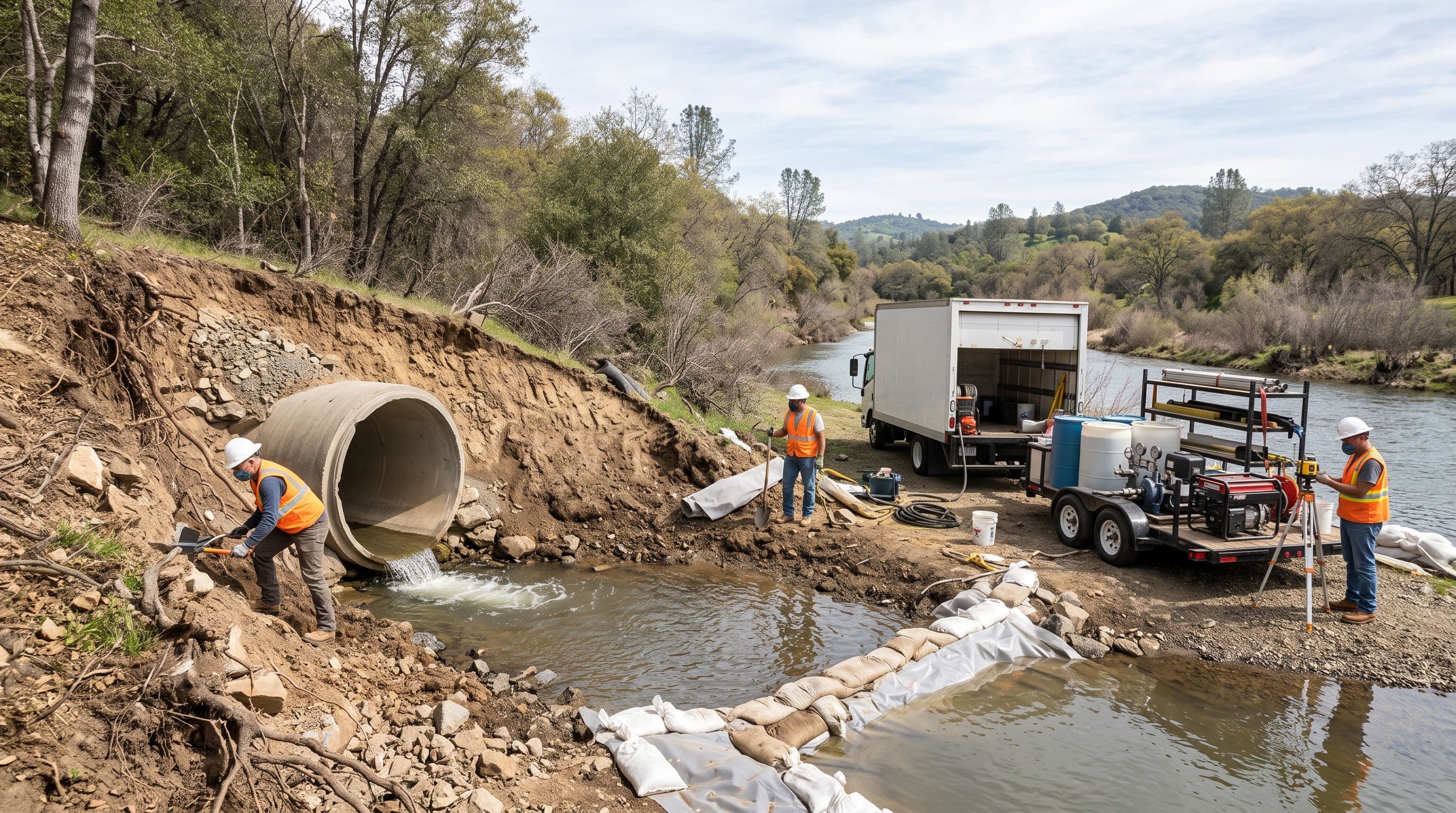
Soil doesn't need a hole to disappear. Water can carry it away grain by grain through a crack, a corroded culvert, or a failing pipe joint, long before anyone notices a dip or a void.
Applied in these Services
Soil Stabilization

Related Industries
Transportation
Municipal Infrastructure
Need a Site Assessment?

800-240-7868

Soil doesn't need a hole to disappear. Water can carry it away grain by grain through a crack, a corroded culvert, or a failing pipe joint, long before anyone notices a dip or a void. Soil Loss stabilizes that soil in place, stopping the erosion before it becomes an empty space underground. Transportation departments, rail operators, and public works agencies turn to it whenever soil is gradually eroding or migrating away, even without a confirmed void yet.
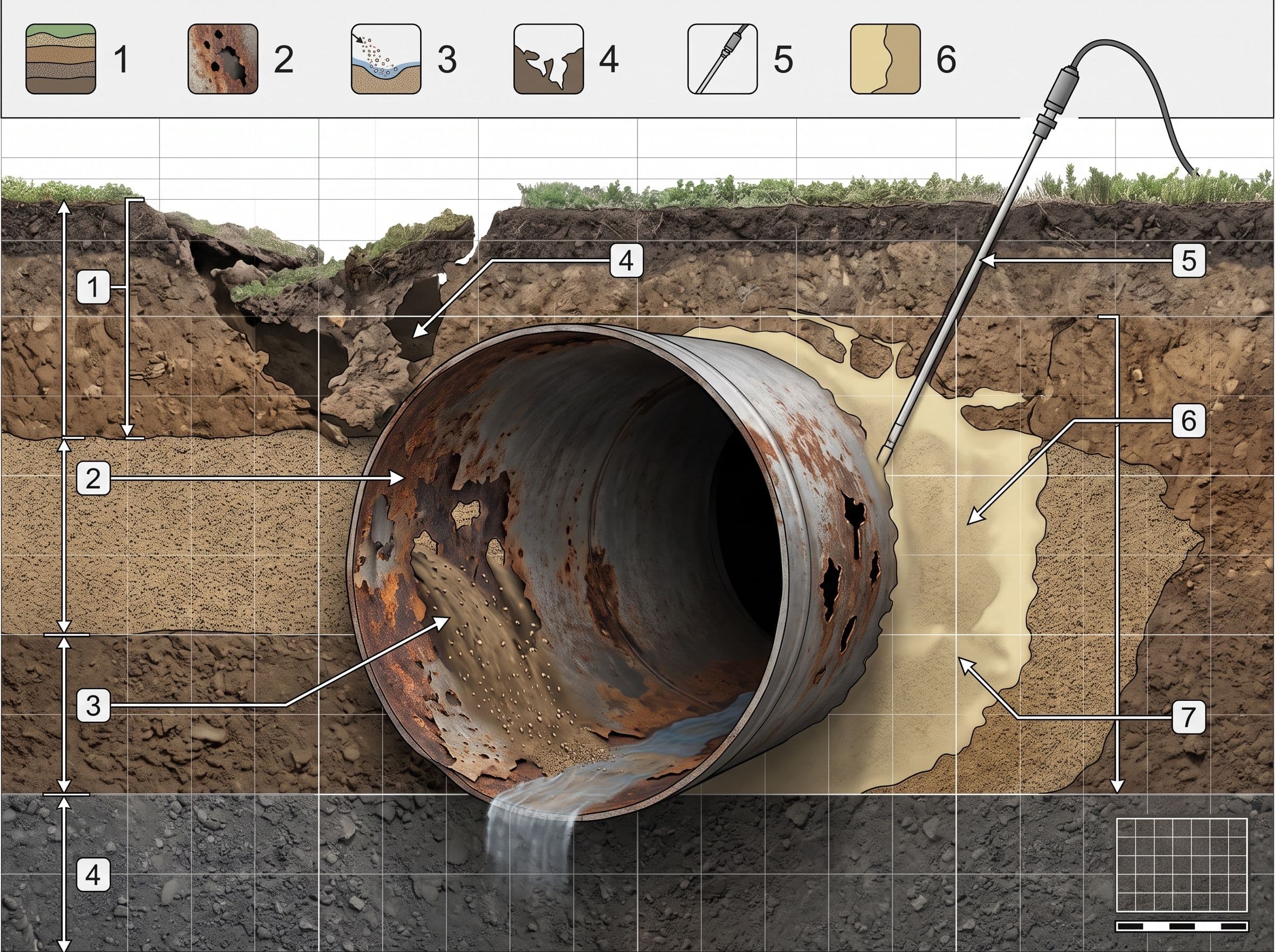
Soil loss is usually a slow process with a specific, findable cause. Here's what URETEK sees most often.

Water repeatedly washing fine soil particles through a crack, joint, hole, or oxidized culvert wall
Wave action, current, or flowing water gradually eroding soil along a bank, pond edge, or waterway
A damaged or corroded pipe, culvert, or drainage structure allowing soil to migrate into it over time
Repeated wetting and drying cycles slowly breaking down and carrying away fine soil particles
Soil loss is easy to miss until it's added up to something bigger. Watch for these.
Soil visibly thinning, settling, or disappearing along a bank, slope, or pond edge over time
A culvert, pipe, or drainage structure with visible oxidation holes or corrosion where fine soil could be escaping
Recurring minor settlement in the same general area that keeps needing small repairs
Erosion control measures, rock, vegetation, prior patches, that keep failing in the same location
A pond, waterway, or embankment edge that's visibly receding or changing shape over months or years
Soil testing or inspection showing a specific area losing density gradually, without a confirmed void yet
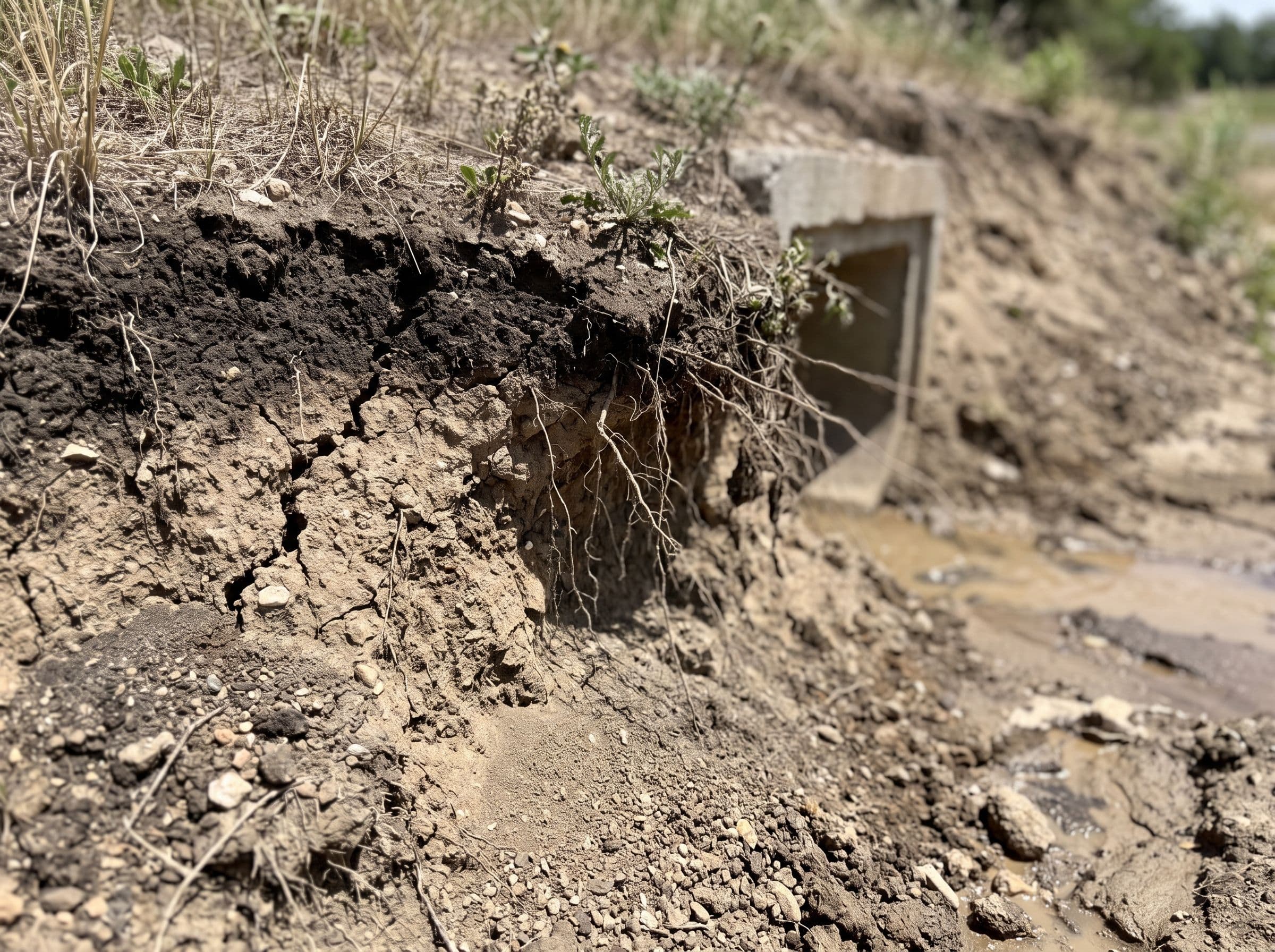
This is the right page when soil is gradually disappearing or eroding away over time, without a confirmed void or open hole yet.
It's not the best fit in every case. Check these first:
 A specific void has already been detected below the surface? See Void Formation.Ground has already collapsed into a visible hole? See Sinkholes.The soil loss is specifically near an old or abandoned utility line? See Abandoned Utility Voids.
Soil loss through a culvert or pipe often traces back to the pipe's own condition. If a specific pipe is the source, Pipe Penetration Leaks is worth checking too.
What stabilizing eroding soil early, instead of waiting for it to become a void, actually gets you.
Strengthens and locks soil in place, addressing the ongoing erosion mechanism directly rather than only patching the surface symptom above it
Reduces the risk of gradual soil loss eventually undermining a bank, railbed, or roadway to the point of failure
Keeps the area usable during the work. On a Brick Mill Road project in Middletown, Delaware, crews worked overnight from 7 p.m. to 5 a.m. specifically so the road could reopen each day
Measured in hours, not days. A railroad erosion project in Baltimore was completed in under 20 hours total, including setup, breakdown, cleanup, and final inspection
Structural polymer is injected along the erosion path, sometimes creating a continuous treated zone rather than a single point. On a Missouri City, Texas pond bank, over 100 injection sites formed a 500-foot underground curtain
Soil Stabilization, the Service, performs this fix directly, treating the soil before it reaches the point of forming a confirmed void
URETEK's general approach injects expanding polymer directly into soil that's actively eroding or losing fines, increasing its density and locking it in place before a void or collapse can form. Depending on how far the erosion has spread, this can mean a continuous treated zone along a bank or culvert rather than a single injection point.
This is exactly what the Soil Stabilization service does. It's different from Void Formation's response to a confirmed empty space, and different from Sinkholes' response to an already-open hole.
URETEK has stabilized eroding soil along ponds, railbeds, and roadways for public agencies nationwide.


On an effluent pond in Missouri City, Texas, URETEK created a continuous 500-foot underground curtain using more than 100 injection sites along the pond banks, addressing the full erosion path rather than patching a single spot.
On a railroad erosion project in Baltimore, voids beneath the railbed were initially estimated at up to 12 inches deep, stretching several hundred feet, confirmed before the injection plan was finalized.
Often significantly so. The Baltimore railroad erosion project was completed in under 20 hours total, including setup, breakdown, cleanup, and final inspection, a fraction of what repairing a later collapse would require.
Yes, in most cases. On a Brick Mill Road project in Middletown, Delaware, crews worked overnight from 7 p.m. to 5 a.m. specifically so the road could reopen each day, and the Baltimore rail line project was completed in under 20 hours.
A damaged or corroded culvert gives water a direct path to carry soil away. In Middletown, Delaware, DelDOT identified a systemic issue where oxidation holes at the crown of corrugated metal pipe culverts were causing fine loss through the holes across many locations, not just one.
Get the eroding soil stabilized before it turns into an open void.
Request a Soil Loss Assessment
URETEK
Ground improvement solutions engineered for performance.
Contact Us
Find Local Experts


13900 Humble Road, Tomball, TX 77375
Services
Solutions

 800-240-7868


