

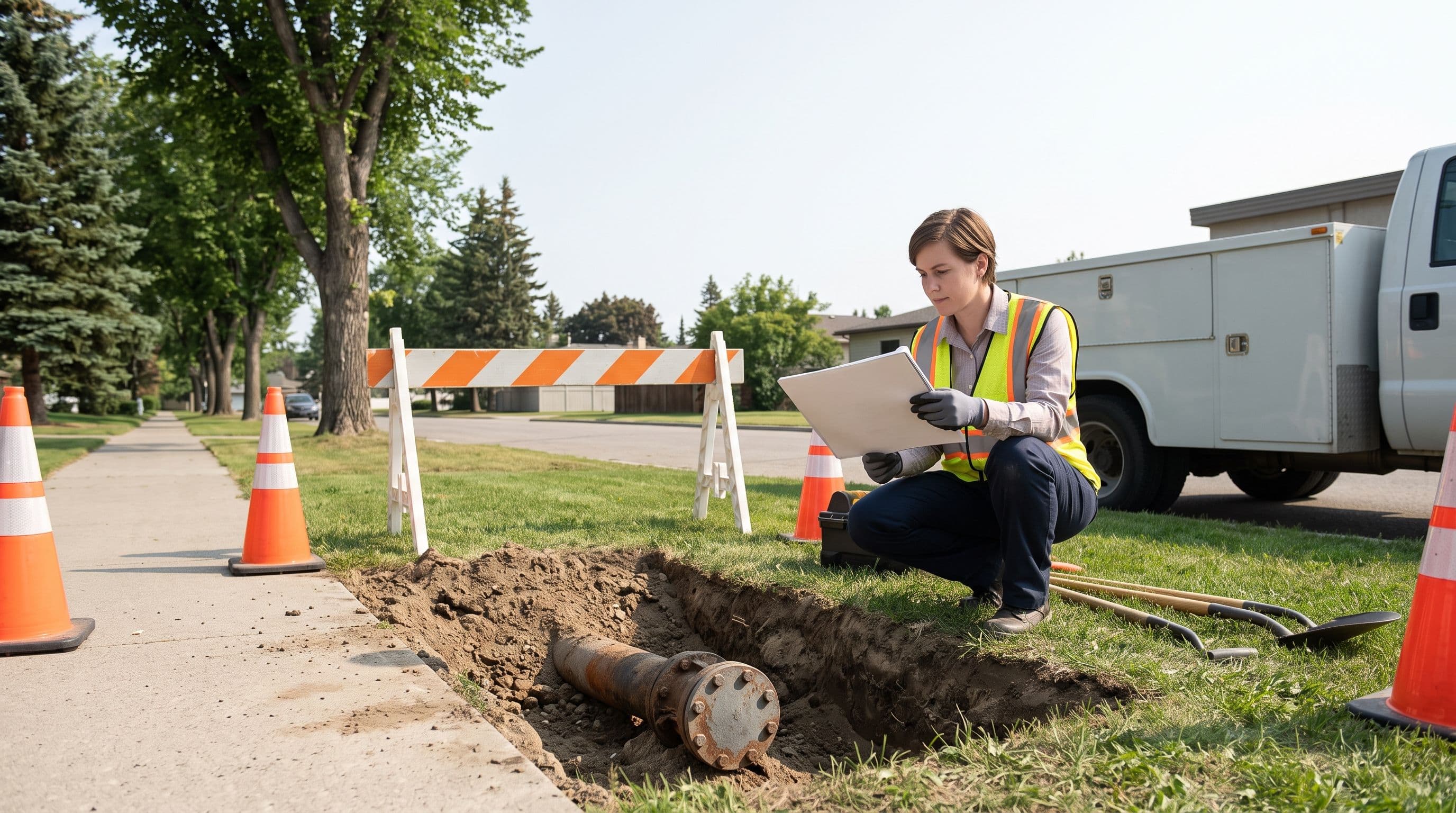
An old utility line rarely gets removed when it's taken out of service, it usually gets capped and left in place, and the soil around it settles into the space it leaves behind.
Applied in these Services
Void Filling

Related Industries
Municipal Infrastructure
Transportation
Need a Site Assessment?

800-240-7868

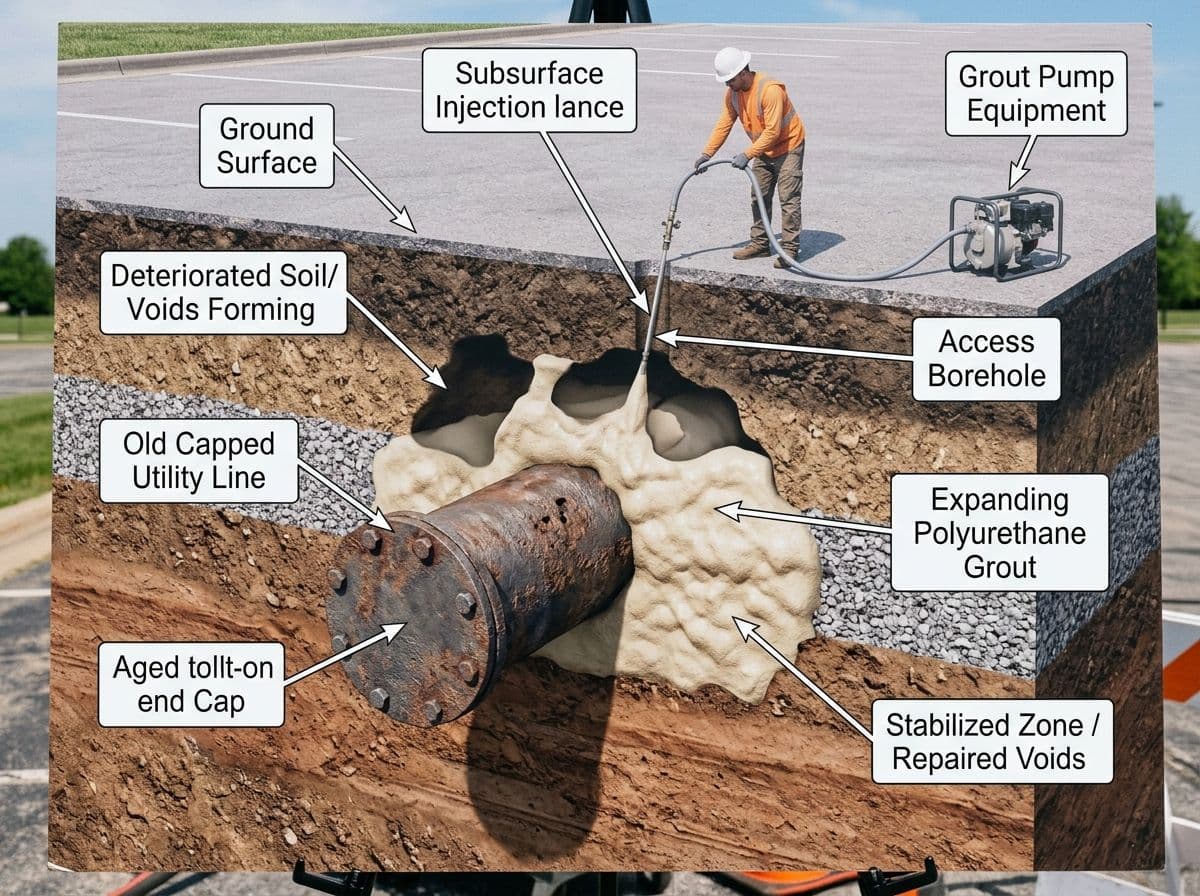
An old utility line rarely gets removed when it's taken out of service, it usually gets capped and left in place. Over time, that line can deteriorate or collapse, and the soil around it settles into the space it leaves behind. Abandoned Utility Voids fills that hidden space directly, without needing to locate or expose the old line itself. Municipal engineers and public works departments turn to it whenever a void is suspected near infrastructure that's no longer in active use.
An abandoned utility void usually has a specific, if hard-to-document, cause. Here's what URETEK sees most often.

An old pipe, conduit, or utility line was abandoned in place rather than removed, leaving a hollow space as it deteriorates or collapses over time
Soil around a decommissioned utility structure gradually settles into the empty space left behind once the structure is no longer maintained
Records of exactly where old utility lines were routed are incomplete or outdated, so a void isn't discovered until something above it moves
A utility line that was capped or abandoned without being properly filled or grouted, leaving the surrounding soil unsupported
An abandoned utility void is often the hardest of this group to trace, since there's no active line to point to. Watch for these.
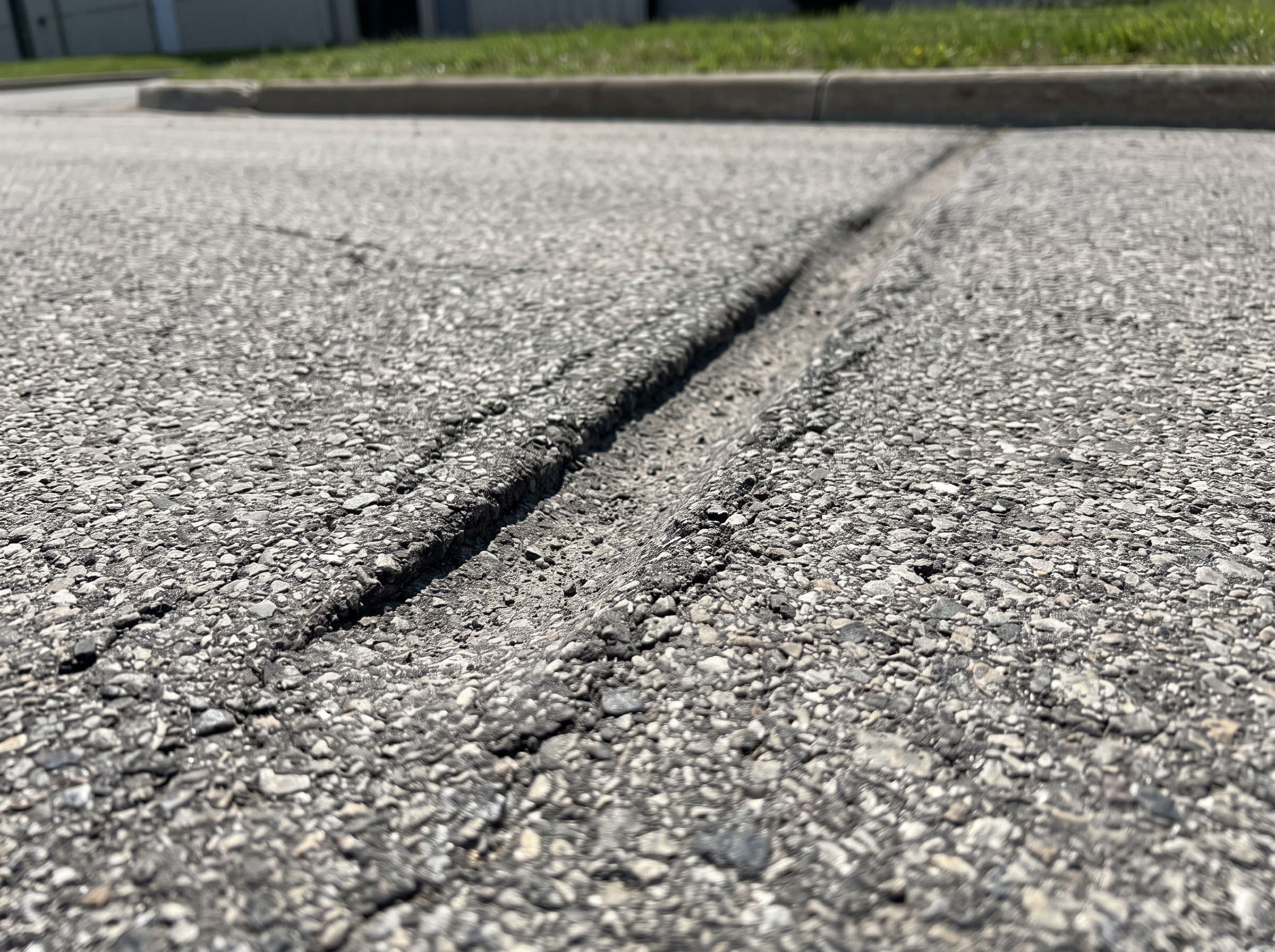
A dip or depression forming along a route where an old utility line is known or suspected to run
Utility maps or as-built records showing a line in an area with no visible surface sign of one
A void discovered unexpectedly during unrelated excavation or construction work nearby
Settlement appearing in a pattern that follows a straight line, consistent with a buried utility corridor
A structure or pavement section settling with no obvious modern cause, pointing to an older, undocumented void
A utility company or municipal record confirming a line was abandoned in place rather than removed
This is the right page when a void is suspected or confirmed near an old, decommissioned, or abandoned utility line, one that was left in place rather than removed.
It's not the best fit in every case. Check these first:
 The void isn't tied to an old utility line, more of a general erosion or settlement pattern? See Soil Loss.A void has been detected but the cause isn't tied to an old utility line? See Void Formation.Ground has already collapsed into a visible hole? See Sinkholes.
An abandoned utility void found near a current, active pipe is worth checking against Pipe Penetration Leaks too, since the two can sit close together underground.
What filling a void tied to an old, undocumented line, instead of waiting for it to be found the hard way, actually gets you.
Fills the void left behind by an old, undocumented utility line, addressing a hidden risk before it's discovered by accident
Reduces the risk of a structure or roadway settling suddenly into a void that wasn't on any current map
Doesn't require excavating to locate or expose the old utility line itself, only what's needed to reach the void
Crews can mobilize on short notice, including nights, weekends, or holidays, so a void near an old utility line can be addressed on a schedule that works around other activity in the area
Expanding polymer is injected directly into the void left behind by the old line, filling irregular gaps a rigid material would miss
Void Filling, the Service, performs this fix directly, filling the void without requiring the old line itself to be located or removed
URETEK's general approach starts with confirming a void near a suspected or known old utility line, using surface investigation, soil testing, and any available records. Once confirmed, crews inject expanding polymer directly into the space, filling it around the old structure without needing to locate, expose, or remove the line itself.
This is exactly what the Void Filling service does. It's different from Soil Loss's focus on ongoing erosion without a utility line involved, and different from Void Formation's broader framing, which isn't tied to a utility line specifically.
URETEK has filled voids left behind by old, decommissioned utility lines and structures nationwide.




URETEK 486 Star cures to 99% of its final strength within minutes of injection, so it isn't a slow-setting material that shifts as it hardens. A project manager evaluates the actual site conditions first, including how much of the old line's route is accessible or suspected, rather than treating one void in isolation.
Surface investigation, soil testing, and any available utility or municipal records are used together to narrow down the likely location before drilling starts. Once a void is confirmed, the injection pattern is designed around its actual size and position, not a guess.
In most cases, yes. The fix targets the void itself, so there's no need to locate, expose, or remove the old line to address the problem it left behind.
Yes. Because the fix targets the void directly through small access holes, the old utility line itself doesn't need to be located, exposed, or disturbed.
It's often cheaper and less disruptive to cap a line and leave it in place than to fully excavate and remove it. That's exactly why the void it eventually leaves behind, as the line deteriorates or the soil around it settles, can go undetected for years.
Get the void filled before it's found the hard way.
Request a Void Assessment
URETEK
Ground improvement solutions engineered for performance.
Contact Us
Find Local Experts


13900 Humble Road, Tomball, TX 77375
Services
Solutions

 800-240-7868


