

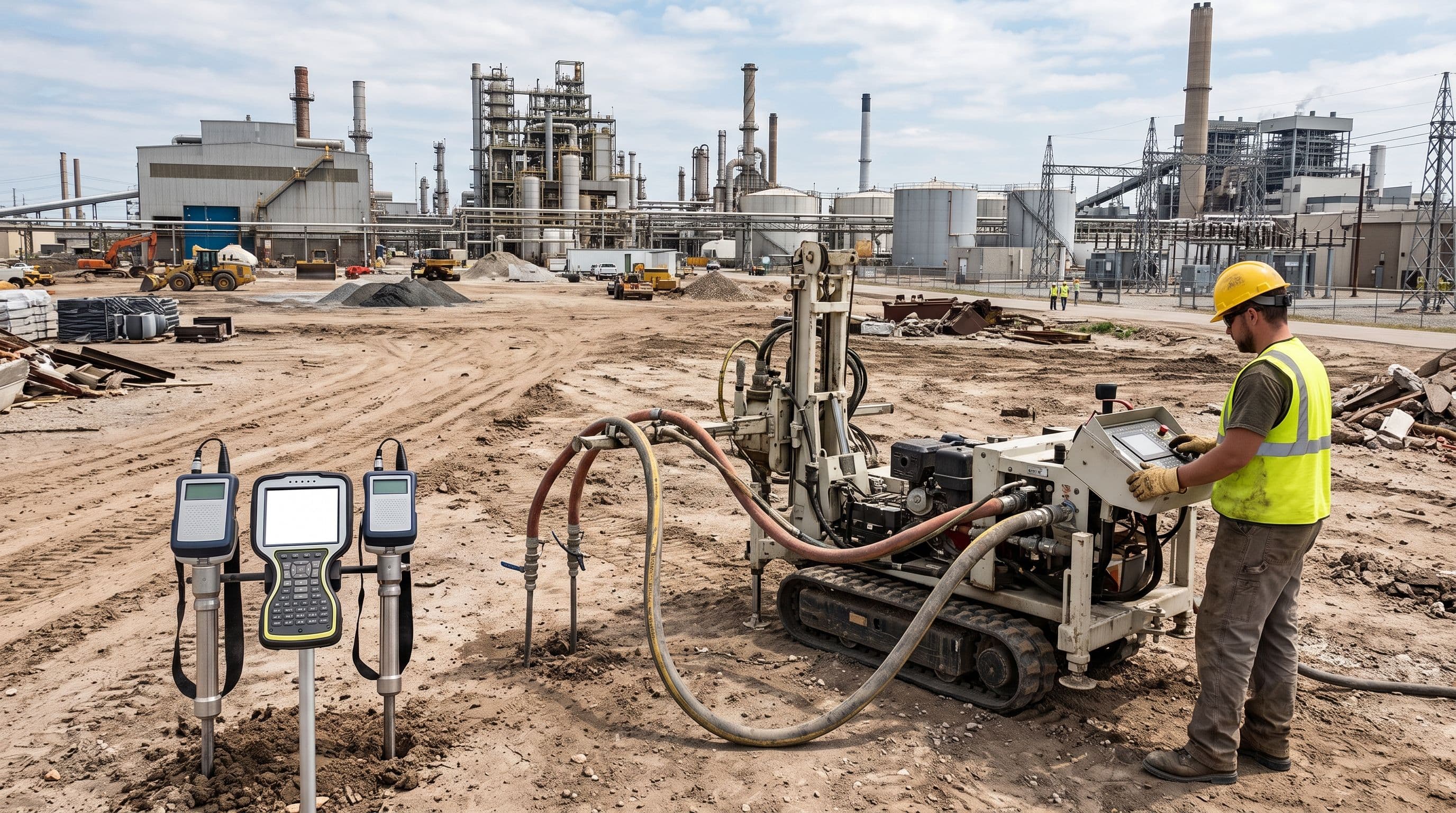
Some soil was never strong enough for what's built on top of it, or for what's about to be. Weak Soils increases bearing capacity directly in the ground.
Applied in these Services
Soil Stabilization

Related Industries
Industrial Facilities
Transportation
Need a Site Assessment?

800-240-7868

Some soil was never strong enough for what's built on top of it, or for what's about to be. Weak Soils increases bearing capacity directly in the ground, whether that's beneath an active facility, a roadway carrying heavy traffic, or a site being prepared for new construction. Engineers, industrial operators, and public agencies turn to it whenever soil testing shows a site's ground condition falls short of what it needs to support.
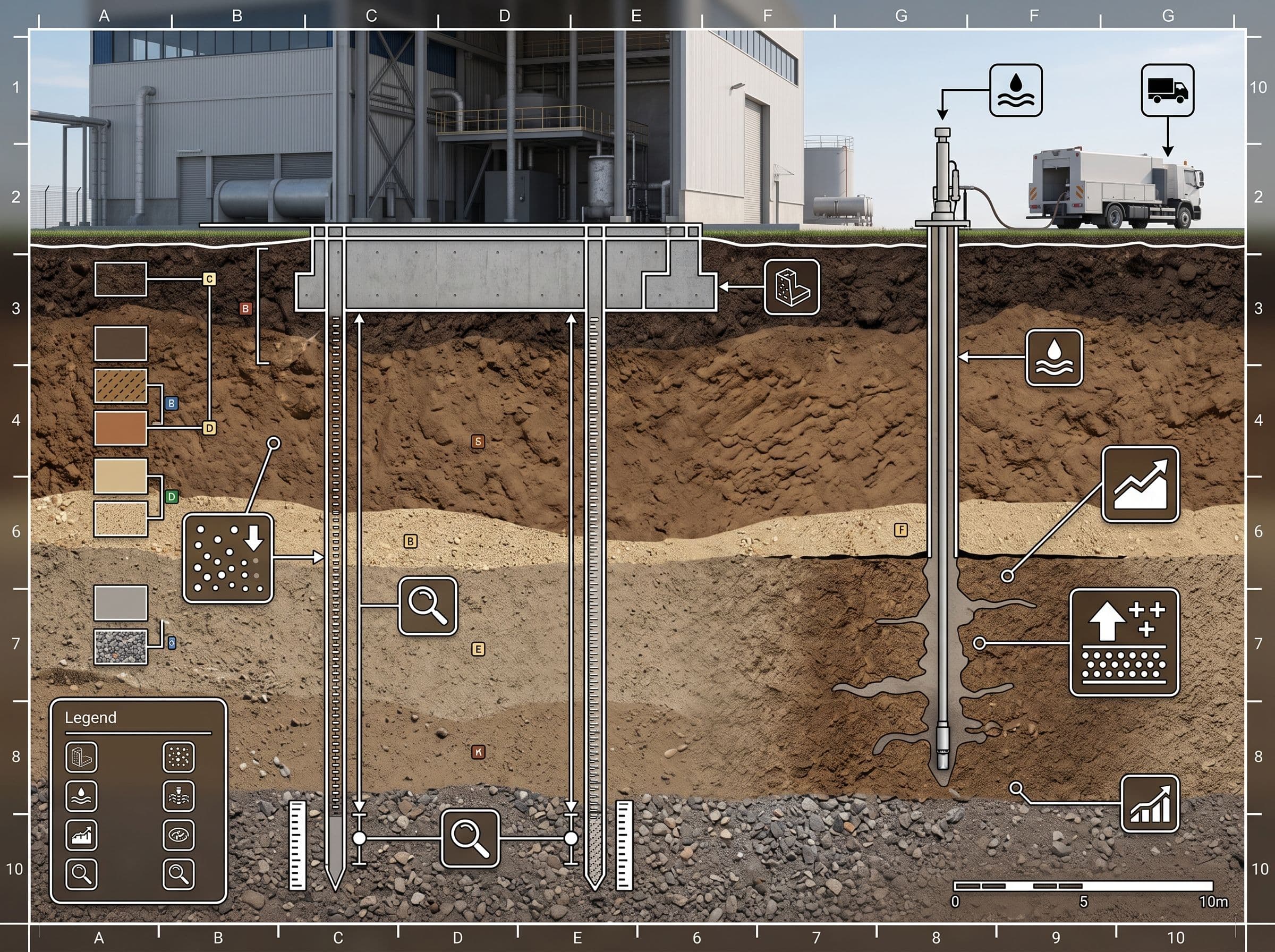
Weak soil is usually a site condition, not a one-time event. Here's what URETEK finds most often.

Native soil at the site was never dense or strong enough to reliably support the load being placed on it
Fill material used during original construction was poorly compacted or contains organic material that continues to break down over time
Water saturation, poor drainage, or a high water table keeps the soil soft and reduces its ability to bear weight
Increased traffic, equipment loads, or industrial activity placing more demand on soil than it was ever built to handle
Weak soil often shows up as a pattern across a site, not a single isolated issue. Watch for these.
Geotechnical testing showing soil density or bearing capacity below what a planned structure or load requires
Rutting or pavement deformation forming under repeated heavy traffic, without one specific isolated cause
A site with a known history of soft, saturated, or organic-rich soil, even before construction begins
Repeated settlement or movement issues across a site that all trace back to the same underlying soil condition
Standing water or persistent dampness in the same area, keeping the soil consistently soft
A structure or facility experiencing gradual movement in more than one unrelated spot, suggesting a sitewide soil condition
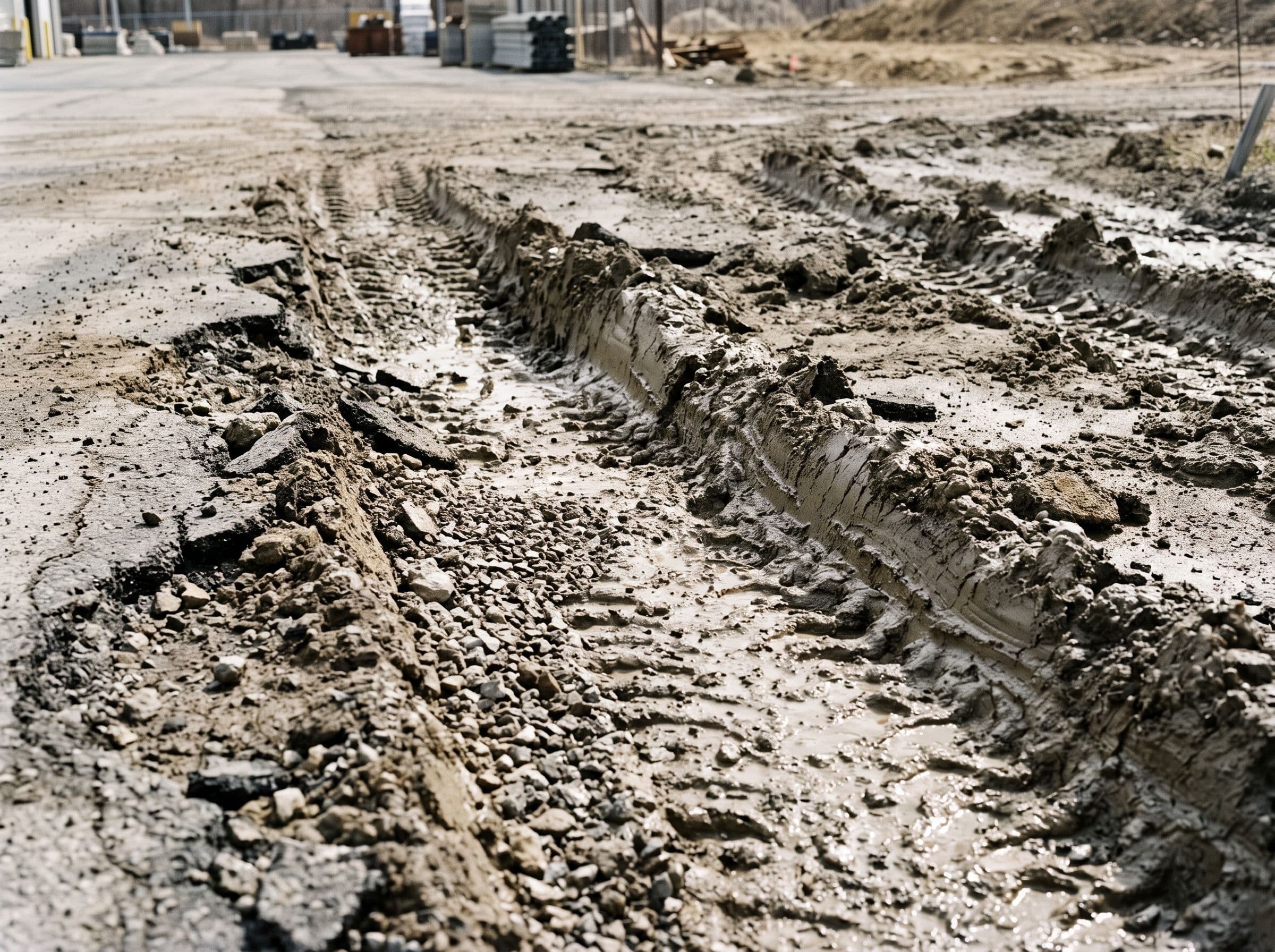
This is the right page when soil across a site or area is generally weak or low in bearing capacity, whether or not a structure has shown visible movement yet.
It's not the best fit in every case. Check these first:
 The soil is specifically sandy and prone to shifting, not simply weak? See Loose Sands.The concern is specifically seismic liquefaction risk, not general bearing capacity? See Liquefaction Risk.Soil is being actively washed away by water, rather than just weak in place? See Erosion Voids.
Weak soil found beneath an existing structure that's already showing movement is also covered by Settlement Remediation. This page focuses on the ground condition itself, often identified before or independent of visible structural symptoms.
What confirming and improving bearing capacity before it becomes a bigger problem actually gets you.
Increases soil density and bearing capacity to match the load it needs to carry, addressing the ground condition directly rather than reinforcing whatever's built on top of it
Reduces the risk of a structure, roadway, or facility being placed on soil that was never adequate, before that gap becomes a bigger problem
Keeps operations running. At two industrial food processing facilities in Kansas and Kentucky, work was completed without halting ongoing operations
Crews can mobilize on short notice, including nights, weekends, or holidays, so weak soil can be addressed on a schedule that works around active operations
Expanding polymer is injected directly into the weak soil layer, increasing its density. On a Filer, Idaho test site, this raised soil stiffness by 38.8 percent over an untreated control section
Soil Stabilization, the Service, performs this fix directly, targeting the specific soil layer that's falling short of what it needs to carry
URETEK's general approach injects expanding polymer directly into the weak soil layer identified by testing, increasing its density and bearing capacity so it can reliably support the load already on it, or new load being planned. On a Filer, Idaho test site, this approach raised soil stiffness by 38.8 percent over an untreated control section.
This is exactly what the Soil Stabilization service does. It's different from Loose Sands' focus on sandy, shifting soil specifically, and different from Liquefaction Risk's focus on seismic performance.
URETEK has increased bearing capacity in weak soil beneath industrial facilities, highways, and roadways nationwide.



At two industrial food processing facilities in Kansas and Kentucky, URETEK monitored the site for more than two years after completion, with no additional settlement issues detected.
On a rutted roadway test site in Filer, Idaho, injecting the optimal polymer amount yielded a 38.8 percent increase in soil stiffness compared to an untreated control section, measured directly rather than estimated.
In most cases, yes. At two industrial food processing facilities facing similar weak soil and drainage challenges, URETEK addressed the underlying soil condition directly rather than waiting for repeat settlement issues to appear.
In most cases, yes. On a New Mexico state highway project, NMDOT had the weak soils around a culvert densified and the asphalt road lifted back to grade as part of the same project, without a separate closure phase.
No. Many sites have weak soil identified during geotechnical testing before construction even happens. On a New Mexico state highway project, NMDOT proactively contracted to densify weak soils around a culvert rather than waiting for a settlement problem to develop.
Get the bearing capacity confirmed and improved before it becomes a settlement problem.
Request a Soil Assessment
URETEK
Ground improvement solutions engineered for performance.
Contact Us
Find Local Experts


13900 Humble Road, Tomball, TX 77375
Services
Solutions

 800-240-7868


