

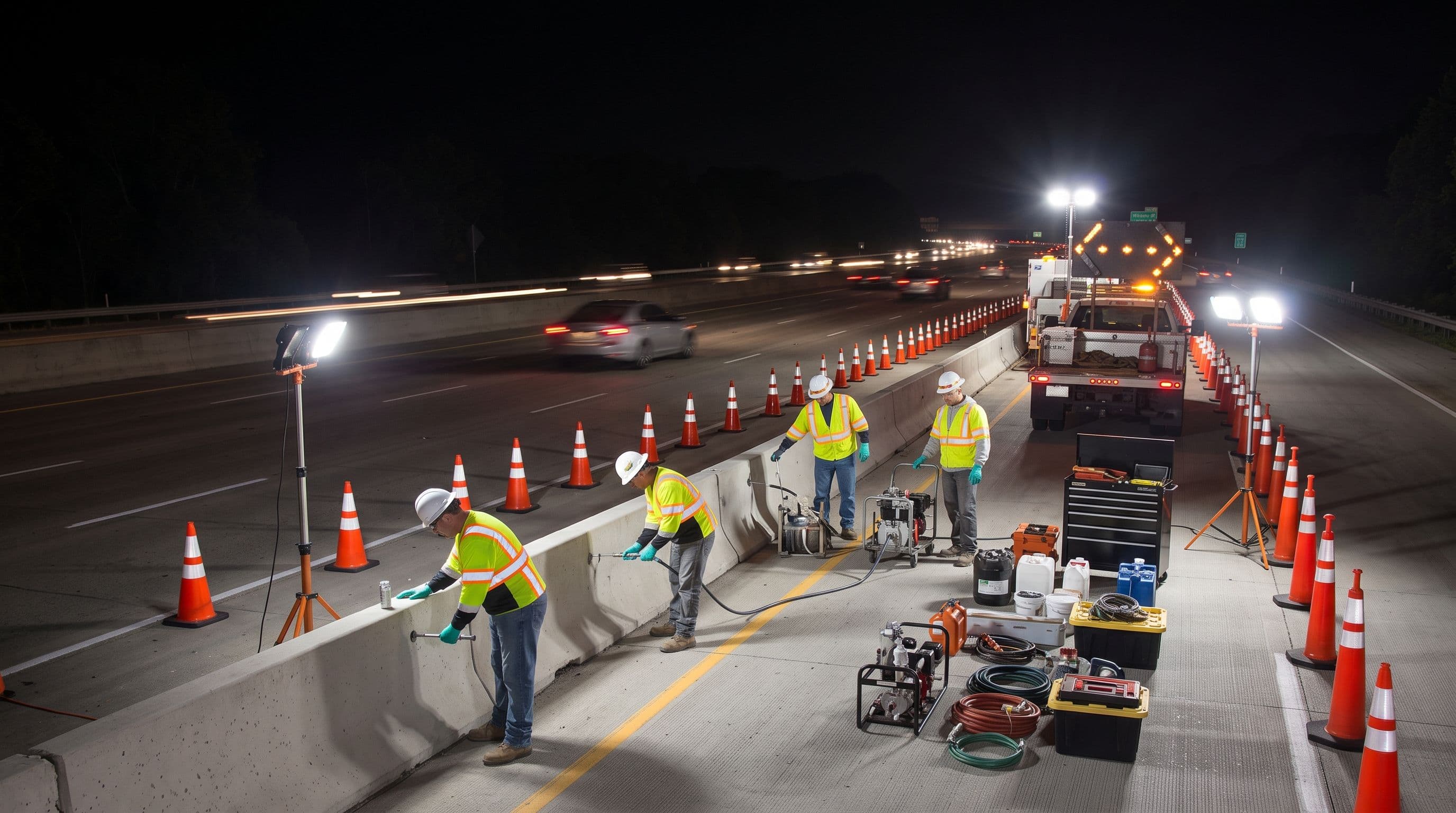
A dip in a highway lane, a sunken runway approach, a parkway that keeps needing the same patch, public infrastructure settles for the same reasons buildings do, but the fix has to work around traffic and public safety.
Applied in these Services
Settlement Control

Infrastructure Stabilization
Related Industries
Transportation
Municipal Infrastructure
Need a Site Assessment?

800-240-7868

A dip in a highway lane, a sunken runway approach, a parkway that keeps needing the same patch. Public infrastructure settles for the same reasons buildings do, but the fix has to work around traffic, schedules, and public safety. Infrastructure Settlement Control stabilizes the soil beneath roads, runways, and other public assets without long closures. Departments of transportation, airport authorities, and municipal engineers turn to it when a public asset is settling and downtime isn't an option.
Public infrastructure settles for a mix of everyday and one-off reasons. Here's what URETEK sees most often.

A subgrade that was built on weak native soil, sand, or gravel not originally suited to the load now placed on it
A nearby culvert, drainage pipe, or utility line failing or eroding, washing soil out from beneath the pavement above it
Decades of repeated heavy traffic loading gradually compacting or displacing subgrade soil unevenly
Utility work, trenching, or nearby construction disturbing the soil supporting an existing road or runway
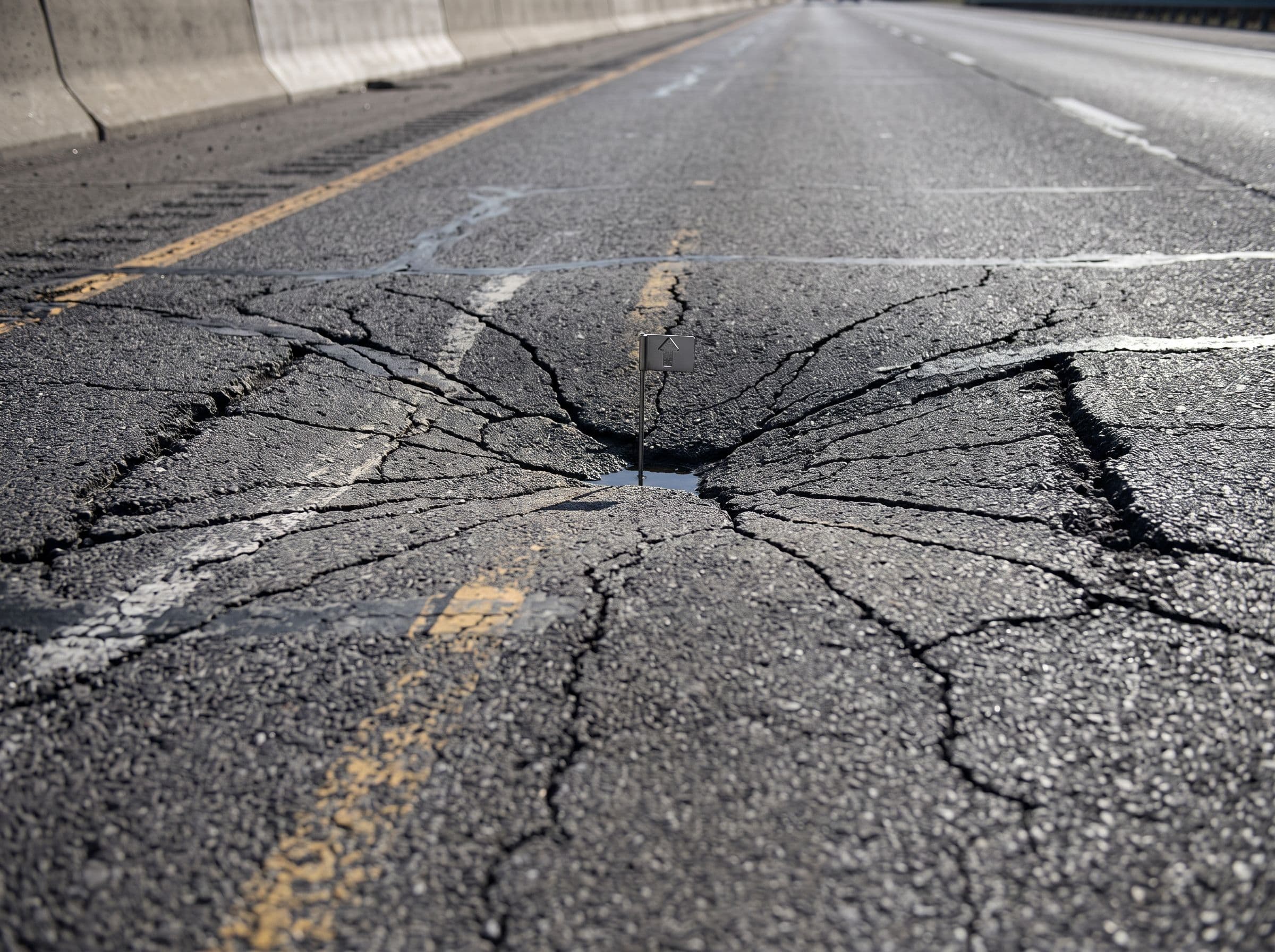
Public infrastructure often shows settlement gradually, then all at once. Watch for these.
A dip, depression, or wave forming in a specific section of pavement
Cracking radiating outward from one area of a road, runway, or parkway
A patch or previous repair that keeps reappearing in the same spot
Uneven joints or panel edges where one section has settled lower than its neighbor
A section of pavement over or near a culvert, pipe, or utility line settling faster than the rest
Reports from drivers, maintenance crews, or inspectors of a rough or shifting section that wasn't there before
This is the right page when the settlement is happening on a road, runway, parkway, or another public asset where the fix has to work around traffic and public safety.
It's not the best fit in every case. Check these first:
 Problem is a private building, floor, or paved area, not a public asset? See Settlement Remediation.A public building or facility is out of level at more than one point? See Structural Re-Leveling.The concern is a public facility's foundation capacity for new or added load, not visible settlement? See Foundation Stabilization.
A settled section of infrastructure often sits near a forming void or an eroded culvert. Worth checking Void Formation and Soil Loss too.
What fixing public infrastructure settlement the right way actually gets you.
Strengthens the subgrade causing the movement, instead of resurfacing over a problem that will resurface again
Reduces the safety risk of a settled lane, runway approach, or parkway section going unaddressed until it becomes a hazard
Keeps traffic moving. On the I-69 feeder road project in Sugar Land, Texas, all four lanes were repaired and reopened over 24 hours ahead of the deadline set by TxDOT and the city
Measured in days, not weeks or months. The Andrews Air Force Base runway repair was completed with a 60 percent reduction in work time compared to the original reconstruction proposal
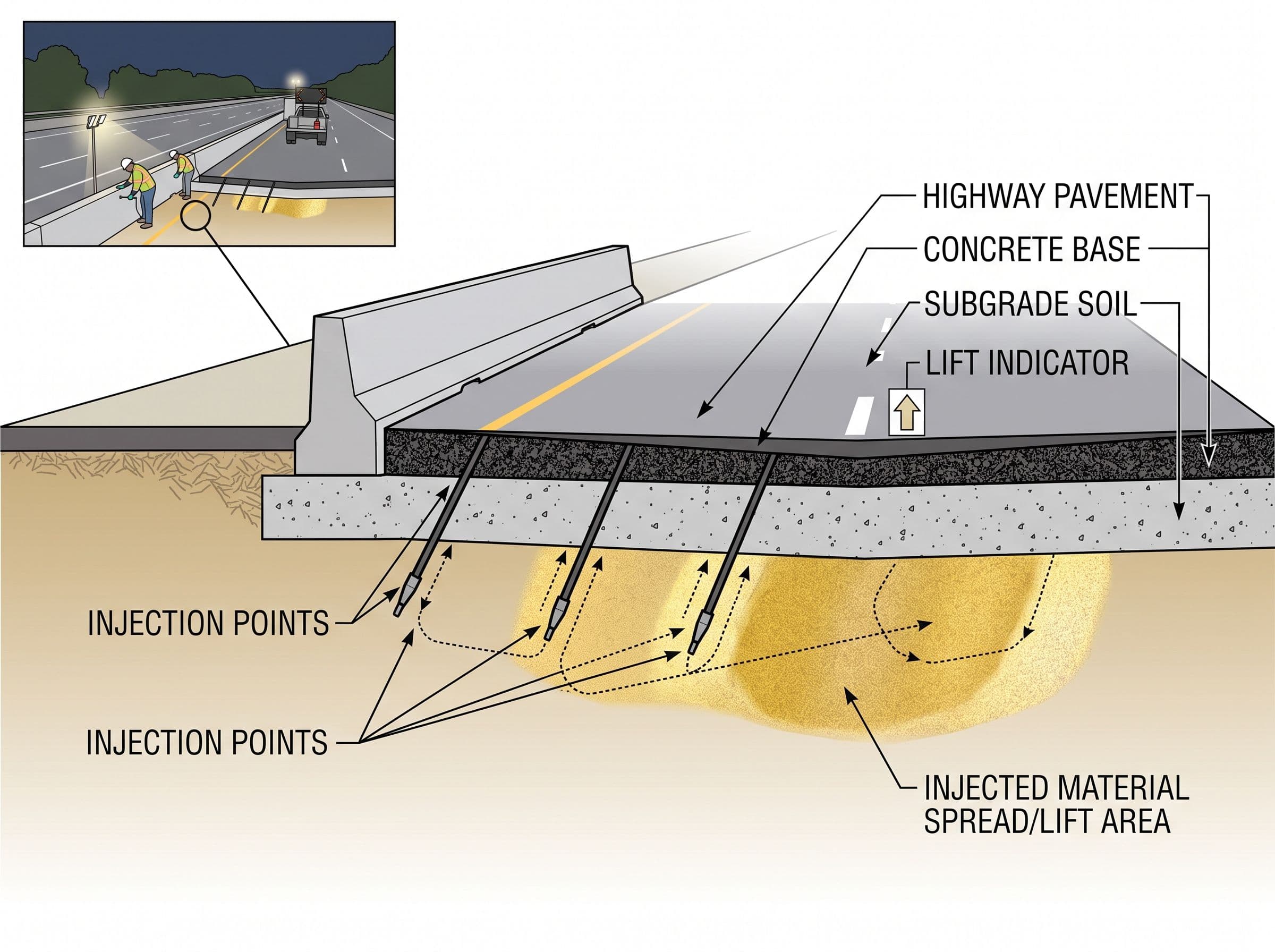
Expanding polymer is injected directly into the weak subgrade layer, strengthening it in place so the pavement above stops settling, rather than being repaved over unstable ground
Settlement Control and Infrastructure Stabilization, the Services, perform this fix directly, engineered around the load and access constraints specific to a public asset
URETEK's general approach is the same small-hole polymer injection used across other settlement problems, adapted to work around live traffic. Crews inject expanding polymer into the weak subgrade layer, often at night or during scheduled closures, strengthening the soil so the pavement or structure above stops moving.
This is the job Settlement Control and Infrastructure Stabilization perform directly, distinct from Settlement Remediation's private-building focus and Structural Re-Leveling's whole-structure, multi-point coordination.
URETEK has stabilized highways, runways, and parkways for departments of transportation, airport authorities, and municipal agencies nationwide.
At a major Mid-Atlantic airport, follow-up testing was performed every six months for three years after a runway repair, with no detectable settlement recorded. The soil is strengthened at the depth where the original weakness was found, not just patched at the surface.
Testing identifies the weak layer's depth before drilling starts. On the Pennyrile Parkway project in Hopkinsville, Kentucky, crews injected in a three-dimensional grid pattern to strengthen soils down to 10 feet across a defined work area, based on what that testing showed.
Often significantly so. At Andrews Air Force Base, URETEK's repair saved an estimated $125,000 and 20 days of runway closure time compared to the original reconstruction proposal, a 60 percent reduction in work time and a 50 percent reduction in cost.
Yes. On the I-69 feeder road project in Sugar Land, Texas, all four settled lanes were repaired and reopened by early Saturday afternoon, over 24 hours ahead of the deadline set by TxDOT and the city.
Often it's a weak or eroded subgrade beneath the pavement, sometimes worsened by a nearby culvert or drainage issue. In Boulder Creek, California, a section of Highway 9 settled 4 inches directly over a culvert before URETEK lifted the roadway back to grade and stabilized the soils below.
Get the subgrade stabilized before it needs a full closure to fix.
Request an Infrastructure Assessment
URETEK
Ground improvement solutions engineered for performance.
Contact Us
Find Local Experts


13900 Humble Road, Tomball, TX 77375
Services
Solutions

 800-240-7868


