

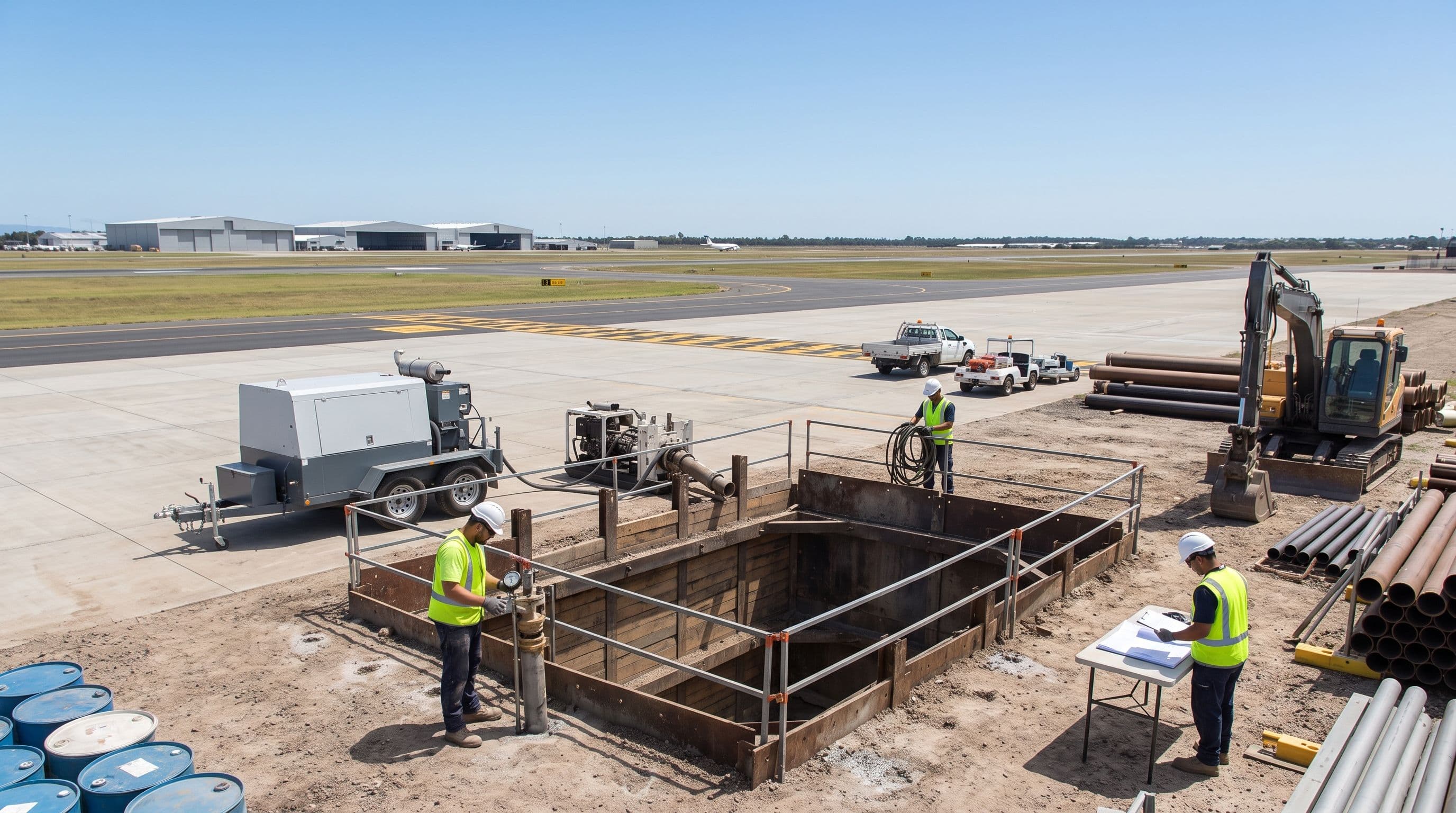
Trenchless installation methods still depend on the soil around them behaving predictably. When it doesn't, conventional shoring can drive up costs or slow a project down before it starts.
Applied in these Services
Microtunneling

Infrastructure Stabilization
Related Industries
Transportation
Water and Wastewater
Need a Site Assessment?

800-240-7868

Trenchless installation methods, jack-and-bore, directional drilling, and similar techniques, still depend on the soil around them behaving predictably. When it doesn't, conventional shoring can drive up costs or slow a project down before it starts. Trenchless Utility Support stabilizes that ground directly, giving trenchless methods the support they need to proceed as planned. Utilities, contractors, and public agencies turn to it whenever soil conditions threaten to complicate a planned trenchless or minimally invasive installation.
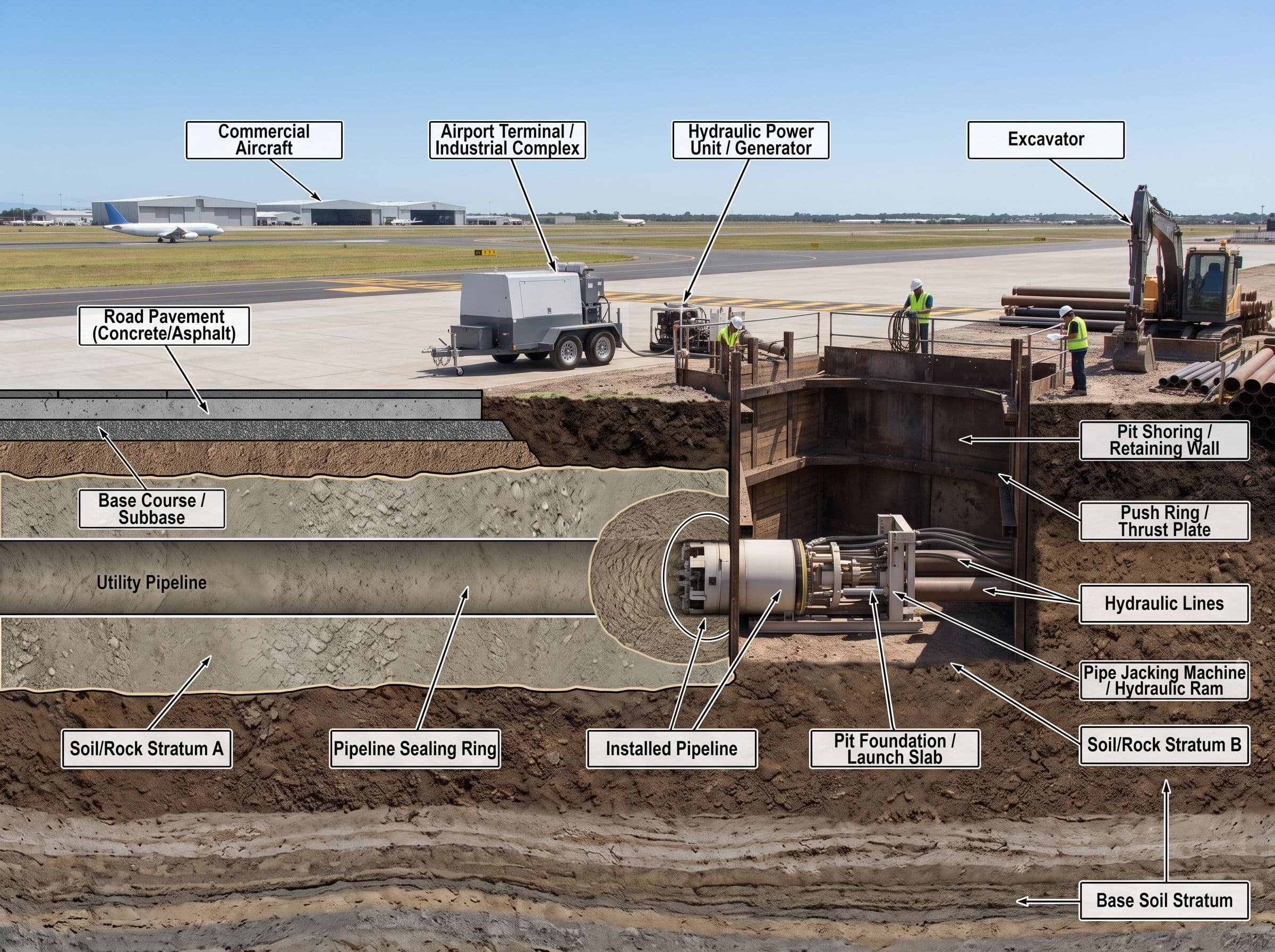
The need for additional ground support usually comes down to what the soil can't do on its own. Here's what URETEK sees most often.

Deep or unstable trenching required for utility installation increases the risk and cost of traditional shoring methods
Soil conditions around a planned bore or trench path are too weak or loose to support the work without reinforcement
Nearby structures, roadways, or other utilities limit how much the surrounding ground can be disturbed during installation
Rising costs or safety requirements for conventional shoring make ground stabilization a more practical alternative
This page applies earlier in a project's timeline than most, often during planning rather than after something has gone wrong. Watch for these.
A planned utility installation project involves trenching or boring through soil with known weak or loose conditions
Conventional shoring costs are rising faster than expected for a planned trenching project
A trenchless installation method, jack-and-bore or directional drilling, is being planned near a sensitive structure or roadway
Worker safety requirements call for additional ground support beyond standard shoring
A utility project needs to minimize surface disruption near an active facility, like an airport or transportation hub
Soil testing along a planned trench or bore path shows conditions that could complicate installation without additional support
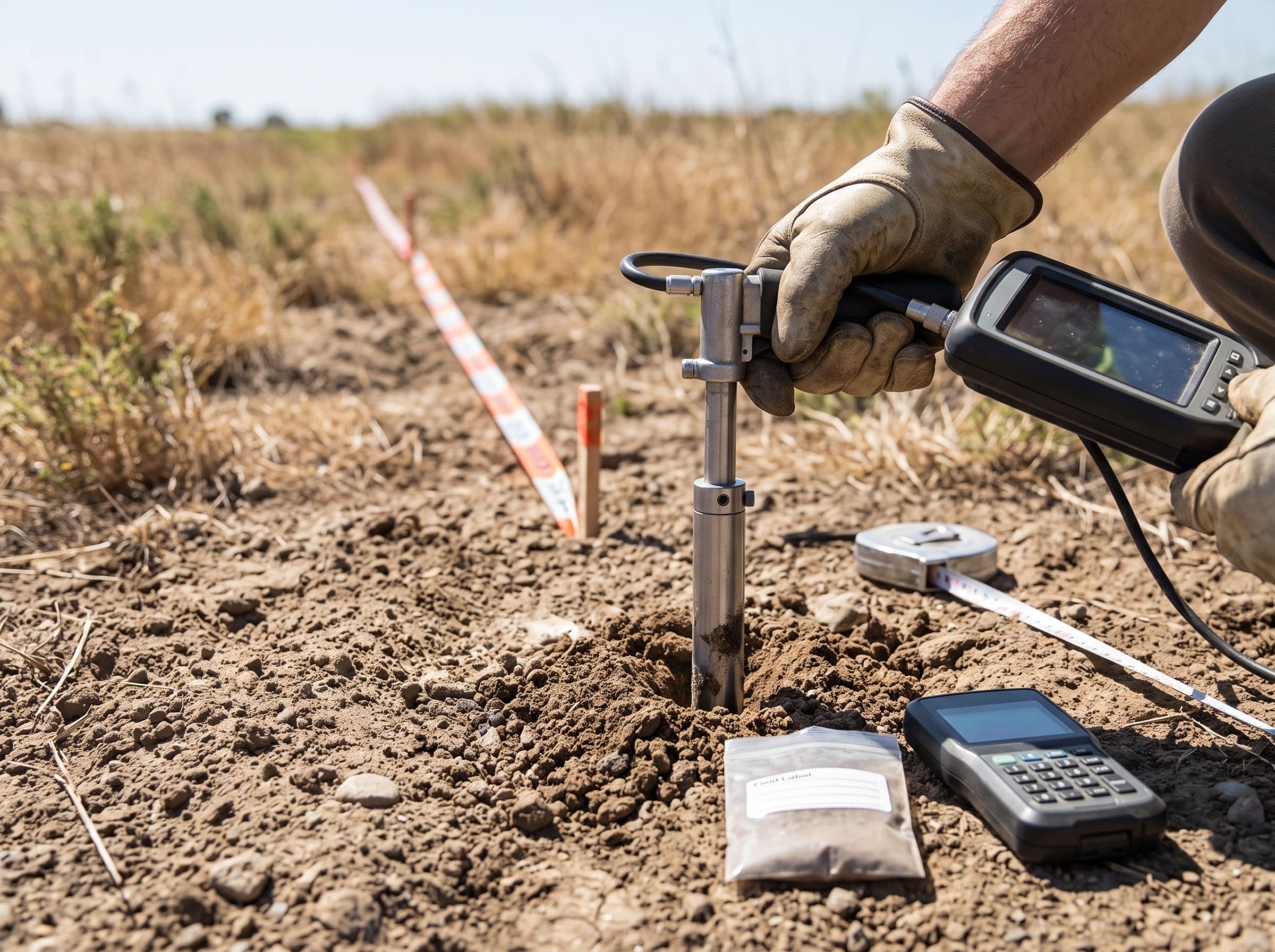
This is the right page when a planned or active trenchless or minimally invasive utility installation project needs additional ground support to proceed safely and cost-effectively.
It's not the best fit in every case. Check these first:
 An existing pipeline has already lost soil support along its length? See Pipeline Stabilization.A void has already formed around an existing utility trench? See Utility Void Filling.The concern is a specific leak or infiltration point rather than installation support? See Active Water Intrusion or Pipe Penetration Leaks.
Trenchless utility support projects are often planned in areas with known weak soil. Weak Soils is worth reviewing too if the broader ground condition is also a concern.
What stabilizing the ground before or during a trenchless project, instead of relying on shoring alone, actually gets you.
Stabilizes soil around a planned trench or bore path, reducing the risk and cost of the excavation itself
Reduces the risk to workers by supporting unstable soil conditions beyond what standard shoring alone provides
Reduces disruption to an active facility. At Portland International Airport, shoring wall variations were tested specifically to manage cost and disruption across multiple active trenching projects
Matched to the specific project. A jack-and-bore project in Sun Valley, California, used injection support to allow the planned method to proceed rather than defaulting to a slower, more disruptive alternative
Polymer injection stabilizes soil around the planned trench or bore path, creating a supported zone that reduces reliance on conventional shoring alone
Microtunneling and Infrastructure Stabilization, the Services, perform this fix together, chosen based on the specific trenchless method and ground conditions involved
URETEK's general approach assesses the planned trench or bore path and injects polymer to stabilize soil that would otherwise complicate the work, supporting the surrounding ground before or during installation rather than relying on shoring alone.
This is the combined job Microtunneling and Infrastructure Stabilization perform. In practice, URETEK's role is most often ground support around trenchless work already underway, not operating the boring equipment itself. It's different from Pipeline Stabilization's focus on an existing pipe's structural span, and different from Utility Void Filling's focus on a void that has already formed.
URETEK stabilizes ground around trenchless utility installations for airports, utilities, and public agencies nationwide.
At Portland International Airport, URETEK tested two variations of shoring walls, a 6-foot wall for shallow trench work and a 12-foot wall for deeper trenches, matched to specific test site parameters before being used on active projects.
At Portland International Airport, shoring wall depth was matched to the specific trench depth needed, tested against actual project parameters rather than applied as a one-size-fits-all approach.
Often, yes. Portland International Airport officials specifically raised concerns about the rising costs of conventional shoring work required to protect workers on active trenching projects, which is what led to testing this alternative approach.
Yes. This approach was tested directly at Portland International Airport for active trenching projects underway at the facility.
URETEK's role is most often stabilizing the soil around a planned trench, bore, or jack-and-bore path, as it did on a jack-and-bore project in Sun Valley, California, rather than operating the boring or trenching equipment itself.
Get the ground supported before it slows down a trenchless project.
Request a Trenchless Support Assessment
URETEK
Ground improvement solutions engineered for performance.
Contact Us
Find Local Experts


13900 Humble Road, Tomball, TX 77375
Services
Solutions

 800-240-7868


