

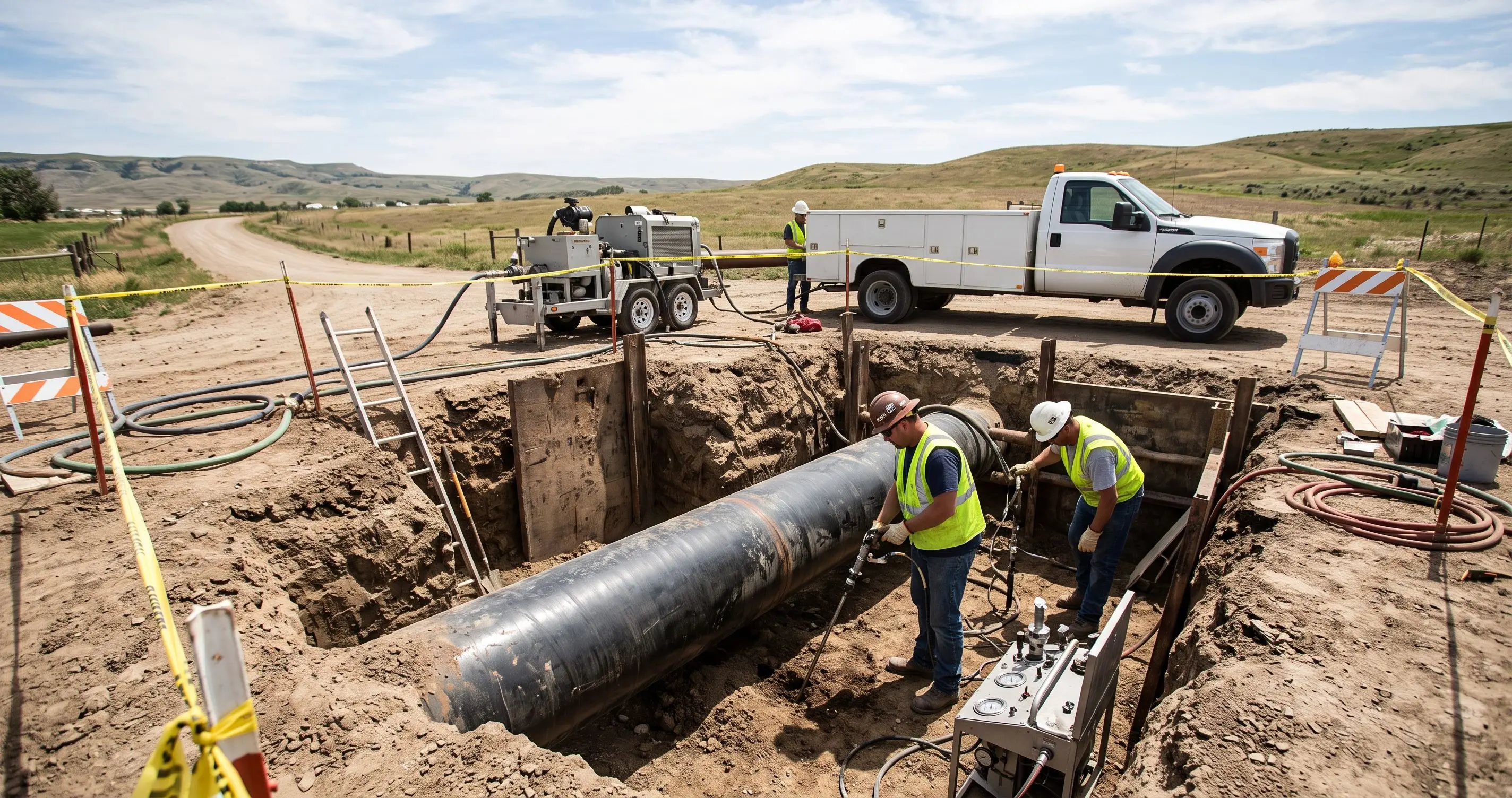
A pipeline is only as reliable as the ground supporting it. When the soil beneath it erodes, settles, or was never properly bedded, the pipe is left to bridge a gap it was never designed to span.
Applied in these Services
Infrastructure Stabilization

Related Industries
Water and Wastewater
Power and Energy
Need a Site Assessment?

800-240-7868

A pipeline is only as reliable as the ground supporting it. When the soil beneath it erodes, settles, or was never properly bedded, the pipe is left to bridge a gap it was never designed to span, putting stress on every joint along the way. Pipeline Stabilization restores that support directly beneath the pipe, without excavating it open. Utilities, energy operators, and public works agencies turn to it whenever a pipeline has lost the ground support it depends on.
A pipeline losing support underneath it usually traces back to the ground around it, not the pipe itself. Here's what URETEK sees most often.

Soil beneath a buried pipeline has eroded or settled, leaving the pipe unsupported along part of its length
A pipeline was originally installed on inadequate bedding material that has since compacted or shifted
Nearby excavation, construction, or a separate utility installation disturbed the soil supporting an existing pipeline
Water flow around or beneath a pipeline has gradually washed away the soil that once cradled it
An unsupported pipeline span often shows up as stress somewhere else along the line before it's traced back to the actual cause. Watch for these.
A pipeline inspection or survey revealing an unsupported span, sag, or gap beneath the pipe
Increased stress or strain readings at pipe joints or connections along a specific section
A pipeline route crossing an area with known soil settlement, erosion, or void activity nearby
Ground settling or a depression forming directly above a buried pipeline's route
A pipeline that has required repeated joint or connection repairs in the same general area
Pressure or flow anomalies traced back to physical stress on the pipe rather than the pipe material itself
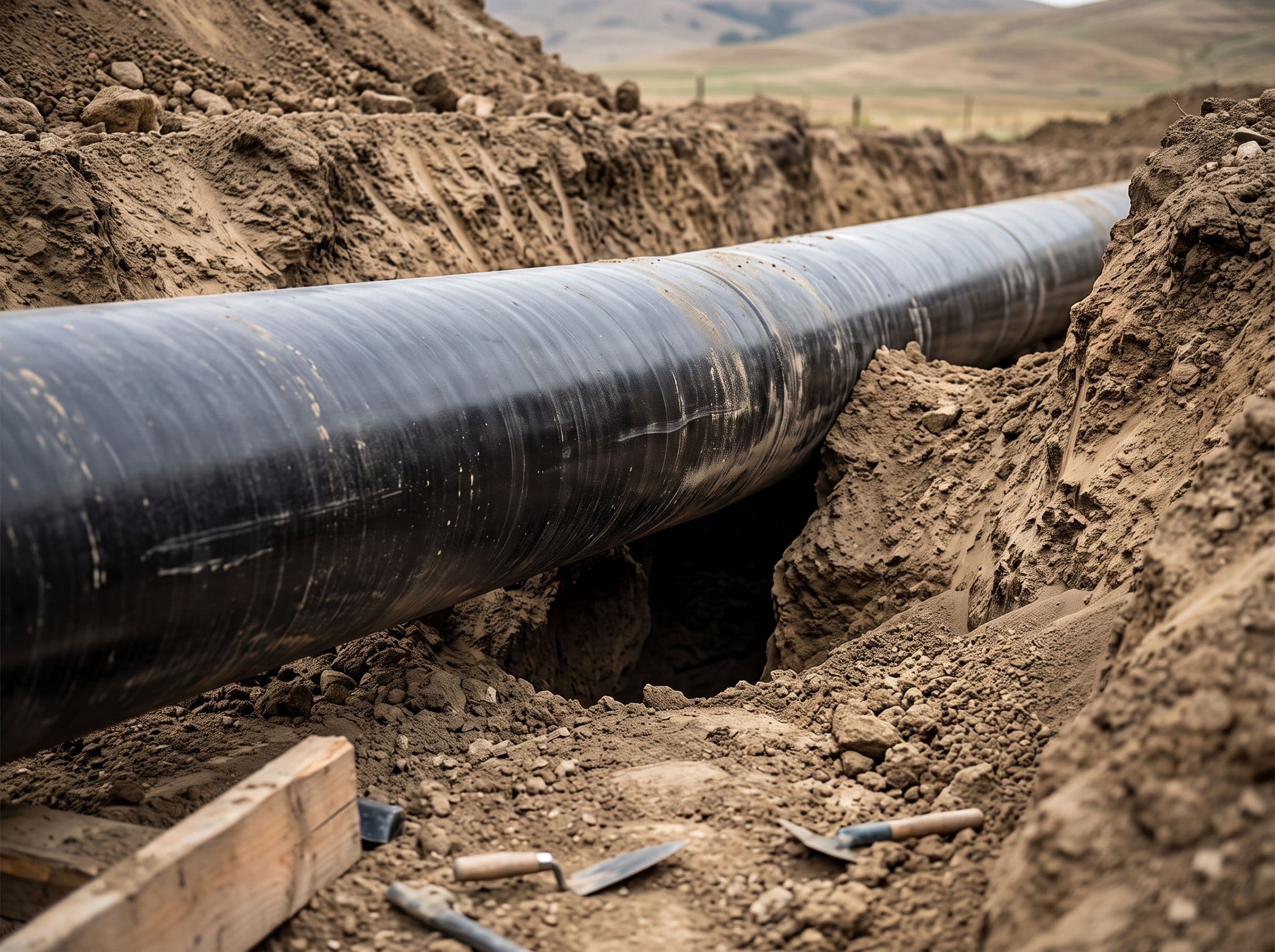
This is the right page when an existing underground pipeline has lost soil support along part of its length and needs that support restored.
It's not the best fit in every case. Check these first:
 The concern is specifically a leak where a pipe passes through a wall or structure? See Pipe Penetration Leaks.The void is around a utility line more broadly, not specifically supporting a pipeline's structural span? See Utility Void Filling.The work involves installing new utility infrastructure without open trenching? See Trenchless Utility Support.
A pipeline losing support is often tied to nearby soil erosion. Soil Loss and Erosion Voids are worth checking too if the surrounding ground condition is also a concern.
What restoring support beneath a pipeline, instead of waiting for a joint to fail, actually gets you.
Restores support directly beneath the pipeline along its actual unsupported span, rather than addressing only the symptom at a joint or connection
Reduces the risk of pipe failure, joint separation, or a leak developing from ongoing physical stress on an unsupported section
Doesn't require excavating the pipeline open, work is accessed through small injection points rather than exposing the full pipe length
Crews can mobilize on short notice, including nights, weekends, or holidays, so pipeline support can be restored on a schedule that works around service demands
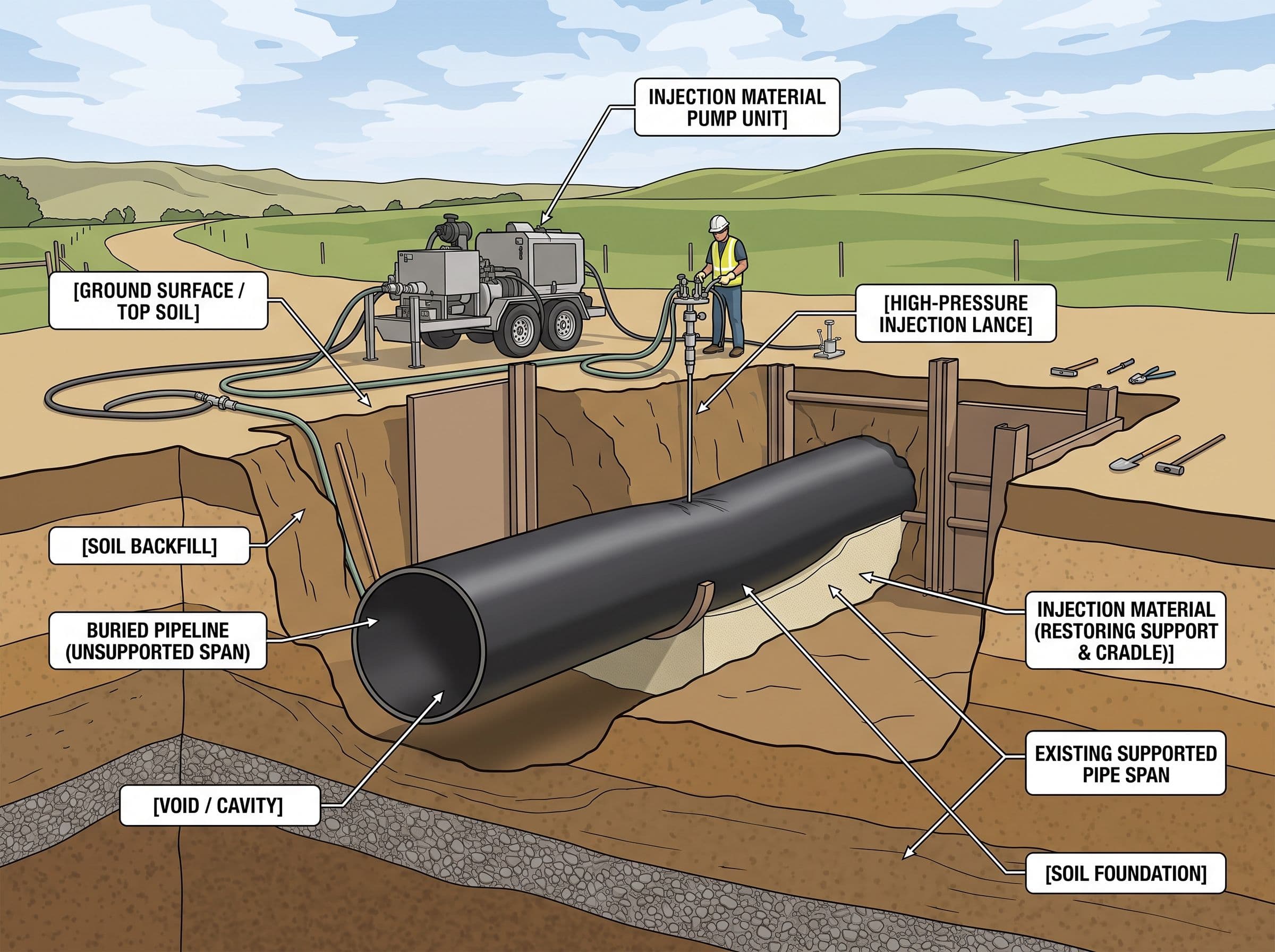
Expanding polymer is injected beneath the pipeline to fill the void and cradle the pipe from below, restoring the support the original bedding material was meant to provide
Infrastructure Stabilization, the Service, performs this fix directly, targeting the specific unsupported span identified along the pipeline's route
URETEK's general approach starts by confirming the unsupported span through inspection, survey, or strain testing along the pipeline's route. Crews then inject expanding polymer beneath the pipe to fill the void and restore support along its length, without excavating the pipe open.
This is exactly what the Infrastructure Stabilization service does, applied here to a pipeline's structural support. It's different from Pipe Penetration Leaks' focus on a wall seal, and different from Utility Void Filling's broader framing, which isn't tied to a pipeline's structural span specifically.
URETEK restores soil support beneath buried pipelines for water, wastewater, and energy infrastructure nationwide.




URETEK 486 Star® cures to 99% of its final strength within minutes of injection, so it isn't a slow-setting material that shifts as it hardens. A project manager evaluates the actual extent of the unsupported span on site first, rather than applying a generic patch to the visible symptom.
A pipeline inspection, survey, or strain reading identifies where along the route support has been lost. The injection plan is designed around those specific findings, not a general assumption about the pipe's condition.
In most cases, yes, since there is no excavation, no pipe removal, and no re-bedding required. The fix is applied directly beneath the pipe from small access points.
In most cases, yes, since the work is performed from small access points around the pipe rather than requiring the line itself to be taken out of service.
No. Often it's the soil beneath the pipe that has eroded or settled, not the pipe material itself. Confirming which one is actually the cause is the first step before deciding on a repair.
Get the soil beneath it restored before physical stress becomes a leak.
Request a Pipeline Assessment
URETEK
Ground improvement solutions engineered for performance.
Contact Us
Find Local Experts


13900 Humble Road, Tomball, TX 77375
Services
Solutions

 800-240-7868


