

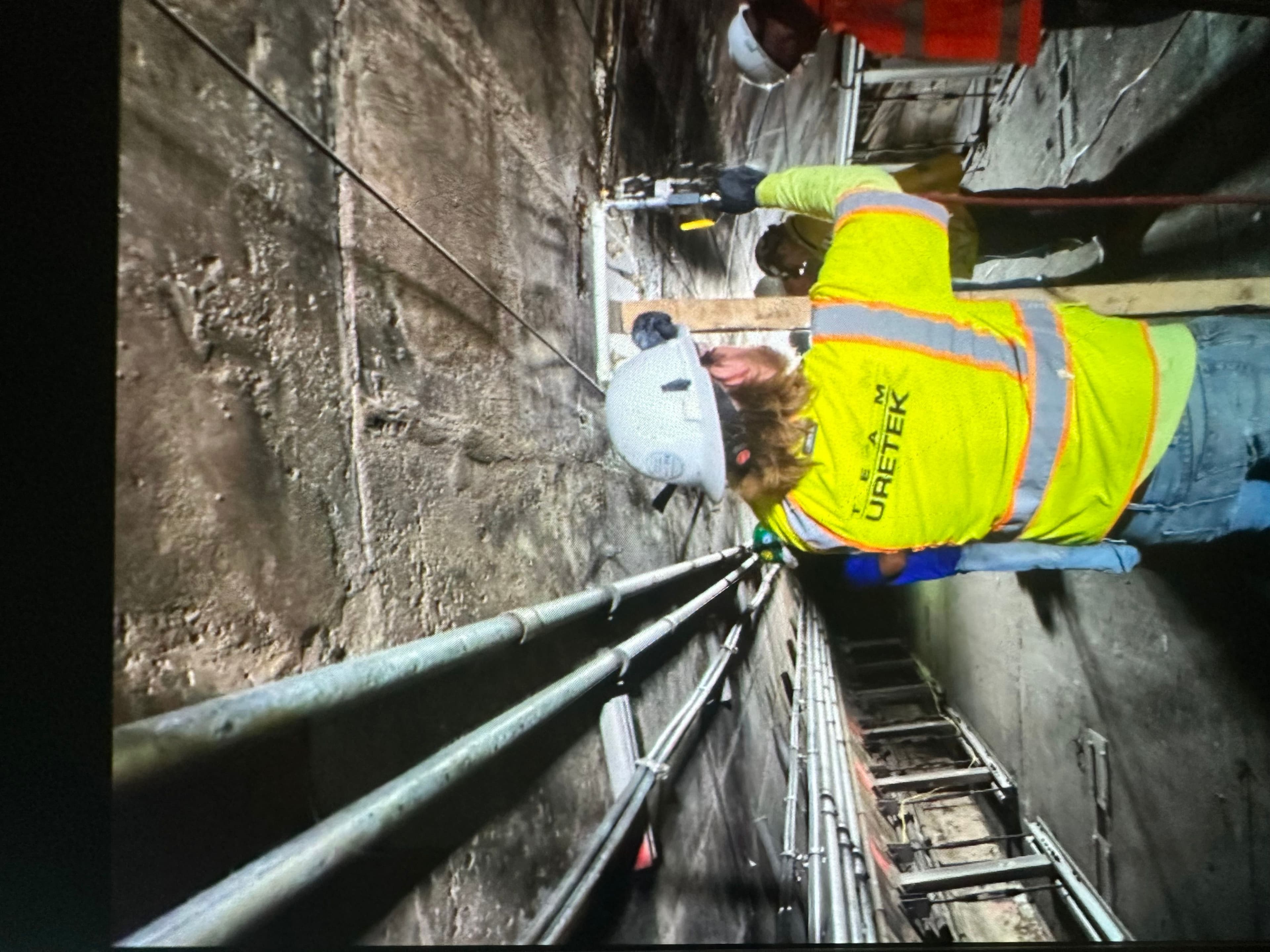
A leak doesn't stay contained to where it's first noticed, and every day it's left alone, it erodes more soil and strains the system around it.
Solutions for this Service
Active Water Intrusion

Manhole Infiltration
Pipe Penetration Leaks
Related Industries
Water and Wastewater
Transportation
Need a Site Assessment?

800-240-7868

A leak doesn't stay contained to where it's first noticed. Water finds its way through a manhole joint, a pipe connection, or a structural seam, and every day it's left alone, it erodes more soil and strains the system around it. Structural Leak Sealing injects polymer directly at the leak point, sealing manholes, sewer lines, pipe joints, and structural connections without excavation. Municipal agencies, engineers, and facility owners use it when a specific, identified leak needs to be stopped at the source.
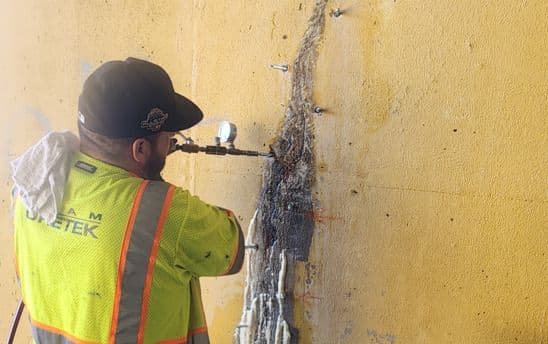
A leak at a joint or connection doesn't stay small. Here's what it leads to when it isn't sealed at the source.

Inflow and infiltration at manholes overloading pump stations and wastewater treatment plants with excess water
Leaking sewer or drainage lines eroding soil around the pipe and threatening the pavement or structure above it
Structural joints, such as bridge or pedestrian deck joints, leaking water that causes icing, erosion, or corrosion below
Multiple leak points across the same system, where each one adds treatment cost and system strain if left unaddressed
A leak at a structural connection usually shows itself before it becomes a system-wide problem.
Unusually high water levels at a pump station or treatment plant during rain events
Visible water seeping around a manhole frame, pipe joint, or structural connection
Icicles or staining forming beneath a bridge or structure where a joint above is leaking
Soil erosion or a developing void near a pipe or manhole known to be leaking
Rising treatment costs traced back to storm or groundwater entering the sanitary system through I&I
A leak that keeps returning after a surface patch or previous repair
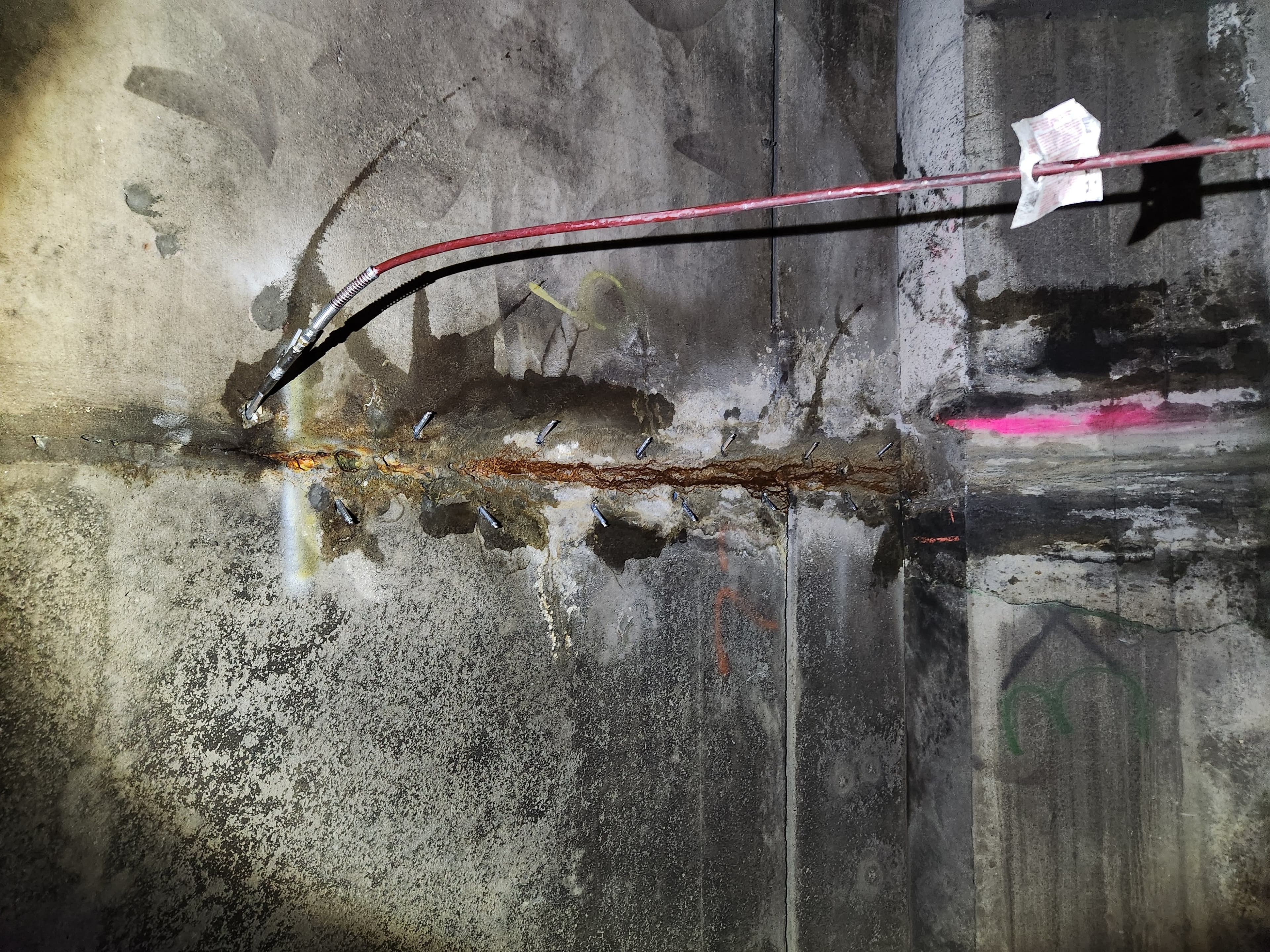
Why municipal agencies and engineers choose Structural Leak Sealing over relining or full replacement.
Seals the leak at its actual source. Polymer is injected directly at the joint or connection where water is moving through, filling the specific gap rather than coating the surface around it.
Reduces the safety risk of excavation-based repair. Crews aren't opening a trench or pit around an active manhole or pipeline, which is the main safety hazard in traditional dig-and-replace leak repair.
The road, facility, or system above stays in use during the work. Small drilled injection points mean there's no open excavation closing off the surface while the leak is sealed.
Most leaks are sealed in hours, not the days a reline or replacement takes. A Michigan sewer line repair was completed in six hours, and a Texas manhole repair sealed two manholes in under four hours.
Multiple leak points on the same system are addressed in one mobilization. Seven manholes straining a wastewater treatment plant in Indiana were all repaired in a single 1.5-day project, not seven separate visits.
Structural Leak Sealing is the right call when a specific, identified leak point, a manhole, a sewer line, a pipe connection, or a structural joint, needs to be sealed at the source, whether it's a single leak or several across the same system. It fits inflow and infiltration problems straining a treatment plant, eroding soil around a leaking line, and joints on bridges or structures letting water through.
It isn't the right tool when the goal is sealing an expansion or control joint in concrete or masonry specifically, with a defined joint width and movement profile; Joint Sealing is built for that more specific technique. It also isn't the starting point when there's no leak yet and the goal is a preventive, continuous barrier ahead of a known groundwater or tidal risk; Groundwater Cutoff addresses that proactively, and Chemical Curtain Grouting is the right tool when the barrier needs to reach unusually fine-grained soil or tight joints with precision.
Structural Leak Sealing is frequently paired with Void Filling on the same project when a leak has already eroded soil into a void behind or beneath the leaking point, addressing the leak and the resulting void together rather than leaving one to undo the other's fix.
1
Evaluate
A URETEK project manager identifies the actual leak point and its cause before proposing a plan, not a salesperson.
2
Deploy
Crews mobilize on the schedule the site needs, including nights, weekends, or holidays, in a self-contained unit.
3
Drill
Small holes, as narrow as 5/8 inch, are drilled at the leak point according to the injection pattern.
4
Inject
URETEK 486 Star polymer is injected to form a continuous seal around the joint or connection, closing the specific gap water was moving through.
5
Monitor
Placement is tracked in real time to confirm the seal is complete at every targeted point.
6
Validate
The client confirms the leak is stopped and the site is restored to service before the crew leaves.
URETEK has sealed sewer lines, manholes, and structural joints for municipalities and agencies nationwide, backed by decades of engineering and execution experience.




On a pedestrian bridge over I-696 in Michigan, URETEK's UDI joint sealing was tested against an untreated control joint. The treated joints showed no icicle formation from leaking irrigation water, while the untreated joint kept forming large icicles, and the seal was still holding 12 years later. That's a tested, long-term result, not a one-time patch.
Small holes are drilled at the leak point, and URETEK 486 Star polymer is injected to form a continuous seal around the joint or connection, filling the specific gap water is moving through rather than coating the surface. On a manhole project in Nederland, Texas, this sealed both manholes and eliminated the ongoing inflow and infiltration risk in under four hours.
In most cases, yes, and sometimes by a wide margin. On the same Nederland, Texas manhole project, URETEK's injection repair saved the city more than 75% of the cost of the cured-in-place liner alternative that had originally been considered.
Yes. In Grosse Pointe Farms, Michigan, a sewer drainage line experiencing groundwater and soil infiltration was fully repaired in just six hours, with the surface above staying in use throughout, since the work is done through small drilled holes, not an open excavation.
Yes. In Clarksville, Indiana, seven manholes straining a wastewater treatment plant with excess inflow were all repaired and returned to full operation in just 1.5 days, addressed as one coordinated project rather than seven separate site visits.
Get a leak sealed before it erodes more soil or strains your system further. URETEK crews respond fast, including emergencies.
Request a Leak Assessment
URETEK
Ground improvement solutions engineered for performance.
Contact Us
Find Local Experts


13900 Humble Road, Tomball, TX 77375
Services
Solutions

 800-240-7868


