

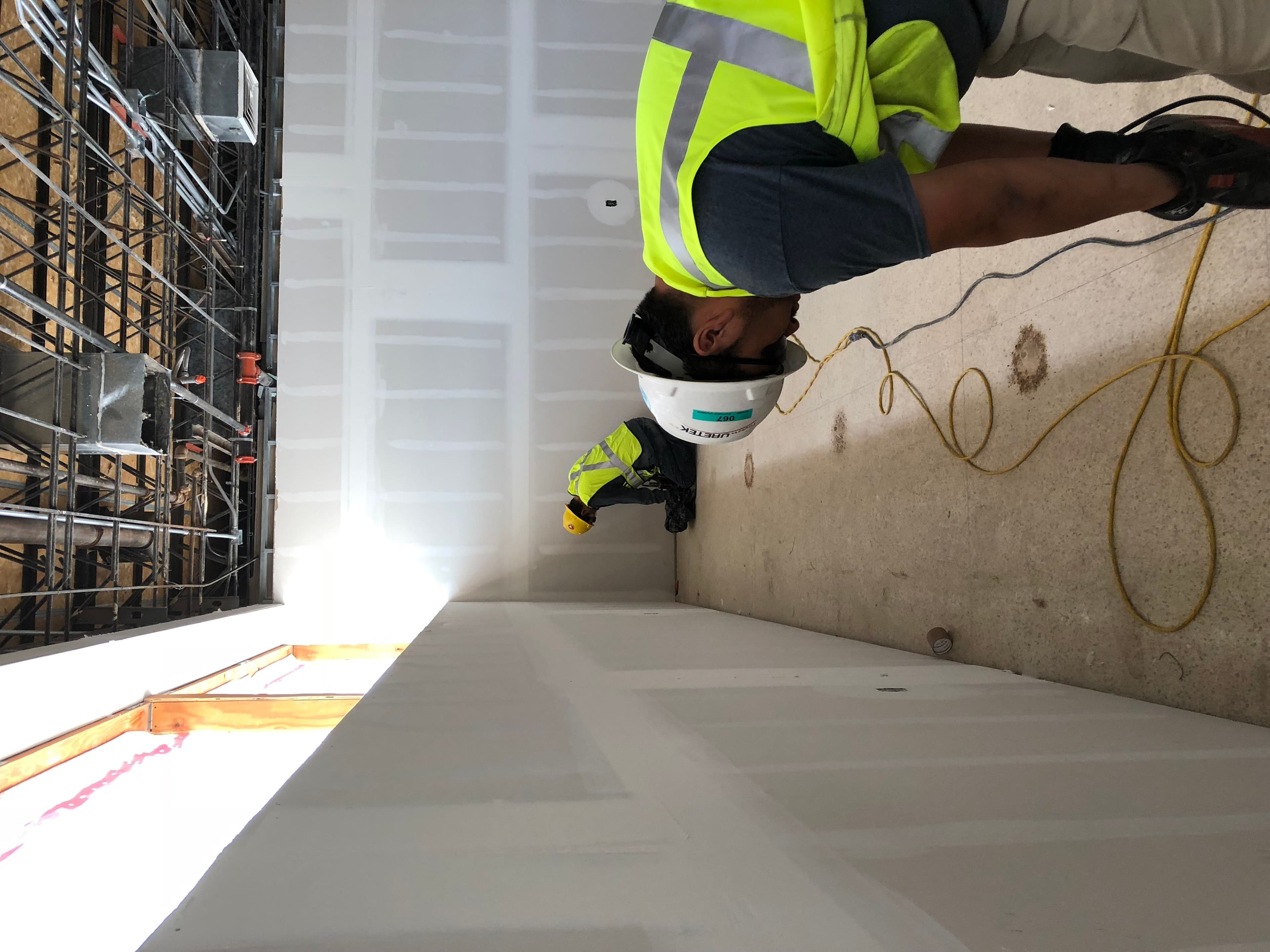
Some water problems haven't happened yet, they're just a matter of time.
Solutions for this Service
Active Water Intrusion

Manhole Infiltration
Pipe Penetration Leaks
Related Industries
Water and Wastewater
Municipal Infrastructure
Need a Site Assessment?

800-240-7868

Some water problems haven't happened yet, they're just a matter of time, a dam with water moving through weak soil beneath it, a containment pond with a deteriorating liner, an excavation site next to rising groundwater. Groundwater Cutoff builds a continuous underground barrier that blocks that water from moving into or through the protected area, before it becomes a failure. Engineers and public agencies use it to protect dams, ponds, excavation sites, and below-grade structures from water they can see coming.
Water moving toward a protected site doesn't wait for a convenient time to become a failure. Here's what it threatens if it isn't cut off.

Water movement through weak soils beneath a dam, risking flooding to communities or infrastructure downstream
Deteriorating liners at containment ponds or basins, letting seepage escape into surrounding soil
Excavation sites where rising or nearby groundwater threatens to flood the work area before it's protected
Below-grade structures near a known water source, tidal, riverine, or high water table, that haven't leaked yet but are at risk
A groundwater risk usually shows itself before it becomes an active failure. Watch for these.
Wet soil, seepage, or soft ground appearing at the base of a dam, pond, or embankment
A containment liner or barrier known to be aging or deteriorating, even without an active leak yet
An excavation planned near a high water table, tidal zone, or known groundwater source
Engineering or geotechnical reports flagging water movement risk beneath a structure
A history of seepage or water loss at a site that hasn't yet reached emergency levels
Why agencies and engineers choose Groundwater Cutoff to prevent a water problem rather than react to one.
Stops water before it reaches the protected area, not after. A continuous barrier is formed to block groundwater movement into or through the site, addressing the risk directly instead of waiting for a leak to appear.
Reduces the safety risk of emergency response after a failure. A dam or containment structure that's already failing puts crews and nearby communities at far greater risk than one treated proactively.
Verified independently, not just visually inspected. On a Baltimore courthouse project, the cutoff barrier's performance was confirmed by independent third-party testing along 280 linear feet of treated wall.
Emergency situations can still be addressed fast. An Ohio DNR dam emergency was stabilized and cut off from water movement in a single day, under the engineered cost estimate.
Protects containment structures without draining them. A pair of industrial firewater ponds were resealed through 76 injections across both ponds, without a full drainage and reline.
Groundwater Cutoff is the right call when the goal is to block water from reaching or moving through a protected site, a dam, a containment pond, an excavation, before it becomes an active leak or failure. It fits emergency dam stabilization, industrial containment barriers, and excavation sites near a known water source, where the barrier needs to stand independently as protection for the whole site, not patch one specific leak point.
It isn't the right tool when water is already actively leaking through a specific, identified joint or connection; Structural Leak Sealing and Joint Sealing are built to close a leak that's already found its path. It also isn't the fix when the precision need is at fine-grained soil or tight joints specifically; Chemical Curtain Grouting is the more targeted material for that.
Groundwater Cutoff is frequently paired with Void Filling on the same project when seepage has already begun eroding soil into a void near the protected structure, addressing both the water source and the resulting void together.
1
Evaluate
A URETEK project manager assesses the site's hydrogeology and the water risk to the protected structure before proposing a plan, not a salesperson.
2
Deploy
Crews mobilize on the schedule the site needs, including nights, weekends, or emergency response, in a self-contained unit.
3
Design
A cutoff wall design is developed based on the site's specific soil and groundwater conditions.
4
Drill
Small-diameter injection points are installed with minimal disruption to the protected structure or site.
5
Inject and Monitor
Expanding polymer forms a continuous, impermeable barrier, with placement tracked in real time to confirm the cutoff is complete.
6
Validate
A final inspection, and independent verification testing where required, confirms watertight, reinforced performance before the crew leaves.
URETEK has protected dams, industrial ponds, courthouses, and public piers nationwide, backed by decades of engineering and execution experience.




At a Baltimore courthouse renovation, URETEK's curtain grouting eliminated water ingress along 280 linear feet of treated wall, confirmed by independent third-party verification testing, not just a visual check. That kind of outside confirmation is standard on a cutoff project, since the barrier is protecting a site that can't afford a partial fix.
A cutoff barrier is built to block water from moving into or through a protected area at all, a dam, a containment pond, an excavation site, rather than closing a leak that's already found its way through. On an Ohio DNR dam, URETEK's cutoff work stopped water movement through weak soils under the dam before it could threaten the community below, not after a failure had already started.
Yes. When Ohio DNR faced an emergency at Lake White Dam, where water movement through weak soils risked flooding nearby communities, URETEK completed a one-day stabilization and cutoff program, and the work came in under the engineered cost estimate.
Yes. At a Texas petrochemical plant, URETEK reconstructed the side-slopes and floors of two firewater ponds with a deteriorated clay liner using 76 injections across both ponds, at a fraction of the cost of traditional repair, without a full pond drainage and reline.
Yes. On the new St. Pete Pier project, URETEK installed a groundwater cutoff at depth beneath a 50-year-old seawall to stop tidal water loss, keeping the $80 million public project on schedule ahead of launch.
Get a dam, pond, or excavation site assessed before groundwater becomes an emergency. URETEK crews respond fast, including emergencies.
Request a Groundwater Risk Assessment
URETEK
Ground improvement solutions engineered for performance.
Contact Us
Find Local Experts


13900 Humble Road, Tomball, TX 77375
Services
Solutions

 800-240-7868


