

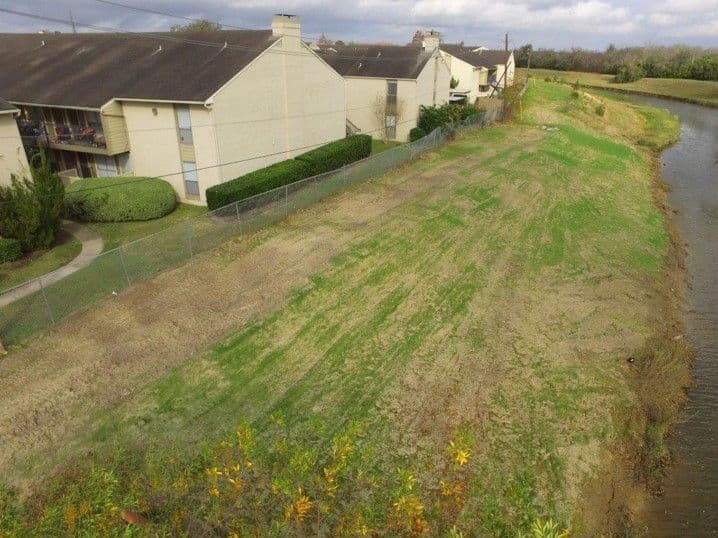
Groundwater doesn't need a large opening to get in, a joint, a utility penetration, or a gap in fine-grained soil is enough.
Solutions for this Service
Active Water Intrusion

Joint Leaks
Pipe Penetration Leaks
Related Industries
Water and Wastewater
Marine and Coastal
Need a Site Assessment?

800-240-7868

Groundwater doesn't need a large opening to get in, a joint, a utility penetration, or a gap in fine-grained soil is enough. Chemical Curtain Grouting creates a continuous, low-viscosity chemical grout barrier behind a structure, sealing the specific gaps a standard grout curtain can't reach with the same precision. Engineers and public agencies use it at seawalls, floodwalls, and below-grade structures where every gap in the barrier has to be closed, not just most of them.
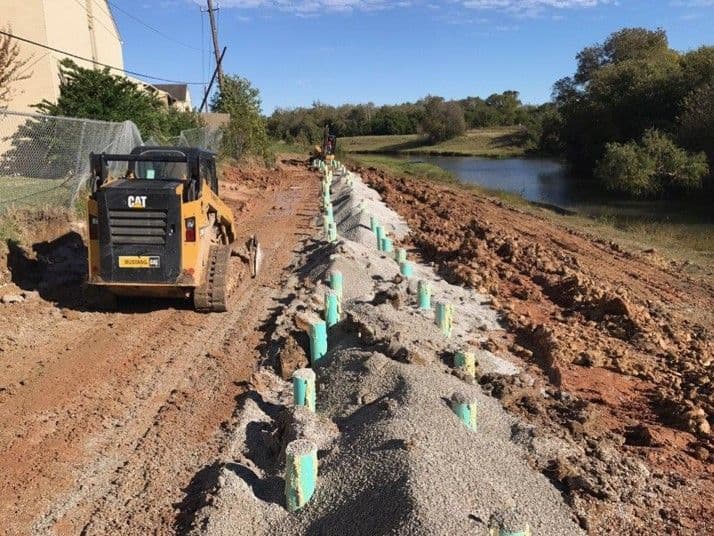
A gap in a water barrier doesn't stay small. Here's what it leads to when it isn't sealed with precision.

Groundwater or tidal water finding its way through utility penetrations, sheet-pile transitions, or joints that a standard grout curtain wasn't fine enough to seal
Seawalls and floodwalls with leaking joints and unknown void extent behind them, threatening the structure and anything built near it
Fine-grained or tight soil conditions where a standard curtain grout can't penetrate precisely enough to close every gap
Below-grade structures facing ongoing groundwater migration after storm or flood damage has already undermined the surrounding soil
A barrier that's letting water through in specific spots usually shows itself before it becomes a structural problem.
Water visibly seeping through a specific joint, penetration, or transition point, rather than across a broad wall surface
A structure near tidal or fluctuating groundwater where leaks come and go with the water level
A prior grout curtain or waterproofing treatment that reduced but didn't fully stop infiltration at specific points
Fine-grained or silty soil conditions on a project where a standard curtain grout has been ruled out as too coarse
Storm or flood damage that's left ongoing groundwater migration beneath a structure's footings
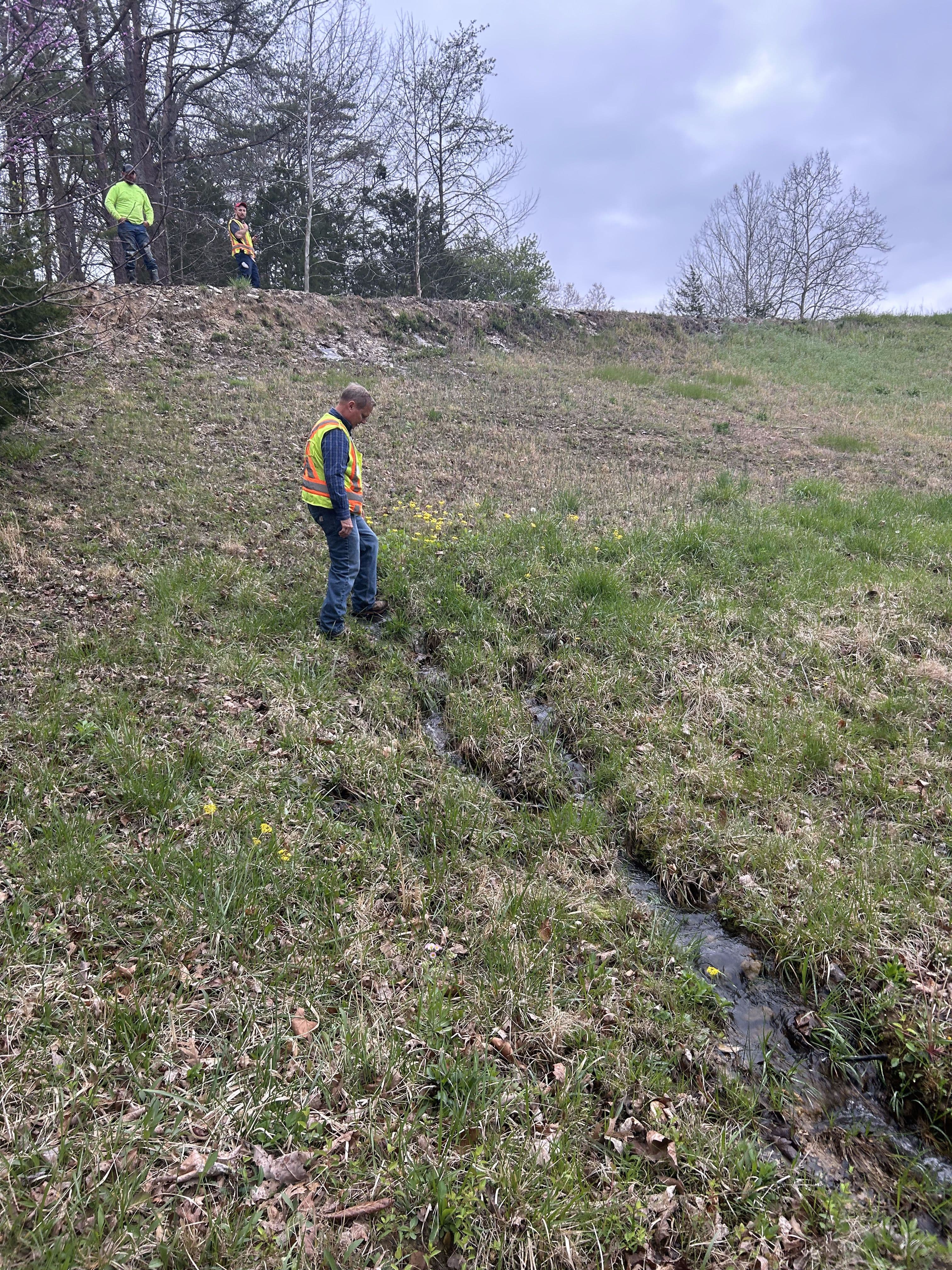
Why engineers reach for a chemical grout curtain over a standard curtain when precision matters.
Reaches gaps a standard curtain grout can't. Chemical grouts like acrylate and urea-silicate have a finer particle size and lower viscosity, letting the curtain penetrate tight soil gradations, utility penetrations, and sheet-pile transitions precisely.
Reduces the safety risk of dewatering and open excavation. Because the curtain is installed from the landside through small injection points, crews aren't working in a dewatered pit next to an active waterway.
The site stays in public or operational use during the work. A municipal marina and promenade stayed open to the public throughout a full seawall injection program, since there was no excavation or wall replacement involved.
Verified watertight, not just assumed watertight. Rising-head permeability testing performed before and after grouting confirmed a zero-leakage outcome through tidal cycling on a coastal bridge service building, a specific, tested result rather than a general claim.
Sites return to use quickly, not after a multi-week closure. A coastal corridor reopened to public use roughly 15 minutes after the final injection on a seawall leak-sealing project.
Chemical Curtain Grouting is the right call when the barrier needs to close specific gaps with precision, at joints, utility penetrations, sheet-pile transitions, or in fine-grained soil, not just cover a broad area generally. It fits seawalls, floodwalls, and below-grade structures where tidal or fluctuating groundwater is finding its way through points a coarser grout can't seal, and where the result needs to be verified watertight, not just visually improved.
It isn't the right starting point when the job is a broad, general groundwater barrier across a large area without unusually tight soil or precision joints; plain Curtain Grouting handles that scope without needing the finer, more expensive chemical grout material. It also isn't the fix for a void or eroded soil pocket on its own, without an active water intrusion problem; Void Filling addresses that directly.
Chemical Curtain Grouting is frequently paired with Structural Underpinning on the same project when groundwater intrusion has also undermined a structure's footings, sealing the water path and restoring bearing capacity together rather than treating them as separate problems.
1
Evaluate
A URETEK project manager inspects the structure for leaks, voids, and the specific points where water is getting through, not a salesperson.
2
Deploy
Crews mobilize on the schedule the site needs, including nights, weekends, or holidays, in a self-contained unit.
3
Design
An injection plan is tailored to the specific soil, tidal, and groundwater conditions at each gap or joint.
4
Drill
Small-diameter injection points are installed from the landside, with minimal disruption to the structure or surrounding site.
5
Inject and Monitor
Chemical grout is injected to form a continuous barrier, with pressure and placement tracked in real time to confirm full coverage at every targeted point.
6
Validate
Permeability testing confirms the barrier is watertight before the crew leaves the site.
URETEK has sealed seawalls, floodwalls, marinas, and below-grade structures nationwide, backed by decades of engineering and execution experience.






On a coastal service building supporting a major NYC bridge, URETEK's acrylate grout curtain was tested with rising-head permeability testing before and after grouting, and the treated areas stayed fully dry through repeated tidal cycles, not just a single dry-weather check. That kind of before-and-after verification is standard on a chemical curtain job, not an optional extra.
Chemical grouts like acrylate and urea-silicate have a much finer particle size and lower viscosity than standard curtain grout materials, so they can penetrate tight soil gradations, utility penetrations, and sheet-pile transitions that a coarser grout can't reach. That precision is why a chemical grout curtain is used specifically at joints, penetrations, and fine-grained soils, where sealing every gap matters more than covering ground quickly.
In most cases, yes, since there's no dewatering, excavation, or structure replacement involved. On a coastal seawall project, roughly 215 linear feet of wall and a secondary subsidence area were treated from the landside, and the corridor reopened to public use about 15 minutes after the final injection, avoiding the extended closure a full seawall rebuild would require.
Yes. On a Florida municipal marina and promenade, URETEK's layered injection program filled all identified voids and sealed leaking joints along the seawall without excavation or wall replacement, keeping the waterfront in public use throughout the work.
Yes. After Hurricane Ian floodwaters undermined footings and drove ongoing groundwater migration beneath a Florida subterranean parking garage, URETEK's chemical grout curtain established a continuous groundwater interruption zone, and the building remained fully operational throughout the repair with zero exterior excavation.
Get a chemical grout curtain evaluated before a small leak becomes a structural problem. URETEK crews respond fast, including emergencies.
Request a Waterproofing Assessment
URETEK
Ground improvement solutions engineered for performance.
Contact Us
Find Local Experts


13900 Humble Road, Tomball, TX 77375
Services
Solutions

 800-240-7868


