

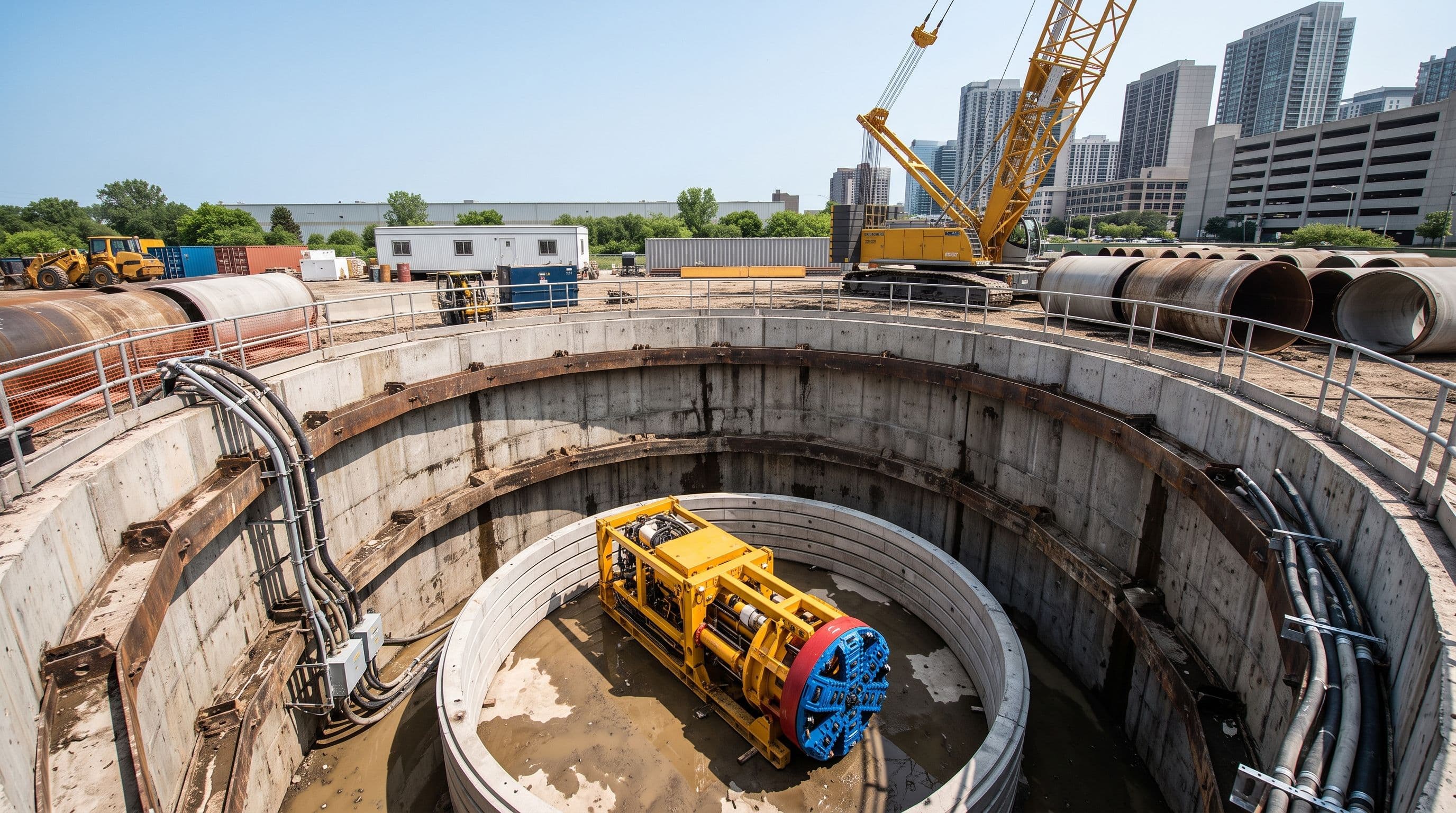
Some pipelines have to cross under something that can't be dug up: a highway, a rail line, a waterway, a building.
Solutions for this Service
Trenchless Utility Support

Pipeline Stabilization
Utility Void Filling
Rail Subgrade Stabilization
Related Industries
Municipal Infrastructure
Water and Wastewater
Need a Site Assessment?

800-240-7868

Some pipelines have to cross under something that can't be dug up: a highway, a rail line, a waterway, a building. Microtunneling installs pipe and conduit through that obstacle using a remote-controlled boring machine, guided to precise line and grade from a launch shaft, without an open trench along the route. Municipal utilities, private developers, and public agencies use it when the surface above the pipeline has to stay in service throughout construction.
An open-cut trench isn't always an option. Here's what Microtunneling avoids.

Closing a highway, rail line, or waterway for the length of time an open trench would require
Risk of damaging existing utilities or infrastructure during open excavation in a congested corridor
Full-depth pavement or trackbed removal and restoration that adds cost and time to a project
Surface disruption to sensitive sites, from historic districts to environmentally protected areas, where digging isn't practical
Microtunneling is usually a planning decision rather than a response to visible damage. Consider it when a project involves these.
A new pipeline or conduit that has to cross under a road, rail line, or waterway that can't be closed
A route that runs through a congested utility corridor where open excavation risks hitting existing lines
A site where surface restoration costs would make open-cut trenching more expensive than boring
Environmentally sensitive or historically protected ground where excavation isn't permitted
A gravity pipeline that requires precise line and grade control over a long, straight run
A congested urban corridor where lane or street closures for open trenching aren't realistic
Why municipalities and agencies choose Microtunneling over open-cut installation.
Installs pipe and conduit accurately over long, straight runs. The boring machine holds precise line and grade throughout the bore, which matters most for gravity pipelines that depend on a consistent slope to function.
Keeps crews out of an open trench. Because the pipeline is installed from small launch and reception shafts rather than a continuous excavation, crews aren't exposed to the cave-in and confined-space risks of a long open trench.
Leaves the surface above untouched along the tunnel path. The road, rail line, or waterway above stays in service throughout the bore, with no lane or line closure required along the route itself.
Avoids the schedule cost of full surface restoration. Without an open trench to backfill and repave, there's no lengthy pavement or trackbed restoration phase tacked onto the end of the project.
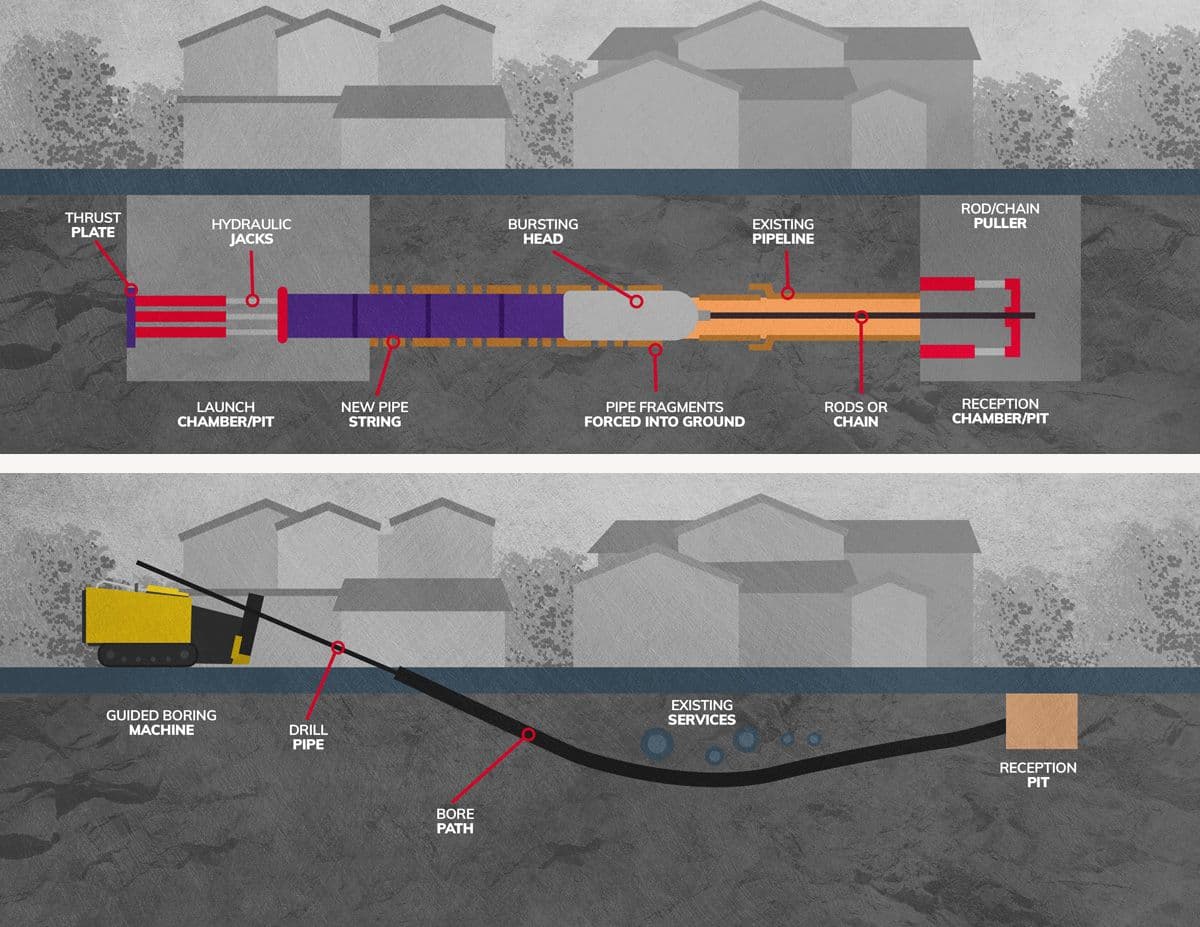
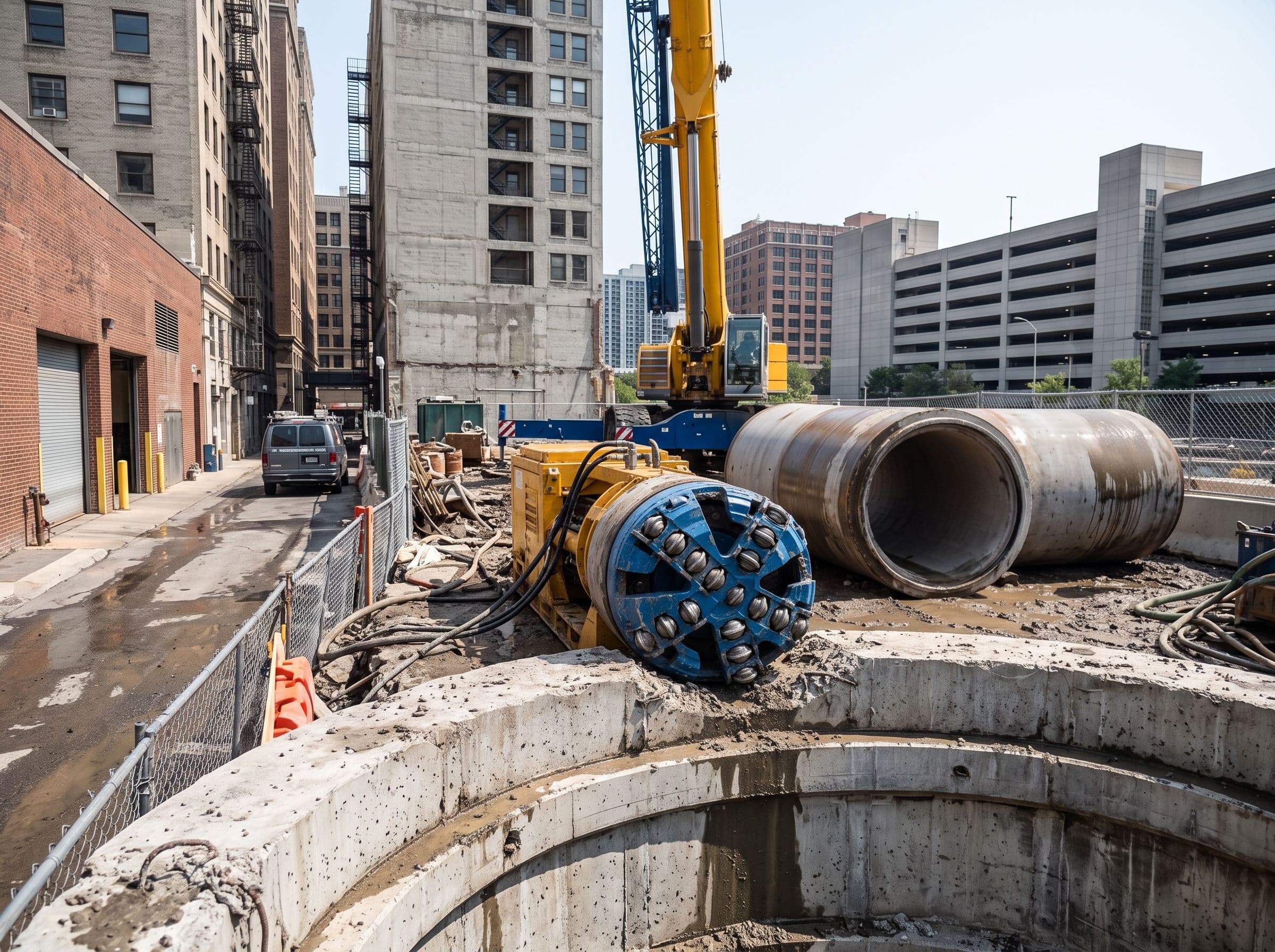
Uses remote-controlled guidance, not manual digging, to hold grade. A microtunnel boring machine is operated from a surface console and tracked in real time by laser or gyro guidance, with pipe sections jacked in behind it as it advances.
Microtunneling is the right call when a new pipeline or conduit needs to be installed under an obstacle that can't be opened up, a highway, a rail line, a waterway, or a congested utility corridor, and precise line and grade matter over the length of the run.
It's not the right tool when the goal is repairing or sealing an existing pipe rather than installing a new one; Joint Sealing or Curtain Grouting address that directly. It's also not the fit when the underlying issue is soil settlement or a void around an existing structure rather than a new pipeline route; Deep Injection (UDI) is the better starting point there. And for a short utility crossing where open-cut is genuinely practical, traditional trenching, with UDI-based trench support if needed, may be the more economical option.
Microtunneling is sometimes paired with Curtain Grouting where the new bore passes near an existing structure that needs its own water-tightness confirmed after the crossing is complete.
1
Evaluate
A URETEK project manager reviews the alignment, soil conditions, and any existing utility conflicts along the planned route.
2
Design
Line and grade are engineered for the bore path, along with the location and depth of the launch and reception shafts.
3
Shaft Construction
Launch and reception shafts are excavated at each end of the tunnel alignment.
4
Bore
A remote-controlled microtunnel boring machine advances through the soil while pipe sections are jacked in behind it.
5
Monitor
Line, grade, and steering are tracked in real time from the surface console throughout the bore.
6
Validate
The completed pipeline is inspected and confirmed to grade before the shafts are closed out.
URETEK's soil support methods have backed trenchless utility crossings for municipal and county infrastructure projects nationwide.



The microtunnel boring machine is tracked from the surface in real time using a guidance system, not steered by feel. Line and grade are monitored continuously as the machine advances, and any deviation is corrected before it becomes a problem, which matters most for gravity pipelines where even a small grade error affects how the line drains.
Microtunneling uses a remote-controlled microtunnel boring machine operated from a console at the surface, guided by a laser or gyro-based tracking system inside the bore. As the machine advances, pipe sections are jacked in behind it, and the operator adjusts steering based on real-time position data rather than direct visual line of sight.
It depends on the site, but once pavement removal, traffic control, and full surface restoration are factored in, trenchless installation often closes the cost gap with open-cut trenching, especially under a road, rail line, or waterway where restoration and disruption costs run high. A project-specific comparison is the only way to confirm the number for a given site.
Yes, that's the main reason to choose it. Because the pipeline is installed from small launch and reception shafts rather than a continuous open trench, the road, track, or waterway above stays in service throughout the bore, with no lane or line closure required along the tunnel path itself.
Microtunneling is used for a range of pipe and conduit diameters and is suited to congested or sensitive sites where open-cut excavation would risk existing utilities or infrastructure. Ground conditions are evaluated on a site-specific basis before a bore is planned.
Get a trenchless option evaluated for your next pipeline or conduit crossing. URETEK works with agencies and developers to plan the route.
Request a Trenchless Crossing Consultation
URETEK
Ground improvement solutions engineered for performance.
Contact Us
Find Local Experts


13900 Humble Road, Tomball, TX 77375
Services
Solutions

 800-240-7868


