

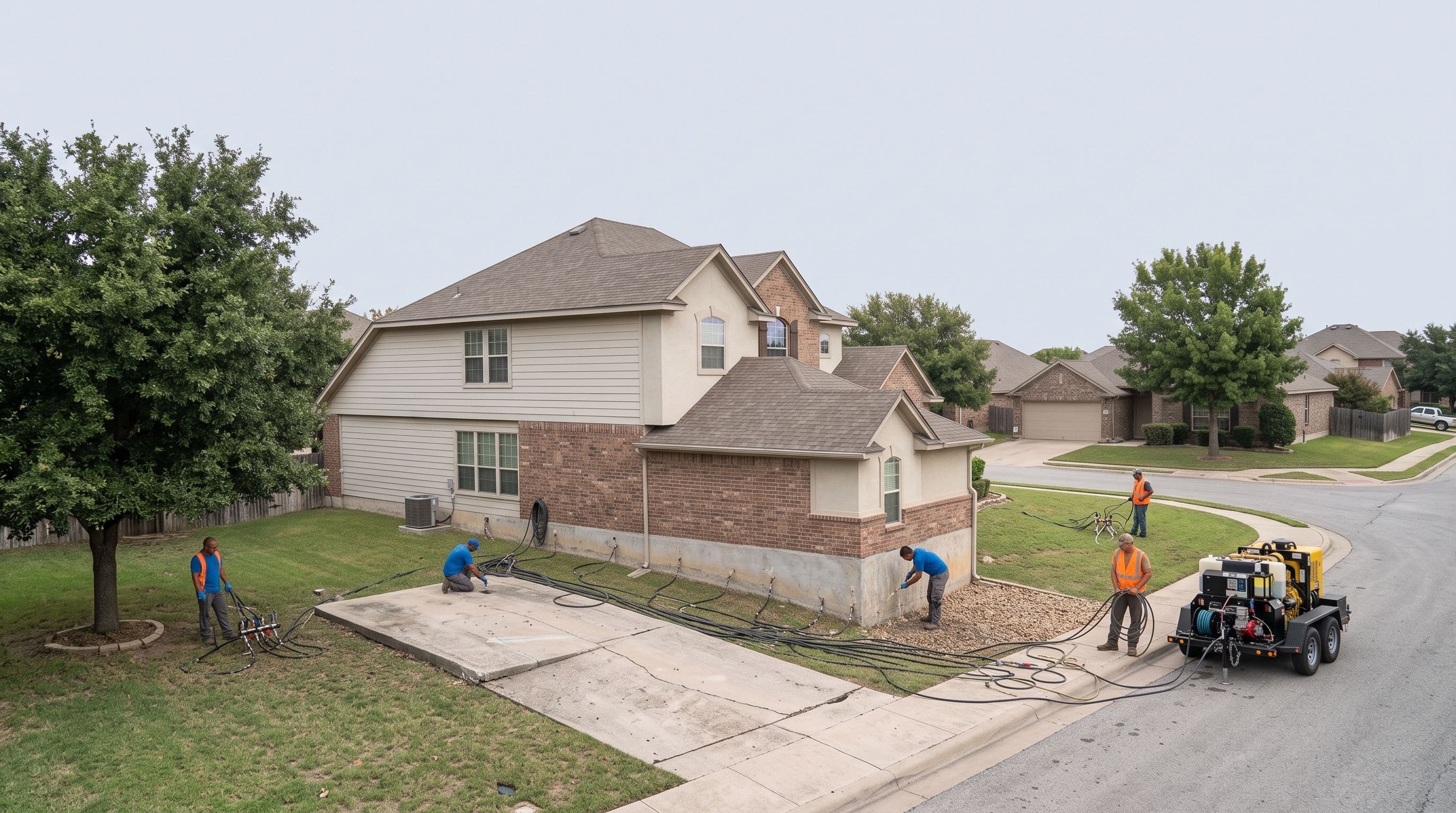
A building that's settled unevenly doesn't need one spot fixed, it needs the whole structure brought back into alignment.
Solutions for this Service
Structural Re-Leveling

Settlement Remediation
Foundation Stabilization
Related Industries
Commercial and Institutional
Industrial Facilities
Need a Site Assessment?

800-240-7868

A building that's settled unevenly doesn't need one spot fixed, it needs the whole structure brought back into alignment. Structural Re-leveling injects expanding polymer at multiple points across a building's footprint, lifting and realigning the structure as a whole rather than correcting a single slab or footing. Facility owners, engineers, and public agencies use it when an entire building, not just one section of it, has gone out of level.
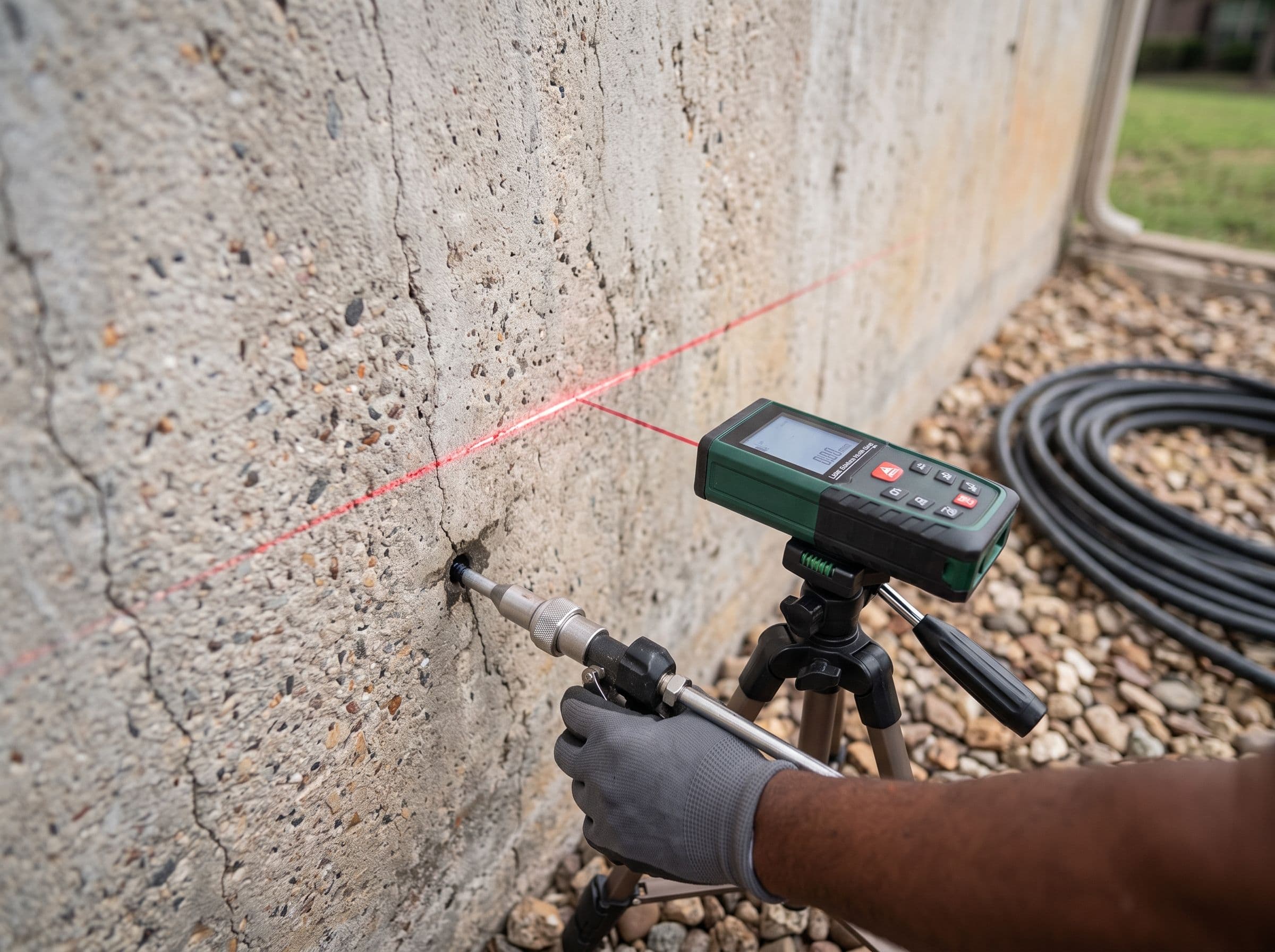
A building that's out of level across more than one point won't correct itself with a single spot repair. Here's what that looks like.

A structure settling unevenly across its footprint, with one side or corner sitting noticeably lower than the rest
Older or historic buildings where uneven settlement over decades has left the structure measurably out of level
Public or institutional buildings that need to stay operational while the realignment happens, not close for a rebuild
A structure where more than one area has already been patched individually, but the building as a whole is still out of alignment
Uneven settlement across a whole structure shows itself differently than a single settled slab. Watch for these.
A visible lean or tilt when viewing the building from outside, not just a dip in one spot
Multiple cracks appearing in different areas of the same structure, not concentrated in one corner
Floors that slope noticeably from one end of a room to the other
Doors and windows across several rooms sticking or going out of square at the same time
A structure where previous single-point repairs haven't resolved the overall tilt
Uneven wear patterns on floors or thresholds that suggest long-term, building-wide settlement
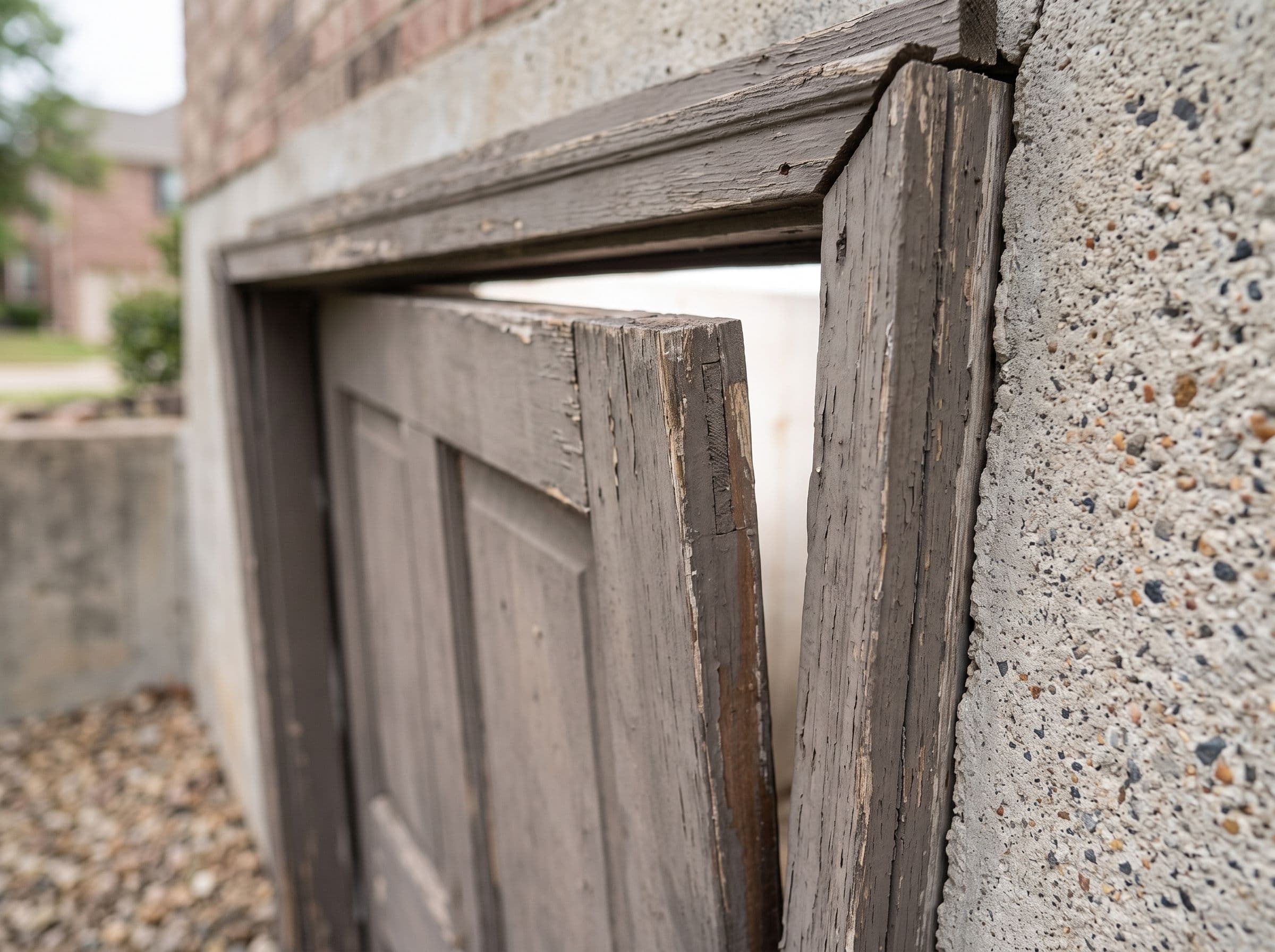
Why facility owners and engineers choose Structural Re-leveling over repairing one settled area at a time.
Realigns the whole structure, not just the worst spot. Injection points are placed across the building's footprint based on a survey of how much each area has settled, addressing the tilt as one coordinated correction instead of a series of unrelated patches.
Real-time tracking prevents overcorrection. Pressure and elevation are monitored at each injection point during the work, so lifting one side doesn't create a new imbalance on the other.
Reaches the structure without excavation or demolition. This matters most on historic or landmark buildings, where original foundations, floors, and finishes can't simply be replaced.
Public and institutional buildings can often stay in use during the work. At the Field Museum of Chicago, the ground floor was stabilized and re-leveled in three days using the UDI process, without a full closure.
Coordinated injection reaches multiple points in a single mobilization. Rather than scheduling separate repairs for each settled area, the entire structure is addressed in one planned sequence.
Structural Re-leveling is the right call when an entire structure, not just one slab or one footing, has settled unevenly and needs to be brought back into alignment as a coordinated whole. It fits older and historic buildings with long-term, building-wide settlement, and public or institutional structures where the misalignment affects more than one area at once.
It isn't the right tool when only a single slab, walkway, or floor section has settled while the rest of the structure remains level; Concrete Leveling addresses that directly, and treating it as a whole-building realignment would be unnecessary. It also isn't the starting point when the issue is bearing capacity generally, rather than an existing, measurable tilt; Foundation Stabilization is built for restoring capacity before a structure goes out of level, not after.
Structural Re-leveling is frequently paired with Foundation Stabilization on the same project, since realigning a structure across its full footprint usually calls for the soil beneath that entire footprint to be stabilized at the same time, not just at the injection points needed for the lift itself.
1
Evaluate
A URETEK project manager surveys how much each point across the structure has settled before proposing an injection plan, not a salesperson.
2
Deploy
Crews mobilize on the schedule the site needs, including nights, weekends, or holidays, in a self-contained unit.
3
Design
An injection sequence is developed across the building's footprint, planned to correct the overall tilt rather than one spot at a time.
4
Drill
Small-diameter injection points are installed at each planned location with minimal surface disruption.
5
Inject and Monitor
URETEK 486 Star polymer is injected at each point, with pressure and elevation tracked in real time to keep the lift controlled and prevent overcorrection.
6
Validate
A final inspection confirms restored alignment and structural performance across the whole structure before the crew leaves.
URETEK has re-leveled museums, historic landmarks, hotels, and federal facilities nationwide, backed by decades of engineering and execution experience.




Re-leveling densifies the soil beneath the entire structure as it lifts each point, so the building ends up resting on stronger soil across its footprint, not the same uneven soil that caused the tilt. A project manager reviews the actual pattern of settlement before proposing an injection plan, and real-time tracking during the work is used specifically to avoid overcorrecting any one point.
The injection plan targets multiple points across the structure's footprint at once, based on a survey of how much each point has settled. Pressure and elevation are tracked in real time at each location during injection, so the lift stays controlled and proportional, correcting the tilt rather than creating a new one in a different direction.
In most cases, yes, since there's no excavation or structural demolition involved. On a historic mansion in Iowa, now in use as a university office building, the full repair was completed in less than 48 hours, avoiding the extended closure a more invasive repair would have required.
Often, yes. At the Field Museum of Chicago, URETEK stabilized and re-leveled the ground floor in just three days using the UDI process, and at a U.S. Air Force Academy medical clinic, the entire foundation slab was stabilized in two days over a single scheduled weekend to avoid disrupting clinic operations.
Yes. Because the work is trenchless and reaches the soil through small injection points rather than excavation, it avoids disturbing original foundations, floors, or finishes, which matters most on landmark or historic structures where the existing materials can't simply be replaced.
Get a full realignment survey before a building-wide tilt gets worse. URETEK crews respond fast, including emergencies.
Request a Structural Assessment
URETEK
Ground improvement solutions engineered for performance.
Contact Us
Find Local Experts


13900 Humble Road, Tomball, TX 77375
Services
Solutions

 800-240-7868


