

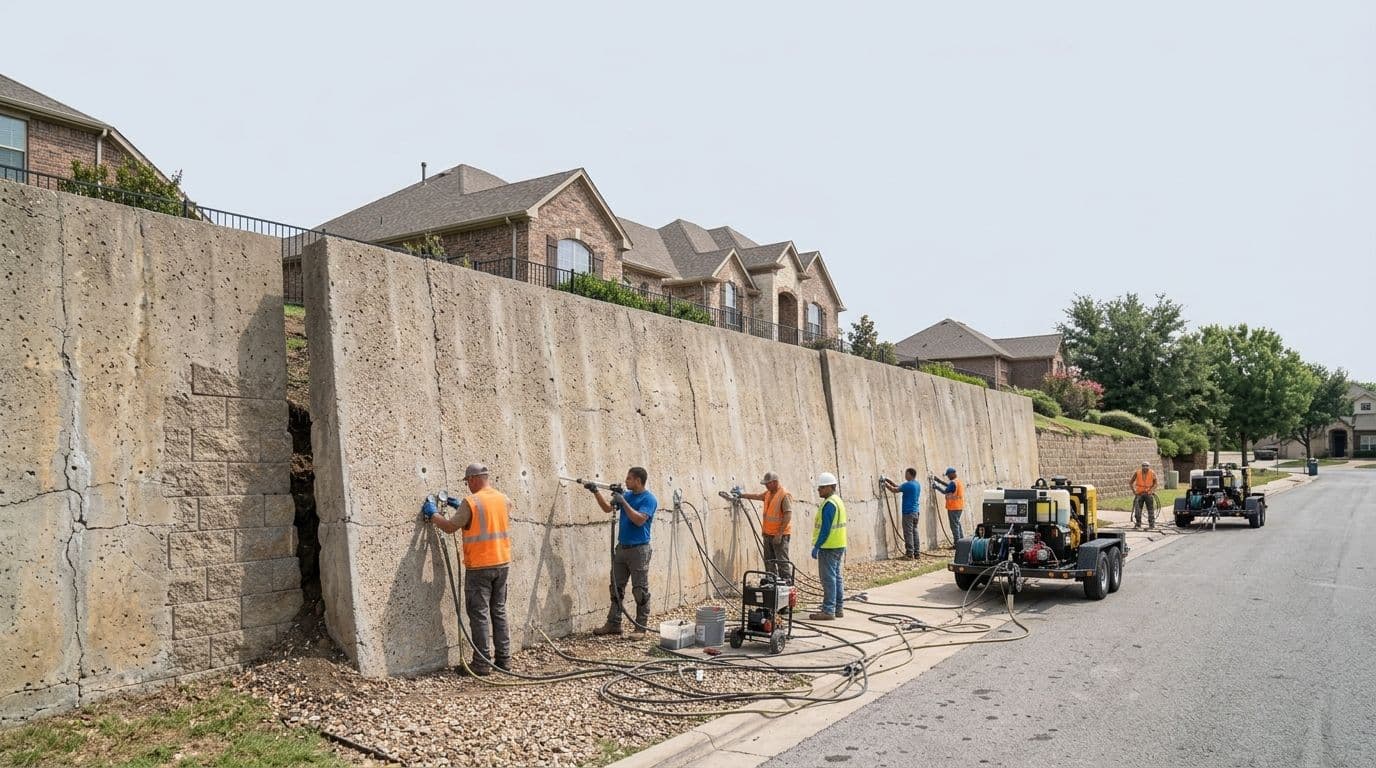
A retaining wall only holds as long as the soil behind it stays where it's supposed to.
Solutions for this Service
Settlement Remediation

Foundation Stabilization
Infrastructure Settlement Control
Marine Structure Stabilization
Related Industries
Transportation
Marine and Coastal
Need a Site Assessment?

800-240-7868

A retaining wall only holds as long as the soil behind it stays where it's supposed to. When that backfill erodes, loosens, or washes out, the wall starts to lean, bulge, or crack, even if the wall material itself is sound. Retaining Wall Stabilization injects polymer into the soil behind the wall to restore the support it lost. Engineers, private owners, and public agencies use it on hillside walls, highway retaining structures, and marine seawalls alike.
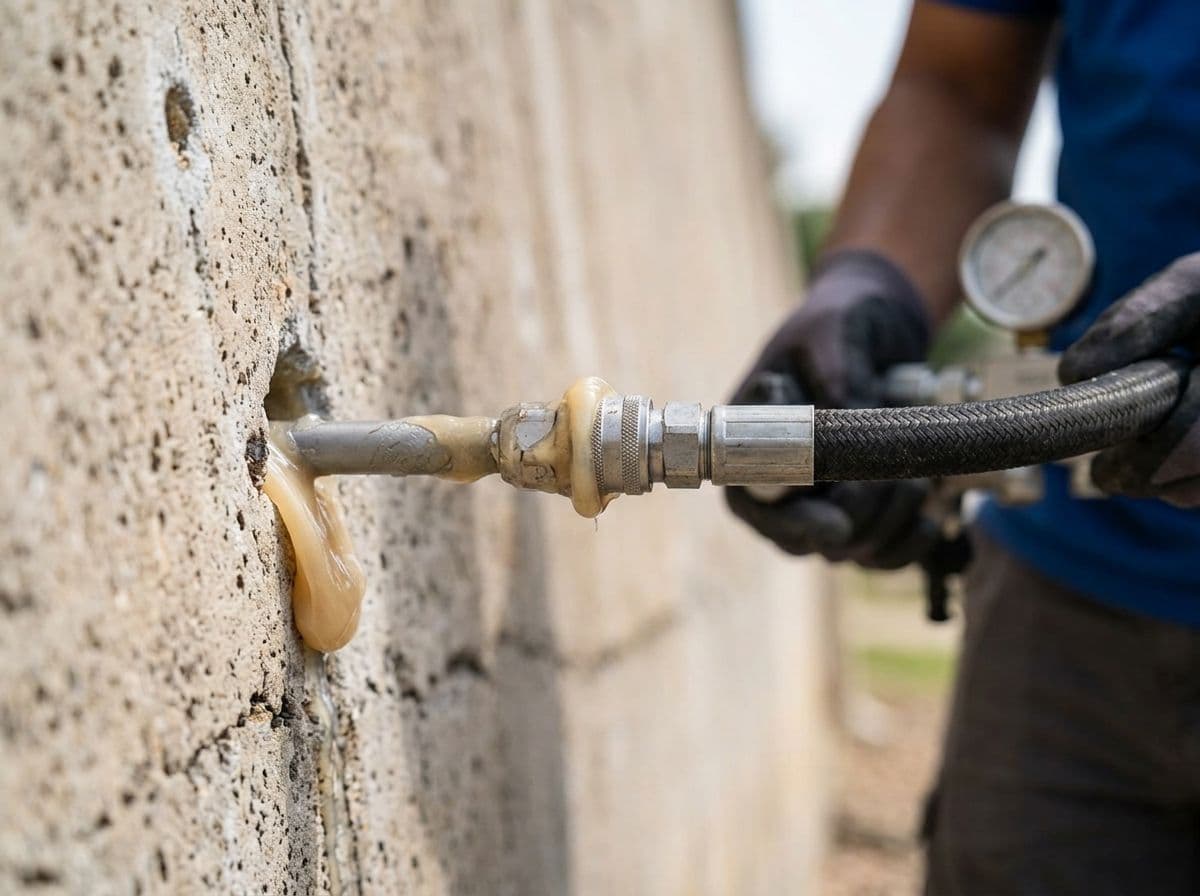
A retaining wall in distress doesn't fix itself. Here's what happens if the soil behind it isn't addressed.

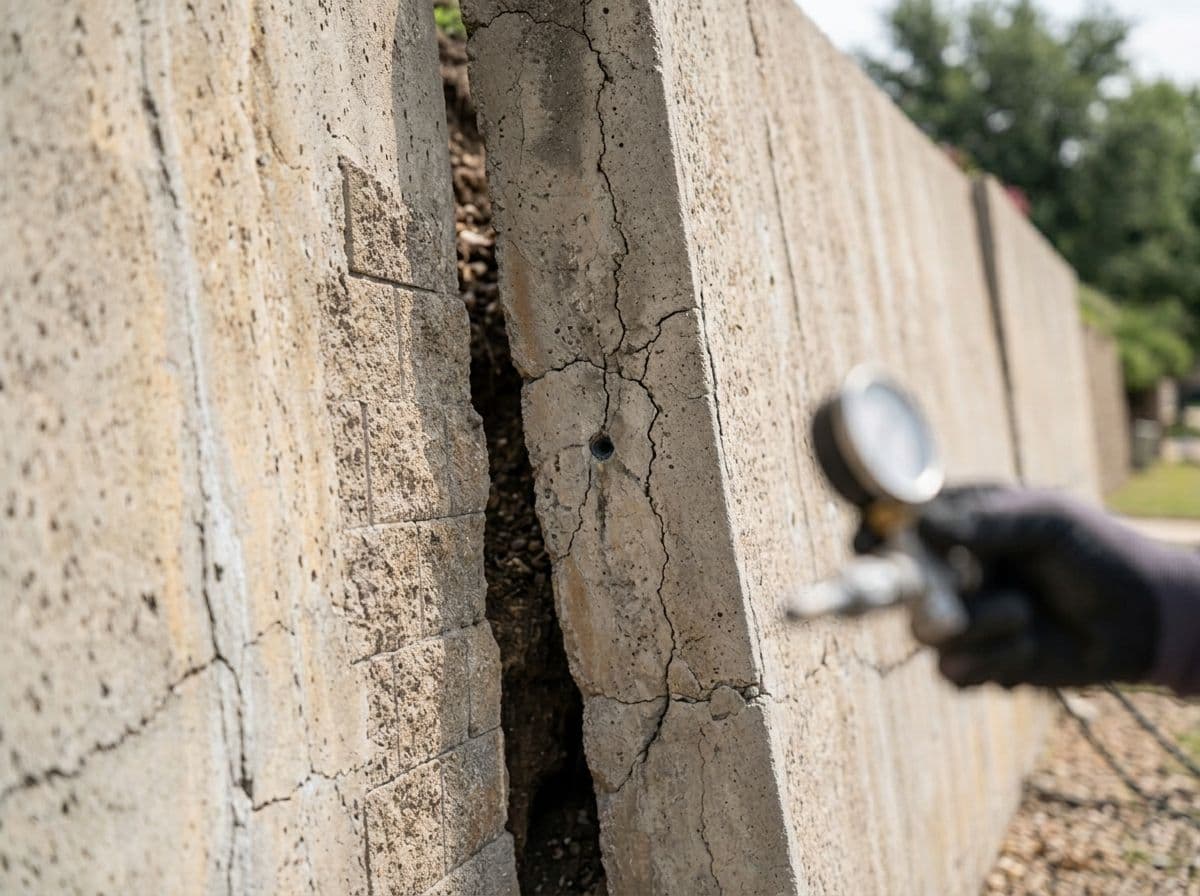
A wall that leans, bulges, or tilts as backfill soil loses density or washes away
Cracking or joint separation in the wall caused by uneven pressure from shifting soil
Erosion voids behind the wall that grow with every rain event or tidal cycle
Loss of support to whatever sits above or behind the wall, from a hillside home to a roadway or dock
A retaining wall usually shows warning signs before it fails outright. Watch for these.
A wall that visibly leans or bulges compared to how it was built
Cracks running horizontally or diagonally through the wall face
Soil pulling away from the top of the wall, leaving a visible gap
Water seeping or pooling at the base of the wall after rain
Settling or sinking ground on the uphill side of the wall
Fence lines, patios, or pavement above the wall starting to crack or shift
Why property owners and agencies choose Retaining Wall Stabilization over demolition and rebuild.
Works on walls of nearly any type or setting. URETEK stabilizes hillside and residential retaining walls, highway retaining structures, MSE walls with reinforced backfill, and marine seawalls and bulkheads.
Reduces the risk of a sudden wall failure. Restoring the soil's support before a wall fully fails protects whatever sits above or behind it, whether that's a home, a road, or a waterfront structure.
Doesn't require the wall to come down. The injection happens from outside or behind the wall, so there's no demolition, and the property, road, or dock above stays usable during the work.
Delivers results fast, even on difficult terrain. In Buffalo, Wyoming, URETEK stabilized an entire retaining wall and hillside area, damaged by a landslide, in under five hours, without heavy equipment.
The polymer restores the soil's lateral support, not just fills a gap. URETEK 486 Star expands into the backfill zone, compacting loose soil and filling erosion voids so the wall regains the even pressure it was designed to hold against.
Retaining Wall Stabilization is the right call when a wall is leaning, bulging, or cracking because the soil behind it has moved, eroded, or lost density, and the wall material itself is still structurally sound. It's built for hillside walls, highway retaining structures, MSE walls, and seawalls or bulkheads.
It's not the right tool when the wall's own structural material has failed, meaning cracked blocks, corroded reinforcement, or a collapsed panel, since that's a rebuild issue rather than a soil issue. It also isn't the first choice when active water intrusion behind the wall is the main driver of the soil loss; Curtain Grouting addresses that source directly rather than treating the resulting soil movement.
Retaining Wall Stabilization is often paired with Curtain Grouting when groundwater or tidal flow is what caused the backfill soil to erode in the first place, since sealing that water path keeps the soil from washing out again after the wall is stabilized.
1
Evaluate
A URETEK project manager reviews the wall, the backfill soil, and site conditions, not a salesperson working from a standard package.
2
Deploy
Crews mobilize on the schedule the site needs, including nights, weekends, or holidays, in a self-contained unit.
3
Drill
Small holes are drilled behind or through the wall in a pattern designed around the wall's height, load, and soil condition.
4
Inject
URETEK 486 Star is injected into the backfill zone, expanding to fill voids and compact the loosened soil.
5
Clean Up
There's no excavation to backfill and no trench to restore, so cleanup is minimal.
6
Validate
The client confirms the wall is stable before the crew leaves.
URETEK has stabilized hillside walls, highway retaining structures, and marine seawalls nationwide, backed by decades of engineering and execution experience.





URETEK 486 Star cures to 99% of its final strength within minutes, so it isn't a slow-setting fill that keeps shifting after the crew leaves. In Buffalo, Wyoming, a retaining wall and hillside damaged by a landslide were stabilized and had their load-bearing capacity increased in under five hours, and Public Works and Federal projects carry a two-year warranty on top of that.
A retaining wall depends on the soil behind it staying dense and in place to push back evenly against the wall. When that backfill erodes or loosens, the wall loses that lateral support and starts to lean or bulge. URETEK 486 Star is injected into the backfill zone, where it expands to fill voids and compact the loose soil, restoring the even pressure the wall was designed to hold against.
In most cases, yes, since there's no demolition, no new wall materials, and no heavy equipment needed to access difficult terrain. In Buffalo, Wyoming, URETEK stabilized an entire retaining wall and hillside area without excavation or disruptive underpinning methods, saving the homeowner the cost of bringing in heavy equipment on a steep site.
Yes. Injection ports are small in diameter and placed with minimal disruption to whatever sits behind or above the wall, whether that's a roadway, a waterfront walkway, or a home. On coastal seawall projects, URETEK has worked directly behind the wall while keeping the surface above in normal use.
Yes. URETEK stabilizes hillside and residential retaining walls, highway retaining structures, MSE (Mechanically Stabilized Earth) walls with reinforced backfill, and marine seawalls and bulkheads affected by soil movement or erosion behind them.
Get a leaning or bulging retaining wall evaluated before it fails. URETEK crews respond fast, including emergencies.
Request a Retaining Wall Assessment
URETEK
Ground improvement solutions engineered for performance.
Contact Us
Find Local Experts


13900 Humble Road, Tomball, TX 77375
Services
Solutions

 800-240-7868


