

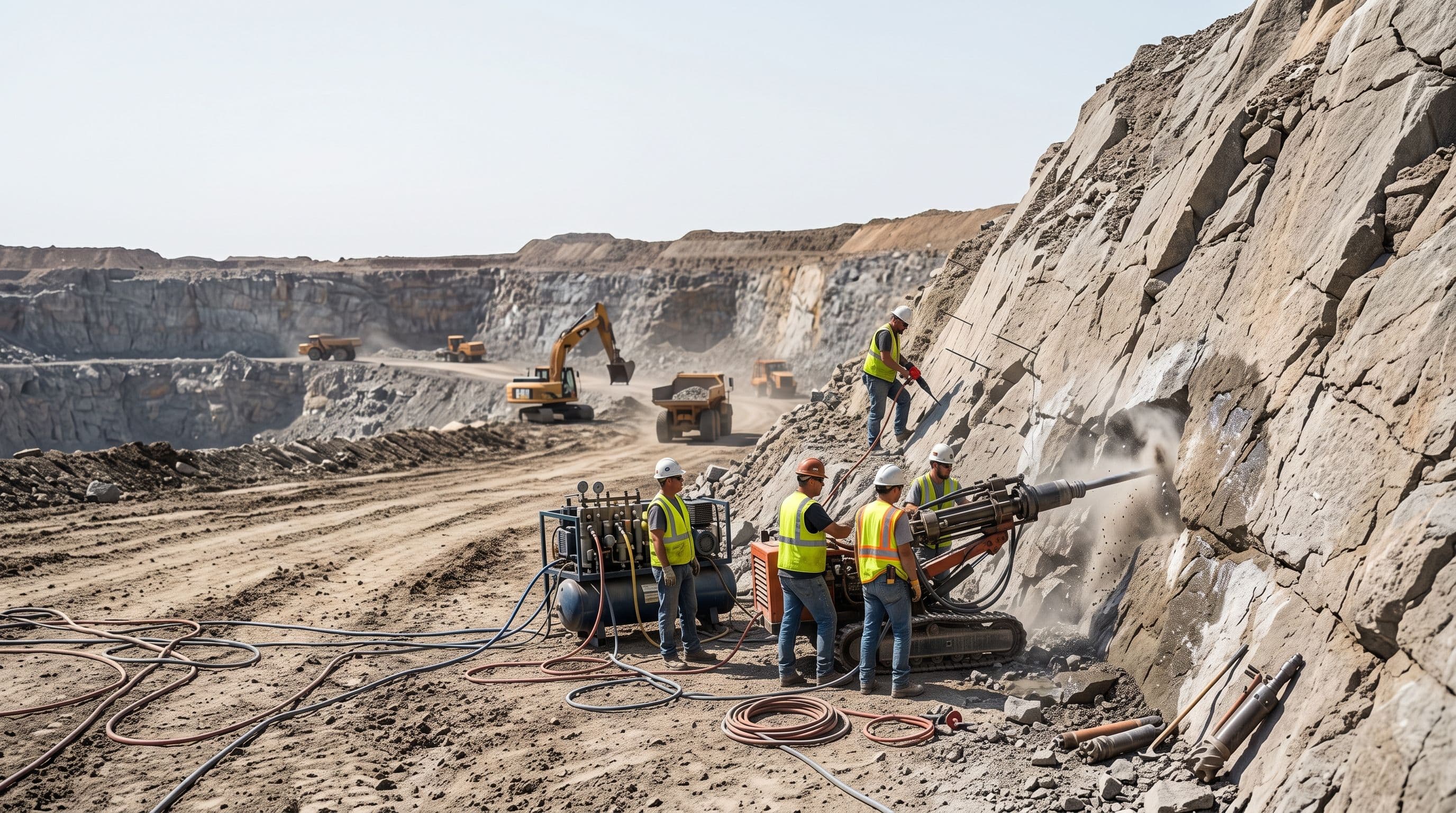
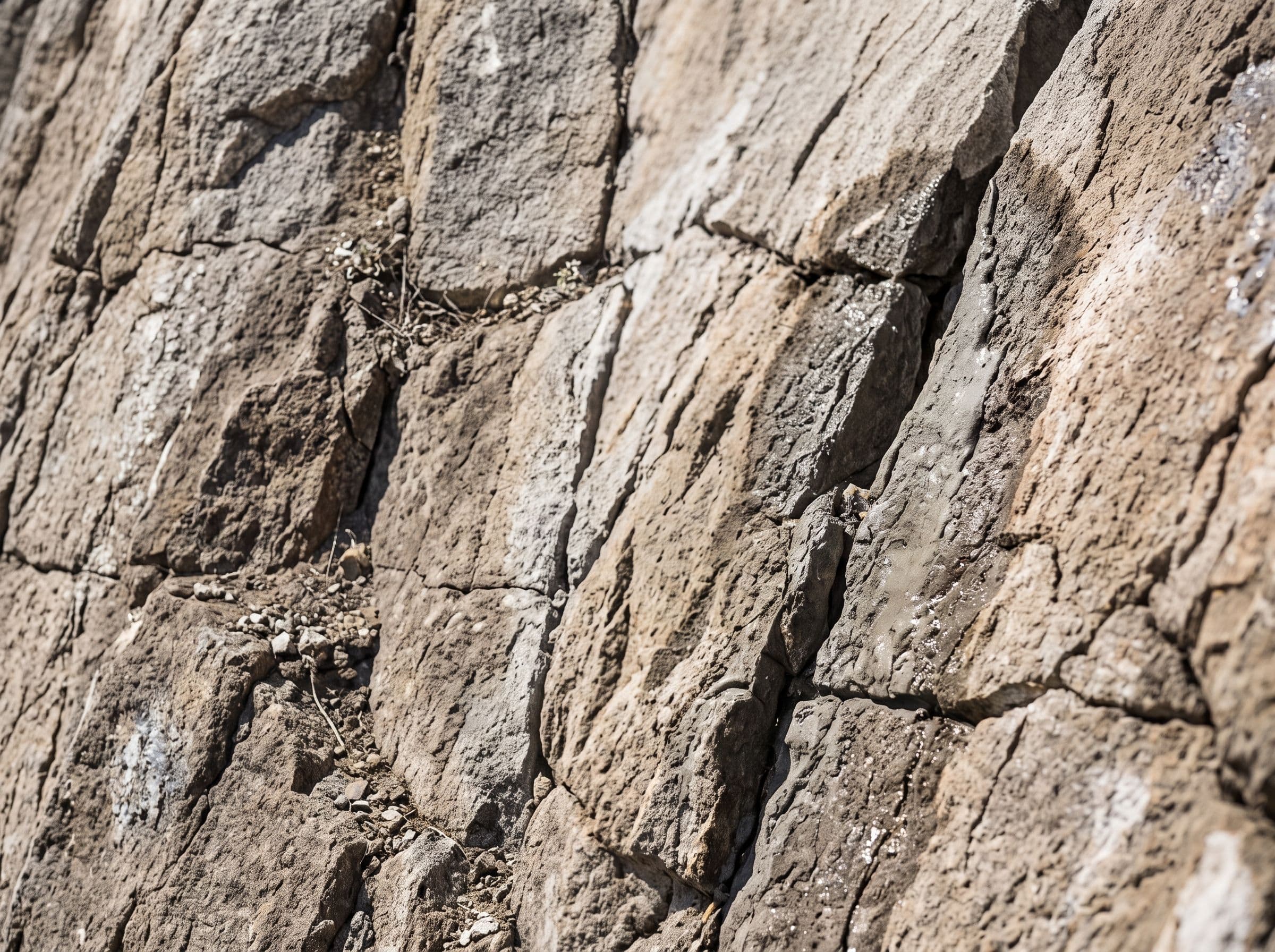
Solid rock isn't as solid as it looks. Fractures, joints, and fissures run through bedrock, and water moves through that network the same way it moves through loose soil.
Solutions for this Service
Active Water Intrusion

Tunnel Leaks
Sinkholes
Void Formation
Related Industries
Marine and Coastal
Power and Energy
Need a Site Assessment?

800-240-7868

Solid rock isn't as solid as it looks. Fractures, joints, and fissures run through bedrock, and water moves through that network the same way it moves through loose soil, just at a different scale. Rock and fissure grouting injects grout directly into the fracture network to reduce water movement and improve the rock mass's stability. It's typically used at dam foundations, tunnels driven through rock, and facilities built on fractured bedrock where a fissure network threatens water control or structural stability.
General industry framing, not yet confirmed against URETEK project history.

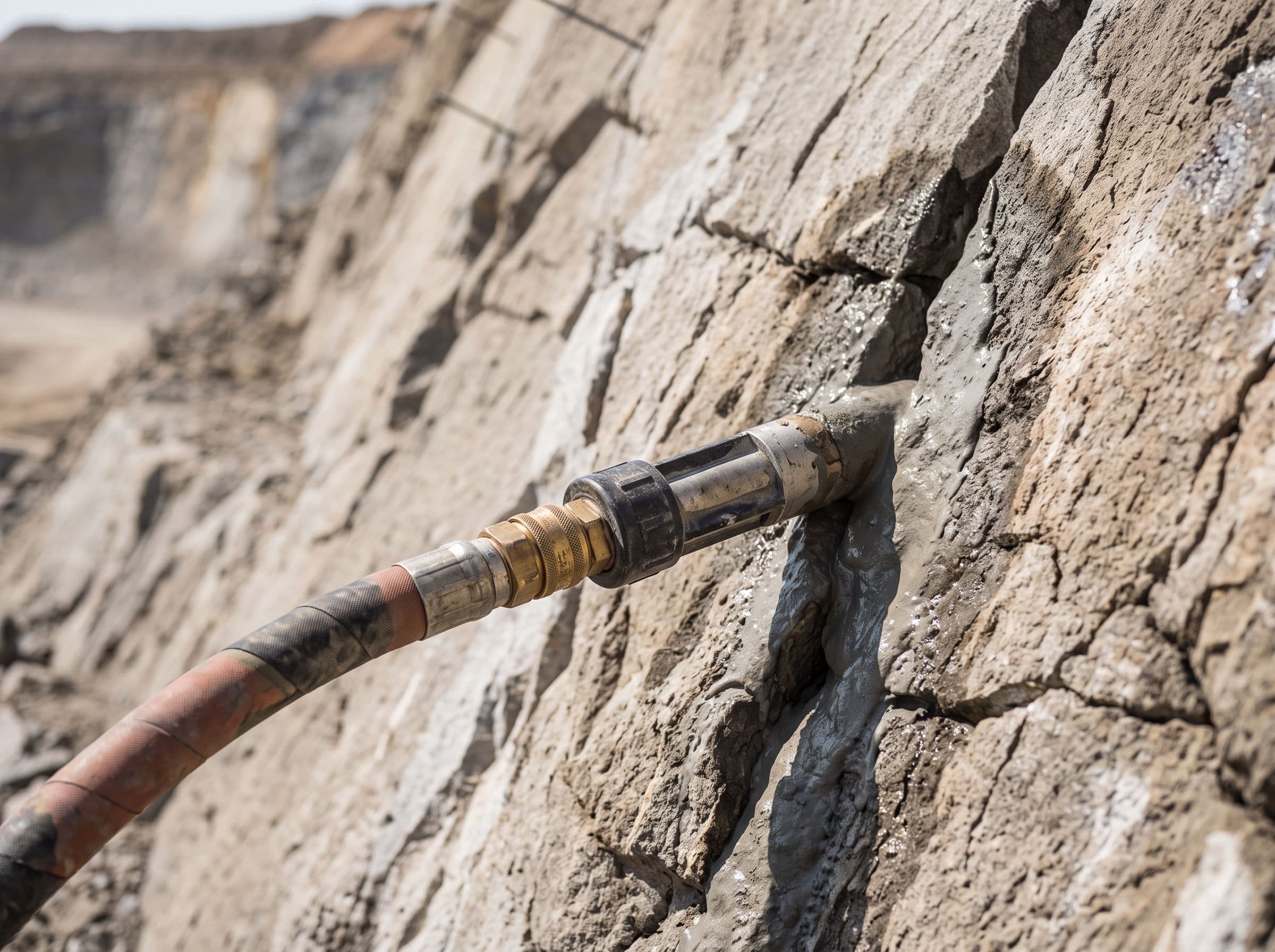
Water moving through a fissure network in bedrock beneath a dam, tunnel, or foundation
Fractured rock that lacks the stability needed to safely support a structure or excavation
Seepage through rock joints that threatens a dam, retaining structure, or below-grade facility
Rock mass permeability too high for a project's water-control requirements
General industry conditions associated with choosing rock and fissure grouting.
Water seepage visible through joints or fractures in an exposed rock face or dam abutment
A geotechnical investigation identifying high permeability in the underlying rock mass
A dam, tunnel, or foundation project sited on known fractured or jointed bedrock
Elevated water-pressure test results (Lugeon values) indicating an open fracture network
A facility built on rock where seepage is undermining structural stability over time
A project specification requiring rock mass permeability to be reduced before construction proceeds
General industry-standard benefits associated with rock and fissure grouting.
Addresses water movement at its source in the rock mass. Grouting the fissure network directly reduces the pathways water uses to move through rock, rather than only treating symptoms at the surface.
Improves rock mass stability for structures built on or through it. Filling fractures with grout can increase the rock mass's overall integrity, which matters for dam foundations and tunnels.
Testing verifies performance rather than assuming it. Water-pressure testing before and after grouting is standard practice for confirming the rock mass's permeability has actually been reduced.
Staged grouting targets gaps a single pass would miss. Primary and secondary borehole patterns are used to progressively close the fracture network, rather than relying on one round of injection.
Material is matched to fissure size. Cement-based grout is generally used for larger fissures, and lower-viscosity chemical grout for finer ones, a different material logic than URETEK's standard expanding polyurethane injection used elsewhere.
Rock and fissure grouting would generally be the right call when the water or stability problem originates in a fractured rock mass, such as a dam foundation, tunnel alignment, or facility built on jointed bedrock, rather than in soil.
It would not be the right tool for the soil-based conditions URETEK's core services already address: settled structures needing lift (Deep Injection UDI), leaking joints in concrete or masonry (Chemical Grouting, Joint Sealing), or loose granular soil (Permeation Grouting, Compaction Grouting). Rock and fissure grouting specifically targets bedrock, a different material entirely from the soil these other services treat.
1
Investigate
Boreholes and water-pressure testing establish the rock mass's fracture pattern and permeability before treatment begins.
2
Design
A staged grouting pattern, primary and secondary borehole locations, is designed around the fracture network identified during investigation.
3
Drill
Boreholes are drilled to the depths and locations set by the grouting design.
4
Inject
Grout, cement-based or chemical depending on fissure size, is injected under pressure to fill the fracture network, typically in primary then secondary stages.
5
Test
Water-pressure testing is repeated to confirm the rock mass's permeability has been reduced to the target level.
6
Validate
Results are documented and compared against the project's water-control or stability requirements before the work is closed out.
Rock and fissure grouting is used industry-wide at dam foundations, tunnels, and power and marine facilities built on fractured bedrock.



In standard rock grouting practice, water-pressure testing (often called a Lugeon test) is performed in boreholes before and after grouting to measure the rock mass's permeability directly, rather than assuming improvement from the grout volume injected.
Boreholes are drilled into the rock mass, and grout, typically a cement-based mix for larger fissures or a lower-viscosity chemical grout for finer ones, is injected under pressure to fill the fracture network. Grouting is usually done in stages, with primary holes grouted first and secondary holes added to fill gaps the primary pattern missed.
It depends heavily on the rock type, fissure pattern, and depth involved, and typically requires specialized drilling and testing equipment different from URETEK's standard small-hole soil injection methods.
Rock grouting is generally performed from boreholes drilled from an accessible surface, gallery, or platform, without requiring the facility above to be taken fully offline, though the specific approach depends on the site.
Industry-wide, rock and fissure grouting is most associated with dam foundations, tunnels driven through rock, mining operations, and power or marine facilities built on fractured bedrock where water movement through the rock mass is a concern.
Talk to URETEK about a fractured rock condition at your site.
Request a Site Evaluation
URETEK
Ground improvement solutions engineered for performance.
Contact Us
Find Local Experts


13900 Humble Road, Tomball, TX 77375
Services
Solutions

 800-240-7868


