

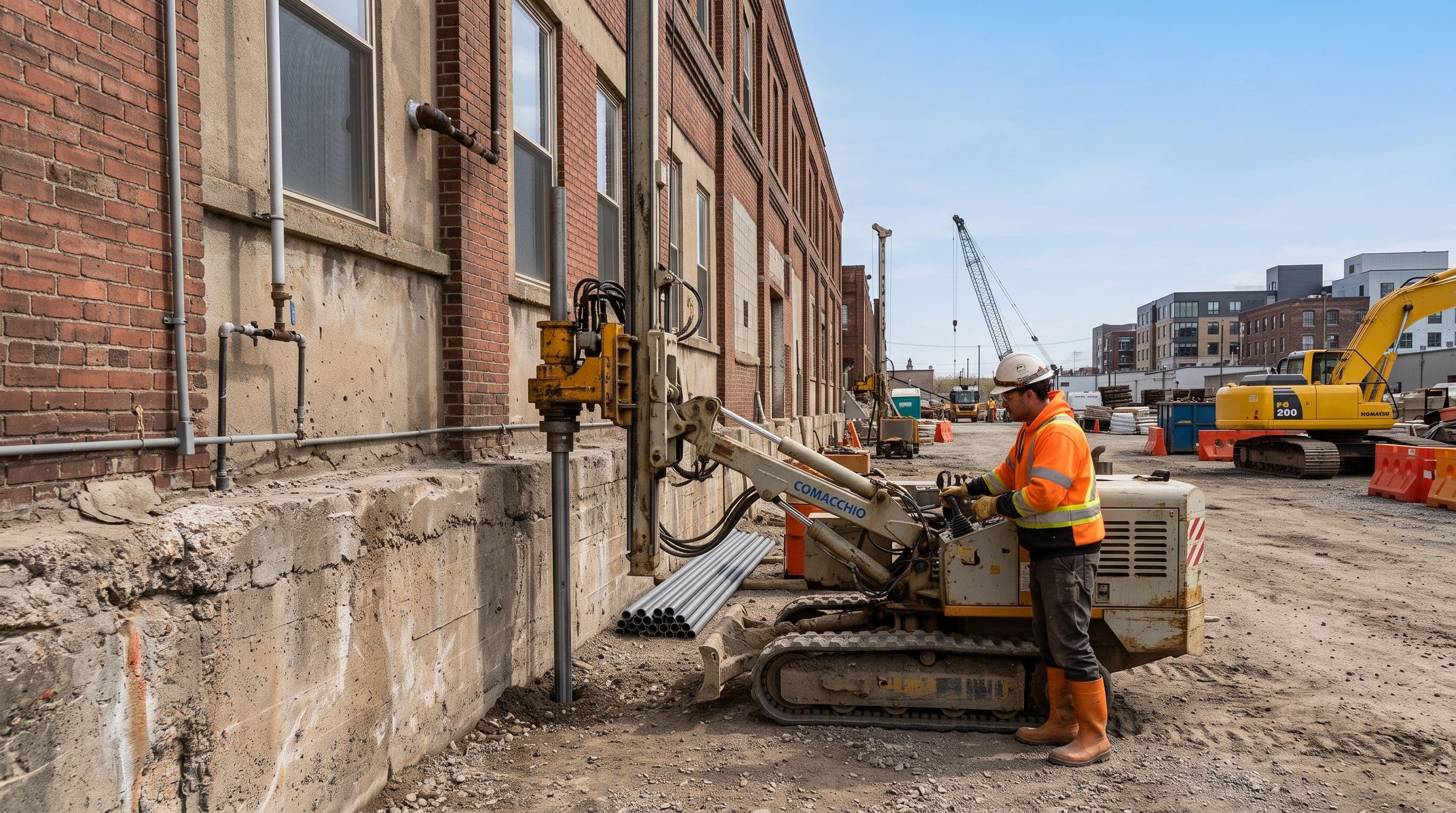
When the soil near the surface can't support a structure's load, but competent soil or rock sits deeper down, a foundation sometimes needs a physical connection between the two.
Solutions for this Service
Settlement Remediation

Foundation Stabilization
Structural Re-Leveling
Infrastructure Settlement Control
Related Industries
Transportation
Commercial and Institutional
Need a Site Assessment?

800-240-7868

When the soil near the surface can't support a structure's load, but competent soil or rock sits deeper down, a foundation sometimes needs a physical connection between the two, not just a stronger patch of soil near the surface. Micropiles are small-diameter, high-capacity piles: a drilled steel casing with a grouted reinforcing bar that transfers structural load down to deeper, more competent ground. They're typically used to underpin existing foundations, provide new structural support, and work in sites too tight or too sensitive for larger pile-driving equipment.
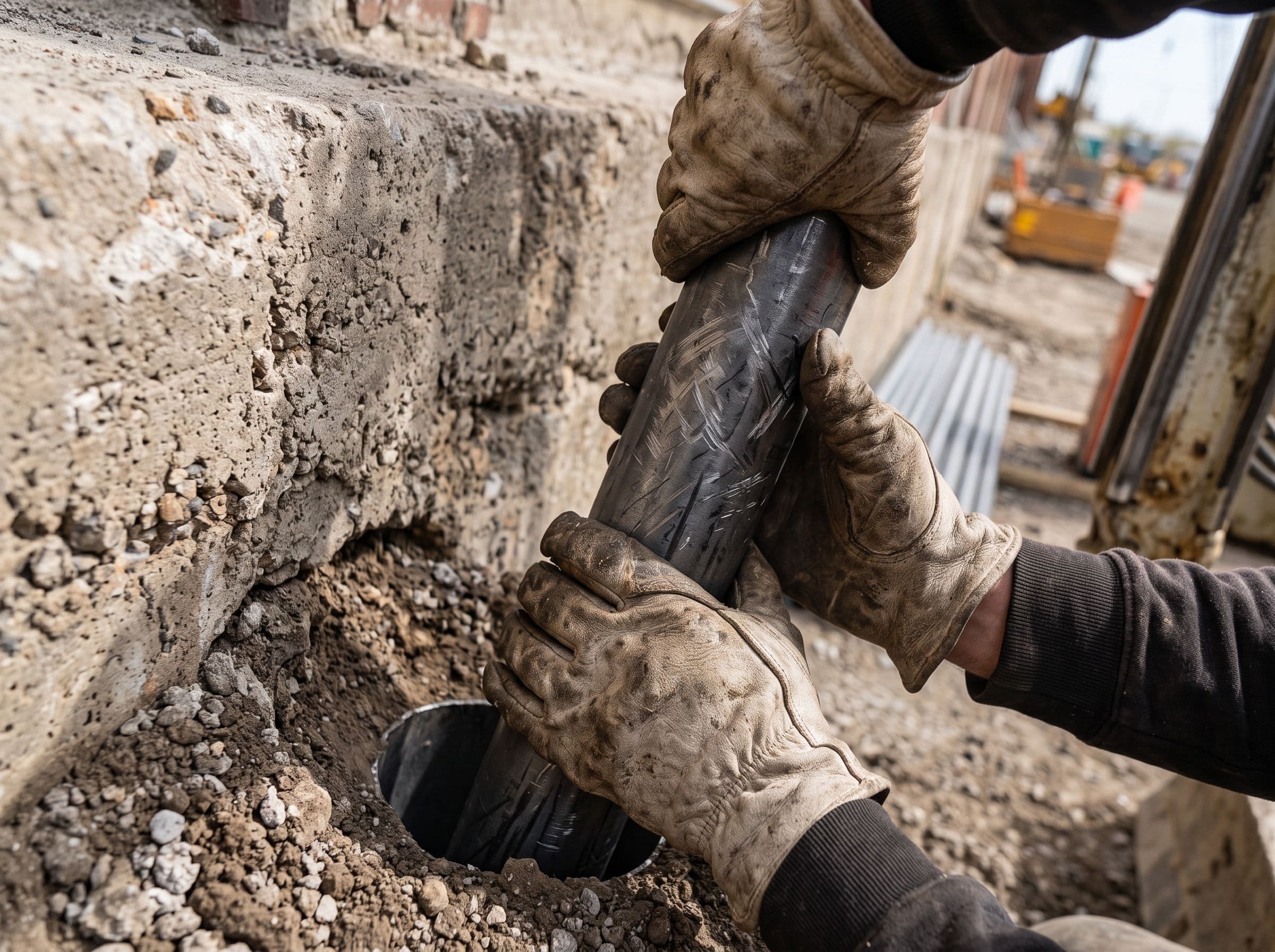
General industry framing, not yet confirmed against URETEK project history.

A structure's load exceeding what the near-surface soil can safely support
An existing foundation needing underpinning without the space for large pile-driving equipment
New construction planned over soil that requires transferring load to a deeper, more competent layer
A site with access constraints, such as low headroom or a tight urban lot, ruling out conventional deep foundation methods
These are the general conditions the industry associates with choosing micropiles over other deep foundation systems.
A geotechnical report showing weak soil near the surface but competent bearing material at depth
An existing foundation needing underpinning in a basement or other low-headroom space
New construction on a site where conventional pile-driving equipment can't access or operate
A structure with unusually high, concentrated loads requiring high-capacity point support
A project near sensitive existing structures where vibration from driven piles is a concern
A retrofit or seismic upgrade project needing added foundation capacity without full reconstruction
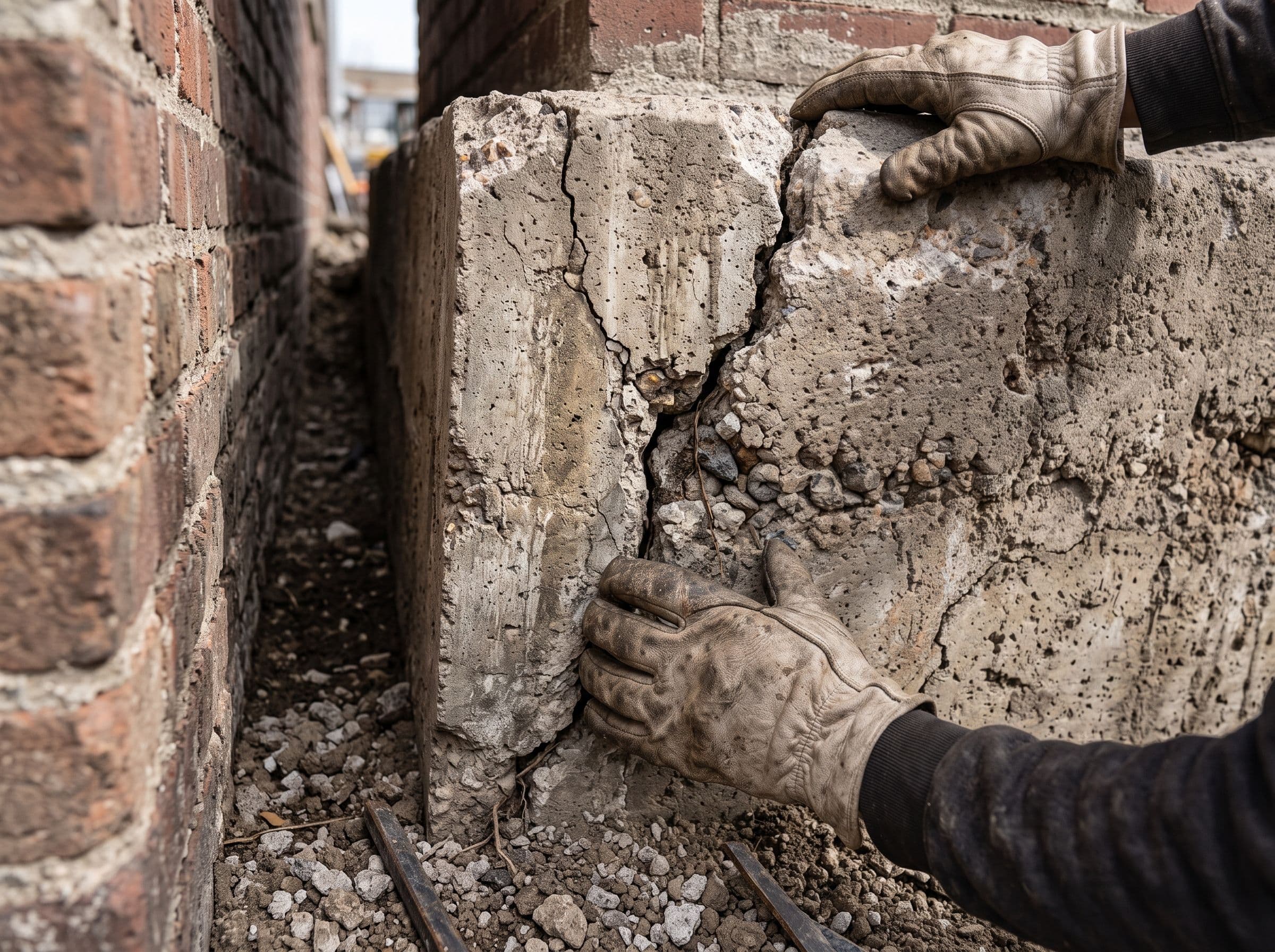
General industry-standard benefits associated with micropiles. Not yet confirmed as URETEK-specific claims.
Achieves high load capacity from a small footprint. Industry-wide, compressive capacities exceeding 500 tons per pile have been achieved in favorable soil and rock conditions, despite the pile's small diameter.
Works in sites conventional piles can't reach. Smaller, more mobile drilling equipment allows installation in basements, tight urban lots, and other restricted-access or low-headroom sites.
Transfers load directly to competent ground. Rather than relying on friction or density improvement in weak near-surface soil, the pile physically connects the structure to deeper, stronger material.
Generally lower-vibration than driven pile systems. Because installation is drilled rather than hammered into place, micropiles are often chosen near sensitive existing structures where vibration is a concern.
Verified with load testing, not assumed from design tables. Test piles or early production piles are typically load-tested to confirm the design capacity holds in the actual soil conditions on site.
Micropiles would generally be the right call when a structure needs a direct, physical connection to deep, competent soil or rock, particularly on sites with access constraints that rule out larger pile equipment, or where a high load capacity is needed from a small footprint.
It would not be the right tool for situations URETEK's core polymer injection services already address well: general weak soil that needs added density rather than a structural connection to deeper strata (Soil Stabilization, Ground Densification), or a structure that has already settled and needs correction rather than new deep support (Settlement Control, Deep Injection UDI). Micropiles specifically address a structural load-transfer need, a different engineering problem than soil densification.
1
Evaluate
Geotechnical data is reviewed to confirm depth to competent bearing material and the required pile capacity.
2
Design
Pile diameter, depth, and reinforcing bar size are engineered to the specific load and soil conditions.
3
Drill
A small-diameter steel casing, generally three to ten inches, is drilled to the design depth.
4
Reinforce
A steel reinforcing bar is inserted into the casing to the full pile depth or bond zone.
5
Grout
High-strength cement grout is pumped into the casing, bonding the reinforcing steel to the surrounding soil or rock.
6
Test and Validate
Test piles or early production piles are load-tested to confirm design capacity before the remaining piles are installed.
Micropiles are used industry-wide to underpin existing foundations and support new construction on sites too tight or sensitive for larger pile-driving equipment.






Load testing is performed on test piles or the first production piles to confirm the design capacity is actually being achieved in the specific soil conditions on site, rather than relying on published capacity ranges alone.
A small-diameter steel casing, generally three to ten inches, is drilled to the design depth. A steel reinforcing bar is inserted into the casing, and high-strength cement grout is pumped in, bonding the bar and casing to the surrounding soil or rock along the bond zone. That bond transfers the structure's load down to more competent material below the weak surface soil.
It depends on site access, required capacity, and soil conditions. Micropiles typically use smaller, more mobile drilling equipment than conventional piles, which can lower costs on constrained sites, but a project-specific comparison would be needed.
Yes, that's one of the main reasons the technique is used industry-wide. Micropile drilling equipment is generally smaller and more maneuverable than conventional pile-driving rigs, which allows installation in basements, tight urban lots, and other low-headroom or restricted-access sites.
Capacity depends on pile diameter and the strength of the bearing soil or rock, but industry-wide, compressive capacities exceeding 500 tons per pile have been achieved in favorable conditions.
Talk to URETEK about a deep foundation need at your site.
Request a Site Evaluation
URETEK
Ground improvement solutions engineered for performance.
Contact Us
Find Local Experts


13900 Humble Road, Tomball, TX 77375
Services
Solutions

 800-240-7868


