

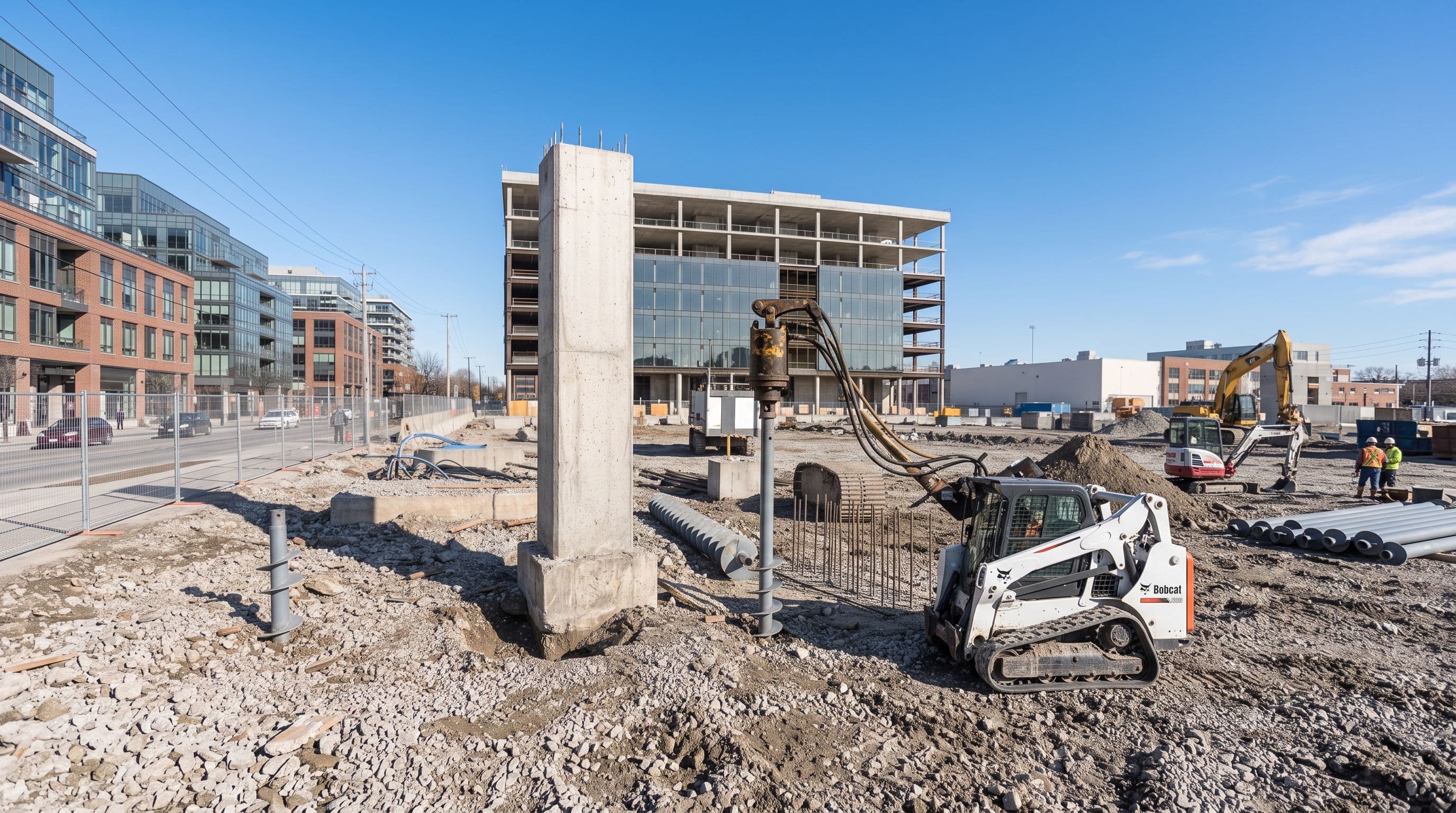
A foundation needs solid ground beneath it, and sometimes that ground sits many feet down, past soil too weak to build on.
Solutions for this Service
Settlement Remediation

Structural Re-Leveling
Foundation Stabilization
Infrastructure Settlement Control
Related Industries
Commercial and Institutional
Municipal Infrastructure
Need a Site Assessment?

800-240-7868

A foundation needs solid ground beneath it, and sometimes that ground sits many feet down, past soil too weak to build on. Helical piles reach that depth by turning a steel shaft with helical plates into the ground, like a large screw, until it reaches soil strong enough to carry the load. Engineers and foundation contractors use them to support new construction or to underpin an existing structure that has settled.
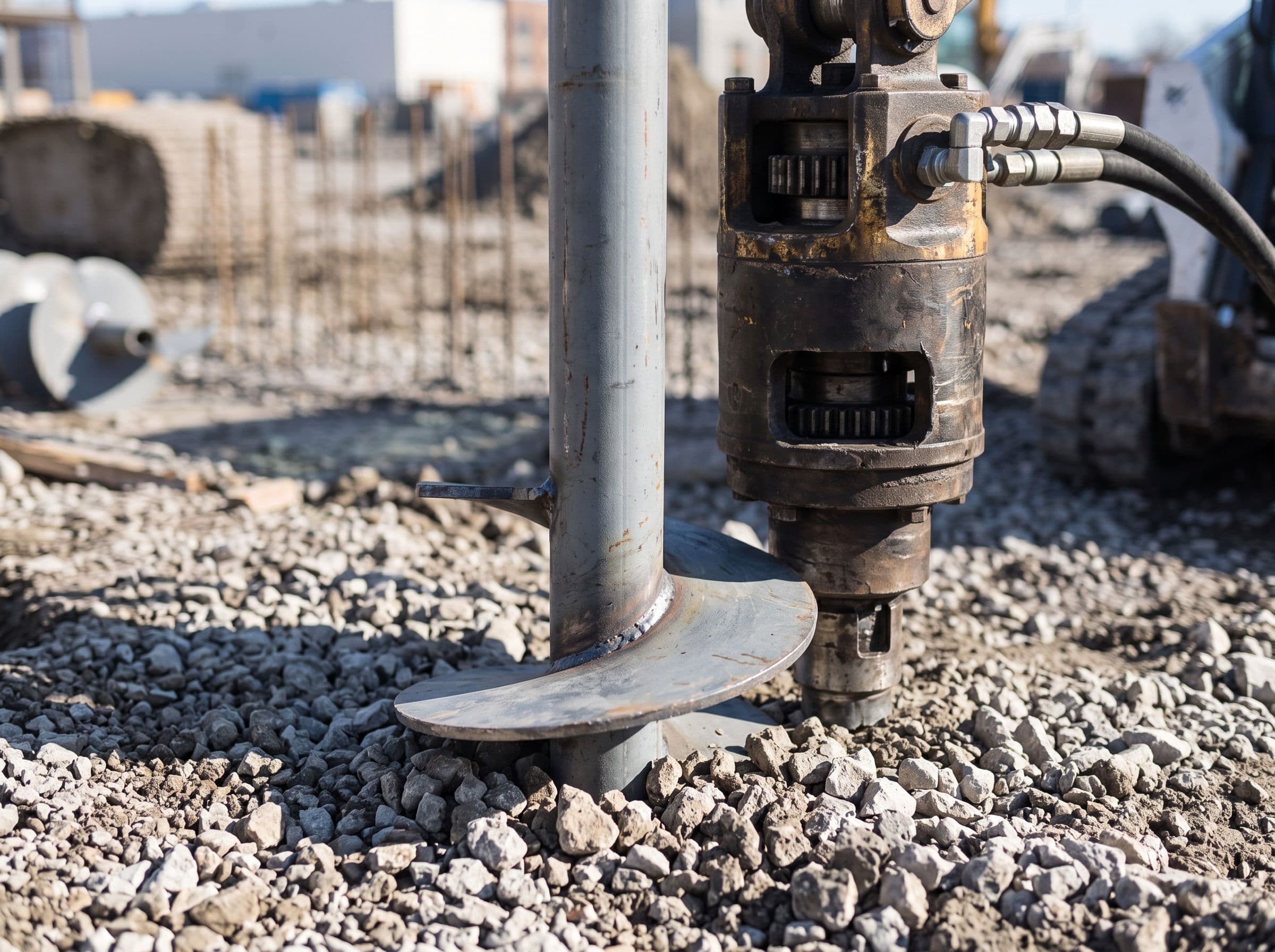
A foundation resting on weak soil doesn't fix itself. Helical piles are one way engineers reach past that soil to something solid.

Foundations settling because the soil beneath them can't carry the building's weight
New construction planned on a site where the upper soil layers are too weak or loose to build on directly
Additions or heavier loads placed on an existing foundation that wasn't designed to carry them
Structures near water, marsh, or fill soil, where deep bearing capacity is hard to find close to the surface
These are the general conditions engineers look for before specifying helical piles.
Cracks in a foundation wall that keep growing, especially stair-step cracks in block or brick
Doors and windows that stick or won't close square anymore
A visible tilt or lean in a porch, deck, or addition
Soil reports showing weak or loose soil near the surface, with better bearing soil only reached at depth
A new structure planned for a site with known fill soil, marsh, or a history of settlement nearby
An existing foundation repair that has failed before and settled again
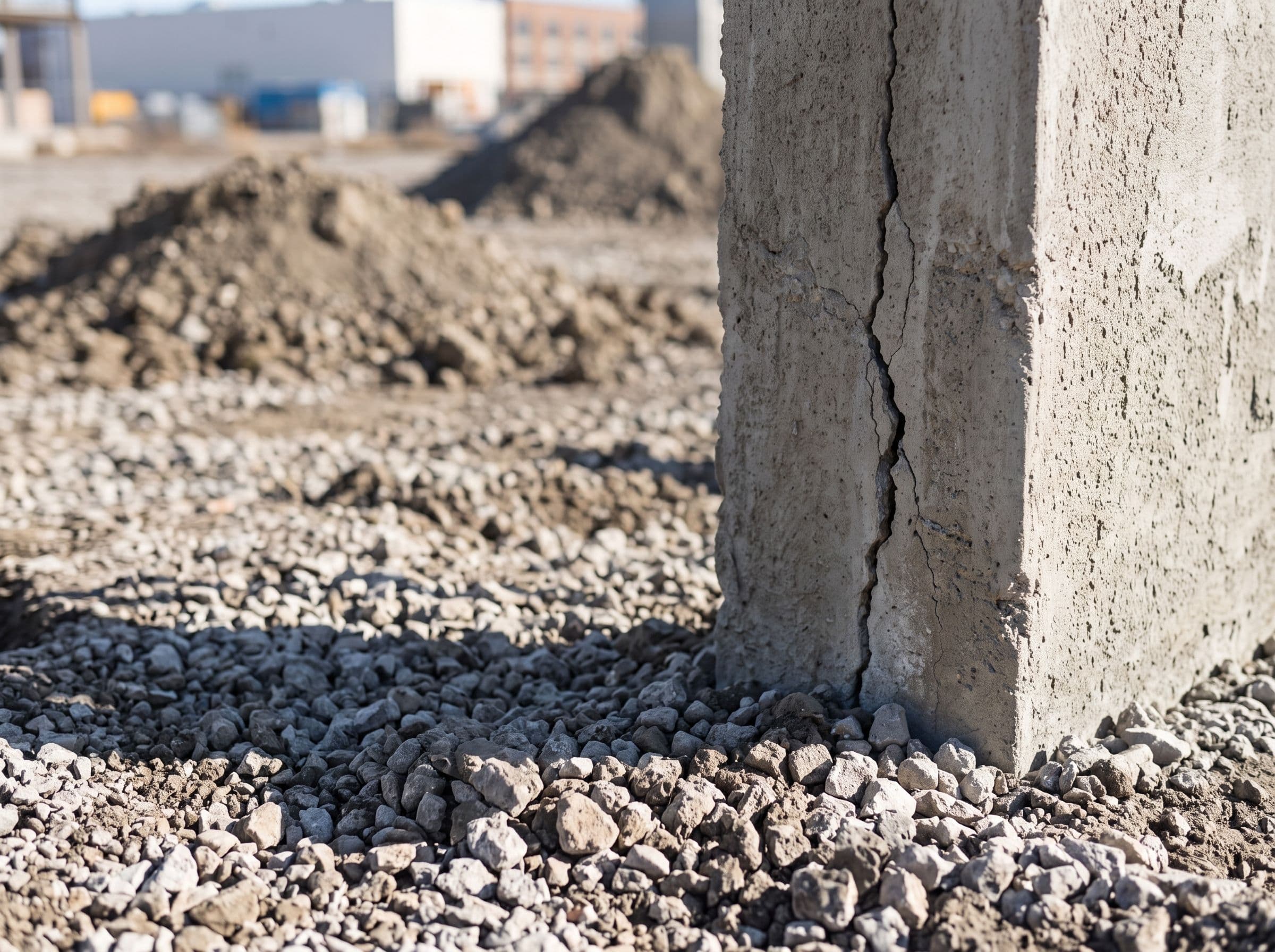
Why engineers reach for helical piles when soil near the surface can't carry the load.
Reaches deep, load-bearing soil layers. A helical pile is turned down through weak upper soil until its plates sit in soil strong enough to carry the structure's weight.
Installation crews aren't digging an open trench next to the structure. Turning a shaft into the ground is a smaller footprint than open excavation, which lowers the safety risk that comes with working in and around an open pit.
Installs with a compact rig, so tight or low-access sites stay workable.
Can be installed and tested for capacity in a single site visit, without a multi-day cure time.
Capacity is checked using the installation torque itself. As the shaft turns into the ground, the resistance it meets correlates to how much load the soil at that depth can carry, so the pile's capacity is checked as it goes in, not guessed at afterward.
Helical piles are the right call when a structure needs a deep, mechanically anchored foundation element, one that reaches past weak surface soil to bearing soil at depth, and where installation access allows a rig to turn the shaft into the ground. They fit new construction on marginal soil, additions that add load to an existing foundation, and underpinning where a fast, torque-verified capacity check matters.
They are not the right tool where the actual problem is a void or loose, ungraded soil rather than a genuine lack of deep bearing capacity. In that case, Void Filling or Soil Stabilization solves the real problem directly, without adding a structural pile the site may not need. Helical piles also are not a fit where site access can't support a drill rig or mini excavator with a rotary head; a smaller-footprint injection method is the better starting point there.
Helical piles are often installed alongside grade beams or new footings on the same project, since the piles carry the load down to bearing soil while the beam or footing spreads that connection across the structure above.
1
Evaluate
Soil conditions and the structure's load are reviewed to size the pile and set a target installation depth.
2
Deploy
A rig capable of applying rotary torque mobilizes to the site, sized to fit the access the site allows.
3
Position
The first pile section, fitted with helical plates, is set at the planned location and angle.
4
Advance
The shaft is turned into the ground under steady torque, with extension sections added as it goes deeper.
5
Verify
Installation torque is monitored and recorded as the pile advances, since torque correlates to the soil's bearing capacity at that depth.
6
Connect
The pile is cut to grade and connected to a new footing, grade beam, or bracket on the existing foundation.
Helical piles are used industry-wide for new construction on marginal soil and underpinning that needs a fast, torque-verified capacity check.





Helical piles are load-tested as they go in. The torque needed to turn the shaft into the ground rises as it reaches stronger soil, and that torque reading correlates to the pile's real bearing capacity, so the capacity is checked at the time of installation, not estimated after the fact.
It depends entirely on the site. Depth is set by a soil investigation, not a fixed number, and the pile keeps advancing until the installation torque confirms it has reached soil strong enough to carry the design load.
A properly installed and torque-verified helical pile is a permanent structural element, not a temporary fix.
Yes, in general. Helical pile installation uses a rig that turns the shaft into the ground rather than digging an open trench, which keeps the disturbed area small compared to a traditional deep foundation dug and poured in place.
URETEK's confirmed process is polymer injection, which is a different method from mechanically turning a steel shaft into the ground.
Talk to URETEK about a deep foundation need at your site.
Request a Site Evaluation
URETEK
Ground improvement solutions engineered for performance.
Contact Us
Find Local Experts


13900 Humble Road, Tomball, TX 77375
Services
Solutions

 800-240-7868


