

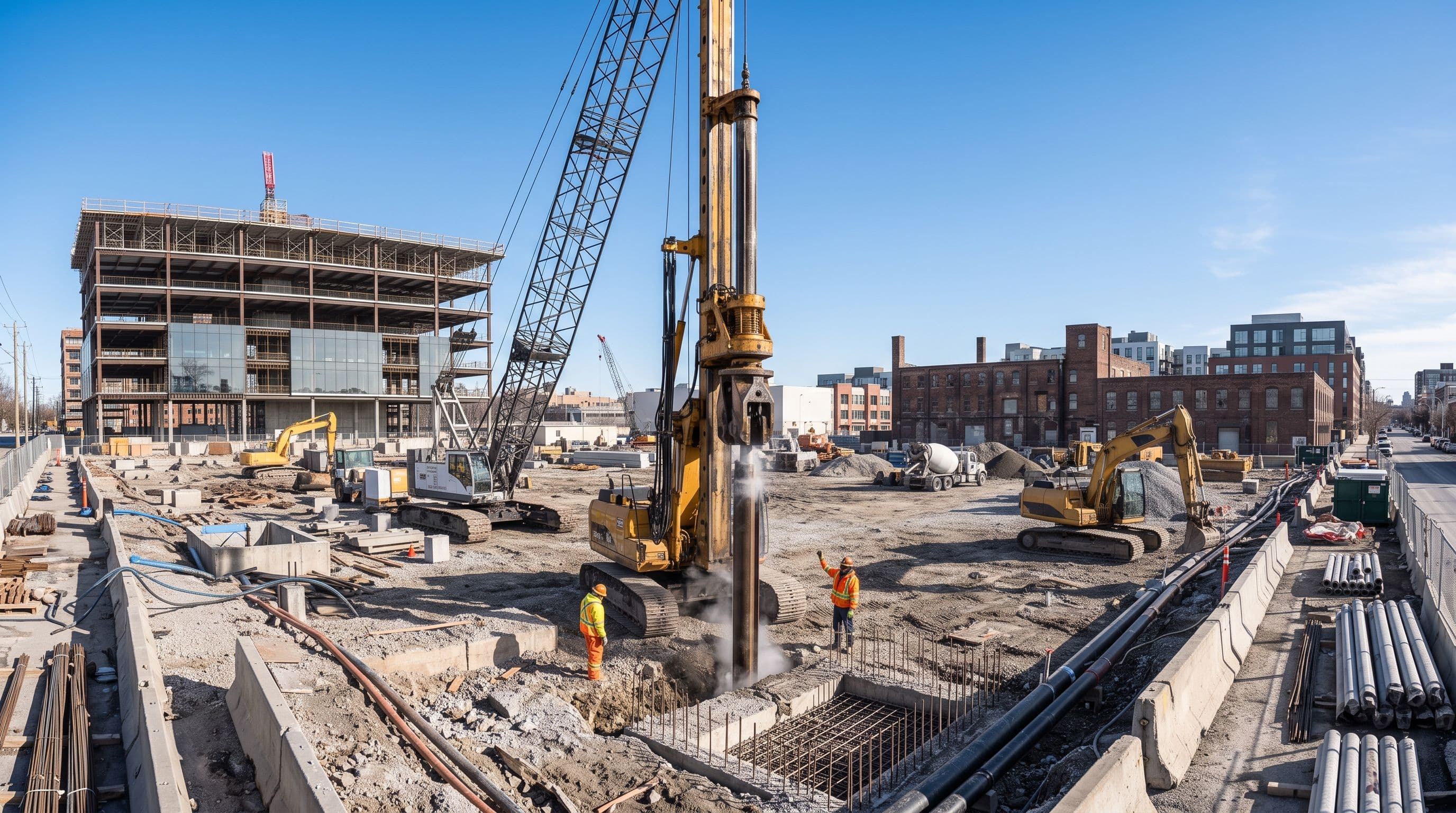
Some foundations need a high-capacity pile built in place, with an enlarged base driven directly into competent bearing soil.
Solutions for this Service
Settlement Remediation

Foundation Stabilization
Structural Re-Leveling
Infrastructure Settlement Control
Related Industries
Industrial Facilities
Marine and Coastal
Need a Site Assessment?

800-240-7868

Some foundations need a high-capacity pile built in place, with an enlarged base driven directly into competent bearing soil. Franki piles, also known as pressure injected footings, are constructed by driving a plug of dry concrete and a steel casing to depth with a drop-weight hammer, then ejecting and compacting additional concrete at the base to form an enlarged foundation. They're typically used for heavy industrial foundations and marine or waterfront structures where high point-load capacity is required.
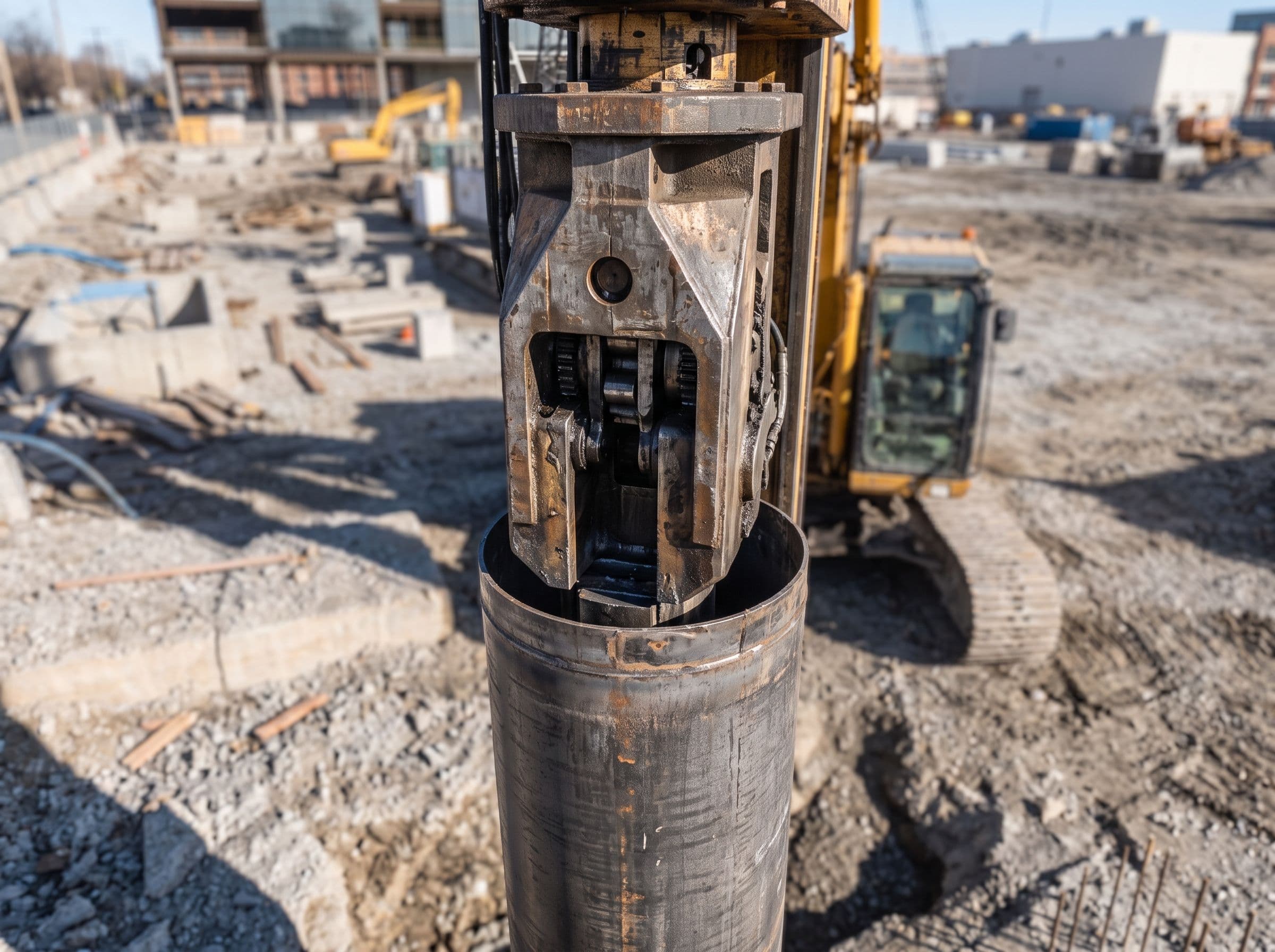
General industry framing, not yet confirmed against URETEK project history.

Heavy industrial or marine structures requiring high-capacity foundation elements
A need for a cast-in-place pile with an enlarged base for greater bearing capacity
Weak near-surface soil requiring a driven pile confirmed to reach a specific bearing resistance
Waterfront or marine construction where a proven, high-capacity driven pile system is specified
These are the general conditions the industry associates with choosing Franki piles over other deep foundation systems.
A structural design specifying a high-capacity, cast-in-place pile with an enlarged base
Heavy industrial equipment or storage structures with significant concentrated loads
A marine or waterfront project requiring proven, high-capacity driven pile foundations
A site where real-time confirmation of bearing resistance during installation is required
Soil conditions suited to a driven, displacement-based pile rather than a drilled system
A project where vibration from driving is an accepted tradeoff for pile capacity and cost
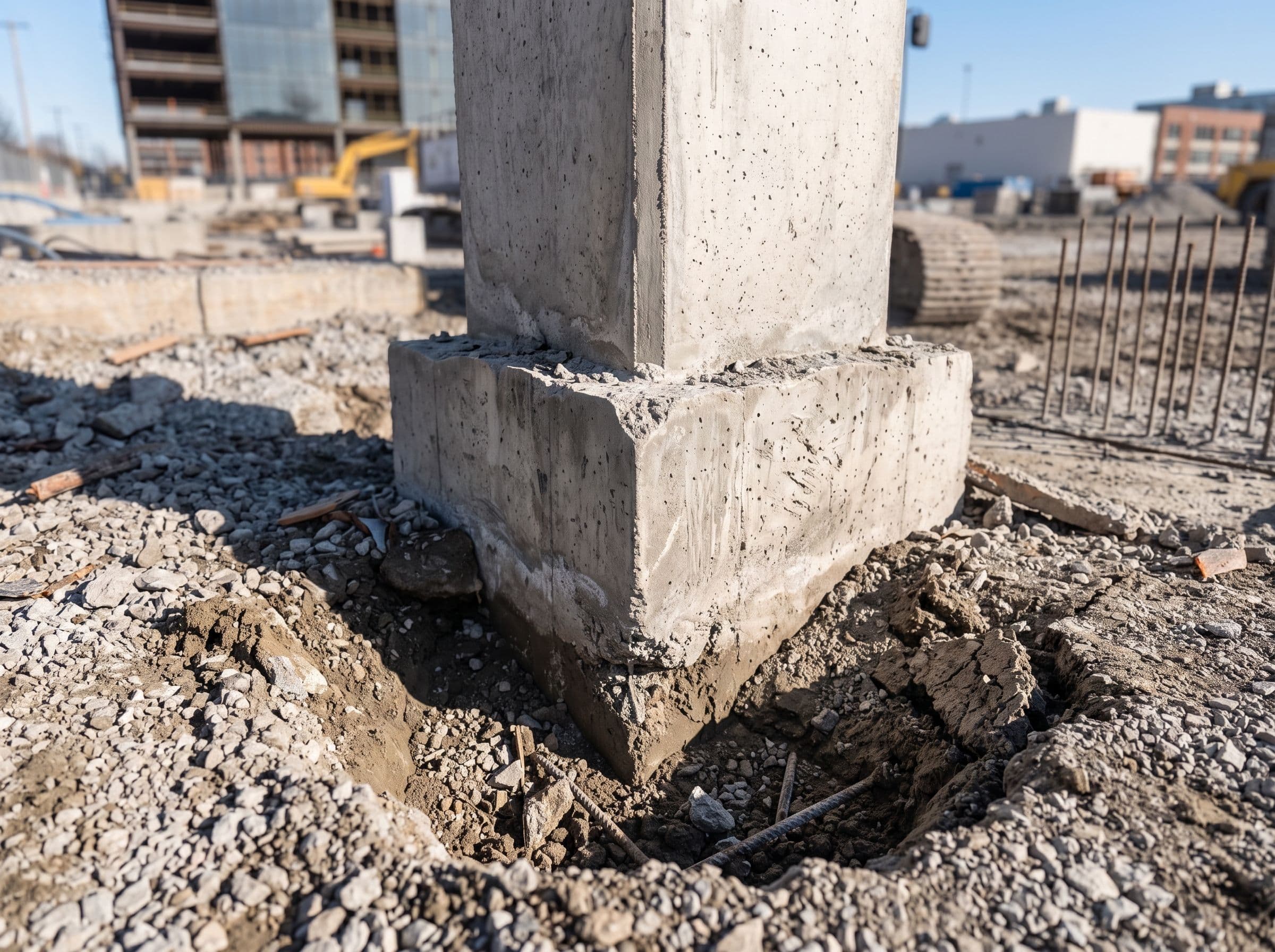
General industry-standard benefits associated with Franki piles. Not yet confirmed as URETEK-specific claims.
Forms an enlarged base for greater bearing capacity. The driving process compacts and ejects concrete at the base of the pile, creating a wider footing than the casing diameter alone would provide.
Confirms bearing capacity during installation, not just by design. The resistance to further driving serves as a real-time indicator of the pile's capacity as it's built, rather than relying solely on design assumptions.
Well suited to heavy industrial and marine loads. The technique is typically specified for foundations carrying substantial concentrated loads, including waterfront and marine structures.
A proven, long-established pile system. Franki piles are an established deep foundation method with a long track record across heavy industrial and marine construction industry-wide.
Displacement-based installation, not drilled removal. The pile is driven and compacted into place rather than requiring a drilled hole and separate grouting step, a different installation logic than URETEK's other services.
Franki piles would generally be the right call when a heavy industrial or marine structure needs a high-capacity, cast-in-place pile with an enlarged base, and the vibration from driven installation is an acceptable tradeoff for the site.
It would not be the right tool for situations where low vibration matters, near sensitive existing structures, in occupied buildings, or on tight urban sites, where a drilled system like Micropiles would generally be preferred. It's also not the right fit for URETEK's core polymer injection use cases: general weak soil needing density improvement (Soil Stabilization, Ground Densification) or a structure that has already settled and needs correction (Settlement Control, Deep Injection UDI).
1
Evaluate
Geotechnical data and the required bearing capacity are reviewed to confirm a driven, cast-in-place pile is the right fit for site conditions.
2
Position
A steel casing, typically two to three feet in diameter, is positioned vertically at the pile location.
3
Plug and Drive
The base of the casing is filled with dry concrete mix, and a drop-weight hammer repeatedly strikes it, driving the plug and casing to the design depth.
4
Form the Base
The casing is held in place while additional hammer blows eject and compact concrete outward at the base, forming an enlarged footing.
5
Confirm Resistance
Driving continues until a target resistance is reached, confirming bearing capacity during construction.
6
Validate
Completed piles are documented against the design's capacity requirements before the project is closed out.
Franki piles are used industry-wide for heavy industrial and marine or waterfront structures that need a driven, cast-in-place pile with an enlarged base.






The pile is driven until it reaches a specified resistance to further displacement, measured by the effort required to advance the casing, which serves as a real-time indicator of bearing capacity during construction, not just a design estimate.
A steel casing, typically two to three feet in diameter, is positioned vertically at the pile location. The bottom several feet are filled with a very dry concrete mix, and a drop-weight hammer repeatedly strikes the mix, locking it into the base of the casing and driving both the plug and casing down to the design depth. Once at depth, the casing is held in place while further hammer blows eject the dry concrete mix outward at the base, and additional concrete is added and driven out until a target resistance is reached, forming an enlarged base.
It depends on soil conditions, required capacity, and site access, and the driven installation method generally requires different, heavier equipment than a drilled system.
Because installation relies on repeated hammer impacts rather than drilling, the process generates more vibration than drilled pile systems, which is a real consideration near sensitive structures.
Industry-wide, Franki piles are associated with heavy industrial foundations and marine or waterfront structures where a high-capacity, cast-in-place pile with an enlarged base is needed.
Talk to URETEK about a high-capacity foundation need at your site.
Request a Site Evaluation
URETEK
Ground improvement solutions engineered for performance.
Contact Us
Find Local Experts


13900 Humble Road, Tomball, TX 77375
Services
Solutions

 800-240-7868


